GLENN O’BRIEN: The first time we met, I thought you were Black. You had black hair and dreadlocks and a tan.
MADONNA: I had a tan! How unusual. Oh, I think I had been to the Bahamas with Jellybean [Benitez]. That was the second tan in my whole life. Yeah, I came to your house for Thanksgiving dinner with Jean-Michel [Basquiat]…
O’BRIEN: To my dumpy apartment.
MADONNA: I can assure you that my apartment was dumpier. Anyway, I remember being hungry, but you guys just wanted to roll joints. I met your wife at Thanksgiving dinner. We’re always eating together. So let’s talk about your marriage.
O’BRIEN: No, let’s talk about your show.
MADONNA: Let’s not. Today was a horrible day. That was the worst rehearsal.
O’BRIEN: Well, I liked it, but I haven’t seen it when you thought it was good. I loved the number where you’re lying on the piano singing a torch song.
MADONNA: You saw only one segment of the show. I’ve created five different worlds, and the set is all based on hydraulics. One is going down and another is coming up. The world changes completely. I think of it more as a musical than as a rock concert. There is a straightforward Metropolis section, like my “Express Yourself” video—that set with all the gears and machinery; it’s very hard and metallic. That’s the heavy-duty dance music. Then the set changes and it’s like a church. We call it the temple ruins. It’s all these columns, trays of votive candles, a cross. I do “Like a Virgin” on a bed, but we changed the arrangement so it sounds Indian. Then I’m being punished for masturbating on this bed, which is, as you know, what happens. Then we do the more serious, religious-type material—“Like a Prayer,” “Papa Don’t Preach”… Then it changes to what you saw, this Art Deco ’50s-musical set. That’s when we do three songs from Dick Tracy, and then after that we do what I call the camp section. Then it gets really serious again and we go into our Clockwork Orange cabaret set.
O’BRIEN: What’s that?
MADONNA: It’s a very sparse set with a backdrop of an orgy—naked people. The paintings are like Tamara de Lempicka—Cubist-like nudes—no pornography, no genitals. You just see people having fun.
O’BRIEN: How long have you been working on this? It’s so elaborate.
MADONNA: Since September. Designing the stage, hiring people, firing people, hiring more people, designing the costumes with Gaultier, going over the music, changing the arrangements, picking the talent.
O’BRIEN: It’s a big operation.
MADONNA: There are seven dancers, two singers, eight musicians, me, about a zillion tech guys just to take care of the musicians, and then all the crew guys underneath the stage working everything. There are a lot of people. Probably seventy-five to a hundred. And a lot of trucks.
O’BRIEN: I heard you fired yourself today.
MADONNA: Yeah. It’s a running joke. I fire someone every day, every time something goes wrong. I fire Lenny every day. He’s the guy who opens the trap doors, and he’s always doing it at the wrong time and almost killing me.
O’BRIEN: I was sitting near your dancers; they were really funny. They were talking to your piano player, who had on a new suit. The pants were short, and one of the dancers said, “Your shoes should give a party so your pants can drop on down.”
MADONNA: The dancers are really funny. They keep me going. They’re real pranksters.
O’BRIEN: I love it when they become mermen. You seem to have a thing for merpersons.
MADONNA: Mermen, yeah. I like to switch everything around. People like mermaids; I like mermen. I like the idea of men with tails on. I like the idea of men being the objects of desire, the sirens that entrap women, instead of the other way around. Some people would say that I hate men and that I like to do things to take power away from them, but you don’t have to get that analytical.
O’BRIEN: I don’t think putting men in flimsy, marabou-trimmed negligees is taking power away from them.
MADONNA: I think it’s funny. Anyway, it’s just a takeoff. Do you think it’s offensive?
O’BRIEN: Not at all.
MADONNA: Well, a lot of people would. You’re a really evolved guy. I can assure you that people in Michigan are going to throw tomatoes at me or something because I have guys in fish tails and negligees. But I like wearing men’s suits, and I grab my crotch a lot.
O’BRIEN: But can you even tell if the audience is offended?
MADONNA: No. I just know from feedback afterward. But when I did the MTV Awards and I was smoking, I could hear people booing. I’m sure I offend people when I grab my crotch, but I really don’t care. That’s bound to happen. And I know I offend people with my videos. But I don’t hear it. I just get feedback later.
O’BRIEN: Do you ever get critical mail?
MADONNA: No. People that don’t like me aren’t going to take the time to write to me.
O’BRIEN: Really? I get mail about things I’ve written. Of course, those letters are usually from guys in jail.
MADONNA: I get letters from guys in jail all the time too, but they just want to have a date with me. Most people that don’t like me are people that are fanatically religious.
O’BRIEN: Have you ever been censored?
MADONNA: I get censored all the time. You wouldn’t believe the stuff that I’d like to do that never gets done.
O’BRIEN: But you’ve never had a video rejected.
MADONNA: No, but there was the whole Pepsi thing. They wouldn’t play my commercial because I wouldn’t take my “Like a Prayer” video off the air.
O’BRIEN: Is that why you’re drinking a Diet Coke right now?
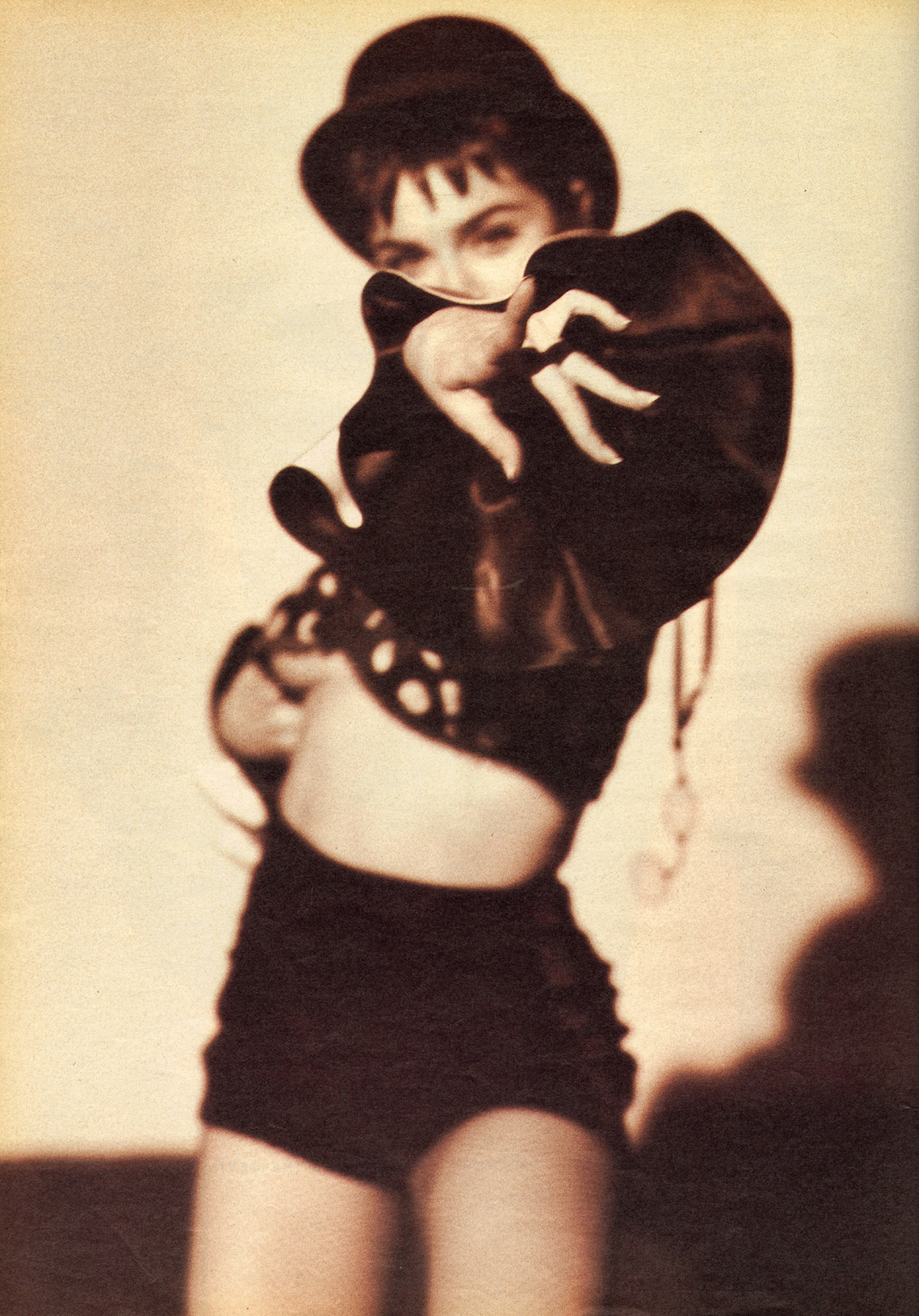
MADONNA: I just like it. I thought MTV might not play my “Vogue” video. You can see my breasts through my dress.
O’BRIEN: Is that really a first? I mean, there are an awful lot of erect nipples under spandex on MTV as it is. I guess as long as you can’t see the dark aureole, or whatever it’s called, that’s OK.
MADONNA: I don’t know. I thought it might get censored.
O’BRIEN: You could put little animated black bars over your nipples, sort of like digital pasties.
MADONNA: Well, every time I do a video they say they’re not going to show it. When I did “Oh, Father,” they said, “We’re not going to show the scene with the lips sewn up.” And I said, “Fuck you.” And then they showed it. In “Express Yourself,” they weren’t going to show me with a chain around my neck. I don’t get their rules. I don’t know what they find offensive. Then I don’t know what’s going to happen with the video of songs I wrote for the Dick Tracy sound track. I had to change lyrics in the songs because the sound track is part of a Disney movie. I had to change things that had anything to do with sodomy, intercourse, or masturbation.
O’BRIEN: Is the movie sexy?
MADONNA: Yeah, but in a really ’50s way. It’s a really clean movie. People kiss, but they don’t have sex or go to the bathroom.
O’BRIEN: So tell us about Breathless Mahoney, your character in Dick Tracy. Do you play yourself?
MADONNA: Glenn! Do I play myself?! No! Am I a cartoon character?!
O’BRIEN: I don’t know anything about Dick Tracy.
MADONNA: No one can ever just play themselves in a movie. That’s ridiculous. Obviously there can be a lot of things in the character that are like you, but you’ve got to be a little bit inventive or imaginative. I mean, there are certain things in the character that I can relate to, but I’m not playing myself, for god’s sake!
O’BRIEN: I’m glad we cleared that up.
MADONNA: Breathless is the queen of the one-liners. She’s always cracking wise. I’m not always that way.
O’BRIEN: Beatty doesn’t have that jaw, does he?
MADONNA: He’s got the jaw he was born with. It’s a pretty nice one.
O’BRIEN: All I remember about Dick Tracy was that he had that right-angle jaw.
MADONNA: Well, Warren didn’t have any prosthetics. Me and Warren and Glenne Headly didn’t have prosthetics. Everybody else did—all the bad people and some of the good people.
O’BRIEN: On the record you play in your show, is Warren singing with you?
MADONNA: Yeah.
O’BRIEN: He’s surprisingly good. How come he never sang before?
MADONNA: Nobody ever asked him. I think he doesn’t think of himself as very musical. But he’s a very good piano player. He wanted to be a concert pianist when he was little.
O’BRIEN: You’re always playing pretty lovable characters. Would you ever want to play a villain?
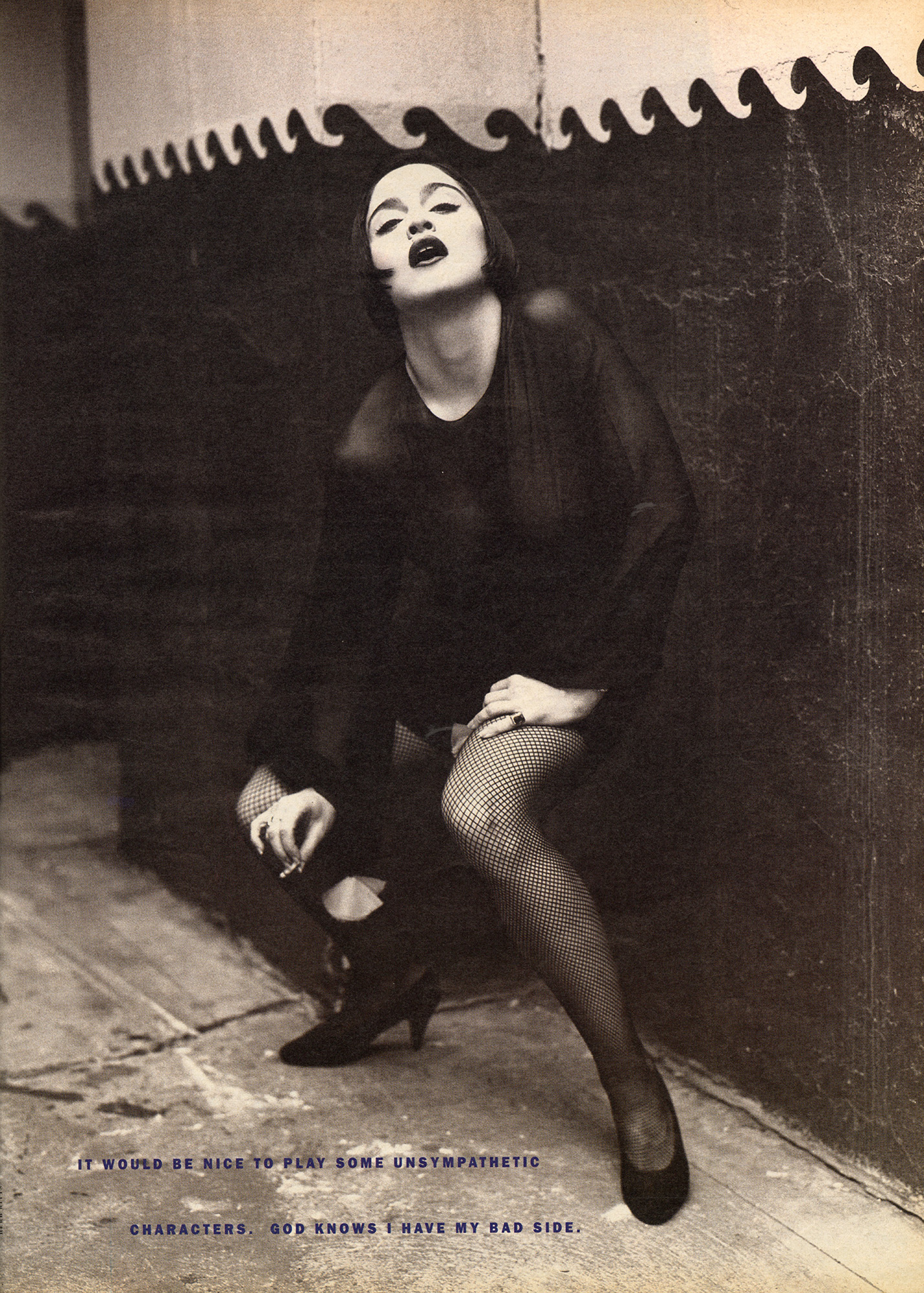
MADONNA: Yeah, but I’ve never been offered one. It would also be nice to play some unsympathetic characters. God knows, I have my bad side.
O’BRIEN: How about playing a mom?
MADONNA: Oh, yeah, sure. I’m down for that.
O’BRIEN: Are you down for being a mom in real life?
MADONNA: I knew that was the next question.
O’BRIEN: I wasn’t planning it; it just popped into my head.
MADONNA: Yeah. I am. I don’t know when, but I’m down.
O’BRIEN: Who are your heroes?
MADONNA: Mother Theresa. Isn’t Gorbachev a hero?
O’BRIEN: I’d say so.
MADONNA: What about [former President Václav] Havel, from Czechoslovakia? He’s a hero.
O’BRIEN: He’s also totally into Frank Zappa and Captain Beefheart. I think he’s put Zappa on the Czech payroll as some kind of cultural consultant.
MADONNA: That’s heroic. But it’s hard to think of heroes, because not a lot of people take risks these days. I’ll probably get in trouble for saying this, but I think those guys in Public Enemy are heroes. They’re not afraid to say things.
O’BRIEN: I think that’s the case with the better rap artists in general. I think they are just about the only people who are really contributing anything on a cultural level these days.
MADONNA: Do you think Spike Lee is a hero?
O’BRIEN: Yeah, I do.
MADONNA: Me too.
O’BRIEN: Do you think how can I push things to the limit?
MADONNA: I’m sort of naturally a pain in the ass. I naturally like to do things that rub people the wrong way. No, that’s wrong. Let me rephrase that. I just like being controversial, I guess. Even that doesn’t sound right. But somehow it happens that way. It’s more like,f “Hey, well, you know how they always say things are this way? Well, they’re not! Or they don’t have to be.”
O’BRIEN: Do you write songs that way?
MADONNA: I’m starting to. Especially on my last album. And when you hear the Dick Tracy sound track, then you’ll know.
O’BRIEN: Is it political?
MADONNA: Yeah. I think my “Express Yourself” video is political too. It depends on what you mean by political. When I think of controversy, I never really think people are going to be half as shocked as they are at what I do. I really couldn’t believe how out of control the whole Pepsi thing got.
O’BRIEN: Maybe that’s just the nature of bureaucracy. They’re a huge multinational corporation with many thousands of stockholders, and you’re an entrepreneur with no stockholders. I was having breakfast this morning next to this record-company goon who was explaining to a management goon about the alternative charts and alternative radio and alternative acts. I thought it was funny that he said Lou Reed and Elvis Costello were alternative acts. I was wondering just where they draw the line. What do you think is alternative music?
MADONNA: I guess it’s music that’s not popular. I mean, alternative to what? I guess it’s supposed to be music that makes you think, as an alternative to music that doesn’t.
O’BRIEN: So what makes Elvis Costello considered alternative?
MADONNA: The fact that he’s not popular.
O’BRIEN: He isn’t?
MADONNA: He’s popular in colleges, in a cult way. He’s not popular like Milli Vanilli, right?
O’BRIEN: I guess. I’m not really sure who Milli Vanilli are.
MADONNA: You lie, Glenn! You know who they are!
O’BRIEN: I saw them on MTV once.
MADONNA: Don’t tell me that crap. Look, you know who they are.
O’BRIEN: They have a lot of hair, right?
MADONNA: Do you think I’m going to fall for that? I didn’t say you had to like them, but you know who they are. Now, they are alternative music.
O’BRIEN: Were you ever alternative? Were you ever on the college-radio chart?
MADONNA: I don’t think so. If there’s an underground disco chart, I’ve been on it.
O’BRIEN: OK, what else should we talk about?
MADONNA: Oh, please! You’re the interviewer!
O’BRIEN: People always talk about what they want to talk about anyway. Come on, help me out.
MADONNA: Help you out! Gimme a break! I’ve been working all day, honey.
O’BRIEN: Listen, it’s after midnight New York time.
MADONNA: I’ve been working all day. I’ve been working all week.
O’BRIEN: Why don’t you just tell me some good lies that can be picked up by the tabloids. Tell me about your lesbian affairs.
MADONNA: That’s old tabloid news.
O’BRIEN: It started with the nuns, right?
MADONNA: No way am I saying that. The lesbian stuff is old. I’ll have to lie about something else.
O’BRIEN: How about art? There’s a lot on your art collection in the Vanity Fair article about you. When did you start collecting art?
MADONNA: As soon as I had the bread.
O’BRIEN: What’s the first thing you bought?
MADONNA: A Robert Smithson painting.
O’BRIEN: Really?
MADONNA: You probably don’t even know who that is.
O’BRIEN: Are you kidding? I just didn’t know he did paintings.
MADONNA: The one I have is a beautiful, sort of abstract painting. But you can make out the figure of an angel in it. So I call it my guardian angel. It’s hanging over my bed in New York.
O’BRIEN: Do you believe in guardian angels?
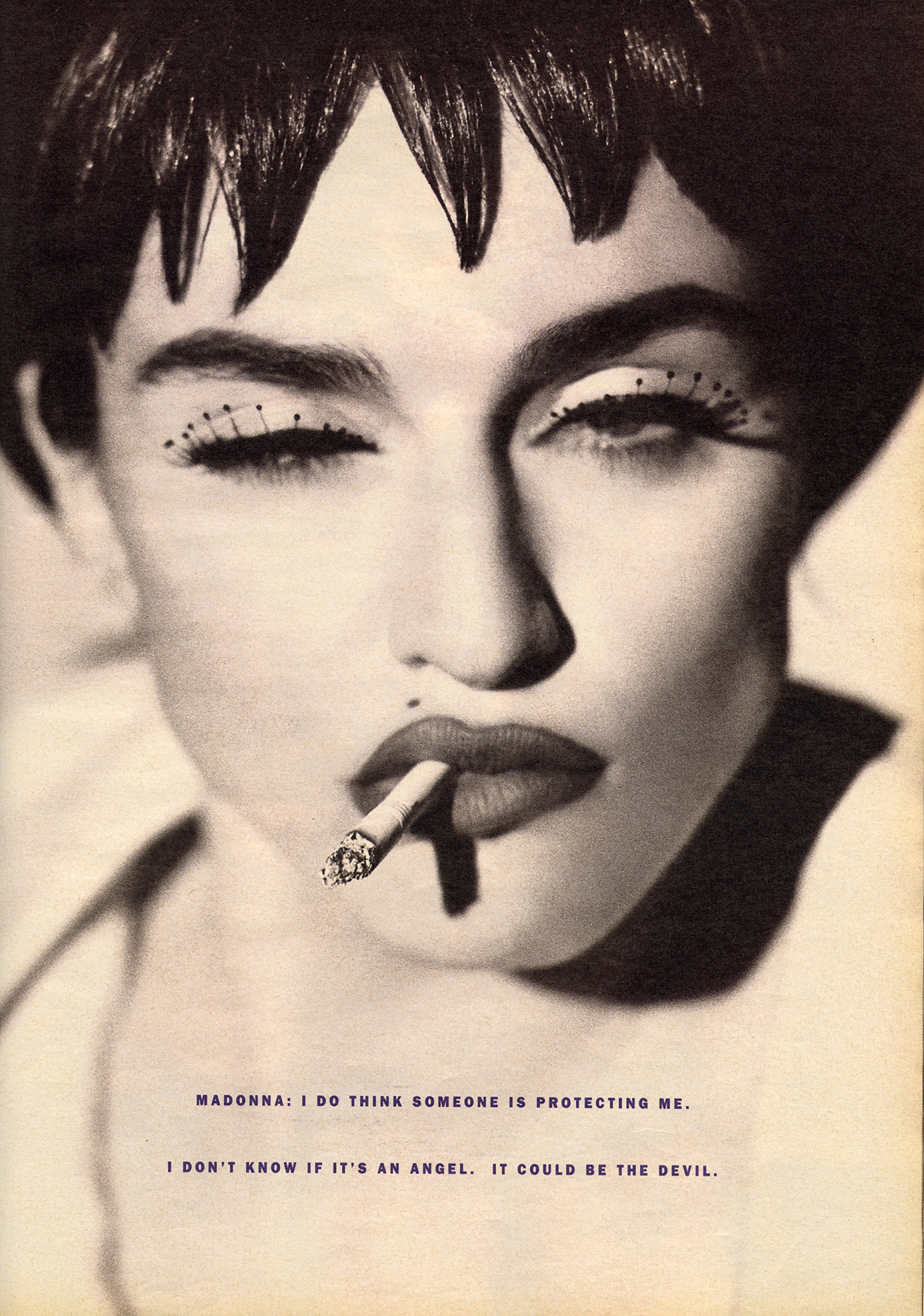
MADONNA: I believe that someone is protecting me. Otherwise, I’d be dead. Otherwise, that guy tonight would have gotten out of his car and beaten the shit out of me. Believe me, it would have happened if I weren’t protected because I can’t resist mouthing off to people when they curse at me. One time a guy did that to me and I said, “Fuck you, motherfucker!” I wasn’t in my car; I was standing on the curb giving directions to my girlfriend. And this guy got out of his car. It was in the Valley. It always happens in the Valley. This big guy got out of his car and walked over to me, and I was thinking, “Oh, my god, he’s going to beat the shit out of me.” I was cowering. And I turned into a person I’ve never been in my life. I said, “I am so sorry! I am truly sorry!” So, I do think someone is protecting me. I don’t know if it’s an angel. It could be the Devil. He could have his own hidden agenda.
O’BRIEN: Do you believe in psychics?
MADONNA: Yeah. I believe that there are real ones and there are fake ones.
O’BRIEN: Do you have any psychic power?
MADONNA: Yeah, I do. I think most sensitive people do. I think a lot of innate psychic power has to do with just being really observant.
O’BRIEN: How does your psychic power show up?
MADONNA: In dreams. Or in knowing when people are going to call, or what people are going to say, or what they are going to do next.
O’BRIEN: Did you ever dream about being an entertainer when you were a kid?
MADONNA: No, I just had dreams about being murdered all the time. The only remotely entertainment-oriented dream I ever had was one where I dreamed I kissed Robert Redford. I was in the sixth grade. And it has not come true.
O’BRIEN: Have you met him?
MADONNA: No. I don’t really want to kiss him. It was weird. I don’t think I ever really had any fixation on him. But the dream was so vivid. I was really turned on.
O’BRIEN: So what sign are you?
MADONNA: Guess. It’s so obvious.
O’BRIEN: Uh. Uh. Uh.
MADONNA: What do I do for a living?
O’BRIEN: Uh, you sing and dance. You entertain people. OK, let’s see…Leo.
MADONNA: Yes. That’s right. Should I guess what sign you are?
O’BRIEN: Yeah. It’s fairly obvious.
MADONNA: Are you a Virgo?
O’BRIEN: No.
MADONNA: It’s obvious?
O’BRIEN: Well, it’s not that hard. Think about when we first met.
MADONNA: I thought you didn’t like me.
O’BRIEN: That happens all the time. I’m awful.
MADONNA: Let’s see. What’s an awful sign? Scorpio?
O’BRIEN: Stop! I’m a Pisces. You were close with Virgo. That’s my opposite sign.
MADONNA: I don’t know that much about Pisces. I’ve never really known any Pisces. What are their characteristics?
O’BRIEN: A lot of writers are Pisces.
MADONNA: Do you have nice feet?
O’BRIEN: No, I have big feet.
MADONNA: Don’t Pisces have nice feet?
O’BRIEN: No, they have influential feet.
MADONNA: Do they have foot fetishes?
O’BRIEN: Some do, I’ve heard. I am attracted by a nice pair of feet.
MADONNA: You know how you have a body spot that’s sensitive or powerful? There’s one for each sign. Mine is my back. I have a great back. It’s beautiful. I can say that.
O’BRIEN: Has there been any astrological pattern to your love life? Do you tend to fall for one certain sign?
MADONNA: Fire signs. I married a Leo. A lot of people in my family are Leos. My mother had a lot of us in the same month. She kept getting pregnant at the same time every year. I had my chart done once. I remember only two things from it. One was that I should eat more cooked vegetables. The other was that I was going to meet an older man who was going to be a great influence on me. And then I met Warren Beatty.
O’BRIEN: Has he been a great influence on you?
MADONNA: Yes. But I haven’t been eating many cooked vegetables. I do eat a lot of raw vegetables. How come you use two tape recorders? Are you superstitious?
O’BRIEN: No, I’m really bad at doing interviews. I recently interviewed someone for an hour and a half and the tape recorder was on “play,” not “record.”
MADONNA: He must have been a loser. Who was this person?
O’BRIEN: He’s a professor of popular culture at Notre Dame University.
MADONNA: Snoresville.
O’BRIEN: Not at all. It was very interesting to hear someone speak in complete paragraphs.
MADONNA: I’m not doing that?
O’BRIEN: No, you’re not.
MADONNA: I am so. For instance, the way I’m talking now, I’m just going to keep going on and on in a never-ending sentence and keep going on and on and then put a period on the end of it. Is that a paragraph?
O’BRIEN: No. You have to speak in complete blocks of thought.
MADONNA: I don’t know too many people like that. Warren Beatty is like that. He’s very intellectual.
O’BRIEN: Articulate?
MADONNA: Extremely. He doesn’t talk a lot, but when he does it comes out in paragraphs.
O’BRIEN: Is he a scholar?
MADONNA: I’d say that. He’s a scholar of humanity.
O’BRIEN: And you?
MADONNA: Am I a scholar? No. I’m not a scholar, I’m a sponge. I just soak things up.
O’BRIEN: You just study the videotapes of your rehearsals.
MADONNA: That’s so fucking funny! No, I don’t just study my videotapes. Yeah, yeah. That’s all I study.
O’BRIEN: I know you have a hard job.
MADONNA: I read. I’ll tell you one thing I don’t do: I don’t watch TV.
O’BRIEN: Really?
MADONNA: Never. And I have four televisions. I used to read a lot more than I do now, I’m sorry to say. I just don’t have time. There, I’ve said it again.
O’BRIEN: Well, what do you do on the plane?
MADONNA: I read magazines. I love reading magazines. It’s my vice. Junk. Not like the Enquirer…
O’BRIEN: Woman’s Day?
MADONNA: Vogue. Tatler. Details. Spy. The usual. I like Vanity Fair. It’s high-gloss gossip.
O’BRIEN: Don’t you think it’s a little negative?
MADONNA: I guess.
O’BRIEN: Usually Vanity Fair just likes English people or aristocratic felons.
MADONNA: They weren’t mean to me.
O’BRIEN: No, but you’re one of the exceptions.
MADONNA: Maybe because everyone shits on me so much they felt sorry for me.
O’BRIEN: Everybody shits on you so much? Give me a break!
MADONNA: Come on, I get a lot of bad press.
O’BRIEN: You get so much good press.
MADONNA: Yeah, but I get a lot of bad press too. I get ripped to shreds. I’ve got everybody waiting to tear me down.
O’BRIEN: Who gives you bad press? What’s the worst thing anybody ever wrote about you?
MADONNA: You know, I’m a good-for-nothing, no-talent has-been, and they can’t wait until I drop dead.
O’BRIEN: That sounds like the alternative press.
MADONNA: Oh, they hate me. People who listen to Elvis Costello hate me.
O’BRIEN: But do they write lies about you?
MADONNA: Every magazine in the world writes lies about me.
O’BRIEN: What are the biggest lies that have been written about you?
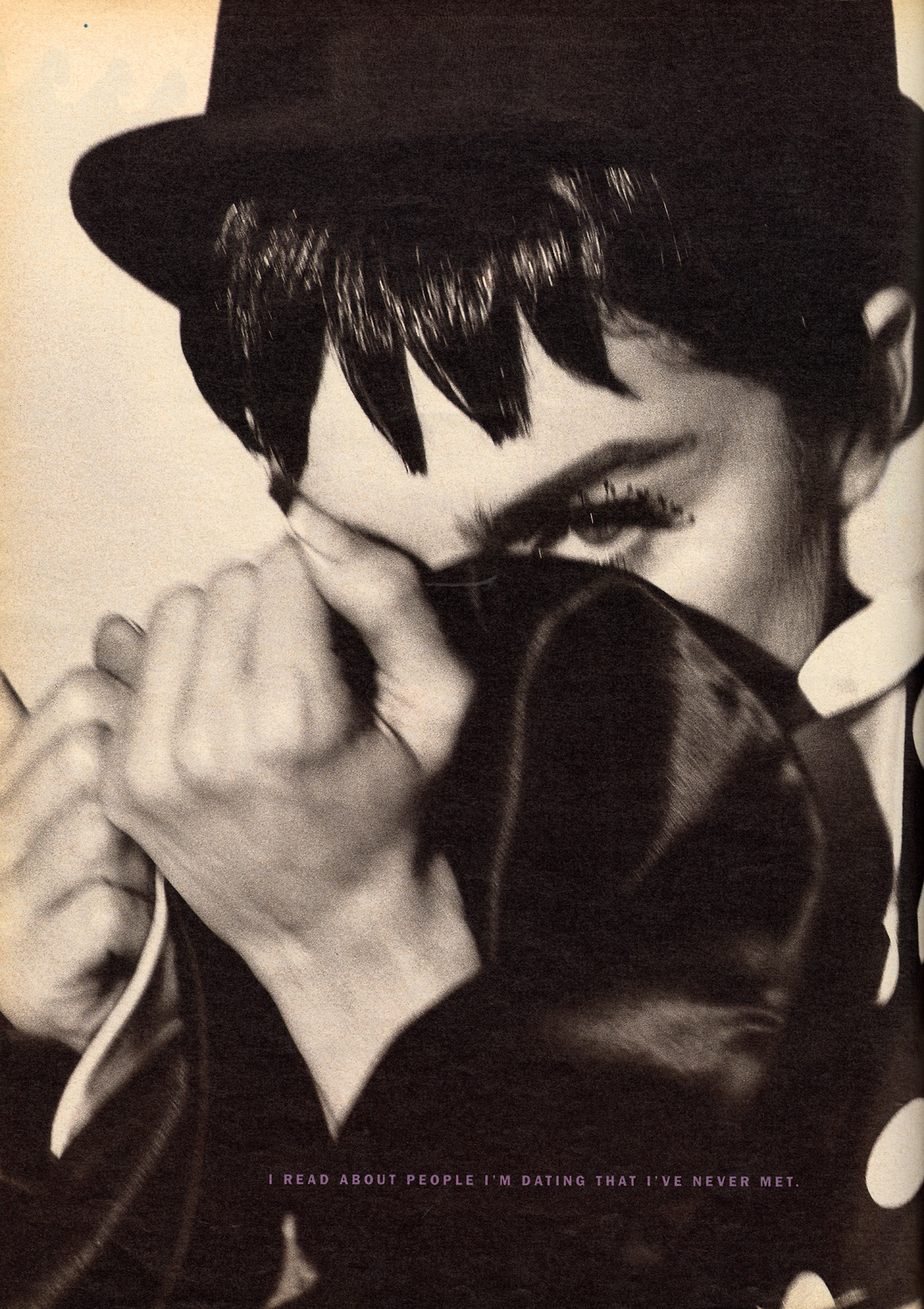
MADONNA: It’s not the big lies, it’s the little tidbits. I read about people that I’m dating that I’ve never met.
O’BRIEN: You should provide your own lies. Maybe there’s something you’d like to tell our readers.
MADONNA: Well, I am really obese right now.
O’BRIEN: Really. How much do you weigh?
MADONNA: I weigh more than Roseanne Barr. Hey, you know what? Vince Paterson, who is choreographing the show now—his mother called him from Florida and said, “Vince, is everything all right?” Vince said, “Yeah, what are you talking about?” She said, “Well, I know you’re working for Madonna now. Is she OK?” He said, “Yeah, she is fine. Why? What’s wrong?” She said, “Well, I just read that she gained fifty pounds and she’s having a really hard time working it off. She can’t do the dance steps…” It’s the silliest stuff. I must have been pregnant three hundred times in the last five years. I was dating Rob Lowe.
O’BRIEN: I was too. Are you the jealous type?
MADONNA: Are you?
O’BRIEN: No.
MADONNA: If your ex-girlfriend was dating someone, you wouldn’t be jealous?
O’BRIEN: I don’t think so.
MADONNA: Lie! Yes, you would! Everybody is.
O’BRIEN: Are you jealous of all your exes if they’re dating somebody?
MADONNA: I have a little twinge of jealousy behind my knee. I secretly want to kill them. You get really territorial over people you spent years of your life with. You don’t want anybody else to have them.
O’BRIEN: Going how far back?
MADONNA: Going as far back as I can remember. I mean, the idea that the first guy I ever slept with, my lover when I was fifteen, is married and has kids really breaks me up. I wonder if he still loves me. He probably does.
O’BRIEN: Maybe you just want to keep them all.
MADONNA: That would be nice.
O’BRIEN: I always used to think that would be ideal.
MADONNA: Do you think anybody would stand for that shit?
O’BRIEN: No, of course not.
MADONNA: But in an ideal world, where you were president, you could make it work that way.
O’BRIEN: I think Donald Trump is campaigning to be president now, carrying on—
MADONNA: With Marla? But he can’t be president if he’s had sex. That’s the rule.
O’BRIEN: No, no. It’s all cyclical. He wants to be like Kennedy, and he has to prove that he’s a womanizer.
MADONNA: It’s not cool to be like Kennedy anymore. Look at Gary Hart.
O’BRIEN: No, Gary Hart just didn’t have it. He didn’t have that aura of power.
MADONNA: You mean Donald Trump is powerful? He’s a wimp. Oh, don’t print that. I want tickets to the next Tyson fight.
O’BRIEN: I do think it’s all cyclical. You go through periods where the country wants a real solid family man, and then you go through periods where the country wants—
MADONNA: A guy with a dick?
O’BRIEN: A potentate. And then he probably gets assassinated.
MADONNA: Ow! But Donald Trump? Isn’t there anyone else? Couldn’t we get someone more handsome?
O’BRIEN: Have you ever considered running for public office?
MADONNA: I think I’ve had a fantasy about it. I’d have to hone up on a few factual things if I did that. Maybe I’m too self-centered.
O’BRIEN: But there hasn’t been a woman yet.
MADONNA: Give it time. Kim Basinger could become the mayor of that town she bought in Georgia.
O’BRIEN: That could be a conflict of interest.
MADONNA: That’s true.
O’BRIEN: But you don’t have any ambitions like that.
MADONNA: I make jokes sometimes that I’m going to run for president someday.
O’BRIEN: I think that’s a good idea. In fact, I think I thought of that.
MADONNA: That you would run for president?
O’BRIEN: No, that you would. Didn’t I write that once? Didn’t I write Madonna for president once? It sure rings a bell. I think it was my idea. You just have to wait till you’re thirty-five.
MADONNA: What are you writing down?
O’BRIEN: That line that one of your dancers said: “Your shoes should throw a party so your pants can drop on down.”
MADONNA: Is that your head, or did your neck just throw up? Do you want to know my measurements or anything?
O’BRIEN: Yeah. What are they? What size hat do you wear?
MADONNA: I don’t know.
O’BRIEN: OK, what about your other measurements?
MADONNA: Thirty-three, twenty-four, thirty-four.
O’BRIEN: Really?
MADONNA: Pretty good, huh?
O’BRIEN: I guess so. I always thought that ideally there was supposed to be ten inches’ difference.
MADONNA: Thirty-four when I’m having my period.
O’BRIEN: Do you find that all the women you work with have their periods at the same time?
MADONNA: That always happens. It pisses me off.
O’BRIEN: Why?
MADONNA: Because we’re all on the rag at the same time.
O’BRIEN: It’s a tribal thing.
MADONNA: What happens is that it screws things up. If you haven’t been with that group of people for a while, and all of a sudden you’re with them, you start your period earlier. It totally fucks up your cycle.
O’BRIEN: When you yelled at that guy in the car tonight, I think he didn’t recognize you. You seem to be able not to be recognized.
MADONNA: I got recognized about twenty times on the way over there. People just wave.
O’BRIEN: So what’s that like?
MADONNA: It’s good and bad. It means you’ve made it.
O’BRIEN: You must like it. Otherwise you’d wear a hat in the car, right?
MADONNA: Right. Sometimes it bugs me when I’m in a bad mood and I’m thinking and I’m driving my car and I look over and there’s a car full of guys and they start following me wherever I go. That’s a pain in the ass. But I could think of worse things that could happen to me. [Madonna pulls out a large bag of candy.] Do you want a piece of candy?
O’BRIEN: No, thanks.
MADONNA: I love candy, as you can see. I’m a sugar junkie. It’s because I was deprived of love as a child.
O’BRIEN: But you have a big family. Don’t they love you?
MADONNA: Yeah, I’m just kidding. I wasn’t deprived. But I wasn’t allowed to eat candy. That’s really the reason. I’ve been gorging ever since I moved out of the house.
O’BRIEN: Your brother paints Madonnas, right?
MADONNA: He paints religious figures. Religion’s been a major influence in our life.
O’BRIEN: Did you have a super-religious upbringing, or just the average Catholic home?
MADONNA: Super. I wasn’t allowed to wear tampons until I married. My stepmother said it was like intercourse. I wasn’t allowed to wear pants for a really long time.
O’BRIEN: What about your brothers?
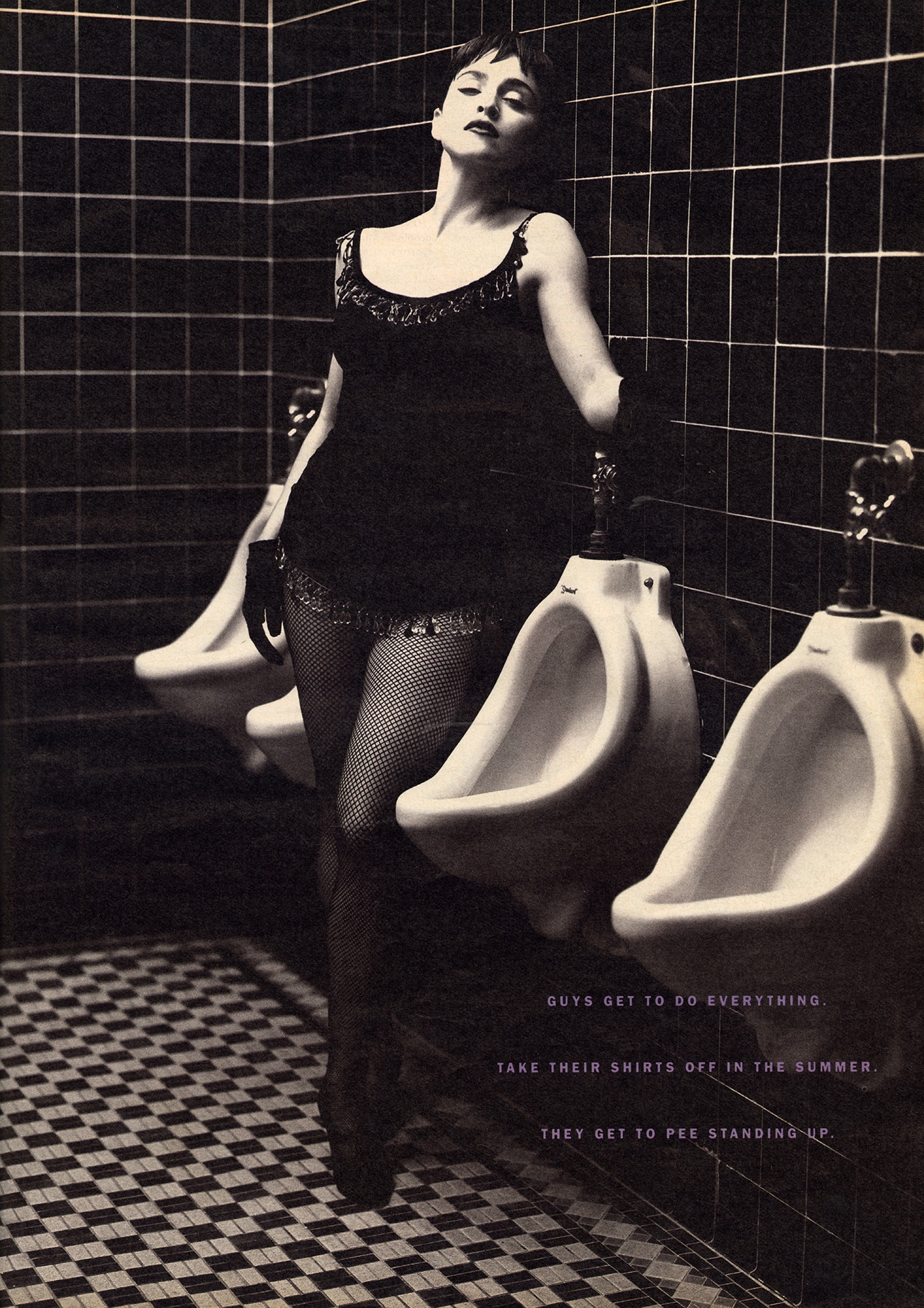
MADONNA: You know how religion is. Guys get to do everything. They get to be altar boys. They get to stay out late. Take their shirts off in the summer. They get to pee standing up. They get to fuck a lot of girls and not worry about getting pregnant. Although that doesn’t have anything to do with being religious.
O’BRIEN: Did you ever go through an atheist period?
MADONNA: No.
O’BRIEN: You just went from Catholic to pagan.
MADONNA: Do you think I’m a pagan? That means I worship false gods.
O’BRIEN: What gods are false?
MADONNA: That’s the definition of a pagan.
O’BRIEN: That’s the Catholic definition of a pagan. I mean, I believe in the main god, the big one, and I believe in Jesus, but I believe in all the other ones too.
MADONNA: I guess I am a pagan in the eyes of Catholicism.
O’BRIEN: Do people ever ask you out on dates?
MADONNA: All the time. You bet!
O’BRIEN: Besides prisoners from jail. Do you like it?
MADONNA: Sure. It’s flattering.
O’BRIEN: What’s a good pickup line?
MADONNA: “Haven’t I seen you somewhere before?”
O’BRIEN: Does that work?
MADONNA: It depends on what they look like. But I really don’t remember anyone giving me a pickup line. Usually only jerks have pickup lines.
O’BRIEN: In your Vanity Fair article you called Oliver Stone and Andrew Lloyd Webber “fabulous misogynists.” What’s a fabulous misogynist?
MADONNA: I just like putting a nice word with a bad word. It means they’re grand in their misogyny. It’s like calling someone a charming creep.
O’BRIEN: Are there a lot of misogynists in—
MADONNA: In Hollywood? They’re everywhere, babe.
O’BRIEN: Is it as bad as it ever was? No improvement?
MADONNA: It doesn’t seem like it. It seems racism is as bad as it ever was, misogyny is as bad as it ever was, homophobia is as bad as it ever was. You know.
O’BRIEN: You’ve been in business ten years. I’ve been in business twenty years. I think some things have gotten better.
MADONNA: You have a different perspective than I have. You’re older. Like about a couple hundred years.
O’BRIEN: Yeah? I’m not as old as your boyfriend.
MADONNA: No comment.