
ON THE RISE
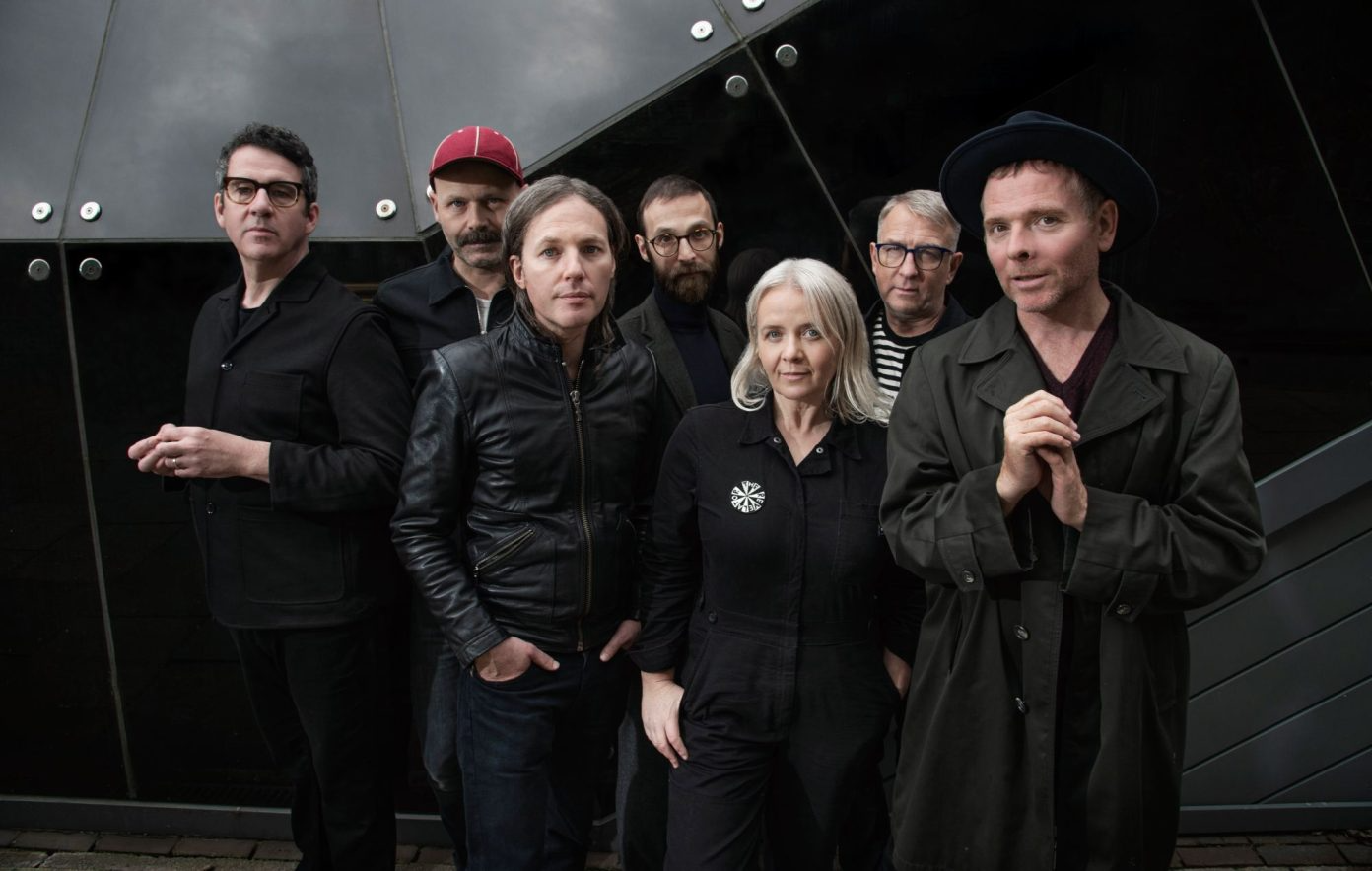
As Belle & Sebastian share their buoyant 2026 Scotland World Cup anthem ‘It Only Takes One Lion’, frontman Stuart Murdoch has spoken to NME about capturing the feeling back home and his hopes for the team since childhood.
Released today (Tuesday June 2), the Scottish indie heroes’ bid for their nation’s tournament anthem was written after the team’s surprise 4-2 qualifying win against Denmark.
“I felt like we were watching history in the moment, like the hand of God from the old National Lottery adverts was pointing at us,” Murdoch told NME about that game-changing victory. “It was meant to be. Scotland aren’t a terrific team and Denmark are better, but it just felt that day that Scotland were destined to win. Three out of the four goals were things of beauty.”
Produced by and co-written with Pete Ferguson and premiered at the band’s recent London Royal Albert Hall show as part of the anniversary tour for their classic first two albums ‘Tigermilk’ and ‘If You’re Feeling Sinister’, the soaring song is intrinsically Belle & Sebastian as it morphs from a hymn to a an orchestral disco jam as Murdoch sings of a nation’s hopes and his own boyhood dreams.
NME spoke to Murdoch from the band’s North American tour, where we found him in a graveyard in Texas. “I was just looking for a park because Austin is a pretty scary place downtown now, so I’ve ended up in the Texas Cemetery,” he shared via Zoom.
Was there anyone famous buried there?
“I was looking around and I found the founder of Austin City Limits, which is pretty cool as that’s where we’re playing tonight. I’m looking at one now and it just says, ‘Martin: he loved the law’. Then underneath it says, ‘Billie Louise: she loved the lawyer’.”
We joke that there’s the opening to a Belle & Sebastian song if there ever there was one. “It’s great! It’s given me inspiration.”
For now, read the rest of interview with Murdoch below as he tells us about Scotland’s chances, 30 years of hurt, if fans will be singing it at the top of their lungs in Canada, the US and Mexico this summer, and what’s next for the band.
NME: Hello Stuart. Here we are with ‘It Only Takes One Lion’ Who needs three?
Stuart Murdoch: “Who needs three? Good question. I wouldn’t know!”
What’s the mood been like in Scotland since you qualified?
“It’s funny. I’ve noticed this everywhere: with the World Cup there’s a mixture of cynicism and anticipation. When the actual tournament starts, everyone will get excited about it. Because of FIFA, the peace prize, the ticket prices, people seem quite down about it. I found that in Mexico. They were quite fed up with the general hype about it. I’m in the States just now and you shouldn’t believe all the hype: people are people. The States are just as ‘great’ as ever. We love coming here, we love the cities. The general sense of North American optimism will make for a good tournament.”
“With Scotland though, people will definitely be excited about it. You have to understand, it’s been 30 years since Scotland qualified so I think everybody and their dog has written a song for the team.”

How do you meet the challenge of penning a World Cup anthem, when there have been so many legendary bangers and absolutely shite duds?
“I never planned it. I woke up with a tune in my head and a feeling. That’s the way it should always be for songs. I couldn’t control myself and it was quite straight-forward. I wrote this initial bit about how I felt about the current World Cup team and the qualifying game. It was more introspective.
“When it starts off with, ‘The days are dark and long…’, it’s just my general feeling about football. I’ve been going to see my own team quite a lot recently. It’s my little anthem for how I feel about football and following Scotland for the last 50 years, just the ups and downs. It’s quite a heartfelt thing. When I was eight or nine, the Scottish team meant so much to me, it the thing I was most invested in. There’s a line in there about how I used to memorise the whole squad before ‘78 and 82.”
Tell us about lyric: “This is Scotland, where everyone knows you start with nothing… where you can join an army for peace”…
“My wife made the video for it and she said, ‘I’m not sure I like that line about everyone starting with nothing’. Our first game is against Haiti and they really have nothing. Their country is pretty poor and they’re going through hard times. It was almost a throwaway line and I’m not sure what I meant by it, but in a footballing sense every game starts with nothing. Even if it’s against Brazil, you’ve always got a chance!
“The army refers to The Tartan Army, which has really been quite a remarkable institution for the past 30 years. We changed from drunken buffoons that used to wreck things to this excellent supporting brigade.”

It’s not your standard football sing-along. Can you see it being sung in the terraces?
“I’m not sure, I didn’t cynically design it for that. Many people have said to me in the past, ‘None of your songs have a chorus, you need to write one’. ‘This is Scotland’ is a chorus! They things need to happen organically. I’m sure the fans will still be singing ‘Yes sir, I can boogie’ for years to come.”
What do you actually think of Scotland’s chances right now?
“With the last Euros, they maybe got stage fright or didn’t have that tournament experience. I think Andy Robertson [captain] will be telling them, ‘We really need to produce our best stuff’. If they do and we see them actually playing football, then I don’t really care about the results that much. I just want to see Scotland exceeding our expectations of them. That Denmark game was so crazy that everything after just feels like a bonus.”
If miracles do happen and Scotland make it to the final, how will you celebrate? A free gig in Glasgow?
“Of course, yes! Free everything. If we even got close, I think the whole country would shut down for a year and the GDP would drop. We’d go into a massive recession but no one would care.
“We were playing a gig in Mexico City and I told the crowd, ‘It’s you and us, Mexico and Scotland in the final’. Mexico have never really got close either. I told them it would be five goals a piece, even after everyone takes a penalty and we have to share the trophy. I would settle for that.”

You released two albums in quick succession with 2022’s ‘A Bit of Previous’, 2023’s ‘Late Developers’ and then your debut novel Nobody’s Empire in 2024. You’ve been busy! Is there any progress on new material?
“We went through a period where we recorded a lot and we said, ‘Let’s not record for a while and give ourselves a couple of cycles off’. We’re doing these 30th anniversary shows so we’re just going to lean on the back catalogue and cruise for a while. We’re doing a year on and a year off so everyone can focus on different things.
We’re not looking at new Belles stuff for a while. I’m meant to be developing Nobody’s Empire into a film, so that’s my next task. It’s a long way off from being made but I’m going to write the script for that.”
Scotland’s first World Cup tournament match is against Haiti on Sunday June 14, before they go on to play Morocco on Friday June 19 and Brazil on Wednesday June 24.
The band’s ‘Tigermilk’ and ‘If You’re Feeling Sinister’ anniversary tour continues throughout the summer, performing the iconic albums in full during across the UK, Europe, North America, Mexico, Australia, Singapore and Japan. Visit here for tickets and more information.
ON THE RISE
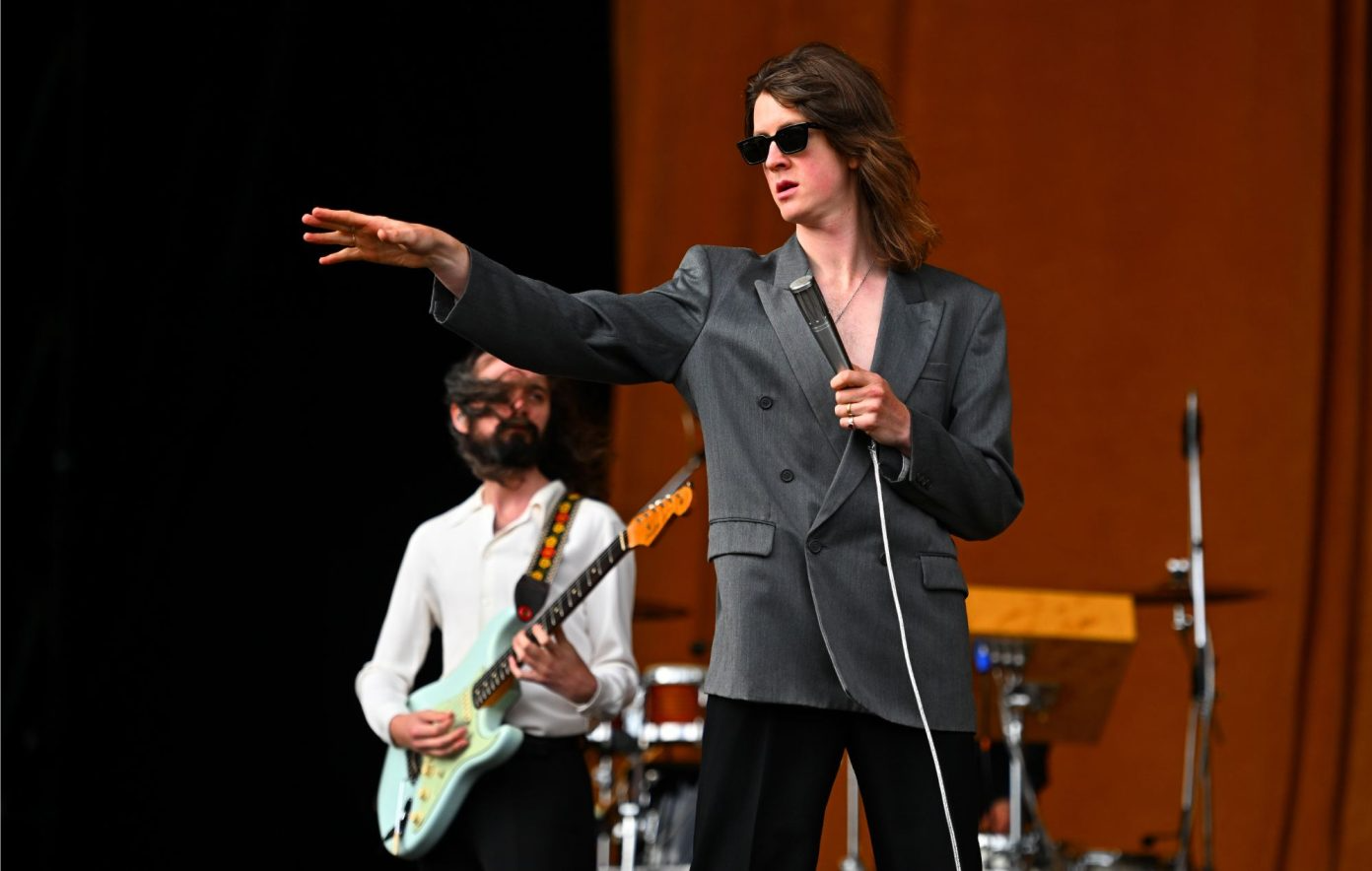
Blossoms caught up with NME to discuss competing with The Beatles and Johnny Marr for this week’s Number One album. With ‘Songs From The Wedding Cake’ in the running, the band also explained why making things themselves remains such an important part of their work as AI becomes more common.
The Stockport group put out their sixth album last Friday, October 2. By the midweek update, it was sitting at Number Two, between The Beatles’ expanded edition of ‘Rubber Soul’ and Johnny Marr’s latest solo album, ‘The Age Of Everything’.
“It’s mad, to be honest,” singer Tom Ogden said to NME about the chart race. “Liverpool on one side, Manchester on the other and Stockport in the middle. If you’d told us this 10 years ago, when we were releasing our debut, I wouldn’t have believed you. But I mean, we’re in good company aren’t we?”
Discussing the stories behind the album, Ogden described ‘Songs From The Wedding Cake’ as “about being married and all the everyday stuff that comes with it”. He married Katie Donovan, the sister of Blossoms drummer Joe, in 2021. Married life has since given him a new appreciation for what he describes as “the extraordinary ordinary”.
“Saying the wrong thing in an argument, losing your wife’s no claims bonus, crying at the Kardashians, it’s all in there,” he explained. “The album is named after Stockport Town Hall, which everyone round where we live calls the Wedding Cake, and it’s where I got married, so it couldn’t be much closer to home.
“The last album [‘Gary’, 2024] had a song about a stolen fibreglass gorilla, which everyone loved, and that gave us the confidence to bring the same playfulness to this one, just with more personal subject matter this time.”
Alongside tracks that came out of writing sessions with Declan McKenna in a hot tub, the album reflects the band’s desire to stay involved in every part of the creative process.
“It started with the recording,” Ogden explained. “We made the album with Shawn Lee, playing live straight to tape, and once you’ve done it that way you can’t really go and fake everything else. We sat down as a band and picked the colour palette, and everything visual followed from that. We had body scans taken of ourselves and cake toppers of the five of us 3D printed, put them on a real cake and photographed it. I’ve directed and edited the videos, and the sets are all built by hand, no green screen. For the pop-up shop on launch weekend, a local artist hand-painted the album cover for the sign outside.
“It’s more work, but you end up with a world that’s yours, and I think people can tell when a band’s had its hands on everything.”
With AI tools and digital effects becoming increasingly widespread, that approach feels particularly relevant. For Blossoms, though, the motivation is simple: “the fun is in the making”.
“Tape doesn’t let you cheat and neither does a real cake,” Ogden said. “If a set’s a bit wonky, it’s because one of us or our mates built it. I think the more stuff gets generated, the more people want to know a human being actually did it. We’ve been in this band together for over 10 years, five lads from Stockport, and that isn’t something you can ‘prompt’.”
Maya Jama also appeared in the video for the album’s first single, ‘Meet Me In Love’. Her appearance came shortly before the UK launch of Celebrity Traitors, where she took on the role of a traitor alongside a cast that included Richard E Grant and James Acaster.
“She was brilliant,” Ogden recalled of working with Jama. “We’d met her at the MTV EMAs in Manchester a couple of years ago, so we took a chance and sent her a DM …and she said yes. Next thing she’s in a theatre in Cheadle miming my vocals while a load of people dressed as me serenade her. She got the idea straight away and was a proper laugh about it.”
The conversation then turned to whether he thought Jama could take home the win on Celebrity Traitors.
Ogden joked: “As for Traitors, she spent a whole day pretending to sing my song and I almost believed her, so I’d say she’s got every chance.”
Fans can listen to ‘Songs From The Wedding Cake’ now. In November, Blossoms head out on a UK arena tour with The Royston Club. Tickets and further details are available here.
Before the tour begins, the group is also scheduled to appear on SNL UK on Saturday, October 24.