

ON THE RISE
.png)
Lettie Law is a vessel for God’s message and she spreads it through her music. She gives Him all the credit for the songs she releases, which she says come to her from Him directly. Her latest single, “Forward Ever Backward Never Jesus” is one that celebrates the ever lasting power she believes He has.
When I spoke to Lettie, I could feel how strong and at peace she was just from our conversation. She shared a variety of stories of her life with me and God was the constant throughout all of them. She has a writing process for her songs but as earlier mentioned, she always credits Him with giving them to her.
“I write songs as they come to me from the Divine. Something is whispering to me to tell me what to write, how to sing it and what instruments go with it. Sometimes I’ll get partial parts of a song gradually but for this song, everything came together at the same time. It all comes from Heaven and I give out what I receive from the Almighty.” she said.
Sharing God’s message is a part of every song Lettie releases but this one was specifically crafted to encourage people who are dealing with everything happening in the world today. Lettie sees all the turmoil people are going through in the world and wants people to know that they will make it through any situation they find themselves in.
“No matter what is going on in life at this current time, you can look to God. If yesterday was not good for you, you don’t need to look back. Look to God and there is no way He will not deliver you. Keep moving forward and doing your best and look to God.” she said.
Lettie believes that music and singing can bring people joy, hope, courage and also healing. The latter can come in the emotional sense but also the physical sense too. During our conversation, she shared a story about how one of her other songs, titled “Yaweh” had a large impact on someone’s life.
“My favorite thing about music is how it can be healing. Not all diseases are physical. A woman called me had shared how she had been dealing with insomnia for eight years and had taken all kinds of medication for it. But once she started listening to my song, she would sleep like a baby.” she said.
Lettie Law knows about the power of God and music from firsthand experience. She shared that while she enjoyed singing in front of the congregation at church as a child, this changed as she began to get older. She became more shy and reserved not just in church but in life and in general.
Her shyness and reluctance to sing became the catapult that would push her to sing as God wanted her to after she went through a life altering situation.
“I ended up getting sick and my son suggested I record one of the songs I had written in the books I had from years ago. But once I started recording more, the sickness left my body. But recording and singing in public are very different. So it became a tug of war between me and the Lord because He wanted me to sing publicly but I didn’t want to.” she said.
“A different situation happened and I ended up in a coma and I could hear various voices around me as I faded in and out. I thought I was dying but I woke up on this side and realized I was still alive. The Lord asked me ‘Are you ready to do My work now?’ And I said ‘Of course! I’ll sing in front of the congregation. I will tell my story to the world. Wherever you send me, I am going.’ And when I woke up, all my family members who I had heard while I was fading in and out apologized because I heard them planning for my funeral and things like that. So the Lord spared my life and I’m not shy anymore. The Lord gave me strength and I chose life.” she said.
As Lettie said, she truly did go wherever God sent her. She’s since sung at Boston College, in Connecticut, at churches and even a club.
“University students love Christ. They were singing and dancing and they wanted me to come back. In the club, people were drinking and smoking and couples were dancing and it was nice because everybody belongs to the Almighty. God sees a sinner and knows one day they will become one of His children.” she said.
Lettie Law is West African with her father being from Nigeria and her mother being from Cameroon. The range of the diaspora is felt throughout “Forward Ever Backward Never Jesus” whose production is far from traditional Gospel instrumentation and blends a variety of musical styles. The positive and uplifting atmosphere is felt through both the instruments and the lyrics.
For many Gospel artists, their foundation was laid by someone older than them that raised them in church and likely also had them singing in church as child. For Lettie, this person was her father.
“He played a very big role in introducing me to Gospel and the Almighty. He introduced me to reading the Bible and he and my Mom introduced me to reading hymns.” she said.
Lettie Law has a 10 track album coming soon which will include songs like “Prayer is a Masterkey” and “God is Our All in All.” Her journey with Gospel has encapsulated her whole life and her ongoing faith continues to motivate her to keep making more music.
“I am just a vessel for His word and His message.” she said.
“Forward Ever Backward Never Jesus” is available on streaming services now.
You can experience more of God’s messages through Lettie Law by following her on these platforms.
ON THE RISE
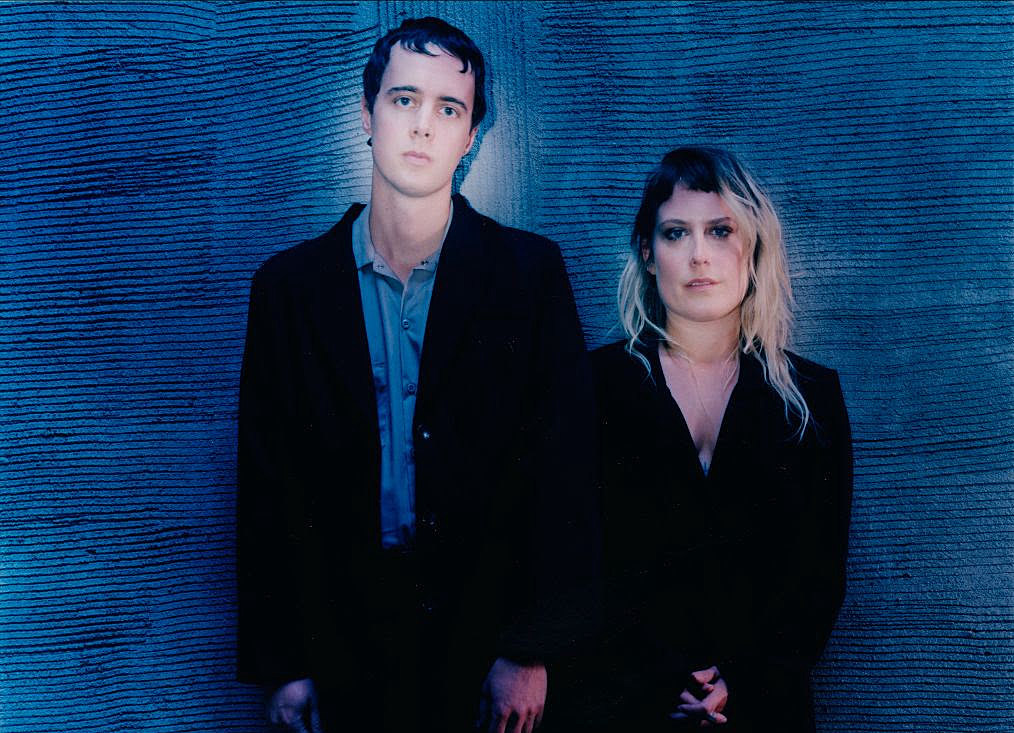
Bats tucked inside jackets, cats secretly brought into gigs in tote bags, and unexpected run ins with bikers hoping to take them away for a night out. It is safe to say that Boy Harsher have experienced their fair share of bizarre moments while touring. For Jae Matthews and Augustus Muller, though, these unusual encounters have become part of the job. The darkwave duo have spent years crafting haunting music driven by heavy synths, building a loyal community of equally unconventional fans along the way. This autumn, they returned with GET MEAN, their latest album, which has excited longtime listeners and attracted a whole new wave of fans. The release also marks their first major album tour since ending their relationship in 2024. Interestingly, their separation appears to have brought their musical partnership closer together, although learning to share the stage again was not always easy. “That was really a learn by fire situation,” Matthews says, remembering their first performances following the breakup. “I cried every day. But now we really have a system figured out.” Speaking from Eugene, Oregon, the two musicians discussed the challenges of touring after a breakup, emotional moments behind the scenes, and their late night McDonalds runs.
EMILY SANDSTROM: How has the response to the new album been?
JAE MATTHEWS: I think good. Gus is doing the thing where he is not in view, so he is just making funny faces at me. How has the response been, Gus?
GUS MULLER: I’m really trying not to read the comments, but it’s been fun to play live.
SANDSTROM: Do you get a lot of hate comments?
MULLER: Not reading the comments, so I wouldn’t know if they’re happy or sad.
MATTHEWS: I mean, people really love to scrutinize women in particular. So I’ve received a lot of interesting noise, but no one says jack shit about what Gus looks like. Gus said he couldn’t take it if they did.

SANDSTROM: That’s funny. But yeah, that’s a real thing.
MATTHEWS: Yeah. But generally, Gus is correct. I don’t want to read much about the album, but we’ve been playing these shows that have been nuts and people are singing along to the new material. And then, because the vibe has been so pleasant, sometimes I’ll go out and say hi to a couple people. I’m like, “Yeah, fuck it. I want to go out and say hi and take a couple selfies or whatever.”
SANDSTROM: Has that come back to bite you at all? Has anything weird happened or has anyone been kind of crazy?
MATTHEWS: I think the craziness is the fact that we have developed systems that generate complete neurosocial relationships and a lot of fandom now is circled around knowing the star intimately. So I think people meet me and they think they know me. They think they understand who I am, and that feels strange. I’m like, “I love that you love my music and I love that you support me, but I also need this boundary because you don’t know who I am.” I don’t have a stalker, which I am thankful for. But I sometimes definitely go wacky bananas. I almost got on a motorcycle in Macedonia because a fan was like, “You ever been on a crotch rocket? Let’s go.”
SANDSTROM: Wait, you should have gone.
MATTHEWS: My tour manager was like, “Jae, if you get on that bike, we won’t be able to trace you. You won’t have data. You potentially will be kidnapped.” I should have gone on the bike though.
SANDSTROM: Another bike will appear. What’s been your favorite stop thus far and least favorite stop, and why?

MATTHEWS: I think that we’re going to probably be sweet about our least favorite, because a musician once was asked, “Who do you think is the most overrated band right now?” And they said us, and it really fucking hurt my feelings. So now, I’ll never answer a question like that. But honestly, Denver and Detroit rocked it so insanely hard in ways that I was on stage taken aback. Denver is nuts too because it sold out really quickly, and people were in their element. There’s a lot of discourse on cell phone usage at shows, and I will say that if you have your phone down and you’re just dancing, I know that you’re embodying my music and that is the coolest thing to witness.
SANDSTROM: Do you feel like the crowd has changed a lot on this record? What does the average Boy Harsher fan look like now?
MATTHEWS: I think that crowds in general have changed a lot, period, not just for Boy Harsher. We’ve been very, very thankful to have a strong gothic community because they’re always fun and they look good. I wonder sometimes if there are more people who are accessing our music and being like, “Who are they?” But I’m never going to be mean or rude about that. The dream is to have everyone who wants to hear it and enjoys hearing it have access to my songs. I actually don’t think I’ve noticed, in terms of the crowd, different types of people, but I’m going to think about that right now.
SANDSTROM: What’s the weirdest thing you’ve seen someone bring into a show?
MATTHEWS: This one’s kind of easy for me because it’s also one of my favorite shows ever. We played Kyiv several years ago at this amazing club. I was outside before or after our set and there was this strange Ukrainian gothic person sitting there. They’re like, “Oh, they won’t let me come into your show because I brought my pet.” And I was like, “What? You brought your pet?” And they opened their jacket and they had a little bat.
SANDSTROM: Oh, no. I hate that so much.

MATTHEWS: Honestly, it was so cute though. I mean, I was worried. I was like, “Your bat definitely doesn’t want to go into a loud music show. They use sonar.” That would be awful.
SANDSTROM: I didn’t even know you could carry bats around like that. I thought they had more agency.
MATTHEWS: Maybe this bat was really needy and attached to them and it was a parental thing. It has come to a Boy Harsher show. Do you have any?
MULLER: Yeah, we did a record signing the other day and someone took their cat out of their tote bag to say hi.
SANDSTROM: Oh, no. Was it on a leash?
MULLER: It was just chilling. It was very polite.
MATTHEWS: It was on a figurative and a physical leash, for sure.

SANDSTROM: Wow, interesting. Do you guys have rituals before you play shows?
MULLER: I don’t, but I’m trying to. I’m playing guitar on this tour. I’ve been trying to warm up on guitar. Jae is just belting in the green room.
MATTHEWS: Yeah. I shut down the green room one hour before stage time where I’m allowed to be alone. I’m very, very social and people want to come into the green room to be like, “What’s up?,” and I can’t say no. I want to see them too. So I have to lock the door, have my TM be like, “Shh.” That hour is my hour to have my anxiety. I do my vocal warmups. I do my makeup most of the time. I’ll finally put the clothes on that I have to wear on stage. I obsessively read my lyrics because my number one nightmare is forgetting lyrics. Sometimes it helps, but a lot of times it just makes me more nervous.
SANDSTROM: Has anything gone wrong on stage yet or has there been a big mix-up?
MATTHEWS: On this tour, it’s been very good, hyper-professional. It’s almost as if we’ve been doing it now for over 10 years and we’re finally starting to figure it out.
SANDSTROM: What’s the worst thing that’s happened at a show?

MATTHEWS: This is my classic story. I fucked up big time at this huge gothic festival in Leipzig called Wave-Gotik-Treffen. Every single goth in Germany has their journey to Leipzig to go to the show, and it’s the first time we ever played in Germany. It felt like the pressure was really high. We roll up late because we’re coming from Berlin. I don’t eat. I just start drinking gin or something crazy, so I’m drunk, mistake number one. I walk onto stage. I don’t do my monitor mix because the sound engineer was like, “People will think it’s starting.” So I’m walking into a foreign monitor mix, and our set begins, and I am almost immediately totally lost. I rely on being able to hear the track in order to know where I sing. We were trying out a new song, a song that eventually was called “L.A.,” and I just messed it up completely. Then I started crying in front of everyone and I ran off stage. And I remember opening the curtains being like, “I got to get out of here.” My manager runs back and he’s like, “Please, please just go on stage, do ‘Pain.’ That is why they came here. Do ‘Pain’ and then you’ll be done.” I did “Pain,” but I was definitely blubbering a little bit. I swear to fucking god, I still run into Germans who are like, “I was there. I saw you cry on stage.”
SANDSTROM: Wow. I think that’s cool. It’s a theatrical and true expression.
MATTHEWS: I learned a lesson that day. I will never ever let that happen again.
MULLER: What, drink on an empty stomach?
MATTHEWS: Messing up the song is really what I mean. But yeah, I also don’t drink gin anymore, and I try not to have an empty stomach because that is pretty disastrous.
SANDSTROM: I imagine being on tour for that long takes a crazy toll on your body and mind.

MATTHEWS: It does. I feel like this tour, even though it is super professional and we have some more creature comforts, I’m feeling the weight of being on the road constantly and not sleeping well. I feel my age in a way that I think the tour has exaggerated the experience.
SANDSTROM: How do you guys get downtime? I know you have your ritual before, but any other indulgences?
MATTHEWS: I’ve been walking. We are in a city, so when I have some time, I try to walk somewhere. This is so sad to say, but I’ve been eating alone. That helps. Privacy is really, really hard to come by. I have found that if I go to a restaurant with my little book and eat some really overpriced sushi, I can have my Jae time. I tried to maintain some pilates, but it’s tough because you go to classes in random fucking cities and it’s so different. I was in a pilates class full of 22-year-old Mormon ballerinas and I was about to die, so that one’s a little more difficult.
SANDSTROM: That is very funny. I went on a work trip to Arkansas one time, and I was doing pilates with a bunch of Arkansas housewives who wore bright orange. It is different city to city.
MATTHEWS: I feel like you get used to your teacher too, and then having to figure out this one night stand with a different teacher—I don’t love that. I have really tight hamstrings and I just need my girl because she gets that.
SANDSTROM: I always want to know what people eat on tour because some people eat crazy.
MULLER: I’ve been eating pretty bad. And Jae, you’re not helping. You went to McDonald’s at midnight and got everybody chicken nuggets.

MATTHEWS: I really like chicken nuggets. Chicken’s something new in my life. I was a vegetarian for most of my childhood, and so I’ve just introduced chicken and wow. McDonald’s chicken nuggets? Chef’s kiss.
SANDSTROM: I don’t know if I’m the first person to ask you this, but how’s touring post-breakup?
MATTHEWS: It was really, really hard at first. Our first tour after the breakup was technically Coachella in 2024. That was really a learn by fire situation. I was a mess. I cried every day. It was tough. I think now we have really figured out a system. Gus and I care about one another and we respect each other, so I think we prioritize trying to maintain a professional relationship that serves Boy Harsher. I always answer this and I feel like I never hear Gus’s response.
MULLER: Well, I mean, you’re having fun. Jae’s having fun. Everyone’s having fun.
MATTHEWS: Oh my god.
MULLER: I think Jae’s having a lot of fun this trip. No?
MATTHEWS: Why don’t you talk about the breakup? Don’t talk about me.

MULLER: I guess having something to do just kind of normalized it. Yeah, we went on this crazy Coachella tour, and I mean, your mom had just died.
MATTHEWS: It was the one year anniversary of her death, the first Coachella night. So that is also why I cried. My life changed drastically in a very small span of time, and I had to learn how to adjust.
SANDSTROM: Yeah, that makes sense. Thank you for answering that. I don’t know if it was rude, but—
MATTHEWS: No, I mean, so much of the album is about heartbreak.
MULLER: And we’re on the album cover.
MATTHEWS: Yeah, exactly. This is the first time that Gus and I allowed our physical form to be so forefront. We’ve never really been in music videos or album artwork because I think we want to demonstrate this level of resilience. We really want to present Boy Harsher as this thing that could have easily just evaporated because we were going through so much, but we didn’t want that to happen.

SANDSTROM: When you guys are on tour, do you find time to write together or think about future stuff?
MATTHEWS: I can’t write. Oh, wait, Gus doesn’t agree.
MULLER: Well, it depends. I think we’ve gotten better at it. I think we got better at laptop art. We went on a tour last summer. We went to Tasmania. We were working in the studio on our days off.
MATTHEWS: We were invited to Dark Mofo. The thing about Tasmania is, when you go over there, you have to be there for a couple days to acclimate. And we worked in the most beautiful studio on the best FKA twigs remix ever that never saw the light of day.
SANDSTROM: Oh, you got to put that out. That sounds good.
MATTHEWS: We’ve got to leak it. But if we have days off, then studio days are really fun because you’re already exercising those muscles while performing every night, and then you just get really inspired by literally watching people respond to the elements of your music.
SANDSTROM: Final question: what’s your favorite song to play live and your least favorite song to play live, and why?

MULLER: Favorite song has been “Break Me” off the new record. My least favorite song to play is “Motion.”
MATTHEWS: “Motion” is a fan favorite song, and we’ve never played it live. It’s on Country Girl, so that’s a 2017 or ’18 release. Gus is a total grump when we play it. I think my favorite song, which was surprising, is a song on the new album called “Coming Home.” The first night we did that in Hudson, New York, I cried while I was singing it, but not out of delirium or anything. I suddenly had this surge of like, “Wow, I did it. We did it.” It’s a really fun song to play live because I sing about how I am suicidal, I was about to kill myself, and then it has such a ramp up that I think you can feel the joy. It’s very anthemic. My least favorite—that is tough. New songs are hard for me because I’m like, “Am I going to fuck this up?” We tried to do “Falling” the other night and I’m like, “Oh my god, don’t forget.” I’m just crazy anxious. Sometimes “Pain” is really hard for me to play live.
SANDSTROM: Yeah.
MATTHEWS: But sometimes it’s the best song ever. It drops, people are screaming like we’re the fucking Beatles, and then “Pain” starts and I just have this weird sense, like I’m just so sad or flat while people are still in it. This is going to be a weird comparison, but it’s almost like having sex with someone you don’t know.
SANDSTROM: I think I understand what you mean.
MATTHEWS: There is something enjoyable about it, but you’re missing that intimacy. And not everyone does this, but I certainly have sex for intimacy.
SANDSTROM: Right. So it’s almost like discovery, that song?
MATTHEWS: Or it’s like a dissociation or something. When I don’t feel the vibe, it’s probably because it’s a little bit of a dissociative experience, and maybe that’s what I’m reacting to.
.png)