LIVE REVIEWS

“You know, Ronnie Hawkins used to say, ‘If this show business thing doesn’t work out, by the time I’m 80, I’m gonna look for another line of work’,” said T Bone Burnett, getting chatty with an audience in the back room at McCabe’s Guitar Shop in Santa Monica, where he was doing a multi-night stand. Burnett seemed happy to have a legendary rock figure to quote with as sardonic a sense of humor as his own.
“And I was thinking about that,” he continued, “because it might not work out for me. I’m getting close to 80 [he’s actually 78], and I thought, ‘You know what I’d be great at, is being an influencer.’ Don’t you think? Like, I’m gonna influence the fuck out of you tonight,” he promised.
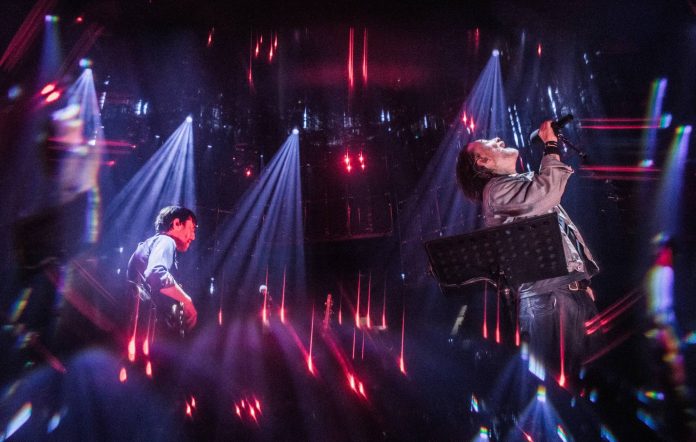
The crowd at McCabe’s could consider itself properly influenced. Not that they had the ability to make anything Burnett was saying or singing go viral, with cell phone usage banished for each of the six shows he did across three successive nights in the intimate 150-folding-chair room. For his first tour in 19 years, Burnett is picking places to play that count as proper listening rooms, even if the size of the venues doesn’t provide the supply to meet the demand that has built up to see the singer/songwriter/producer after nearly two decades spent eschewing the headliner spotlight.
He had other reasons than size — or the sheer lack of it — to pick the venerable McCabe’s as the place to make his L.A. return. It was old-home week for Burnett and some of us who used to see him play there in the early and mid-‘80s, before he all but gave up making his own albums or indulging in his own concert dates to become the very model of a modern major record producer. “I love this old honky-tonk right here,” Burnett remarked during Thursday night’s late show, becoming possibly the first performer ever to slap that particular appelation on this hushed, alcohol-free room. “We used to have a lot of fun here back in the good old days.”
That’s true, but take it from someone who was there for a lot of those seminal shows of yore: What he brought to McCabe’s for this you-can-go-home-again exercise was more fun, because he brought a band, with a string of pedigrees trailing behind them. “I have to tell you that this is seriously one of the great string bands you’ll ever hear,” he declared before bringing the players out, one by one; as the kids say, no lie was detected. If some kind of live album doesn’t come out from this assemblage of “cats,” as Burnett would inevitably call his accompanists, it may call for a criminal investigation, so thoroughly did they elevate the selection of older songs they played on, as well as the run-through they did of the recent “Other Side” album they played on for Burnett.
First out to join him was “the best country-blues guitar player, I think, in the world today, without hyperbole — or he’s as good as the best, at the very least,” Colin Linden, whom Burnett noted was playing with Howlin’ Wolf when he was 12. David Mansfield, who soon joined on fiddle and mandolin, can claim nearly the same level of precociousness, as Burnett noted that he first joined forces with him when Mansfield was in Dylan’s Rolling Thunder Revue at 17, exactly 50 years ago. Rounding out the quartet was Dennis Crouch, “the best rockabilly slap-bass player I know, and also a great jazz player,” who Burnett came across playing with the Time Jumpers many years back in Nashville. “Every time I’d bring him in on a record project, Diana Krall would take him on the road for two years and I couldn’t find him,” Burnett said. “Alison (Krauss) and Robert (Plant, whose two duo albums Burnett produced) have taken him out for four years or something — forever. So I decided I was going to have to go on the road so I could play some with him.” Burnett’s association with Crouch goes back 25 years, versus the 33 he’s spent playing with Linden and the 50 with Mansfield.
Together, they’ve helped bring the joy of live performance back into Burnett’s life, or maybe into it for the first time, since he often claims he never really enjoyed being on stage most of the time he was doing it in his past lives. “I don’t want to be followed… I took driving classes to learn how not to be followed,” he quipped to the crowd. And “when I was a kid, I always viewed the audience as a lynch mob. And then, somewhere recently, not too long ago, I realized, oh, they can just be my close friends.” At a place as small as McCabe’s — smaller, even, by far than the El Rey, where Burnett last officially played in 2006 — a statement like that could count as more than just a passing maxim. If a few of the audience members seemed in danger of taking it literally by getting casually chatty with the singer, it was hard to blame them for falling for the illusion that this was a parlor performance that just happened to feature some of the greatest players in the world.
The format was much the same as it has been in the other cities Burnett has been doing these performances on and off since he released “The Other Side” in April 2024. He and his backing trio would perform that album front to back in its entirety, followed by a set of older material after an intermission — or, in this case, the performance continuing without interruption as Burnett announces, “So, we just took a 15-minute intermission.” One casualty of the artist doing two shows a night, which didn’t take place in those other cities, is that the L.A. shows were not three-hour extravaganzas, as in other cities, necessitating to cutting an encore segment of mostly cover songs that amounted to a whole third set everywhere else. That might’ve been disappointing for Angelenos who’d sneaked a peek at setlists from New York’s Town Hall and elsewhere. But on its own terms in these close quarters, two hours felt like just the right number of courses for a full meal. Once you’ve gotten “River of Love,” “Kill Switch” and especially “Shut It Tight” — in which Burnett threatens to bust out of his casket — you’ve had a proper closer.
The moment at which a live album felt like an imperative idea happened when the show’s second act kicked off with “Humans From Earth,” the comically dark anthem about the imperialist instinct that appeared on both Wim Winders’ “Until the End of the World” soundtrack and a ’91 Burnett solo album. The song always felt impossily clever and arch, but here, with these players, it swung, in ways you wouldn’t have felt possible hearing it brood for the last three and a half decades. A choice like the Bobby Neuwirth song “Annabelle Lee” felt closer to Burnett’s recorded version, because the string-band format is something he was employing back when he recorded it for his self-titled Dot album in ’86. But even on the stuff where you could fairly say he got it right the first time, none of these songs has sounded better. With any luck, he’ll further document what this teaming can do together, before he sends Dennis Crouch back out with Diana, or whomever. There are no more shows on the books at this moment, but this is a brilliant alchemy that needs to keep going.
Speaking of interstellar travel, special attention must be paid to the otherworldly sounds that human-from-earth Colin Linden can coax out of a traditional instrument whose sound you’d think would be pretty well-defined. In concert, as on last year’s album, “(I’m Gonna Get Over This) Some Day” was a gentle highlight — maybe one of the best soft-rockabilly songs ever written, since Johnny Cash’s initial heyday, at least. But the studio instrument left you thinking: What the hell is that sound? Because it sounds like Linden is playing some kind of electric sitar, rather than the tremolo guitar you might expect on such a track. As it turns out, it’s a 1930s Dobro that some weathering has made sound like some other exotic instrument that doesn’t exist. But he doesn’t wear that sound out, as curious and pleasing as it is to the ear — when the songs require some Louisiana slide guitar, he can deliver that, too, even as Mansfield makes the band feel much bigger than it is by switching between fiddle and mandolin. And Burnett’s rhythm acoustic, of course, is the mysterious, subtle force that has powered dozens of records, not just his, without drawing the slightest bit of attention to itself.

Burnett is singing in a different voice on the “Other Side” material than he has in the past. That applies literally, but it’s also true in spirit, as the artist has talked quite a bit about how he wanted this current batch of material to take on a different tenor than his preoccupations of the last few decades — more hopeful and open-hearted in whole than the darker leanings he described as “dystopian.” But, in true rauconteur fashion, Burnett opened the show by speaking to the audience for a good 10 minutes about his nearly lifelong view of government, business and society as nightmarish and authoritarian. If he is truly getting over that, he sure picked a funny time to do it. But in any case, there was some humor to the singer spending so much time talking about how scary the world is just as a preamble to announcing that that’s not what he wants to focus his musical energies on at the moment.
There’s still plenty of darkness in the “Other Side” material, but there’s a real sweetness to it, too, and one that allows him to end the album — and the first half of this touring show — with a song as ingenuously tender and optimistic as “Little Darling.” There’s a lot of loss and searching that almost seems to be taking place in an acoustically inclined underworld, climaxing in a number that feels like Orpheus and Eurydice walking happily ever after into the dawn. If Burnett can feel that good about things right now in these dim times, can we all? For a late-night moment, at least, we felt influenced.
T Bone Burnett setlist, McCabe’s, Santa Monica, May 8, 2025:
He Came Down
Come Back (When You Go Away)
(I’m Gonna Get Over This) Some Day
Waiting for You
The Pain of Love
The Race is Won
Sometimes I Wonder
Hawaiian Blue Song
The First Light of Day
Everything and Nothing
The Town That Time Forgot
Little Darling
Humans From Earth
It’s Not Too Late
Annabelle Lee
The Scarlet Tide
Shut It Tight
River of Love
LIVE REVIEWS
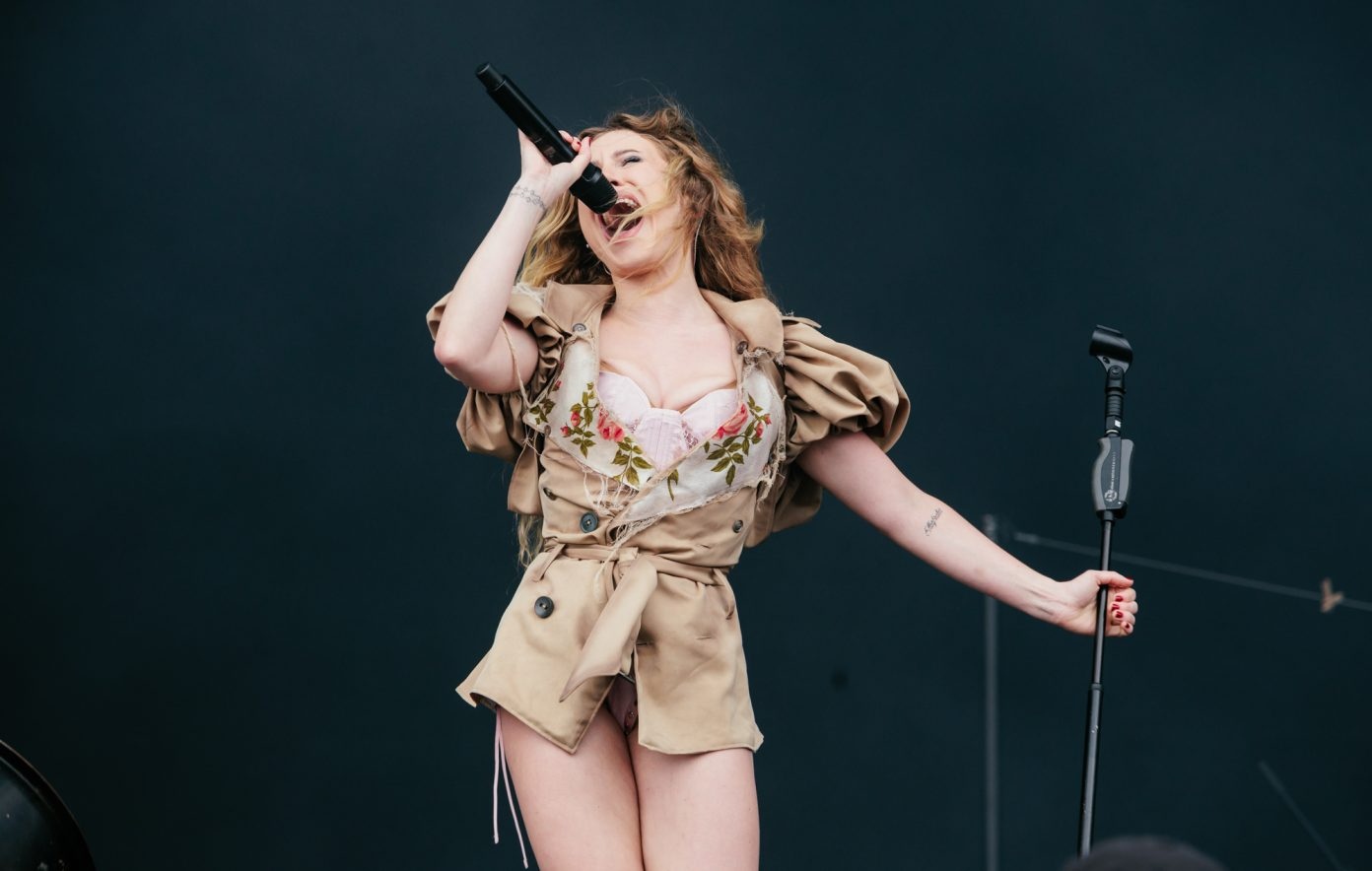
Slayyyter played her take on Turnstile’s ‘Birds’ onstage for the first time in Atlanta. You can watch footage of the performance below.
Slayyyter is currently touring with her ‘Wor$t Girl In The World’ show. She added the cover to her set at The Eastern on Monday night (September 21).
She sang ‘Birds: Slayyyter Version’ near the end of the main set, following ‘Brittany Murphy’. She then came back for an encore featuring ‘Brand New Chanel$’ and ‘Beat Up Chanel$’.
It was her first live performance of the song. She originally recorded it for Turnstile’s ‘Never Enough: Versions’, a collection of reworked tracks released on August 28.
The 22 track release brings together new interpretations of songs from Turnstile’s fourth album. Contributors include Elton John, Hayley Williams, Blood Orange, A. G. Cook, Faye Webster, Four Tet, Oklou, Floating Points, Nourished By Time, Alex G, Julien Baker and Mustafa.
Panda Bear recorded a new take on ‘Magic Man’, while Dying Fetus gave ‘Birds’ another interpretation rooted in death metal.
See Slayyyter perform the track live and listen to her studio recording here:
Slayyyter trades the original song’s hardcore intensity for a bigger electronic sound that feels at home alongside her latest album, ‘Wor$t Girl In America’.
Turnstile first released ‘Birds’ on their 2025 album ‘Never Enough’. The song won Best Metal Performance at the 2026 Grammy Awards, where the album also won Best Rock Album.
In its five star review of ‘Never Enough’, NME pointed to ‘Birds’ and ‘Sole’ as reminders of Turnstile’s hardcore beginnings. It also praised the album for “furthering their unique, pop-facing take on hardcore”.
Slayyyter will join Turnstile on another stage next month. She and Die Spitz are set to support the band at the University of Kansas in Lawrence on October 6 for the ‘Never Enough Tour Pt. 2’.
It has been a big year for Slayyyter. Her third album, ‘Wor$t Girl In America’, came out in March, and NME’s review highlighted its mix of “brash, sleazy pop” and late 2000s indie sleaze sounds.
Last month, she performed Hole’s ‘Violet’ for triple J’s Like A Version. Courtney Love called the cover “a delight” and encouraged Slayyyter to “keep wiping the floors with us”.
A few weeks later, Slayyyter took ‘Wor$t Girl In America’ to Reading Festival. NME’s live review declared that there was “undoubtedly a star before us on stage” and praised her “rasped, rocked-up delivery” and growing confidence as a performer.