
ON THE RISE
2023-Kim-Sayre-Photography(c)2023-Kim-Sayre-Photography-BRND-Norman-Collins-007.jpg)
Norman Collins has put out a new potent rock track titled “I Wanna Rule Somebody,” which has been long in the works and now ready for the masses to hear on the new record Front Porch Philosopher.
“I wrote this song in 1981, believe it or not,” Collins said. “It’s like 40 years old. I’ve been playing it in various bands all this time, and we changed up the chorus a little bit, but I wrote the rhythm all the way back. I hadn’t heard it in any other songs, so I got a verse and some words, and the put bridge together. All my songs basically start with rhythm guitar.”
The LP has 10 tracks that range from straight ahead rock, to melancholic folky ballads, some funk with horns, and even a little bit of calypso style music to show the diversity that Collins beholds.
“There’s a nice mixture of rhythm and a change of pace from song to song,” he said. “If you listen to the song ‘That’s the Way It’s Got to Be’ and ‘I Wanna Rule Somebody’ you’d think it was two different people.”
Collins said the melody always comes first and sometimes it takes a while for the words to get to the end result. He will often spit out nonsense into a tape recorder, or jot it down on paper, without really thinking about the song and where it is heading.
“This one just kind of popped up,” Collins said of the new single. “I had this idea about trying to have power over people. It could be your annoying office worker, or a political dictator. Anyone really. But in a way it was a little bit about Jim Jones and the Peoples Temple. People who just wanted to have power to have people follow them. It just shows how insecure people can be to feel good about themselves.”
“I wanna rule somebody,
I don’t care about who it is”
Collins wants to make it clear that there’s no need to try to be powerful all the time. It’s important to just be happy the way you are, and not force people into your world.
“‘I don’t care who I use, it’s all the same to me’ is one of those powerful lyrics in the song,” he said. “That’s pretty much what these cults turn into. You know, I can choose who I want. I can let you in. You see it all over the world, really. That love of power.”
Collins has been playing music with countless bands, dabbling in all different styles, since he was a teenager. He moved from St. Louis to Nashville to play music when he was 19, and lived there for about three years touring with various top 40 bands. In 1971, Collins went on the road playing guitar with Rock and Roll Hall of Famer Hank Ballard, and wrote a funky track with him called “I’m a Junkie for My Baby’s Love.” At that time, you couldn’t say anything like junkie on the radio, and while Collins thought it would be a big hit, no radio station would play it.
From Nashville, he moved to Warrensville, N.J. to play with several well accomplished saxophone players before moving to Los Angeles. He played with various groups, but mostly worked at a gas station, he admitted. This was 1975, and Collins didn’t think there were enough places to play in the city. He moved up to San Francisco to play country guitar for a band called Hickory Switch and then one called Kingdom Come, and has lived there ever since.
“I was a pawn broker, and a school bus driver at one point,” he said. “All these jobs allowed me to play music during the week and on weekends. I wasn’t constricted by any jobs, but I was always in a band. I’ve been in a band since I was about 17.”
Collins met an arranger in Grass Valley, California named Paul Kraushaar, who can play just about any instrument. The two got to work and put out what Collins feels is an incredible album that was finished up this past May. Kraushaar plays everything except guitar (drums, piano, bass and keys) on the record.
Collins has been with his band, the Tumblers, for about five years, and all the songs on the new LP have been played tried and true for some time now.
While the LP features Collins and Kraushaar, the Tumblers in a live setting includes Ed McClary on drums and Tom McManus on bass. He said all their gigs are a little different, going from background music to a full on concert. Collins prides in the band being super tight and really bringing the songs to life.
“It’s a lot of fun with rhythm” Collins said. “I also have some new songs that I’m working on that I play with the band. It’s a little different and folky. I don’t like having two songs sound alike.”
Be sure to check out the music of Norman Collins, including the new LP Front Porch Philosopher, featuring “I Wanna Rule Somebody.”
ON THE RISE
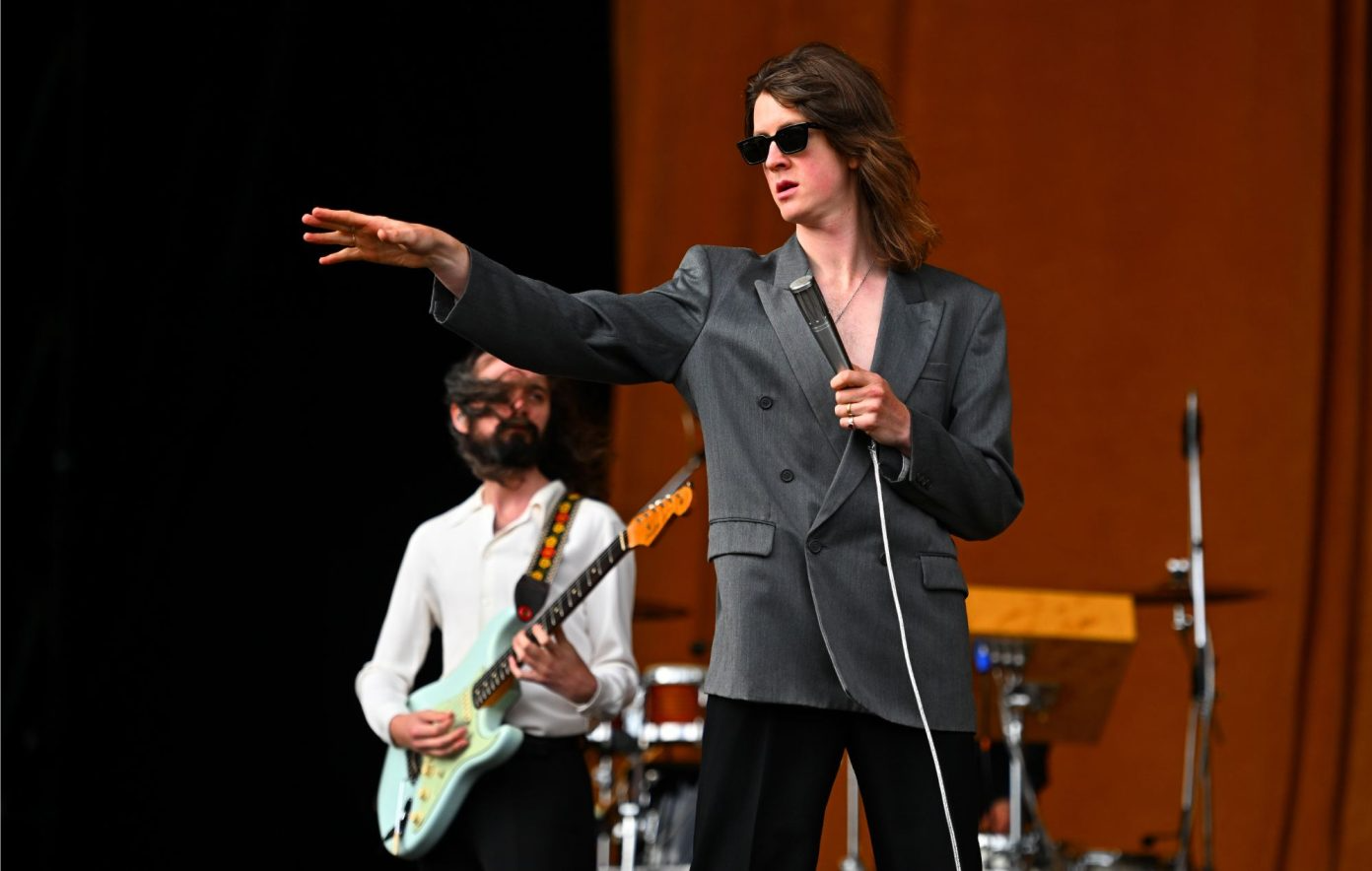
Blossoms caught up with NME to discuss competing with The Beatles and Johnny Marr for this week’s Number One album. With ‘Songs From The Wedding Cake’ in the running, the band also explained why making things themselves remains such an important part of their work as AI becomes more common.
The Stockport group put out their sixth album last Friday, October 2. By the midweek update, it was sitting at Number Two, between The Beatles’ expanded edition of ‘Rubber Soul’ and Johnny Marr’s latest solo album, ‘The Age Of Everything’.
“It’s mad, to be honest,” singer Tom Ogden said to NME about the chart race. “Liverpool on one side, Manchester on the other and Stockport in the middle. If you’d told us this 10 years ago, when we were releasing our debut, I wouldn’t have believed you. But I mean, we’re in good company aren’t we?”
Discussing the stories behind the album, Ogden described ‘Songs From The Wedding Cake’ as “about being married and all the everyday stuff that comes with it”. He married Katie Donovan, the sister of Blossoms drummer Joe, in 2021. Married life has since given him a new appreciation for what he describes as “the extraordinary ordinary”.
“Saying the wrong thing in an argument, losing your wife’s no claims bonus, crying at the Kardashians, it’s all in there,” he explained. “The album is named after Stockport Town Hall, which everyone round where we live calls the Wedding Cake, and it’s where I got married, so it couldn’t be much closer to home.
“The last album [‘Gary’, 2024] had a song about a stolen fibreglass gorilla, which everyone loved, and that gave us the confidence to bring the same playfulness to this one, just with more personal subject matter this time.”
Alongside tracks that came out of writing sessions with Declan McKenna in a hot tub, the album reflects the band’s desire to stay involved in every part of the creative process.
“It started with the recording,” Ogden explained. “We made the album with Shawn Lee, playing live straight to tape, and once you’ve done it that way you can’t really go and fake everything else. We sat down as a band and picked the colour palette, and everything visual followed from that. We had body scans taken of ourselves and cake toppers of the five of us 3D printed, put them on a real cake and photographed it. I’ve directed and edited the videos, and the sets are all built by hand, no green screen. For the pop-up shop on launch weekend, a local artist hand-painted the album cover for the sign outside.
“It’s more work, but you end up with a world that’s yours, and I think people can tell when a band’s had its hands on everything.”
With AI tools and digital effects becoming increasingly widespread, that approach feels particularly relevant. For Blossoms, though, the motivation is simple: “the fun is in the making”.
“Tape doesn’t let you cheat and neither does a real cake,” Ogden said. “If a set’s a bit wonky, it’s because one of us or our mates built it. I think the more stuff gets generated, the more people want to know a human being actually did it. We’ve been in this band together for over 10 years, five lads from Stockport, and that isn’t something you can ‘prompt’.”
Maya Jama also appeared in the video for the album’s first single, ‘Meet Me In Love’. Her appearance came shortly before the UK launch of Celebrity Traitors, where she took on the role of a traitor alongside a cast that included Richard E Grant and James Acaster.
“She was brilliant,” Ogden recalled of working with Jama. “We’d met her at the MTV EMAs in Manchester a couple of years ago, so we took a chance and sent her a DM …and she said yes. Next thing she’s in a theatre in Cheadle miming my vocals while a load of people dressed as me serenade her. She got the idea straight away and was a proper laugh about it.”
The conversation then turned to whether he thought Jama could take home the win on Celebrity Traitors.
Ogden joked: “As for Traitors, she spent a whole day pretending to sing my song and I almost believed her, so I’d say she’s got every chance.”
Fans can listen to ‘Songs From The Wedding Cake’ now. In November, Blossoms head out on a UK arena tour with The Royston Club. Tickets and further details are available here.
Before the tour begins, the group is also scheduled to appear on SNL UK on Saturday, October 24.