LIVE REVIEWS

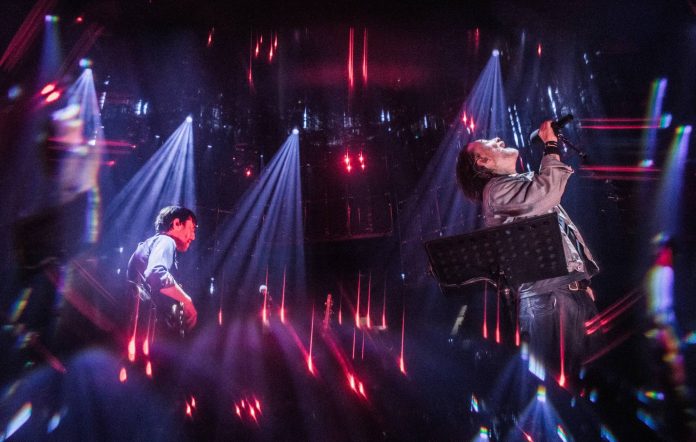
To the left: a tiled hot tub and mini colonnade. To the right: a show-home bar with felt-tip bright cupboard doors. Artificial grass fills the gaps. Welcome to Studio 3 at Olympus TV, home of Jupiter & Juno – reality television for those convinced The Only Way Is Ancient Rome. Or at least it was, until Juno storms off Love Island, leaving Jupiter without a co-star and the show’s producers with plummeting ratings.
That’s just the first few minutes of Rameau’s Platée in Louisa Muller’s new production for Garsington Opera. Rameau’s overture becomes the show’s title sequence (cue lurid graphics featuring posing deities, airbrushed clouds, gold horses). As played by the English Concert under conductor Paul Agnew, it’s a neat fit – Rameau’s fragmentary phrases crisp and taut, every bit the countdown to curtain-up.
In fact Muller’s conceit works like a fever dream through the first half, making near-miraculous sense of Rameau’s 1745 plot-within-a-plot. The raw materials are not for the faint-hearted. At its core, Jupiter is fed up with Juno’s jealousy, so a demi-god cooks up a plan that Jupiter should pretend to fall for the vain marsh-nymph Platée – a figure so obviously unsuitable (not least because she is cast as a high tenor) that Juno will be taught a lesson.

Turning this into a plan devised by a crew clad in athleisure-wear as the latest love-to-loathe-it reality TV gambit makes it much easier to swallow – for a while. Robert Murray and Henry Waddington are a delight to watch as seedy execs, elegantly dispatching Rameau’s ornamentation and finding a natural home for 18th-century French among the coffee cups and beanbags. The chorus is superb – diction chiselled, phrasing in high-definition – and they move with enviable ease. Yes, their lads’-night-out shrieking over a sheep-race (you had to be there) obliterated the orchestra, but the energy was irresistible.
The problem is the second half. The plot slows. Indeed, delay is the point: Jupiter (a gloriously stentorian sing’n’pose act from Ossian Huskinson) mustn’t actually marry Platée before Juno arrives. And at that point the physical comedy gets desperate: an inexplicable scramble to eat wedding cake; a chorus that keeps falling asleep in sync. Mireille Asselin’s lengthy turn as arch-entertainer La Folie was underpowered. I lost track of which plot-level we were in and gradually stopped caring.
At the centre of it all, mercifully, was a captivating performance by Samuel Boden. His Platée went from an also-ran in a swimwear contest (1950s swim cap, flippers, goggles), to a clown-style makeover for her “wedding”. Yet Boden’s singing was rarely cartoonish. His high register was beautiful – his rare lyrical moments achingly so – even while he flopped and tumbled on stage. The opera’s “happy ending” is heartbreaking – made as cruel here as it could be. Or is that just showbiz?
LIVE REVIEWS
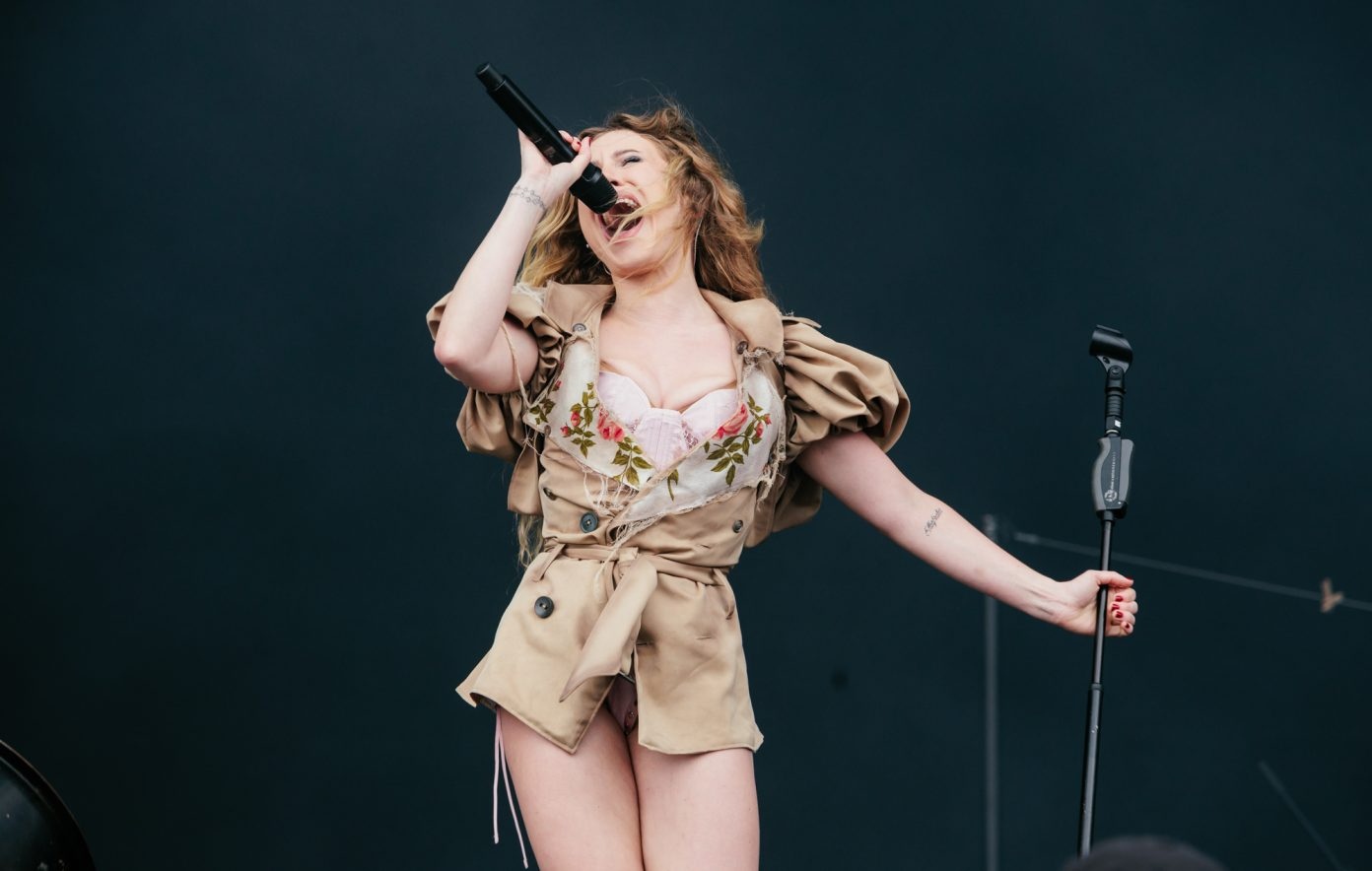
Slayyyter played her take on Turnstile’s ‘Birds’ onstage for the first time in Atlanta. You can watch footage of the performance below.
Slayyyter is currently touring with her ‘Wor$t Girl In The World’ show. She added the cover to her set at The Eastern on Monday night (September 21).
She sang ‘Birds: Slayyyter Version’ near the end of the main set, following ‘Brittany Murphy’. She then came back for an encore featuring ‘Brand New Chanel$’ and ‘Beat Up Chanel$’.
It was her first live performance of the song. She originally recorded it for Turnstile’s ‘Never Enough: Versions’, a collection of reworked tracks released on August 28.
The 22 track release brings together new interpretations of songs from Turnstile’s fourth album. Contributors include Elton John, Hayley Williams, Blood Orange, A. G. Cook, Faye Webster, Four Tet, Oklou, Floating Points, Nourished By Time, Alex G, Julien Baker and Mustafa.
Panda Bear recorded a new take on ‘Magic Man’, while Dying Fetus gave ‘Birds’ another interpretation rooted in death metal.
See Slayyyter perform the track live and listen to her studio recording here:
Slayyyter trades the original song’s hardcore intensity for a bigger electronic sound that feels at home alongside her latest album, ‘Wor$t Girl In America’.
Turnstile first released ‘Birds’ on their 2025 album ‘Never Enough’. The song won Best Metal Performance at the 2026 Grammy Awards, where the album also won Best Rock Album.
In its five star review of ‘Never Enough’, NME pointed to ‘Birds’ and ‘Sole’ as reminders of Turnstile’s hardcore beginnings. It also praised the album for “furthering their unique, pop-facing take on hardcore”.
Slayyyter will join Turnstile on another stage next month. She and Die Spitz are set to support the band at the University of Kansas in Lawrence on October 6 for the ‘Never Enough Tour Pt. 2’.
It has been a big year for Slayyyter. Her third album, ‘Wor$t Girl In America’, came out in March, and NME’s review highlighted its mix of “brash, sleazy pop” and late 2000s indie sleaze sounds.
Last month, she performed Hole’s ‘Violet’ for triple J’s Like A Version. Courtney Love called the cover “a delight” and encouraged Slayyyter to “keep wiping the floors with us”.
A few weeks later, Slayyyter took ‘Wor$t Girl In America’ to Reading Festival. NME’s live review declared that there was “undoubtedly a star before us on stage” and praised her “rasped, rocked-up delivery” and growing confidence as a performer.