Summertime by Sifuentes is an album that has multiple layers. Jim Sifuentes created this album after and in the midst of some very trying life situations. From a cancer diagnosis to losing a job he had for 19 years, the album is nothing short of a testament to the power of perseverance. He also wanted to share his gift of music with his children and his friends.

“My cancer diagnosis at 50 was a bit of an awakening for me of the tenderness of life, being in and out of a situation and being able to overcome it. Additionally, six months after losing my job, I had a heart attack. With all this going on, I realized I wanted to get back into the music. I wanted to get back with my brother who grew up making music with me and put some songs out at this point in both our lives so I could do something with the talent I have since I didn’t do it when I was younger.” he said.

The album includes songs Jim, who’s now over 60 years old, wrote when he was a teenager as well as ones he wrote just last year. This a testament to his songwriting skills and musical ability. These songs, no matter how many decades apart. still paint a narrative within the sequencing of the album. As a songwriter and storyteller, Jim’s album crafts an auditory journey of where he was mentally and sometimes even physically, at various points in his life.

“I made the song ‘The Memory’ when I was in my 20s and visiting my old neighborhood. I wanted to add a brass sound that was reminiscent of Glenn Miller for that one as an homage to my parents who enjoyed listening to him. My colleague and collaborator Matt Riggen did that part of the song for me. There’s another song on there called ‘Mary’ that I wrote for a girl I was dating when I was 19. I actually was able to perform it for on stage at that time in my life and that’s an unforgettable memory.” he said

Some songs on the album have both sentimental and practical value.

“The track ‘Rumors’ is one me and my brother recorded when we were the age we are on the cover of the album. That was between the 80s and 90s. I decided to add that one to the tracklist because I had 11 songs and my goal was 12 and that one just naturally fit the tone of the album.” he said.

Other songs paint a picture of the reality of life when it’s clouded in uncertainty, a feeling many twenty somethings can relate to. This one has a significantly darker melody than the other songs on the album which have an upbeat pop rock feel to them.

“I wrote ‘Searching for the Day’ when I was 19. I didn’t know what I wanted to do outside of being a musician and people were asking me if I was going to college and what I was going to do with my life. And, at that point, I didn’t really know. I never forgot those lyrics.” he said.

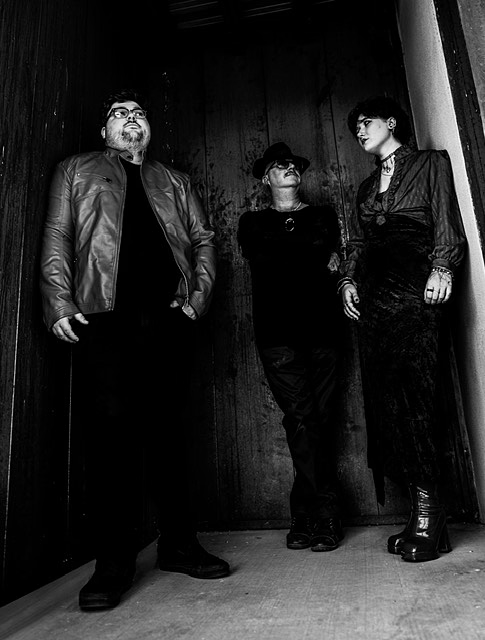
Jim Sifuentes collaborated with his brother Bill and multitalented musician Matt Riggen to create the sound of the album. His brother is a musician and songwriter in his own regard and Matt is a colleague and collaborator that Jim met while in the Chicago Park District. Throughout the album, the three of them play multiple instruments and each one brought their own ideas and expertise to the songs.

The sound of the album is Beatles inspired with Jim growing up studying their music but now he can listen to them for pure enjoyment. Many of the songs on the album have a lighthearted uplifting atmosphere to them as Jim sings of enjoying the summer, love and the aforementioned topics across the album.

“I grew up on The Beatles. I wanted to do something that compliments them and is true to that sound but do it in my own style and my own way. Paul McCartney is my biggest influence and I was thinking ‘Would Paul McCartney and John Lennon be proud of this if they heard it?’ he said.

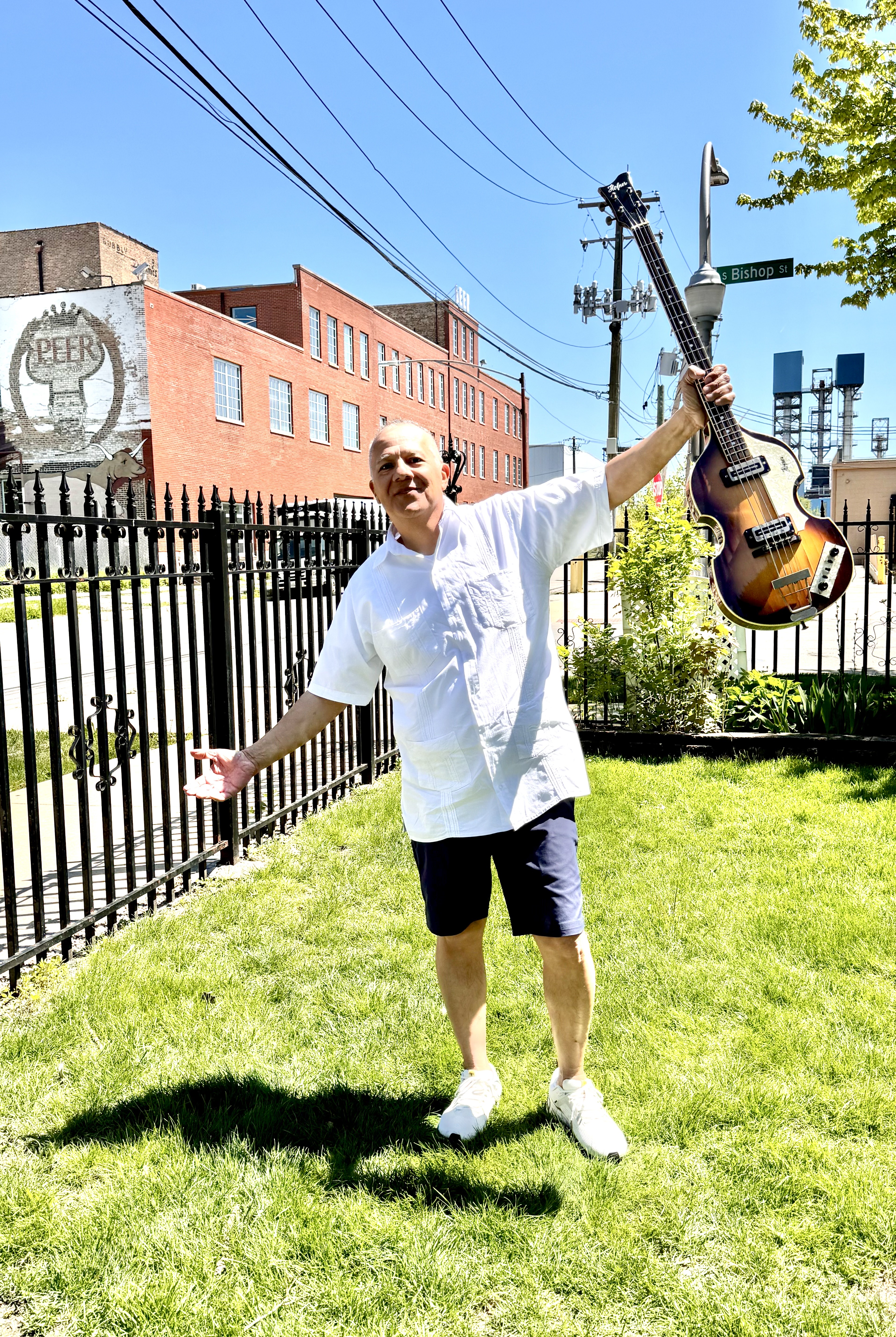
Jim’s love for the bass is directly connected to his love and admiration for Paul McCartney.

“My goal was to make melodious basslines that compliment the songs just like he did.” he said.

The importance of the bass goes all the way back to Jim's younger years which is a full circle moment considering this album encompasses multiple moments from his younger years and life overall.

“I’ve had that bass for about 40 years. When I was a freshman in high school, I got put on academic probation and my Mom told me I needed to get on the honor roll and if I did, she would get me something. I asked her for the same bass that Paul McCartney used. I didn’t know how to play it at that time but it was something I really wanted. She told me that if I made the honor roll for the next three and a half years, she would get it for me. So that’s what I did and for financial reasons, I didn’t get it until about four years after I graduated but I still got it and I still play it to this day.” he said.

When speaking to Jim, his love for life and the music shined through with every story he told and every word he said. He shared that his mission statement for life is
“Create and play a melodious song of love with your life.” With the album out now, all the people who were not aware of Jim’s wide ranging musical ability are fully aware now and he is happy to share it with them.

Music has been the source of happiness and comfort throughout Jim’s life. Even with everything he’s been through, it was always there for him.

“...I got fired in July and in January I had a heart attack. But the music came back. I picked up my guitar and I said ‘Darn it, I love music.’ It actually brought me back to life. I never lost my optimism. It gave me life in a whole new way. All throughout my life when things were going haywire, especially when I was younger, I’d go to my guitar and express how I was feeling…I came back to music and music revived me. It’s like it partnered back with me. It was always there.” he said.

By putting this album out, Jim has continued to move through life with a positive forward thinking attitude.

“Given where I’m at and what I’m doing at this point, I’m happy with the result and where it’s going. It’s also a testament to people my age that no matter what challenge you have, keep living fully and go after what you have to go after because I’m going to do it until I can’t. That’s what I’ve been doing and I still feel good. I have a choice every morning to decide if I’m going to decide to feel good to decide to feel well and I always choose to feel well.” he said.

Summertime by Sifuentes is available on streaming services now.

You can see more of Sifuentes and his love for music by keeping up with him on these platforms.

Apple Music
Spotify
Facebook
Instagram
Twitter

Unless you’ve been living in self-imposed social media exile for the past six months, there is a high probability you’ve witnessed the choreography of Simon Donnellon. Perhaps via the flirty, candy-hued video for PinkPantheress and Zara Larsson’s ultra-viral “Stateside (Remix),” or maybe in Alyssa Liu’s triumphant 2026 Winter Olympics performance set to the same song, which saw some of Donnellon’s catchiest moves repurposed for the ice. Over the past few years, the London-based choreographer and movement director has made a niche for himself, coaching a starry roster of alt-pop princesses to move unencumbered across stage, screen, and beyond. Speaking to his friend, writer and pop devotee Harald Smart, Donnellon shares his origin story and offers a window into the ‘Pop Girl Bootcamp’ that has helped more than one diva find her groove.

———

HARALD SMART: Simon, hi!

SIMON DONNELLON: Harald, hi, how are you? 

SMART: I’m good! Excited to be talking to you. There’s so much to talk about. I wanted to ask how you got started in this field, your origin story.

DONNELLON: What’s pertinent to my job now is that I was a dancer, mostly with contemporary companies, and I graduated when it was kind of in vogue for contemporary dance to be across music projects. So I was doing music videos, dancing in them, and then I got the opportunity to choreograph one for Self Esteem. Then, I started moving a bit more into artist coaching. Back then, it wasn’t such a big thing. Now, I’d say 90% of the musicians you see performing live will have had some level of movement direction or performance coaching. 

SMART: So, what’s the distinction for you between movement direction and choreography? 

DONNELLON: With choreography, I’m creating movement steps that you will learn and repeat. Direction is much more about giving people stimuli and guiding them through stuff. That could be a character-based stimulus or asking, “What color is this song?” or “What does this song smell like?” So they can start to build a world around the song to inhabit, which would hopefully give them more room to play on stage. For me personally, my job is more about setting artists up with the tools to be able to play freely on stage with a level of comfortability.  

SMART: You worked with Romy [Madley Croft] in that capacity, right? How did that process start?

DONNELLON: Yes. Romy was super interesting because I’m a huge fan of The XX. So when that opportunity came up, I was freaking out. Her wife’s a really successful photographer and director. I’d been shooting with her and she was like, “Oh, my wife is a musician and she’s doing a solo project [2023’s Mid Air] for the first time.” 

SMART:  Did you know it was Romy at the time? 

DONNELLON: I didn’t know it was Romy.

SMART: That’s so funny. 

Simon Donnellon

DONNELLON: So, when we started working together, her refrain was, “I just want to feel more confident in moving on stage.” We would get in the dance studio and I’d set up a fake DJ deck with some ballet bars and a table top across them. At first, it was really about diving into rhythm and going back to basics. Giving Romy the tools to start to move a bit freer. I think with a lot of artists, it’s about giving them permission. Because Romy can move, but I think it was just trying to give her a new movement language to use. 

SMART: It must be amazing to watch over a period of time, watching someone blossom. 

DONNELLON: Totally. And I think some people would look at one of her shows and be like, “Oh, what is the movement direction there?” because she’s just moving freely. But actually, from where she began, now she’s running around the stage at Glastonbury. In the new XX show that just debuted at Coachella, she’s singing “Enjoy Your Life” out on the runway, which is something I think she didn’t think she was capable of. She’s always been capable of it! 

SMART: That’s quite beautiful. 

Simon Donnellon

DONNELLON: I think every person, no matter whether they’re a pop star or not, deserves the space to find what it is they do free from intense scrutiny. No one’s doing the best thing they’ve ever done straight out of the gate. I mean, some people I work with are pretty incredible straight out of the gate… PinkPantheress, for example. The music and the tone of what she’s making is so unique. 

SMART: 100%. So let’s get into that. Because I feel like every day I see a fan edit or a meme or something related to PinkPantheress and her stage presence transformation. What kind of phase she was in when you started working together and how has that relationship evolved?

DONNELLON: At the very beginning, before Fancy That, we did the videos for “Picture of My Mind” and “Capable of Love,” which were more narrative.

SMART: “Capable of Love” is incredible. 

DONNELLON: I remember when I first heard that song, I kind of couldn’t believe that she’d made something that epic.

SMART: Yeah, it’s like her version of a power ballad.

Simon Donnellon

DONNELLON: Literally. And so we’d started working together a little bit sporadically and we just got on really well. From that point on, each project had a larger choreography component, especially coming back for Fancy That. I think she’d had a bit of time off and she came back and the music was so good and she was like, “I’m ready to step into it. ” Also, she can groove. She’s got a great sense of rhythm. But I feel like at Glastonbury [2025], she switched something on on show day and we were all like, “Whoa.” That was a real moment of stepping into performance in a way that she hasn’t before. I think she’s come back to this new era and attacked it with such…

SMART: Gusto?

DONNELLON: I was trying to find a synonym for gusto!

SMART: Just say it!

DONNELLON: Gusto! Like, she wants to be eating it up on stage. She wants to be involved in everything. She’s learned so quickly and I can’t take all the credit on that. I definitely got her to a certain point, but she’s also worked with super established female choreographers as well—Charissa Kroeger, Danielle Polanco, Luam, who did the 2025 US/Australia tour. And I think having that time with them, they’ve given her this new confidence. 

SMART: It sounds like a really strong team.

DONNELLON: Yeah, it’s important to Pink that there are women across choreography. Charissa is amazing. We were able to riff off each other and find this newer thing for Coachella, which is a really big, super ambitious show.

SMART: It was so impressive, the number of elements, the storytelling. 

Simon Donnellon

DONNELLON: Totally. And it’s one of those shows that is a statement of intent because she straddles all these different things. She’s the pop girl, but she’s also making this quite alt music.

SMART: It’s also so British as well!

DONNELLON: A vast majority of the team working on the show are actually British. I think that’s been a big thing for finding the nuance and the comedy and all these bits that feel “Big Pop Show,” but also still feel very her. I think one of the other big tasks for this show was finding newness in the movement language. 

SMART: How do you approach that?

DONNELLON: For me, it’s looking at other artists that sit within the same world and what they are doing. Not to copy, but thinking about what it is they’re doing that is resonating. For example, everyone thinks of Gaga like, “Put your paws up.” But Gaga also sits in this ticking world; it’s her specific way of moving. The task for the show was trying to find something that feels very unique to PinkPantheress. What are the Pink-isms? 

SMART: And what would you say those are?

DONNELLON: Always that insane hair flip. She’s in the hips, and she’s really good at finding a mix of fluidity and staccato in the upper body. It’s finding those moments, but also what is the music saying? We still want it to feel a bit punk with a tiny injection of silliness and camp. So, it’s mixing all those things together. 

SMART: What’s been your favorite song of Pink’s to choreograph? 

DONNELLON: Ooh, I mean, I love “Tonight.” For me, it has a special place. It was the first track for her that we really choreographed. 

SMART: I remember that video dropping and everyone being like, “Oh, she’s really doing the thing.” Backing dancers, the whole nine yards. 

DONNELLON: Exactly! So seeing that, editing that into the [Coachella] show and making it bigger and more exciting, that’s been really amazing. And honestly, “Stateside.”

SMART: Oh, we’re getting to her! Tell me about your involvement with that particular song and your response to where it went. 

DONNELLON: My god, crazy. With Pink, the video scheduling is always really reactive. The energy is like, “Okay, the song’s doing well, the fans want something, let’s give their fans what they want.” I had heard someone whisper that they were thinking about a video with Zara, and I was like, “Oh my god.” Then [director] Charlotte Rutherford—who I’ve worked with a lot in tandem with PinkPantheress—called me and was like, “Okay, this is the concept.” It all came together really quickly. There was essentially one day between Pink and Zara’s schedules in which they could shoot it, and the shoot definitely felt really gag on the day. Two pop stars on the precipice of stardom. They’re both doing so unbelievably well. 

SMART: And on their own terms, as well.

DONNELLON: Absolutely, I think it was so intelligent to put both of their worlds in the video and smash them together. It was so indicative of the branding power of both campaigns. Then, to choreograph something that felt really fun and kitsch. The main reference was always “Fergalicious.” 

SMART: Oh my god, I said this. The second I saw it I was like, “This is Gen-Z ‘Fergalicious.’”

DONNELLON: Yes! Even down to how it was shot because a lot of the time things are shot on Steadicam, roaming around. But Charlotte was like, “No, I want straight-on choreo.” 

SMART: Old school. 

DONNELLON: Obviously the song was having a moment, but I don’t think anyone really expected how big it was going to go. 

SMART: How did you approach the choreo? 

DONNELLON: Sometimes Pink is a fun challenge. Often my contemporary [dance] background can be really useful to avoid it leaning too far into stereotypical pop. On Stateside, my associate choreographer, Angelica Wolańska, was super helpful. It’s really helpful to ideate with a female choreographer. The work feels more rounded. With the male dancers, we wanted to stay in this really masc place but, like, a bit camp.

SMART: Metrosexual!

DONNELLON: Yes! Charlotte sent me this reference from a Madness video where they’re walking in a particular way. At first I was like, “Whoa, that’s such an off-piste ref.” But then, in the context, those off-piste moments really work. And, obviously, all the boys falling and the room shaking when Zara hits her run—

SMART: That’s so good.  

DONNELLON: But Pink is really experienced with the music video thing now. She knows her angles. She can step on set and just own it. Also, her and Zara being together, they both lifted each other up so much. It was really nice to watch. Zara had toured the night before in Stockholm, flown in that morning. We’d sent her the choreo and we ran it through with her twice and she was like, “Got it.” Just real star energy. The whole thing was such a great experience. 

SMART: It’s heartening to hear that the mutual support is so strong and genuine. 

DONNELLON: Oh my god, totally. I think we’re in an era of female stars genuinely supporting each other.

SMART: I think another key thing is they’re being cute and sexy, but it’s not two women together who are just being sexual for the male gaze. It’s for the girls who want to get cute and look cute and hang out with their friends…And the gays, of course! 

DONNELLON: Very much so.

Simon Donnellon

SMART: What’s your favorite choreo moment from the video?

DONNELLON: I love the big tableau with Pink sitting on the guys’ shoulders and Zara laying on the floor. I was thinking about Renaissance paintings…and Gentleman Prefer Blondes!

SMART: Yes! Those moments are incredible. How did it feel to see Alyssa Liu perform parts of that choreography on the ice at the Winter Olympics?

DONNELLON: Crazy, crazy, crazy. To see something you’ve done, my little pop choreo, being performed on a stage like that even for a second…Working in this profession, you’re around a lot of famous people at work. There’s certain people that I’m starstruck by for sure, but I think with most people you have a level of professionalism, like, that’s just another person. But something about that moment was like, “Wow, okay. This is kind of crazy.” 

SMART: I feel like as a choreographer or a movement director, that must be the pinnacle.

DONNELLON: Oh, it’s gag

SMART: Where do you go from there? 

DONNELLON: I’m quite excited to get back to some fashion stuff, and then this year’s festival season. And then it’s thinking about other artists on my dream board…I would die to do Rosalía!  

 
CONTINUE READING