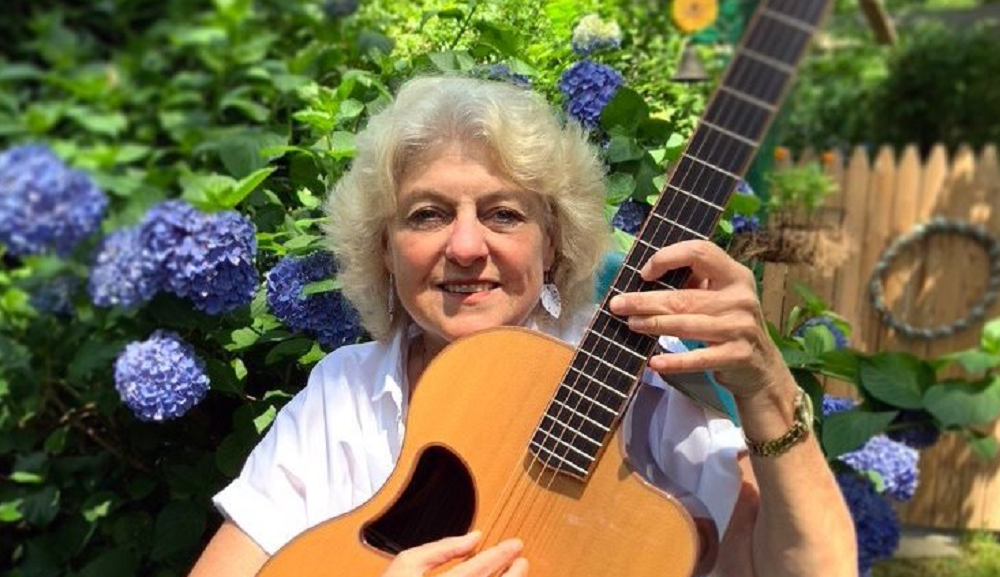
Marla Lewis might not be a name that everyone immediately recognizes, but she has spent years building a remarkable career that has earned her a loyal global fan base, countless streams, and even a Grammy Award for Best Children’s CD. Today, Music-News had the chance to talk with Marla about her new single “Kill The Lights,” a smooth, feel-good jazz track that captures the magic of walking through New York City in winter with a warm smile on your face.
Tell us about Marla Lewis?
Born in New Jersey, wrote my first song at the tender age of 12 called “Hopeless Love” (LOL). From the time I could talk, music has always been my closest friend. I sang and played guitar in clubs, got disenchanted, went back to school for my Masters, and became an English as a Second Language teacher in a Harlem elementary school for 23 years. That’s when I started writing songs for kids, to help them learn English. I released two children’s albums, WE ALL LAUGH IN THE SAME LANGUAGE and I LOVE TO TALK TO PLANTS. One tune from PLANTS, called “Leap of Faith,” appears on a Grammy-winning Children’s CD called ALL ABOUT BULLIES... BIG AND SMALL, with my incredible friend and producer, Bob Stander.
Who are some of your musical influences? What else inspires you?
Ella Fitzgerald, the Beatles, Michael Franks, Phoebe Snow, Carole King, to name a few. My mom aspired to be a jazz singer, so we had lots of Big Band music playing in the house. Besides music, the rhythm of conversation inspires me.
Congrats on the release of “Kill the Lights”! We love it. What’s the story behind the song?
Thanks so much! Bob (my producer) said to me, “We need another R&B flavored song with a catchy chorus.” So, I played around with a new idea about love on the rebound. I wrote the lyrics first, a very rough draft, and put music to it - that’s how songs usually evolve for me. I was really “in the zone” when I was working on this one, fiddling around with it until it felt complete. The song went through many incarnations before I got the “actors in a play” metaphor right. I don’t think it’s autobiographical – unless it’s about an affair that I’ve totally forgotten about!
Who is one artist you’d love to tour with?
Nora Jones! Oh, yes!
What’s your favorite thing to do when you’re not doing music?
Walking the dogs, hanging out with friends, watching a great TV series.
What's the 2022 plans for your musical journey?
I want to continue live streaming - it’s fun! My show is called “Marla in La La Land.” You can tune in every Wednesday evening at 7:30 PM Eastern. I already have enough songs for my next smooth jazz album, and I’m calling it, “Livin’ the Dream.” The songs are very socially conscious – I can’t write in a bubble any longer, with what’s going on in the world. I hope to record and release that album in 2022. And perhaps, I’ll muster the courage to do live shows!
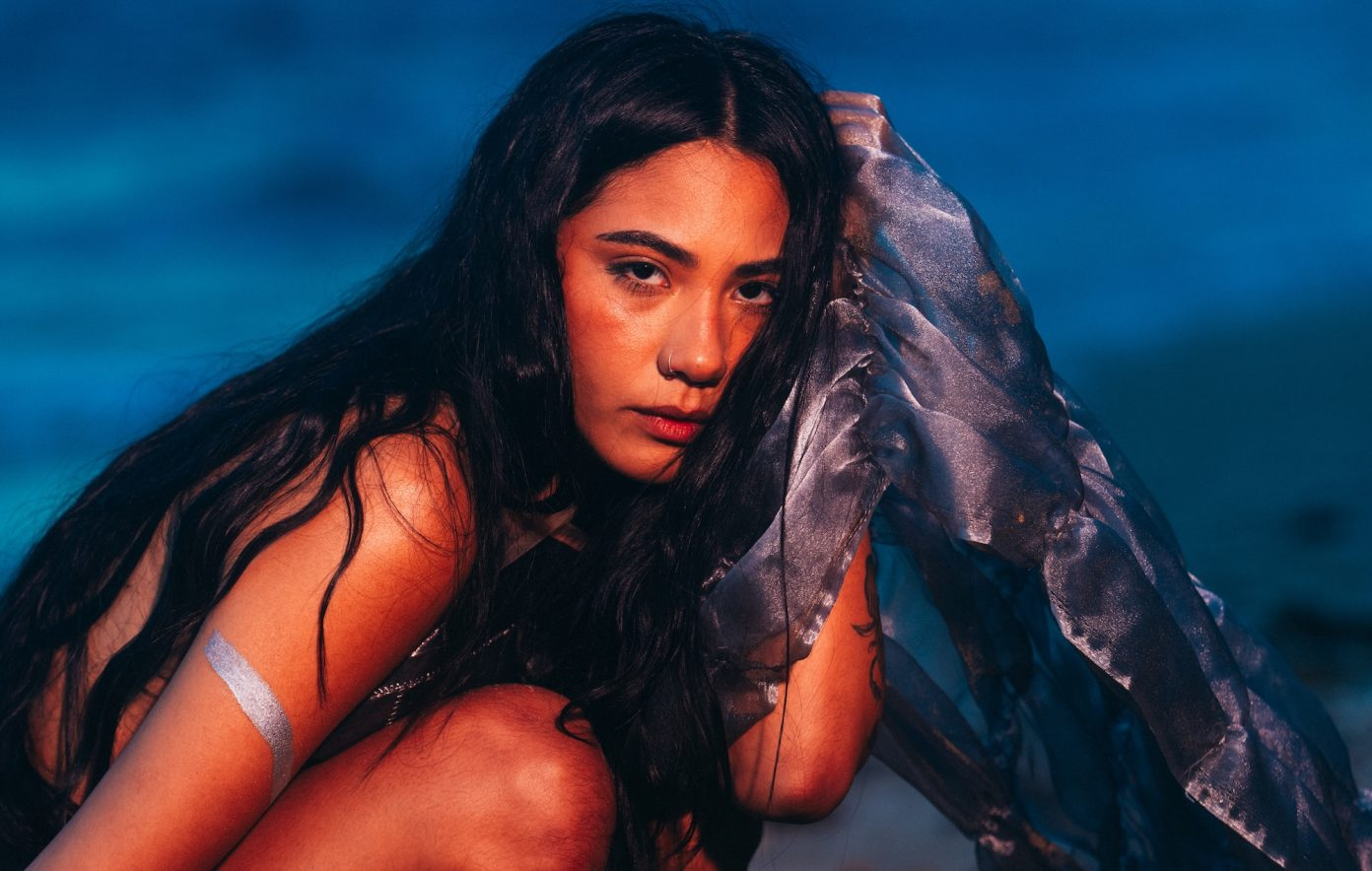
Even more than 6,000km away from her hometown of Santurce, Puerto Rico, RaiNao still manages to keep a piece of home with her. It’s Monday morning in Madrid, and the 32-year-old, born Naomi Ramírez Rivera, is calmly sipping on a cup of black coffee surrounded by fan palms and chestnut trees inside the terrace of her hotel. Coffee is her morning ritual back home, and things don’t change even if mere hours ago she was performing in front of 70,000 people as a guest on Bad Bunny’s ‘Debí Tirar Más Fotos’ residency in the city.
“I think it was the biggest venue I’ve ever performed at, or maybe it was Brazil,” RaiNao gushes, referring to her February appearance on the tour in São Paulo. Ultimately, the numbers don’t matter; for her, it’s all about the experience. “Even if I had done it 10 times over, it’s always beautiful and a different surprise.”
Music has always been a constant in RaiNao’s life. She began playing the saxophone at 11, but she never thought it would be the way she would make a living. “It’s all Wiso Rivera’s fault,” she says with a laugh. During the pandemic, her then-boyfriend and now creative partner and go-to co-producer encouraged her to go for it. She was stuck in a rut, juggling part-time jobs, when she realised that was not the life she wanted to lead.
“I felt overwhelmed that I thought, ‘Am I really going to spend the rest of my life working inside a bank?’ Wiso told me, ‘We have the tools, the studio is right there. Let’s just do it.’ And we did it.” Her stage name followed naturally. The moniker, a play on her nickname “Nao” with the creolisation of “right now,” is her own carpe diem. “It’s become a mantra for me,” she explains. “I’m in the moment all the time now. It’s a goal and a way of life.”
That now is what has taken RaiNao to global stages, performing ‘PERFuMITO NUEVO’ across the world, on US television, and gaining new listeners along the way. The song is what has put her on the map, and she’s more than grateful to Bad Bunny for the exposure. “He’s an artist who knows what he wants but also gives you your space to create,” she says, adding that their collaboration flowed as smoothly as a hot knife through butter. “I had a lot of freedom, and I’m always going to be thankful for that. I love that type of creative connection; it’s intuitive. We listen to each other. It’s great when anyone connects with your music, but he’s obviously a very important artist for Puerto Rico. Knowing he appreciates my music and my art, and that he says it every time he gets the chance, is incredible.”
She believes it’s precisely this type of interdependent local network that makes the Puerto Rican music scene as special as it is. “The support between artists has been key in careers that blow up,” she says. “We really do rely on each other and uplift each other constantly. It’s beautiful.”
The same way she got the cosign from Bad Bunny, RaiNao is also sharing the spotlight with Puerto Rican talent on her latest project, her second studio album, ‘Marcría’, a play on words that refers to both the PR slang for “spoiled brat” and “sea-raised”. In the 16-track album, RaiNao lends the mic to up-and-coming local musician Frido Vargas, who released his first song, ‘Mareo’, as part of the project.
“I’ll always make space to draw attention to the talent coming from my island, which I know goes hard and deserves as many ears and eyes as I do,” she says. Her debut studio album, ‘Capicú’, followed a similar pattern with the inclusion of Gyanma’s ‘Bajo Candau’.
“I’ll always make space to draw attention to the talent coming from my island, which I know deserves as many ears and eyes as I do”
“Puerto Rico’s indie scene is bustling, and you need to be on the island, soaking it up, to know [local artists],” RaiNao shares. Her label was “sweating” when she proposed including ‘Mareo,’ but when Vargas played the song for her, she knew it belonged in ‘Marcría’.
That’s not to say the project isn’t entirely RaiNao’s. Though it borrows its name from the sea, her ultimate “safe space”, ‘Marcría’ is born from RaiNao’s experience at 10, when her mother enrolled her in a school for the visually impaired. The album is a sensory journey accompanied by guided meditation, colour visualizers, and more to tell the full picture. You’ll notice green is a predominant theme. Emerald is RaiNao’s birthstone and the central piece of a ring she received in sixth grade, when she graduated from said school. As such, the hue has tinged the entire album, manifesting in music videos and in the small orb featured on the cover art.
On YouTube, she has microstories for each song that complement the sensory experience. “Not everyone has seen those, and they form a little story that I wrote based on the sensorial treatments,” she explains. “That came first, and then came the songs. It was an experiment.”
Only two tracks were created before the overarching theme was set: ‘Chamberí’ and the single ‘Gris’, which the artist initially intended to give to someone else. Legendary producer Tainy reached out and asked her to send over a few songs for his repertoire, and RaiNao obliged. “I sent him a few, but I kept going back to ‘Gris’ and thinking it was my song; someone else might like it, but they aren’t going to like it as much as I do.” It wasn’t until she was already structuring the project’s concept that she felt she needed to ask for it back. “I felt no other song exemplified water as much as ‘Gris’ did.”
RaiNao credit: Eric Rojas
Another emotional crux on the album is ‘Cántaro’, featuring salsa legend Andy Montañez, one of many remarkable collaborations alongside the likes of Omara Portuondo and Cultura Profética. The song marked the first time RaiNao recorded her own sax in her career. “I know that there are better sax players in Puerto Rico whose sound is way better than mine, and I always tap them to record,” she explains, “but this was a very personal song, and it needed to be me even if the result is not the best.”
The melody for the track was born from a sample of her voice and was later re-envisioned and reworked into a brass comp. Her sax is complemented by a bassoon, played by her best friend, who sent in recordings from Jacksonville, Florida. The result is her take on the “Death of the Author” literary theory and, in a way, her own eulogy. “Once you put out a project, it dies for you,” RaiNao explains, “but with that death comes another birth, another interpretation.”
‘Marcría’ comes to a close with the track that lends it its name, which sees RaiNao reciting a poem by the late Puerto Rican artist Ángelamaría Dávila, included in the 1966 poemario ‘Homenaje al ombligo’. RaiNao serendipitously came across Dávila’s work while working on the album. Upon reading this poem, she was stunned. It perfectly encapsulated the project. “It’s remarkable that this poem was born years ago from the mind of another Puerto Rican woman who’s no longer with us.”
RaiNao toyed with the idea of borrowing from the poem and playing around with vocal layering to use it as an interlude in a song that she’d call ‘Garabato’ (slang for “scribble”). “I wanted something simple that’d bridge the project from its more danceable side to its darker side,” she recalls. Ultimately, she felt the poem, as it was, was the perfect summary, a bio to ‘Marcría’.
Throughout the process of working on this album and the accolades it’s brought her, including a spot in YouTube’s Foundry Class, RaiNao feels “blessed and happy”, but she knows the final word no longer belongs to her; it belongs to the world. “For me, art is very spiritual. I knew I came into this world to leave it a better place with my art,” she says. “I’m always going to try not to dehumanise myself, not to stray too far away from myself to create.”
RaiNao’s ‘Marcría’ is out now via Rimas Entertainment.