
ON THE RISE
I've sometimes felt as though every piece of music is an exploration of our perception of time. What sparked the idea of focusing on time as the main focus for your new work?
The focus on time in this work emerged quite unconsciously.
What actually happened is that the title came last, after I received an email from John (Benedict ndr) regarding the production timeline. In the middle of that email, those two Latin words appeared, and for me, as an Italian reading them in an English context, they had an almost striking, illuminating effect.
At that point, I went back to the pieces I had written, listening again to how they had been developed and recorded, and also considering the broader time span over which the entire EP had been composed. It became clear to me that Tempo Fugit was the most fitting title to represent the work.
I've been listening to Tangerine Dream's Zeit a lot recently but that album is based on a very specific concept of time, as pioneered in the West bei Parmenides, that time does not, actually, move. What are your own reflections on time?
Time is perhaps the most objective construct that exists in nature, and yet the most paradoxical aspect of it is that it is entirely perceived in a subjective way.
At times, time seems not to pass at all; at other times, it rushes forward, or even feels as if it stops. But this sense of flow, its rhythm, its pace, is not determined by time itself, it is determined by us.
This is precisely why I see it as such a fundamentally objective dimension. It is inescapable, it is constant, and yet our perception transforms something absolutely objective into something deeply subjective.
Time is not just the medium through which music flows, it can also be a musical tool in its own right. How did you work with it for Tempo Fugit?
For this EP, I worked with time in two main ways.
On one hand, there are pieces built around a very clear and explicit temporal reference, a metronome. On the other, there are works that were recorded almost entirely without any fixed time reference. This applies both to the piano pieces and to the electronic ones.
In some tracks, the presence of a grid allows for a very precise perception of construction, almost as if the composition were being built brick by brick. In others, there is a deliberate need to remove any external reference and instead follow what I would describe as an inner sense of time.
These two approaches reflect the way I usually compose, and they are both clearly present and articulated throughout this EP.
Many contemporary composers have tried – or are still trying to make – time transparent by opting for extreme lengths. Your music, however, is quite to the point, on your earlier van Gogh EP even radically so. What is satisfying about concision for you?
I don’t usually approach composition by asking myself how long a piece should be.
When I work on immersive projects, of course, there are specific durations dictated by the storyboard. In those cases, the shorter the piece, the greater the risk of it sounding like a jingle. It becomes more difficult to preserve an emotional depth rather than just leaving behind a catchy motif.
At the same time, I find it very interesting to impose, in a way, constraints of brevity. I have written pieces that last twenty minutes or more, though they are often less suited to streaming platforms, and in some cases they have not even been officially released, as they belong to installations or more experimental contexts.
On the other hand, I also created a collection of one hundred one-minute pieces as part of a creative exercise called “100 days.” The idea was to repeat a creative act every day for one hundred consecutive days. My approach was to sit at the piano, even before having my coffee, and write exactly one minute of music.
Over time, this became a fascinating process. In the beginning, I relied on a timer, constantly checking the clock. But toward the end, I developed an internal sense of that one-minute span. Despite differences in tonality, meter, and tempo, I could almost instinctively feel when to begin and when to end each piece.
That experience taught me that duration is not something I impose from the outside, but something that can be internalized and shaped from within.
I understood that the process on Tempo Fugi was very different from piece to piece, with some finished quickly while others taking a lot of time. What is it about some works, do you feel, that makes them harder to nail down – how would you describe the sensation that something is “done”?
In this case, it was not really about how long it took to finish each piece. The tracks were written at different times, sometimes even years apart.
What happened later, when I listened back to them, was that I felt the need to create a stronger sense of cohesion across the EP. By “cohesion,” I mean introducing elements that could give more consistency to the role each track plays within the overall narrative.
So I revisited older demos that had been sitting in my archive for quite some time, pieces I still considered valid, and approached them almost as a form of rearrangement within the context of the EP. It was not about struggling to complete a piece, but rather about shaping it so that it could fully belong to this specific body of work.
For me, a piece is finished when I feel a strong coherence in the message I want to convey, when every sound has found its place, and when the musical discourse flows naturally and feels complete. It is not something I can define in purely rational terms. It is, above all, a sensation.
Since the process for Tempo Fugit was quite extensive, were there possibly overlaps between tracks composed for this project and the Van Gogh show? If so, how similar do pieces composed at the same time but for different projects tend to be?
There was no overlap. The music for the Van Gogh project we are referring to was written before the pandemic, whereas the material for Tempo Fugit dates back, at most, to about two or three years ago.
If we talk about similarities between pieces, I would distinguish between two different aspects.
From a purely musical perspective, meaning harmony and melody, it is actually more likely for similarities to emerge over time rather than within the same period. When you develop a certain awareness in your musical language, it naturally creates a kind of continuity, almost like a diary of melodic and harmonic ideas that evolves over the years.
On the other hand, pieces written within the same timeframe may resemble each other more from a sound design perspective. For example, if you are exploring a particular instrument, a specific synthesizer, a new effect, or even a certain way of miking the piano, these elements can shape the sonic identity of multiple pieces. Even choices like register or tonality can be influenced by those explorations.
So, if there is a form of resemblance within the same period, it is more likely to emerge from the sound and the tools being used, rather than from the underlying musical writing itself.
The release opens with a piece called “Repetition,” which called to mind a sentence by Ryoko Sekiguchi: “Time doesn’t pass, it returns.” How do you see that yourself – and how do you use repetition and variation in your work?
I see repetition as a beautiful form of communication, where the reiteration of an idea actually allows that idea to emerge more clearly.
The presence of a pattern becomes almost a kind of subtle game with rationality, with perception, with the listener’s intelligence. It invites a process of recognition, almost like solving a riddle.
This is what I find particularly compelling about minimalism. An idea is explored, listened to, gradually exhausted, then transformed, and the cycle begins again.
Since one part of the project seems to have been to use music to capture specific moments in time – how do you see the relationship between the moment and the music created in it? Quite often, sad music gets written in happy times of an artist's life and vice versa, so it seems like a complex relationship.
I agree that it is a complex relationship, and I would even extend it beyond the idea of writing sad music in happy times, or happy music in sad ones, as a way of balancing or compensating.
For me, it also involves the relationship with instruments. My work moves between acoustic instruments, like the piano, and more electronic forms of production, and I often experience this dialogue between emotional states and sound through them.
For instance, I might be drawn to more experimental electronic instruments during a more rational phase, while in a more instinctive or emotional moment I might turn to something structurally more defined, like the piano. In this sense, the contrast or interplay between different emotional states becomes symbiotic with the choice of instruments.
So yes, I would definitely describe this relationship as complex, but also deeply fascinating.
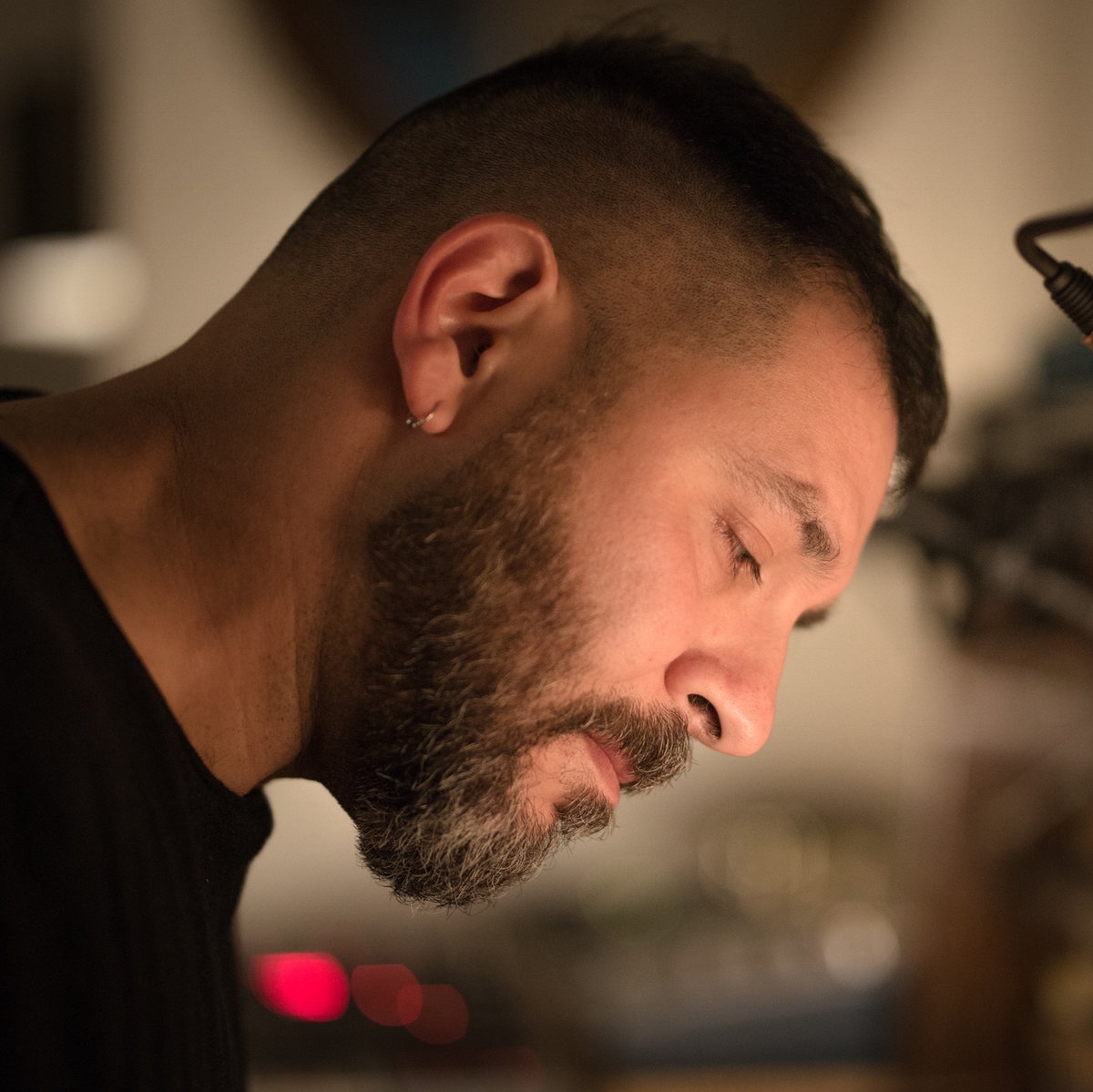
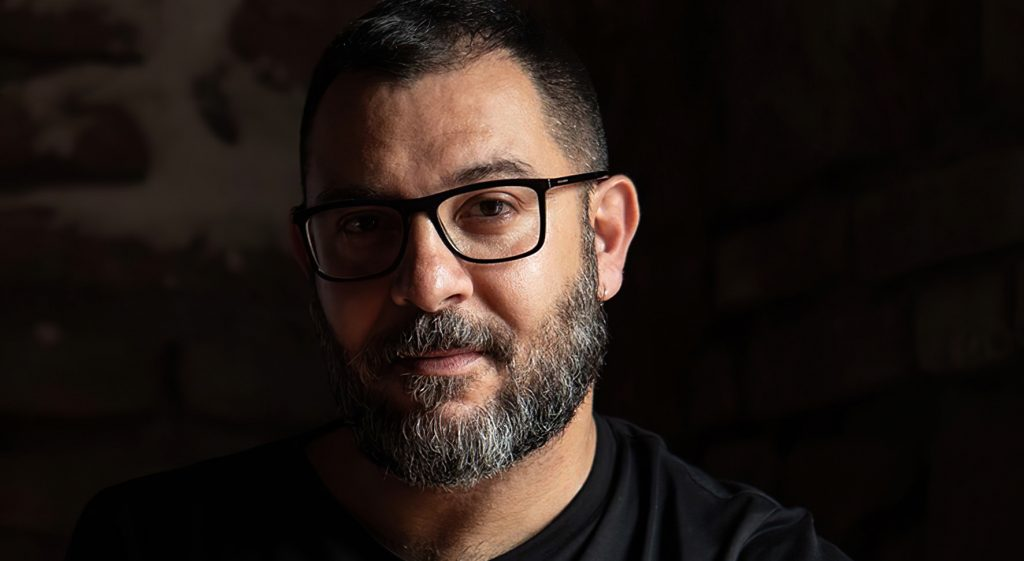
Luca Longobardi Interview Image (c) the artist
“I see repetition as a beautiful form of communication, where the reiteration of an idea actually allows that idea to emerge more clearly.“