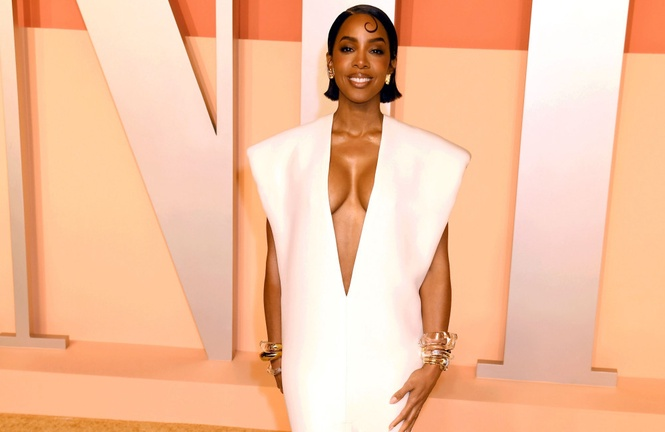

D'Mile attends the 93rd Annual Academy Awards at Union Station on April 25, 2021 in Los Angeles.
Chris Pizzello-Pool/Getty ImagesD'Mile was born to make music. The 36-year-old producer, born Dernst Emile II, grew up in a studio-ready household -- his mother a vocalist and father an instrumentalist and producer. "I was like two or three, banging on the piano," he explains. "It was a part of me."
In the last few months, D'Mile has established himself as a force in the award show circuit. "I Can't Breathe," was named song of the year at the Grammys, and about a month later, "Fight For You" from Shaka King's Judas and the Black Messiah took home best original song at the Oscars. Both tracks, brought to life by power team D'Mile, H.E.R. and singer-songwriter Tiara Thomas, center the relentless racial injustice of the past and present.
While D'Mile's introduction to music was mostly centered in Caribbean and jazz songs, by age 10, he became immersed in R&B/hip-hop by way of The Notorious B.I.G. and Junior M.A.F.I.A. As a burgeoning producer, he began working alongside Rodney Jerkins (a.k.a. Darkchild) for two years, and later collaborated with the likes of Mary J. Blige, J. Lo, Janet Jackson and Justin Bieber. It was during this time with Jerkins that D'Mile met 11-year-old Gabriella Sarmiento Wilson, now known as R&B star H.E.R.
D'Mile was at the studio with Jerkins when H.E.R. arrived, along with her parents and longtime manager, Jeff Robinson. They all spent the weekend together, even attending church, where Jerkins got the young H.E.R. to perform during offering time. "She's on stage killing it on the bass and singing at the same time, and I'm just like, 'Yo, she's a prodigy,'" D'Mile says.
Around that time, D'Mile was noticing a trend in R&B. He says many notable R&B acts like Chris Brown and Rihanna were moving into pop, as R&B's mainstream appeal began to fade. Because pop was in demand, the Brooklyn-raised producer shifted his own focus. "I was doing [pop] so much at one point that I felt like I couldn't even go back to R&B," he explains.
In a matter of a few years, D'Mile found his way back to R&B, and began collaborating with H.E.R., around the time of her 2014 deal with RCA Records. Since his return to R&B, the award-winning producer has also worked with Ty Dolla $ign, The Carters, Charlie Wilson, Lucky Daye and most recently, Silk Sonic, expanding on his already star-studded resume.
Now, as R&B continues its resurgence, D'Mile finds himself at the forefront. Billboard caught up with the Grammy and Oscar award winner to discuss his big wins, the historical importance of "Fight For You" and "I Can't Breathe," and gives advice on cultivating the right studio environment to create timeless music.
Less than 24 hours have passed since you won your first Oscar. How’s the day been?
It’s [been] crazy, my phone is hot from everybody just calling and texting and DM'ing me. I still don't know if it's hit me. I have to look at the award and be like, “Yo, that is really here at my house.” Right now, it's just on my dining room table.
What does this Oscar win mean to you?
It means everything. [Judas & the Black Messiah] took place in the '60s, but it still weighs [heavily on] today. Outside of that, to know that my mom and dad are over there watching, and my team, all my friends. I did not think that they were going to call our names, all of it was moving fast. All I heard was when Zendaya said “H.E.R." -- I don’t even think I heard when she said my name.
It means everything to me. I didn't come in expecting to get to the Oscars or the Grammys before that. And for everything to turn out the way it did, it was definitely God's plan.
“Fight For You” is attached to such a monumental historic moment that a lot of people weren’t fully aware of before watching Judas and the Black Messiah. What do you think is the significance of the song today?
I actually was one of those people. I knew about the Black Panthers, but I didn’t know anything about Fred Hampton himself. As the movie was going along and I'm learning this stuff, I'm just like, "Man, this is this is very, very important." It still hits home for a lot of people because we're dealing with some of the same fight. It's not over, so it will always be relevant -- until we get to that place of finally overcoming all the stuff that’s still happening in the world.
How did the song come together?
We were blessed enough to be able to watch [Judas and the Black Messiah] while we were in the studio. I don’t think we had popcorn, but we had M&Ms. Right after we finished watching, we had to come up with something on the spot. H.E.R. had a conversation with the directors and the only direction they gave us was that they wanted something upbeat, uplifting and hopeful. We had to cater to the time of it -- the '60s and '70s -- which is up our alley. Then we just took it from there.
How long have you been working with H.E.R.?
I've known H.E.R. since she was 11. I was at a studio working with Rodney Jerkins (Darkchild) and [H.E.R.] came to see him [with] her mom and dad. She spent that whole weekend with us. At this church, Rodney got her to do a couple of numbers during offering time. She's the on the stage killing it on the bass and singing at the same time, and I'm just like, "Yo, she's a prodigy." We reconnected when she was 16 and did one or two songs around that time. Then we connected four years later and we've been working ever since.
That's my sister. I always was looking out for her. Just seeing her grow up, with the talent that she has, and to become the woman that she is today, and what she stands for and everything, it’s just an amazing thing to see.
After spending 15 years making R&B music, what are the transformations that you’ve seen?
Growing up, the people I used to look up to were the Timberlands and the Pharrells, Quincy Jones, Darkchild. It started shifting around 2008, where Chris Brown’s “Forever” came out and Rihanna’s “Disturbia.” All of the black artists were going pop. I was doing [pop] so much at one point that I felt like I couldn't even go back to R&B. I would get calls to work with certain people and I was just like, "I don't even know how to do R&B music anymore."
Shortly after I was just like, I just want to do what I want to do. If it works, it works. Then Drake comes around. He is responsible for a certain kind of R&B [coming] back and for it to be cool. Childish Gambino for me, with “Redbone” and [Awaken, My Love!] also helped me feel like it was okay to do [R&B] again. History repeats itself. So, everything always comes back one way or another, in a new way.
What is it that always brings you back to R&B music?
To me, [this is] the way I look at it now: When you leave your hometown, let's say you find beautiful places that you love and you may even move. But you always have your hometown to come back to. I feel like R&B is my hometown.
How did your work with Silk Sonic come about?
I met Bruno first, through a mutual friend of ours, James Fauntleroy. It was a mix of Bruno finding me on Instagram and hearing what I did on the Lucky Daye album. Then I get a call from James and he was like, “What are you doing on Friday?” and I’m like, “Nothing.” He said, "Come over to the studio. Bruno wants to meet you and he wants to work with you." Then during that time, Anderson .Paak came in.
Were Bruno and Anderson .Paak already established as Silk Sonic at the time?
[Silk Sonic] wasn’t planned from the beginning -- until one day Bruno called and was like, “Yo, come to the studio and let’s just vibe.” We all worked on one song, it turned into more and turned into Silk Sonic down the line, organically.
As a producer, how do you create an environment where great music happens?
I hate meeting somebody for the first time and getting straight into work. I always get nervous. If we start a conversation, that's very helpful. Plenty of times, I've been in a room with people, and we'll just be talking, then I'll get quiet because now I'm reading the personalities in the room and building something based off of that. That's why I like just creating from scratch, instead of like coming in with tracks already made.
Do you have any advice to rookie producers?
Listen to yourself. Know who you are. If you're in the middle of learning who you are, explore different things. Hone in on whatever it is [you like] and just start. That's how you sharpen your skills -- that's how you find yourself and what gravitates to you. If you’re a religious person, pray. But just don't ever stop.
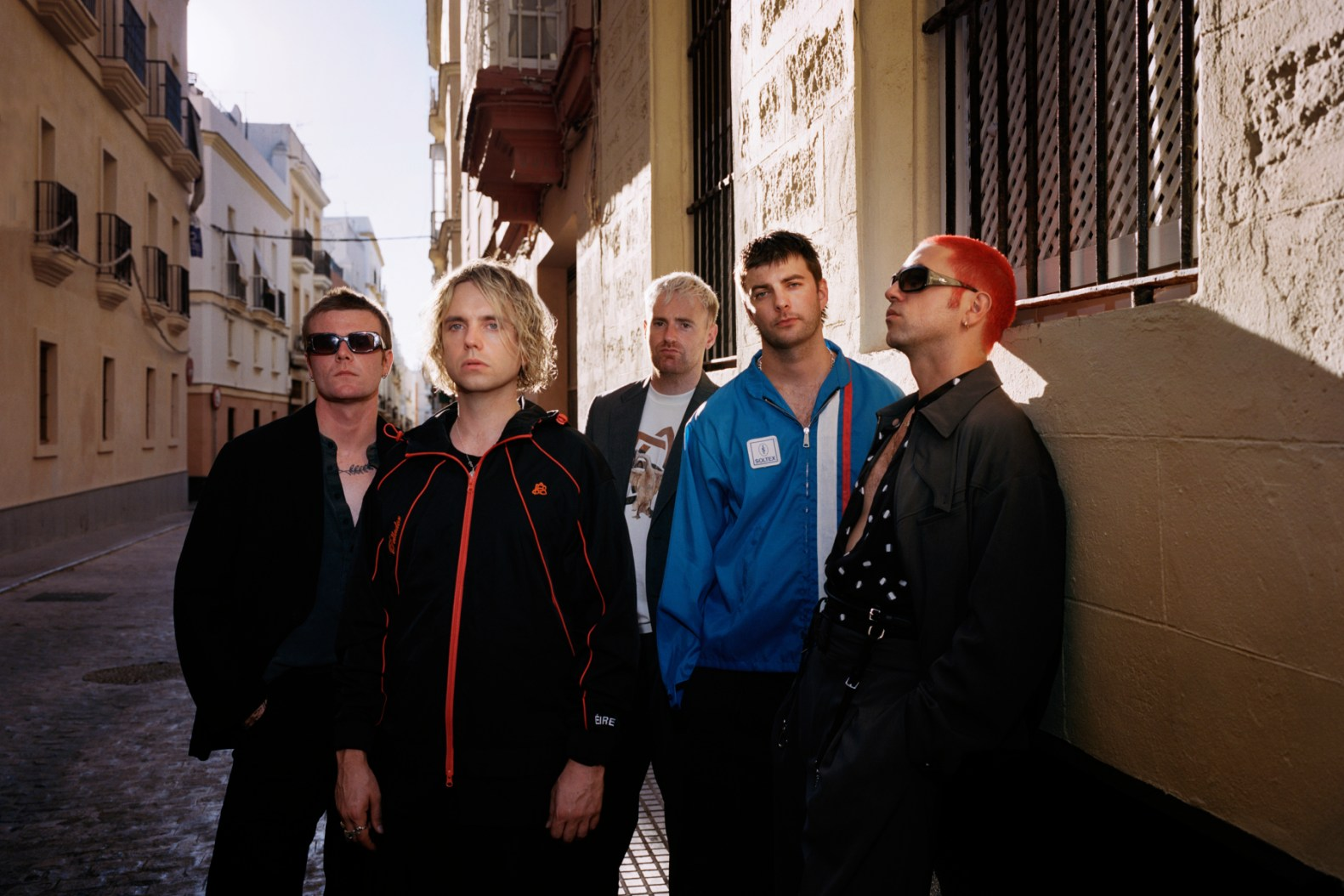
Fontaines D.C. have teamed up with Rosalía for their new collaboration, Where Is Gone?.
The song features on the Irish rock band's forthcoming album, Dopamine Chamber, which arrives on Friday (16.10.26). For guitarist Carlos O’Connell, working with the Spanish superstar is particularly special because of his own Spanish roots.
He explained: “I’ve admired Rosalía ever since her debut album, which I thought was absolutely beautiful.
“What excited me most was the way she continued to preserve Spain's musical traditions, something that felt spiritually connected to what we've been trying to achieve with Irish music. Having roots in both countries, it's been really special to witness. "She's an artist who has continued to amaze me at every point in her career.”
Frontman Grian Chatten has also described the collaboration with Rosalía as one of the most memorable achievements of his career.
He revealed that he felt "humbled" when she agreed to lend her voice to the band's album.
Speaking to NPR, Grian said: “I've always felt there's something almost like a single big idea that I'm personally trying to communicate to the world before I get old and die, if that makes sense. There's one thing I think I'll spend my life trying to express. I have a feeling she has a similar outlook. … I mean, she's an amazing arranger, composer and lyricist. It means so much that she wanted to sing on something we'd put together. It's definitely one of the highlights of my career.”
Rosalía's links to Irish rock music extend beyond Fontaines D.C. She also offered inspiration and helped develop the Spanish lyrics for U2's The Mirror Maker (Rosalía), a track from their forthcoming album, Carnaval de Luz.
During an appearance on The Tonight Show Starring Jimmy Fallon last week, she spoke about frontman Bono, saying: “I don't know him personally, but he sent me a text explaining that he was working on a new project and had written a song called The Mirror Maker."
Rosalía joked that Bono had invented a few words of his own.
She recalled telling him: “I wasn't sure what to make of it, but I told him he could create his own language if he wanted to.”
She described the opportunity to collaborate with the 66 year old music veteran as a real privilege.
She added: “Bono is a legend.
“It's amazing.”
Bono recently revealed that he was worried about seeming like a stalker when he reached out to Rosalía to ask whether he could name the song after her.