
"I knew that God wasn’t finished with me yet," Merry Clayton says of finding her way back to singing.
Mathieu Bitton*When Merry Clayton woke up in the hospital, she just had one question. In June 2014, three months after Twenty Feet From Stardom, the documentary telling the story of the legendary backup singer, won an Oscar, Clayton suffered a near-fatal car accident in her Los Angeles hometown, resulting in months of hospitalization and the amputation of both her legs. A team full of doctors and nurses surrounded her bed to inform Clayton of her life-altering surgery.
“When they gave me the news, I asked them, ‘Well, did anything happen to my throat?’” the 72-year-old singer tells Rolling Stone. “They said, ‘No, we knew you were a singer, and nothing happened to your throat.’ And then I started to sing. My sister looked at me, and she looked at the doctors, and she said, ‘She’ll be alright. She’s singing, she’s good. She’ll make it through this.’”
Clayton’s sister, who passed away in 2018, was right: Less than six years after her life-altering accident, Clayton — who has released records under her own name since 1971, but remains best known for her appearances on everything from the Rolling Stones’ “Gimme Shelter” to Lynyrd Skynyrd’s “Sweet Home Alabama” — has returned with Beautiful Scars, her first studio album in 27 years. Beautiful Scars is in many ways a long-awaited sequel to Clayton’s 1994 gospel debut, Miracles. The album merges traditional gospel songs like Sam Cooke’s “Touch the Hem of His Garment” with spiritual originals from songwriters like Diane Warren and Chris Martin.
“This record was divinely planned, every piece of it: every song, every musician, every singer,” says Clayton. “I knew that God wasn’t finished with me yet, and that he had another plan in mind. If he hadn’t had another plan, I wouldn’t have come through the way I did. Because I absolutely came through that accident. I came through shining like gold.”
Rolling Stone recently spoke with Clayton about her new album, her half-century-plus career, her faith, and more.
What was the initial inspiration for Beautiful Scars?
We’re going to cut to the chase: I was in the hospital for about five months, and I kept speaking to my musical godfather, who is known as Uncle Lou: Lou Adler. He kept saying, “Just concentrate on getting well.” In the last phases of my hospital stay, he said, “Well, what do you think, do you think you want to record again?” I said, “Lou, that’s the furthest thing from my mind right now. We can revisit that.” So when I had been out of the hospital for at least six months, he brought it up again. He said, “Merry, you may have lost other parts of yourself, but you didn’t lose your voice.”
When was the first time you really tried to formally sing again?
My manager got a call from Chris Martin, who was calling to check in and see how Merry was doing. Chris said, “We’re going to be in town in two weeks, and if she feels like it, we’d love for her to just come by the studio.” Two weeks [later], and everybody is at [A&M Studio] to greet me when I got there. Chris says, “Oh, Merry, we’re so glad to have you. How are you feeling?” I said, “Well, I feel great.” He said, “We want you to sing one song.” So I went into the booth and I put a little part on [Coldplay’s 2015 album A Head Full of Dreams]. They were just loving it. Chris says, “Have you been singing?” I said, “Chris, I’m fresh out of the hospital. What do you mean, have I been singing?” He said, “If you ever record again, call me. I’m going to write something for you.” That’s how it all got started. I spoke to Lou [Adler] and I said I’d love to go back into the studio.
How did Diane Warren end up writing the title track?
We were sitting in the studio one day and Lou said, “Let’s call Diane.” She said, “I’ll have something for you.” Two weeks later and there came “Beautiful Scars.” Oh, my heart was just in my throat. Everybody was crying once we heard that song.
What moved you so much about that song?
It applied so much to my life and to what I had been through. The lyrics are a testimony that tells my story. It tells my total story. How Diane did that, I don’t know, but God bless her. “I’ve been knocked down/I’ve been kicked down.” That’s what happened to me. I had just won an Oscar, just won a Grammy. So I had been up, down, kicked down, but I believe my faith absolutely brought me back. That’s all I had to stand on. I’m a pastor’s daughter, so I came up in the faith, and I just had to stand on who I was and who I belong to. This album is a humble offering back to God for really saving my life and giving me my life back again.
You received a lot of overdue recognition after Twenty Feet From Stardom. What was that period like for you?
There were so many things that went down. They [later] convicted the Weinstein gentleman who put out our movie. There was talk of going on tour together [with film co-subjects Darlene Love and Lisa Fischer]. We were really happy about doing something, all of us, together, and my accident just tore everything apart. The girls, they were just distraught about what had transpired. We didn’t know what was going to happen. But I knew what was going to happen. I knew that God wasn’t finished with me yet, that he had another plan in mind.
Your album opens with Leon Russell’s “A Song for You,” which you first covered 50 years ago on your debut album. How has that song changed for you since you first sang it?
Lou came up with that idea. One day he said, “Merry, what about ‘Song for You.’” That was my husband [jazz saxophonist Curtis Amy, who died in 2002] and I’s song. [Curtis] loved for me to sing that song. We went in and did the song, and when we were listening back, Lou says, “Now, Merry, we gotta have a solo on that.” We thought of who we wanted to play a guitar, but I didn’t know if a guitar solo was going to be good in that particular spot. Not knowing anything about it, [co-producer] Terry [Young] lifted Curtis’ original solo off the [1971] Merry Clayton album and put it on this record. I had no idea. He told me, “Merry, we’re going to send you over the new ‘Song for You,’ but I’d love it if [Clayton and Amy’s son] Kevin was there to listen with you. So [Kevin and I] are sitting there listening to the song one day, and all of a sudden, his dad comes in with his solo. The tears started to flow. Nobody plays like Curtis.
Do you ever listen back to your older solo records?
I don’t go back. I listened to the [2013 Best of Merry Clayton] compilation a couple times, thought it was wonderful, and then I put it in my archives. You don’t want to refer back to anything you did before. I’ve always been like that.
Looking back on your career, are there periods you feel most or least fondly toward?
I don’t feel the least of anything. It was always, “OK, we did that album. It was great, so let’s move onto the next thing.” After I got into recording, I went into TV. I did Cagney and Lacey. I did film: Maid to Order; Blame It on the Night. I was busy. I didn’t stay stagnant. For music, they called me; I didn’t call them. Aretha would call: “We’re going to be in New York, and I just need you to come be with me.” So I’d go and sing with [Aretha] and the rest of the girls. Art Garfunkel would call and say, “We’d love it if you would come, Merry.” I said, “Get me a ticket and I’ll be there.” We’d go to New York and come and hang out with Art, and I’d sing. So I was always doing something. And they knew they would have to take care of me. It was always fun. I never looked back and went, “Oh, I shouldn’t have done it that way.” No, it was finished. What was I going to do? I always had a great time. Whatever it was, I made it great. And Merry had a great time because I was singing my face off.
That sounds like a healthy attitude.
I couldn’t have stayed in it this long had I not done that.
Now that Beautiful Scars is done, are you eager to keep making records?
I’d love to stay in the message mode. People need to hear that they can make it, no matter what they’ve been through. It’s all in how you act, telling yourself: “You’re going to make it through.” So yes, I’d love to do many more records, but, I just have to tell you this: It’s according to what God wants me to do, really. This is his project. We are the vessel. So if this record was divinely planned, oh, please let me do another one! Because people need to hear that they can make it, that they can be delivered, that they can be healed, especially given everything that we have been through. Love will take you to anything. If you want it, you can have it, but you have to dig deep. You can’t fool around and say, “I don’t know, maybe I can make it, but I’m not sure.” You’re not sure? If you’ve been moaning and groaning, that’s where you’re going to stay. I refuse to gripe and groan and moan.
You sing Sam Cooke’s “Touch the Hem of His Garment” on your new record. Did you grow up with that song?
Sam Cooke was the artist we all tried to emulate. He’d come to my childhood church when he was in a group called the Soul Stirrers. Sam would come through New Orleans and sing on Sunday mornings, at whatever church I was at. Later, they came and sang at my church in Los Angeles, at Mount Moriah Baptist Church. You’d have special gospel artists: Mahalia Jackson, the Soul Stirrers, the Caravans, who would all come to sing.
The author Hanif Abdurraqib wrote a moving essay about you in his new book called A Little Devil in America. Would you mind if I read you a couple lines from it?
Please do.
It’s called “I Would Like to Give Merry Clayton Her Roses.”
Wow.
He writes, “I would like roses to burst forth from the walls of every room Merry Clayton is in. I would like to give roses to every singer who had a name tied up in liner notes and not on the tongues of people who sang along to their pristine vocals. … I want record stores to stock the solo records of Merry Clayton in the front case and I want them to play all of the songs she sang alone, with no one else.”
Oh, my God. That is incredible. That is so beautiful. I want an autographed book, that’s what I want. It makes me cry. It touches my spirit. It touches my soul, for anyone to pay you that kind of homage. It’s humbling. That is such a blessing, it’s just generous and wonderful. It sounds like something my husband would have written to me for Valentine’s Day. Mr. Amy, our entire marriage, my jaws would drop every time he would write anything, [even] if it was just a note that he would leave at home when he was going out.
How has life been for you during the past year of being stuck at home?
It’s been a bit of unbelief. You hold onto your faith. We’ve been through trials and tribulations over the last year, watching people just leave the earth. Two of my best girlfriends passed away: Edna Wright, lead singer of the Honeycombs, and a childhood friend. And we just lost my great friend Mary Wilson from the Supremes. … It’s been rough to see your friends go. I’ve been … seeing nobody. We’re wearing all these masks. I said, “If I have to wear a mask, it’s going to be gorgeous.” I speak to Lou and Terry every day. So I’ve just been taking care of myself and praying for people, because people need prayer.
Your new album feels like its own form of prayer.
Every song is a prayer of sorts. If you sit back and listen to each song, you will come to the same conclusion: “That is nothing but a prayer.” No matter what you’ve been through, you’re not going to get out of this life without having scars. As I said at the end of the song: “Everybody’s got scars.” Everybody. Isn’t that amazing?
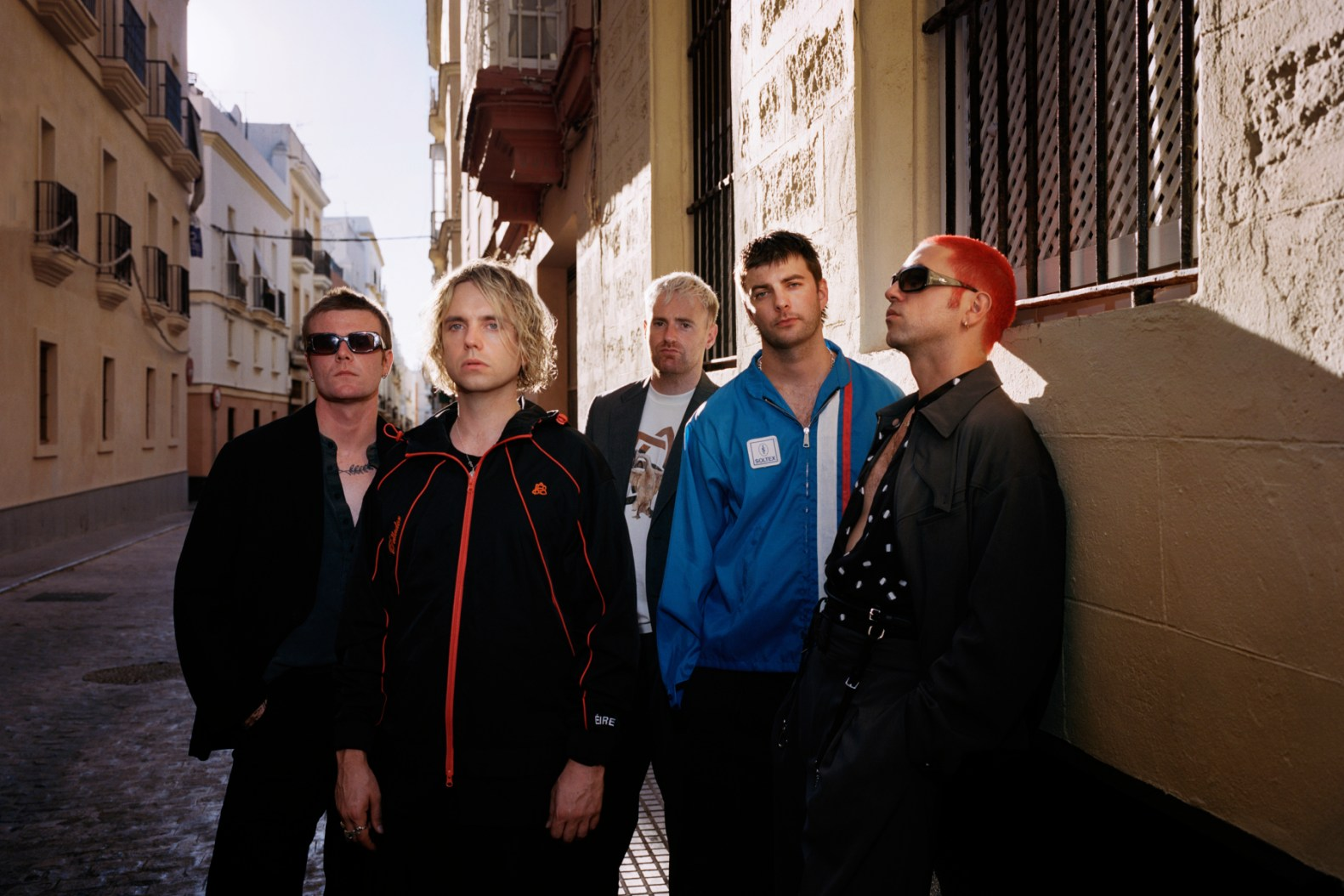
Fontaines D.C. have teamed up with Rosalía for their new collaboration, Where Is Gone?.
The song features on the Irish rock band's forthcoming album, Dopamine Chamber, which arrives on Friday (16.10.26). For guitarist Carlos O’Connell, working with the Spanish superstar is particularly special because of his own Spanish roots.
He explained: “I’ve admired Rosalía ever since her debut album, which I thought was absolutely beautiful.
“What excited me most was the way she continued to preserve Spain's musical traditions, something that felt spiritually connected to what we've been trying to achieve with Irish music. Having roots in both countries, it's been really special to witness. "She's an artist who has continued to amaze me at every point in her career.”
Frontman Grian Chatten has also described the collaboration with Rosalía as one of the most memorable achievements of his career.
He revealed that he felt "humbled" when she agreed to lend her voice to the band's album.
Speaking to NPR, Grian said: “I've always felt there's something almost like a single big idea that I'm personally trying to communicate to the world before I get old and die, if that makes sense. There's one thing I think I'll spend my life trying to express. I have a feeling she has a similar outlook. … I mean, she's an amazing arranger, composer and lyricist. It means so much that she wanted to sing on something we'd put together. It's definitely one of the highlights of my career.”
Rosalía's links to Irish rock music extend beyond Fontaines D.C. She also offered inspiration and helped develop the Spanish lyrics for U2's The Mirror Maker (Rosalía), a track from their forthcoming album, Carnaval de Luz.
During an appearance on The Tonight Show Starring Jimmy Fallon last week, she spoke about frontman Bono, saying: “I don't know him personally, but he sent me a text explaining that he was working on a new project and had written a song called The Mirror Maker."
Rosalía joked that Bono had invented a few words of his own.
She recalled telling him: “I wasn't sure what to make of it, but I told him he could create his own language if he wanted to.”
She described the opportunity to collaborate with the 66 year old music veteran as a real privilege.
She added: “Bono is a legend.
“It's amazing.”
Bono recently revealed that he was worried about seeming like a stalker when he reached out to Rosalía to ask whether he could name the song after her.