Amy Harris/Invision/AP
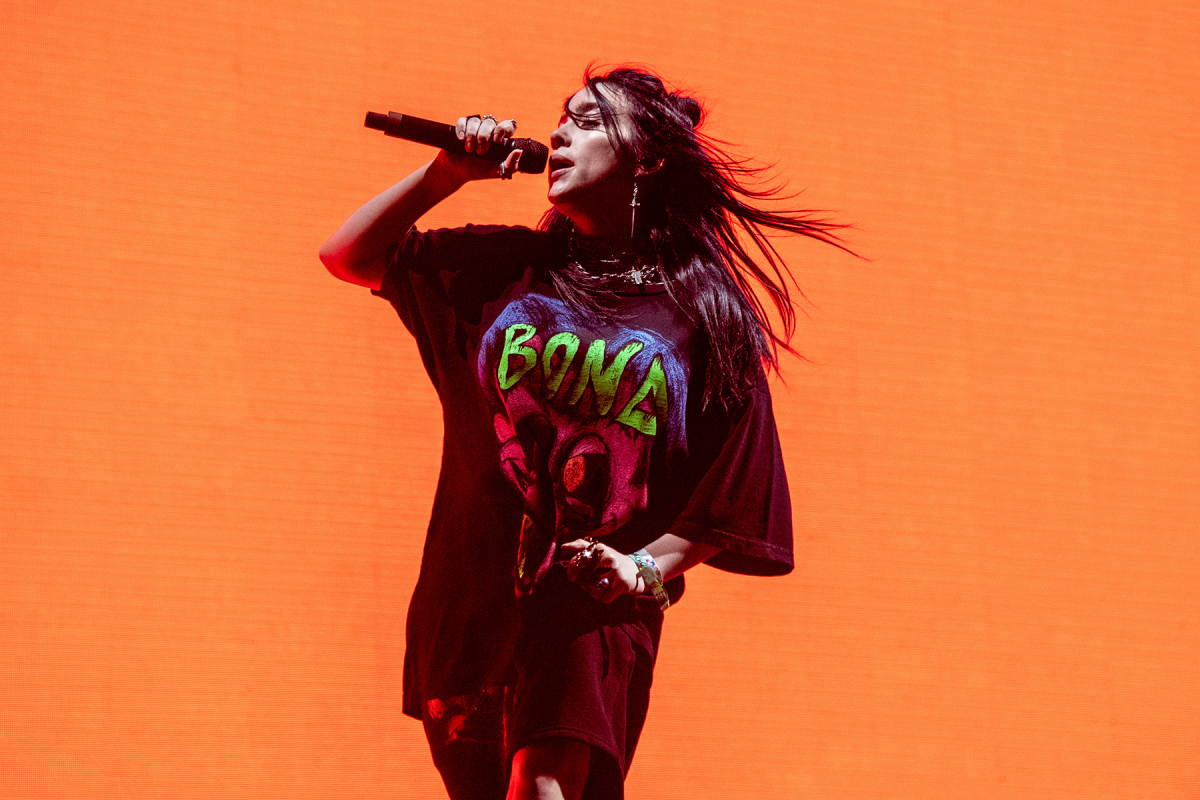
The singer’s “Where Do We Go? The Livestream” show aired Saturday from a stage enhanced by moody, immersive visuals and XR effects that punched up the ambitions of pay-per-view music

Eight months into live music’s pandemic-mandated shutdown, can livestreams offer anything we haven’t already seen? Billie Eilish’s “Where Do We Go? The Livestream” concert on Saturday night seemed highly cognizant of that question — serving up a meticulous visual affair, replete with lofty LED screens and extended-reality (XR) effects, that felt determined to recapture weary viewers’ attention.

With the feel of a highly produced music video, the show, which charged $30 a ticket, hit on all the strengths of livestreaming. Enormous animated creatures and chimeric landscapes whirled by around Eilish, her brother Finneas, and her drummer Andrew Marshall as they played into multiple roving cameras from a 60-by-24-foot stage; the trio’s sparse physical presence made for a striking silhouette to the rapidly shifting scenery, while the occasional close-up quick cut allowed the audience to feel like they were inside the performance itself. On a sidebar, fans had the ability to type into a chatroom and purchase Eilish’s merchandise.


“I can’t even tell you how bad I wish I could be on tour,” Eilish said onstage. “During quarantine, I think I realized that the only place I’ve ever felt myself, like I belong, is in front of you guys and with you guys.”

Her setlist featured a potpourri of hits like “Xanny,” “When the Party’s Over,” and “Ocean Eyes,” as well as her James Bond theme “No Time to Die” and her recent track “My Future.” Between songs, she also revealed that she and Finneas are working on her next album; shouted out the crew members who served as a substitute audience; and implored fans to vote in the upcoming election (“If we vote the orange man out, maybe we’ll get to see each other again. Trump is the worst!”).


Eilish performed from a studio stage in Los Angeles, but the show spanned cities, oceans, and worlds with its rapid-fire visuals. For “You Should See Me in a Crown,” the singer walked circles underneath a bus-sized spider, and during “Everything I Wanted,” a wall of fans’ faces came up to join Eilish on stage; later, she was devoured by the hulking white teeth of an animated shark, before reemerging to sing from the moon.

Behind the scenes, the production was similarly sprawling. Montreal-based creative production team Moment Factory (which has had worked with Eilish on in-person shows in the past), extended-reality group XR Studios, Los Angeles interactive studio Lili Studios, and livestreaming platform Maestro (which has also put on Covid-era shows for Melissa Etheridge and Tim McGraw) all worked on the design of the show. Maestro hosts virtual-, mixed-, and augmented-reality concerts, while Lili helps create 3D fan experiences. Brand partners on the livestream included Fender and Gucci.

Speaking of Gucci, the fashion house debuted a new season’s campaign, featuring Eilish, during the pre-show — which was one of the most unique aspects of the livestream. While Eilish took the live stage at 6 p.m. E.T., viewers were able to tune into pre-recorded videos starting one hour earlier, where they found Gucci’s new campaign, as well as a first look at Apple TV+’s Eilish documentary, some backstage footage, interactive quizzes, shoutouts from the likes of Steve Carrell, Alicia Keys, and Lizzo, and a short introduction to the back-of-house production staff filmed by Eilish herself.

“It’s important you know that people are losing jobs,” Eilish told fans from a handheld camera, referring to the financial damage that Covid has wrought on the live music industry, as she went around speaking to crew members. “So it’s important that we do this.” Eilish canceled her sold-out 2020 world tour in May due to the pandemic and has not yet offered rescheduled dates and venues. Portions of sales from her Saturday show also went to Crew Nation, a Covid relief fund created by Live Nation.

A sidebar allowed fans to share messages during Eilish’s pre-show and show.


Both the pre-show and the show laid out a refreshingly honest value proposition for Covid-era livestreaming: You’re not paying to see a live concert substitute; you’re paying to see a technological feat, to connect to music in a new way, and to support artists and crew members in a time of urgent need. If you’d put the livestream into a background tab and not paid any attention to the screen, then Eilish’s show might have seemed almost identical to a pared-down live show — I closed my eyes for a bit and heard the sound of Eilish’s set at Apple’s Cupertino theater in December last year — but you’d also have been missing the point.

(Another benefit of livestreams, by the way: All my nostalgia for live shows aside, it was extremely pleasant to wait only six minutes between pre-show and show, as opposed to, say, idling in a squeezed mass of people for an hour and a half.)

Eilish’s team, which controls the audience data from the livestream under Maestro’s business model, declined to provide details on the number of tickets sold. But high-resolution pay-per-view livestreams have proved a runaway success for established artists like BTS, which generated around $20 million in a single concert. In under a year, livestreaming has gone from a niche, shrugged-aside field into a juggernaut of the music business, with fresh investors including J Balvin, Scooter Braun, and Justin Bieber — though artists and production companies do have to fight a crowded landscape of competitors to make their projects stand out. According to Bandsintown, several thousand music livestreams are being put on every month, from superstars and emerging artists alike.

Eilish closed the set with “Bad Guy,” her Grammy-winning 2019 hit that took viewers back to quixotic pre-pandemic days. “Bad Guy” was also the most visually dizzying production of the night, putting Eilish and Finneas in quick-paced flashes of color as silhouettes of cars, people, and other objects circled around them, like a hallucinatory early 2000s iPod commercial.

And then it was over. (Highly choreographed digital livestreams are not, it turns out, ideal settings for encores.) “Vote, for God’s sake,” Eilish shouted into the mic a final time, before cameras panned out to show the scope of production — thick wires galore, clumps of production staff, and huge soundboards surrounding the screen-paneled stage — and the credits began to roll.

Kanye West, the artist and producer now going by Ye, stepped back onto a Los Angeles stage focused purely on the music during night one of his two show run at SoFi Stadium in Inglewood, California on Wednesday, April 1. The return arrives after years filled with controversy, public scrutiny, personal struggles involving mental health, and his January apology published in The Wall Street Journal addressing his antisemitic comments. Showing unusual restraint, the outspoken performer chose not to address any of the criticism during what marked his first major U.S. performance in years.

Public backlash did little to slow the momentum of the event as thousands of supporters filled the venue floor and stands. Many arrived dressed in Kanye merchandise, avoiding controversial imagery, along with lucha style shirts fresh from the merch counters. A look at ticket prices shows Ye continues to command major revenue from his catalog despite his offstage controversies. According to Ticketmaster, general admission tickets for the April 3 show were listed at $537.80. Resale listings for upper tier seats, which offered clearer views of his half sphere inspired stage design, were also priced in the hundreds. Fans who could not attend in person were able to watch through a livestream that appeared on his Instagram just hours before the performance began.

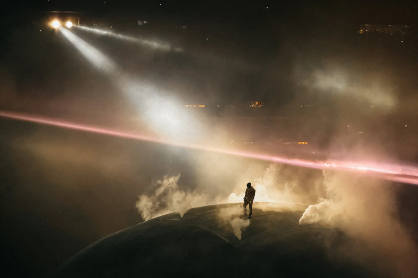
Across a two hour performance, Ye delivered a wide ranging set filled with classic favorites, repeated tracks, and selections from his recently released twelfth album Bully. Wearing a black face covering, he walked alone across the curved stage structure designed to resemble Earth and at moments gave the impression of a solitary figure on his own world.

The crowd reflected different generations of listeners as younger fans sang along to newer tracks such as “FATHER” and the André Troutman collaboration “ALL THE LOVE.” Energy spiked when a mosh pit formed during “Blood on the Leaves.” Older millennial fans found their nostalgia during a sequence of songs spanning Kanye’s early and mid career from 2004 through 2016, from The College Dropout through The Life of Pablo. Songs like “Can’t Tell Me Nothing” and “N—-s in Paris” echoed through SoFi Stadium with the same intensity as when Graduation or the Jay Z collaboration Watch the Throne first arrived. “Say You Will” and “Heartless” from 2008’s 808s & Heartbreak brought back familiar feelings tied to heartbreak and the era when Auto Tune shaped the sound of pop and hip hop. The closing stretch featuring “All Falls Down,” “Jesus Walks,” “Through the Wire,” “Good Life,” “All of the Lights,” and the emotional finale “Runaway” sparked a sense of longing for earlier days both for fans and for the Chicago native himself.

Aside from the nostalgic song choices, technical problems occasionally interrupted Ye’s creative plans. Early performances of “KING” and “THIS A MUST,” which he later repeated, were affected by microphone and audio complications. He also stopped “Good Life” three separate times because he was unhappy with what he called the “corny” lighting setup. “Is this like an SNL skit or something?” he asked the production team. “Stop doing the vibrating Vegas lights, bro. We went over this in rehearsal.” The first SoFi Stadium show almost felt like a preparation run for the April 3 performance, which also happens to land on Good Friday. The timing also recalls the G.O.O.D. Friday song releases that led into his landmark 2010 album My Beautiful Dark Twisted Fantasy.

Despite frustrations with the production, Ye did not perform alone. Longtime collaborator Don Toliver joined him onstage for performances of “Moon” and his own track “E85.” Ye’s daughter North also appeared, bringing bright energy and her blue hair to performances of “Talking” and “PIERCING ON MY HAND.” She wore one of her father’s concert shirts during the appearance, all while it was still a school night.

As the concert continued, Ye handled the technical setbacks as they happened without turning the situation into a rant. For longtime fans, separating his unpredictable public behavior from his extensive catalog of influential songs remains complicated, especially for those who still feel connected to his earlier creative periods. At the same time, his former close collaborator Jaÿ Z is preparing for his own stadium appearances this summer, which adds another layer of reflection about what their partnership once represented. Ye may be staying quiet publicly for now, yet questions remain about whether a full redemption era could still be ahead.

Ye 2026 Set List

1. KING
2. THIS A MUST
3. FATHER
4. ALL THE LOVE
5. Father Stretch My Hands, Pt. 1
6. Can’t Tell Me Nothing
7. N—-s in Paris
8. Mercy
9. Praise God
10. Black Skinhead
11. On Sight
12. Blood on the Leaves
13. Carnival
14. Power
15. Bound 2
16. Say You Will
17. Heartless
18. Moon (with Don Toliver)
19. E85 (Don Toliver)
20. KING
22. THIS A MUST
22. FATHER
23. ALL THE LOVE
24. Talking (North West)
25. Piercing On My Hand (North West)
26. Everybody
27. All Falls Down
28. Jesus Walks
29. Through the Wire
30. Good Life
31. All of the Lights
32. Runaway

This article was originally published on VIBE.
CONTINUE READING