

In 2018, Lee Bains was at a Swedish university, where he’d been invited to speak about music and movement-building, when a student asked him a question he still thinks about to this day: Given Bains’ interest in social justice organizing, the student wanted to know if Bains ever wrote songs with the idea of people being able to sing along to them?
“Not really, to be honest,” Bains replied.
“The reason I ask,” Bains remembers the student saying, “Is that in the early 20th century Swedish labor movement, there would be songs adapted from hymns, so everyone knew the tunes. Entire picket lines could sing them in the union hall.”
The Alabama-via-Atlanta singer-songwriter and frontman of the Southern punk band Lee Bains and the Glory Fires says the idea that a song could be both easy to sing along to and radical — and in fact, that one quality could amplify the other — had never quite occurred to him. Bains had grown up in Birmingham’s punk and hardcore scene, and, after his band the Dexateens disbanded in the early 2010s, he’d devoted the next dozen years of his life to the Glory Fires, whose formula for liberation tended to mean playing as fast and cramming in as many words as you possibly can.
“I had all this shit I wanted to say,” as Bains puts it, “and I wanted it to kick ass.”
But after releasing the band’s superb Youth Detention in 2017, Bains couldn’t shake the Swedish student’s comment. “It really stuck with me, the notion of a sing-along,” says the 37-year-old singer-songwriter. “I tend to associate that with commercialism — give them something that they can spit back at you in a beer commercial. But the way he framed it is that it’s also solidarity.” Bains also realized that what the student was describing was also, essentially, the foundation of Southern musical tradition: call and response.
That notion of sing-song solidarity ended up becoming a guiding principle of Old-Time Folks, the stunning new record from the Glory Fires, due later this year. Although it’s filled with plenty of high-charged punk, Old-Time Folks represents a slowing down and a new emphasis for Bains’ decade-long project of intersectional Southern storytelling alongside bandmates Adam Williamson (bass) and Blake Williamson (drums). On songs like “Gentleman,” “Rednecks,” and “Old Friends,” he uses rootsy balladry to address typically weighty topics: gentrification, right-wing social media conspiracy theories, and class consciousness.
“All the punk bands I tended to like [growing up] were always the one you could sing along to,” says Bains, who found himself intrigued by the idea of cloaking confrontational subject matter in pop melodies, in the tradition of acts like Billy Bragg and Chumbawamba and Bad Moves. “I’ve been listening to a lot of music that felt like it did that: inviting people into ideas that might be challenging or subversive.”
After spending a decade resisting tempos that dipped below 150 beats per minute on banged-out, breakneck records like 2012’s scrappy There Is A Bomb In Gilead and 2014’s rowdy Dereconstructed, Bains finally listened to another piece of advice. For years, the band’s friend and producer Tim Kerry had always told Bains the same thing: “Turn the vocals up…You spend all that time working on those lyrics. You gotta let them hear you.”
The Glory Fires were sick by this point of knocking out their albums in three-day recording sessions. They turned to David Barbe, the producer who’s spent the past 20 years helping another band — Drive-By Truckers — disguise deep, dark songwriting in appealing power chords.
“I always thought there was a different kind of record in Lee, and another type of record-making that would bring out the most savory juices of what his songs are all about,” says Barbe, who compares the LP’s majestic reach to All Things Must Pass. “There are songs on this album that are so much grander in scope than a lot of his previous work.”
Bains and his bandmates recorded Old-Time Folks over several sessions in Athens, Georgia, that stretched from 2019 to 2021. Now that he finally had time to flesh out his ideas, Bains obsessed over each detail. That perfectionism was on full display on a Zoom visit to the studio last year, as the band tried to nail the “Old-Time Folks” reprisal that concludes the LP. The band kept tweaking the arrangement, adding a mandolin, even a lute at one point, but Bains wasn’t quite satisfied.
“That’s the thing about this song,” Bains told his bandmates after yet another take. “It’s like when you’re acting up in church and your mom’s whispering in your ear, but she’s whispering that she’s gonna kick your ass. That’s what this needs: leaned back but intense.”
His initial plan for the record was to write a set of songs set in the ancestral lands of the Muscogee-Creek people, a vast swath including much of what is now western Georgia and Alabama. “I was interested in writing a history of collective resistance to power in that land’s occupied history,” he says. “That was my boundary: the way these chains of events affected these pockets of land, whether it’s Atlanta or Birmingham or Tallasee or Talladega.”
On the title track, which begins with audio of an Angela Davis speech, Bains traces a 500-plus year history of Southeastern resistance, from the Muscogee people facing down 16th-century Spanish conquest to protestors in downtown Atlanta getting tear-gassed. On the song’s reprise, Bains’ writing borders on poetry: “Would they call the cops on Reverend Hosea Williams, armored in overalls/Sipping corn with barbershop comrades, unbought and unbossed?” he sings. “They whooped the Klan, damn right/This street bears his name/Like freedom ain’t the end of the line; it’s a holy old road.”
Central to Bains’ writing, in both his songs, and his poems about Southern food (published last year in the New Yorker), is an insistence in broadening the scope of stories that get told about places like Birmingham and Atlanta.
“The South is still, for a lot of people, such a flat experience, often a white experience, and I really appreciate Lee for breaking that apart and saying, ‘No, it’s more complicated than that,’” says Regina Bradley, a professor of English at Kennesaw State and author of Chronicling Stankonia. “Lee refuses to allow his work to fall into that trap of, ‘I’m breaking new ground.’ It’s more like, ‘I’m just giving you a different perspective of how to get there so that you can do that work.’ Oftentimes, that work of discovery is painful, but Lee does that so well: There’s a consistent discovery and rediscovery about how Southerness is multifaceted, multi-pronged…He’s saying, ‘I have to confront this shit that others won’t, or can’t.’”
On “The Battle of Atlanta,” a Civil War clash is a stand-in for the 150-year fight for the soul of a city. On “Done Playing Dead,” Bains envisions the region’s history coming to life as a righteous, multigenerational zombie awakening.
“Part of what I was trying to do was write against this notion of us being at the end of history,” says Bains. “Even if it feels like we exist in a place and time where we’re just looking at our phones and we’re in this moment that has never existed before — because that’s often how it’s written and talked about: ‘This is unprecedented.’ It’s like, no. It’s completely precedented.”
Like many independent musicians, Bains has a day job: For the past decade, he’s worked a series of construction and maintenance jobs and home repair gigs. But unlike so many musicians, who view their day jobs as a begrudging financial necessity, Bains’ work is central to his identity as an artist and citizen. Sometimes, experiences on the job find their way into his music, like on “Rednecks.” The chorus for the song (“Don’t call her a redneck/She’s your sister”) came to Bains as he was picking up trash at work and overheard a coworker being talked down to.
In 2018, a photo of him wearing the blue-jean overalls he’d put on for work that morning before heading downtown to protest the Atlanta city jail imprisoning ICE detainees briefly became a meme. “Me and my friends were like, ‘Man, you’ve been fucking writing songs about this shit, trying to be smart and thoughtful and artful for years, and people are like, whatever,’” he says wryly. “But a picture of you and a fucking sign that took me five minutes to scribble out…”
Bains’ relationship to work informs the new record’s themes of collective identity, whether on the title track, “God’s A-Working Man,” or “(In Remembrance of the) 40-Hour Week.” At one point, Bains even considered calling the album A People’s History.
“Central to this record is the idea of work and labor, whether that’s a day job or making art,” he says. “That concept of being a worker among workers is something I was trying to explore. We’re socialized to think of history and society as being a bunch of individuals living their own lives. I’ve been more interested in the notion of collective identity shaping not just our society, but our selves.”
Tied to those notions of work and liberation for Bains is his Christian faith, which shows up all over Old-Time Folks. When I ask Bains if he is a practicing Christian, he responds by saying “I am practicing at it,” before erupting into laughter. “I haven’t won the ballgame.”
Bains had walked away from the church earlier in his life, but he’s been a regular churchgoer for the past decade. In recent years, he’s scrutinized the scripture he grew up on, the way it divides the world into good and bad, but for him, spiritual life is a necessary counterpoint to the forces of exploitation and alienation. “It’s offered justice and liberation and reconciliation and openness and all that kind of stuff,” he says.
Bains returns to the comment from the Swedish student. He hopes Old-Time Folks is the Glory Fires record that summons new audiences, that his sing-along choruses are catchy enough, this time around, to trick a listener into hearing about the surveillance state and the prison-industrial complex and corporate greed in the verses. He hopes his coworkers might dig the album. He dreams that it might even, years from now, lead to the type of moment he still remembers as a kid: the first time he saw a man cry, a burly biker weeping to “Simple Man” at a Skynyrd show. (“What a subversive song that is,” he says now.)
He’s not sure if any of this will happen, but he knows that if he’s achieved anything on Old-Time Folks, it’s that he’s made a record bound to invite more people than ever into the Glory Fires’ welcoming world of Southern resistance.
“That’s the thing that I’ve fallen in love with about music again, is its way of inviting,” Bains says with a smile. “It can just invite us into something, together.”
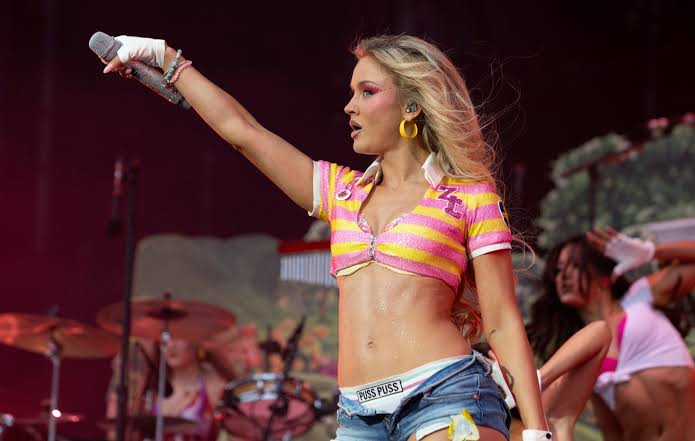
Zara Larsson has indicated that she may have cancelled her December 3 appearance at the Formula One Abu Dhabi Grand Prix. The singer initially confirmed that she would not attend, before removing the comment and sharing a more detailed explanation of why the performance no longer feels right for her.
The Swedish star was scheduled to take the stage at Etihad Live on Yas Island during the Yasalam After-Race Concerts. Zara and Lewis Capaldi were due to launch the weekend’s entertainment. However, supporters encouraged her to reconsider the booking because of concerns surrounding the United Arab Emirates’ reported connections to Sudan’s Rapid Support Forces, a paramilitary organisation accused of committing atrocities during the nation’s civil conflict.
A fan commented: “Please read about what UAE is doing to Sudan then cancel your Abu Dhabi show!” Zara responded: “I will not be going to Abu Dhabi.” Fans later realised that both comments had been removed.
She then shared that she had been considering what it means for her, as an artist, to perform in particular countries.
The Midnight Sun singer explained: “I think about that a lot in my life as an artist… I wanna perform and spread joy and music for people in every country, because no single person is their government.
“I’ve met so many wonderful people from every corner of the world and I know this to be true in my heart. I love people, and I love my fans soooo much.”
Zara acknowledged that her original comment “maybe came off as an impulsive response,” but explained that she had given the booking serious thought. She now believes withdrawing is the decision that “aligns with me the most right now, for many different personal reasons beyond politics.”
She continued: “Maybe I’ll delete both comments and do a better statement soon. I hope to sing with you in the beautiful future!”