
Nick Cave paid tribute to his friend and occasional collaborator, Mark Lanegan, in his Red Hand Files newsletter. Lanegan, who fronted Screaming Trees before embarking on a solo career, died Tuesday at the age of 57.
“I encountered Mark many times over the years — we engaged in some extremely dubious escapades back in the Nineties; he sang ‘White Light/White Heat’ and ‘Fire and Brimstone’ with Warren [Ellis] and me on the Lawless soundtrack; he recorded my favorite ever Nick Cave cover — an astonishing version of ‘Brompton Oratory’; we did something together for the Jeffrey Lee Pierce record, I think; and he toured and hung out with us on the Bad Seeds’ 2013 Australian tour,” Cave wrote.
With Lanegan, the feeling was mutual. In his 2020 memoir, Sing Backwards and Weep, he describe Cave’s music as one of his biggest inspirations. “I’d been a huge fan of Nick Cave for years,” Lanegan wrote. “I felt a deep connection to his music, and he and the Bad Seeds had been a central influence on the solo records I’d been toiling away at for some years now.”
Cave continued his tribute by praising the way Lanegan duetted with him on one of the Bad Seeds’ classic songs on the 2013 Australian tour. “Go online and watch Mark sing Blixa [Bargeld’s] ‘father’ part with me in ‘The Weeping Song’ on that tour,” Cave wrote. “As a frontman, I move around a lot on stage, I can’t help it, it is a habitual nervous thing, a kind of neurotic compensation for a voice I have never felt that comfortable with. But watch Mark, watch how he walks onto the stage, plants himself at the mic stand, one tattooed fist halfway down the stand, the other resting on top of the mic, immobile, massive, male. When the time comes to sing, he simply opens his mouth and releases a blues, a blues lived deeply and utterly earned, and that voice tears right through you, his sheer force on stage absolutely humbling. A greatness, Mark, a greatness — a true singer, a superb writer and beautiful soul, loved by all.”
A few days after Lanegan’s death, drummer Barrett Martin also paid his respects on Instagram. Martin joined Screaming Trees in time to record their Sweet Oblivion album, which contained the group’s breakthrough hit, “Nearly Lost You,” as well as its 1996 follow-up Dust. He was also a member of Mad Season, the supergroup that featured Alice in Chains’ Layne Staley and Pearl Jam’s Mike McCready; Lanegan co-wrote and performed on two songs from their only album, 1995’s Above.
“Mark was full of contradictions to be sure, but how else could he be, when he was destined to sing the blues?” Martin wrote. “Only those who understand the darkness of humanity can also sing about its light, and Mark could sing both, superbly. Because of that contradiction, we [in Screaming Trees] understood Mark in a way that only a literal band of brothers can understand, because we saw it all, firsthand, together, in those decades on the road and in the studio.
“Mark had a voice for the ages, truly one of the great American vocalists of all time,” he continued. “Critics often claimed that his voice came from whiskey drinking, but Mark sang like that when he was young and sober, an ancient voice transplanted inside a young man’s body. By the way, we never saw Mark touch a drop of whiskey — gin & tonic was his preferred drink, and a lot of cigarettes.”
Martin went on to write that after Screaming Trees broke up in 2000, the band joked that its members could finally become friends and that they kept in touch occasionally. When Lanegan published Sing Backwards and Weep — which contains several brutal passages about his Trees bandmates — Martin wrote that it took some time to make sense of it. “After the initial shock wore off, we all made peace and laughed at Mark’s wry sense of humor and great storytelling style,” he wrote. “Mark had the ability to tell the most horrific of stories, yet have you chuckling out loud as he spun the yarn to its conclusion. He had that sharp wit that all great writers have, because he also had a keen view into the hearts of people – and he showed us the full spectrum of humanity.”
Lanegan’s frequent collaborator, Isobel Campbell, also remembered Lanegan fondly in an essay for The Guardian. Between 2006 and 2010, Lanegan and the former Belle and Sebastian member recorded three albums together. “People said we were beauty and the beast,” she wrote. “Yet I witnessed your beauty and I could frequently inhabit beast. Light and dark. Angel and devil. Of our records, you said you were ‘happy for me to do the heavy lifting.’ Yet you brought my songs to life.”
Earlier this week, Eddie Vedder also paid tribute to Lanegan at one of his solo concerts, in Seattle. “There are a lot of really great musicians, some people know Seattle because of the musicians that have come out of the great Northwest,” he told the audience. “Some of those guys were one-of-a-kind singers. Mark was certainly that and with such a strong voice.”
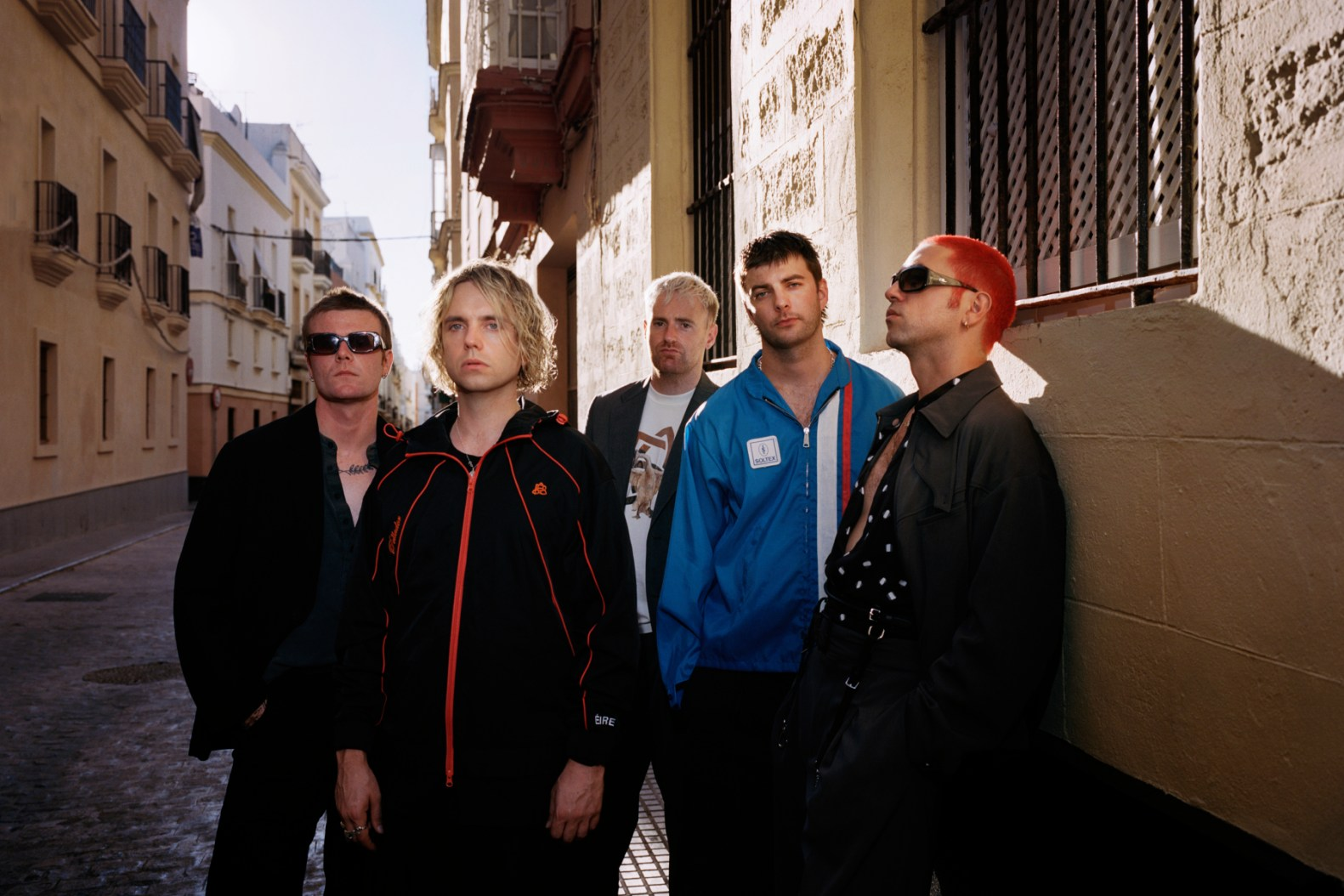
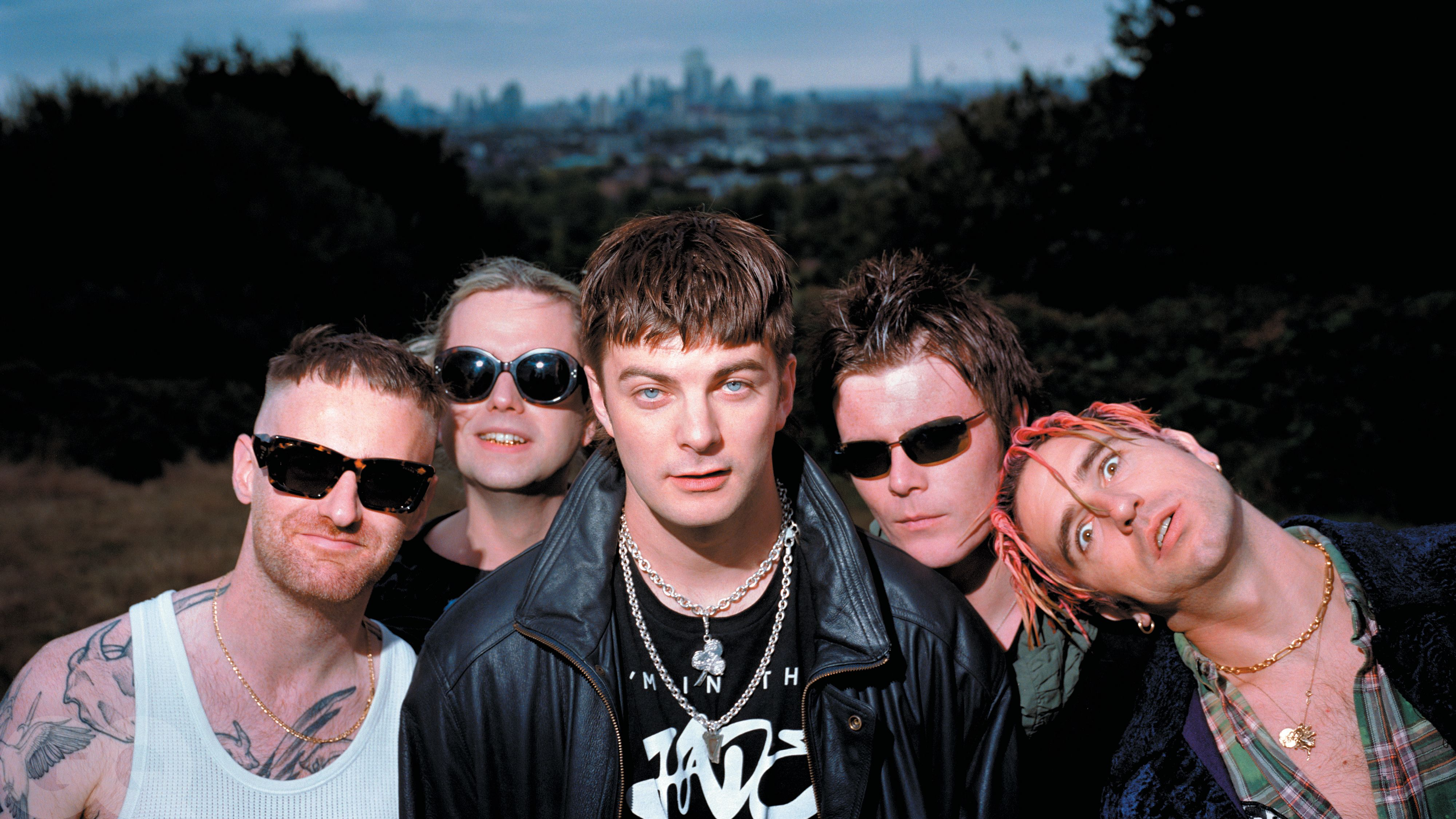
Fontaines D.C. have teamed up with Rosalía for their new collaboration, Where Is Gone?.
The song features on the Irish rock band's forthcoming album, Dopamine Chamber, which arrives on Friday (16.10.26). For guitarist Carlos O’Connell, working with the Spanish superstar is particularly special because of his own Spanish roots.
He explained: “I’ve admired Rosalía ever since her debut album, which I thought was absolutely beautiful.
“What excited me most was the way she continued to preserve Spain's musical traditions, something that felt spiritually connected to what we've been trying to achieve with Irish music. Having roots in both countries, it's been really special to witness. "She's an artist who has continued to amaze me at every point in her career.”
Frontman Grian Chatten has also described the collaboration with Rosalía as one of the most memorable achievements of his career.
He revealed that he felt "humbled" when she agreed to lend her voice to the band's album.
Speaking to NPR, Grian said: “I've always felt there's something almost like a single big idea that I'm personally trying to communicate to the world before I get old and die, if that makes sense. There's one thing I think I'll spend my life trying to express. I have a feeling she has a similar outlook. … I mean, she's an amazing arranger, composer and lyricist. It means so much that she wanted to sing on something we'd put together. It's definitely one of the highlights of my career.”
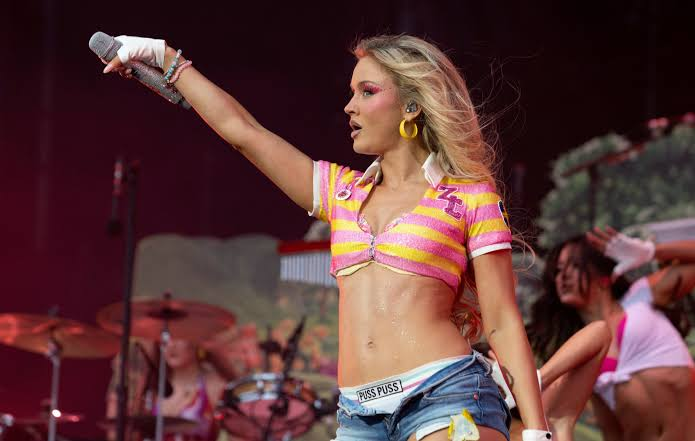
Rosalía's links to Irish rock music extend beyond Fontaines D.C. She also offered inspiration and helped develop the Spanish lyrics for U2's The Mirror Maker (Rosalía), a track from their forthcoming album, Carnaval de Luz.
During an appearance on The Tonight Show Starring Jimmy Fallon last week, she spoke about frontman Bono, saying: “I don't know him personally, but he sent me a text explaining that he was working on a new project and had written a song called The Mirror Maker."
Rosalía joked that Bono had invented a few words of his own.
She recalled telling him: “I wasn't sure what to make of it, but I told him he could create his own language if he wanted to.”
She described the opportunity to collaborate with the 66 year old music veteran as a real privilege.
She added: “Bono is a legend.
“It's amazing.”
Bono recently revealed that he was worried about seeming like a stalker when he reached out to Rosalía to ask whether he could name the song after her.