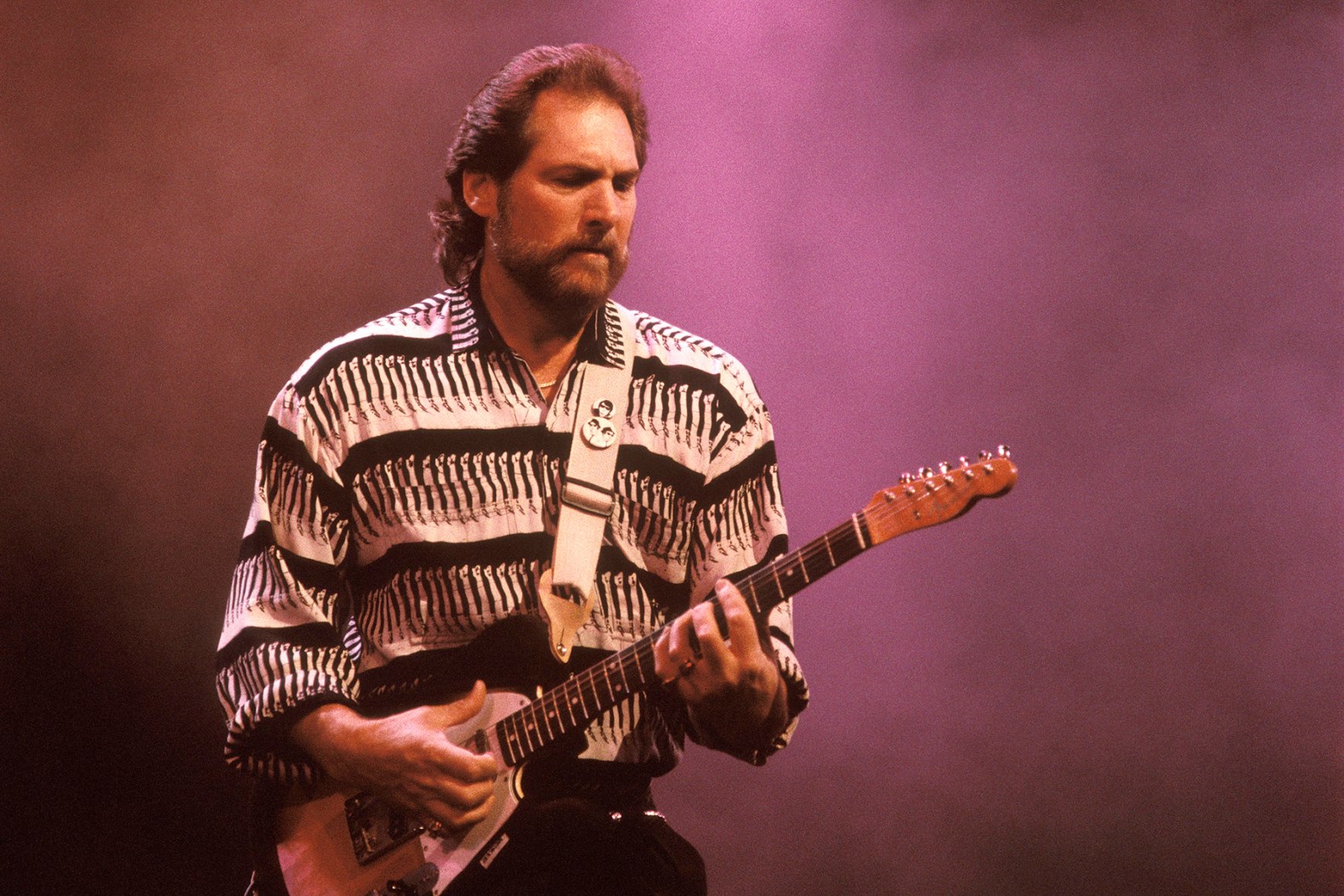

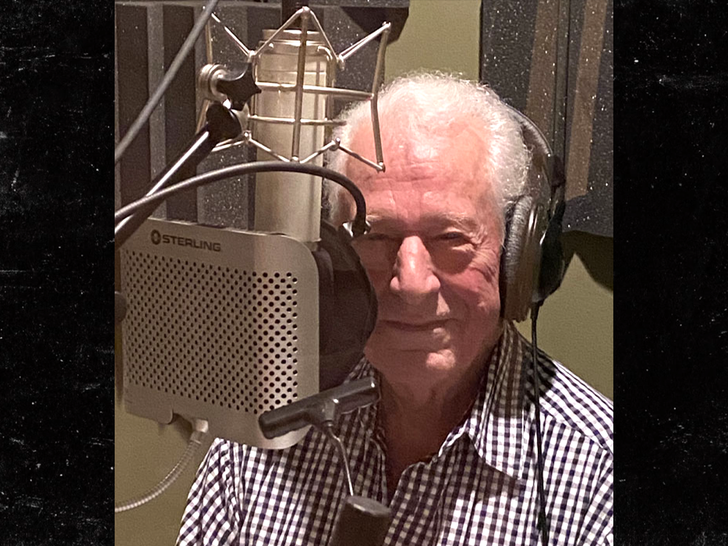
Dave Burgess, the guitarist, songwriter, and original member of the influential rock and roll group The Champs, has passed away at the age of 90.

An obituary confirmed that he died on October 19, 2025, in Dover, Tennessee.

Burgess became widely known as the creative force behind The Champs, the group that broke through with their 1958 instrumental hit Tequila. The track was first released as the B-side to Train to Nowhere, but radio stations quickly flipped the record and gave Tequila heavy play. In only a short time, the song climbed to the top of the Billboard pop chart and earned the first Grammy Award for Best R'n'B Performance.

Born on December 3, 1934, in Los Angeles, Burgess entered the music world during the early period of rock and roll. He took his stepfather’s last name and began recording as a solo performer before forming The Champs in the late 1950s. The group featured saxophonist Chuck Rio, whose real name was Daniel Flores, who wrote Tequila and delivered its iconic shouted line.

The Champs produced several hits throughout the late fifties and early sixties, but Tequila remained the song that secured their legacy. Its lasting popularity grew even stronger after it appeared in the 1985 cult film Pee-wee’s Big Adventure, where it accompanied an unforgettable dance scene.

Outside of his time with The Champs, Burgess built a long career as a songwriter and producer. He was credited with more than seven hundred copyrighted works, and his creativity reached across multiple genres, influencing the sound of early American rock and roll.

Burgess is survived by his son, David. He was preceded in death by his wife, Deon, and his daughter, Charmaine. A celebration of his life took place on November 8 at Anglin Funeral Home in Dover.

Steve Cropper, the Rock & Roll Hall of Fame guitarist who helped form the “Memphis soul” sound on Stax Records recordings by Otis Redding, Wilson Pickett, and Booker T & the MG.s, died on Wednesday. He was 84.

“The Cropper family announces with profound sadness the passing of Stephen Lee Cropper, who died peacefully in Nashville today at the age of 84,” his family said in a statement. A cause of death was not immediately available. “Steve was a beloved musician, songwriter, and producer whose extraordinary talent touched millions of lives around the world.

“While we mourn the loss of a husband, father, and friend, we find comfort knowing that Steve will live forever through his music,” they added. “Every note he played, every song he wrote, and every artist he inspired ensures that his spirit and artistry will continue to move people for generations to come.”

“Steve Cropper’s offerings to American music are significant but his contribution to soul and R&B music are immeasurable,” Pat Mitchell Worley, president and CEO of the Soulsville Foundation that operates the Stax Museum of American Soul Music in Memphis, added in a statement. “His songwriting and guitar work shaped the very language of soul music. A gifted songwriter, producer, and musician, Cropper helped create timeless hits that continue to influence artists and people worldwide. His signature style helped define an era and cemented his legacy as one of the most important guitarists in modern music history.”

As the founding guitarist in Stax’s house band during the Memphis label’s hit-making prime, Cropper played on classics like Sam & Dave’s “Soul Man,” Booker T. & The MG’s “Green Onions,” Wilson Pickett’s “In the Midnight Hour,” and Redding’s “(Sittin’ On) The Dock of the Bay,” with Cropper also serving as co-writer on the latter three hits. 

“Cropper has been the secret ingredient in some of the greatest rock and soul songs,” Rolling Stone wrote when placing Cropper at Number 45 on the list of the 250 Greatest Guitarists of All Time.

“His spare, soulful playing has appeared on records by dozens of rock and R&B artists, including a stint in the Blues Brothers’ band. Think of the introduction to Sam and Dave’s ‘Soul Man,’ the explosive bent notes in Booker T.’s ‘Green Onions,’ or the filigreed guitar fills in Redding’s ‘(Sittin’ on) The Dock of the Bay’ — they all bear Cropper’s signature sound, the quintessence of soul guitar.”

“I don’t care about being center stage,” Cropper once said. “I’m a band member, always been a band member.”

For “Dock of the Bay,” ranked Number 26 on Rolling Stone‘s list of the 500 Greatest Songs of All Time, Cropper contributed the track’s guitar chords and rhythm to Redding’s lyrics about his experience on a Sausalito houseboat.

“Me being a purist kind of guy I said, ‘Otis, did you ever think that if a ship rolls it’s going to take on water and sink,’” Cropper recalled to Rolling Stone in 2017, “and he said about the lyric, ‘Hell, Crop, that’s what I want,’ and Otis always got his way.”

However, the platinum-selling Number One song wasn’t released until January 1968, a month after Redding’s death in a small plane crash. Cropper finished work on the song in the immediate aftermath of Redding’s death. “I didn’t know we were the same age until I read an obituary,” Cropper told RS in 2024. “I always thought Otis was older. I looked up to him as an older brother. Why? He was so wise.”


“One of the hardest things I ever had to do was mix that song,” Cropper told Rolling Stone. “I stayed up 24 hours mixing the song. The next morning I went out to the airport, went out on the tarmac and a stewardess came down to the bottom of the steps and I handed her that master.”

The Missouri-born Cropper moved to Memphis as a child, with the Tennessee city exposing him to gospel music. As a teenaged guitarist, Cropper co-founded the band the Mar-Keys, with that group recording the classic instrumental “Last Night” for the local Stax label in 1961, one of the first tracks released by the label after it changed its name from Satellite Records to Stax.

The Mar-Keys soon became the in-house band for Stax; in addition to backing the artists that recorded at Stax’s studio, members of the Mar-Keys themselves were rebranded as Booker T. & The MG’s (fronted by Mar-Keys keyboardist Booker T. Jones) for their own releases.

Following his legendary, nearly decade-long stint at Stax, Cropper moved to Los Angeles and became a go-to session musician, playing on tracks by artists like John Lennon (1975’s Rock ’n’ Roll), Ringo Starr, Leon Russell, Rod Stewart and, notably, the Blues Brothers, with Cropper also appearing in the 1980 comedy about the Saturday Night Live sketch (and revisited his work on Sam & Dave’s “Soul Man”). “Duck [Dunn, MG’s bassist] and I got a lot of flack” for the Blues Brothers, Cropper told RS in 2024. “They said, ‘What are you guys doing, playing with a couple of crazy comedians?’ I said, ‘Get out of here. You gotta be nuts. Off the bat, you don’t know that John, before Second City, was fronting a band, playing drums and singing? And Dan is really is playing harmonica.”

Throughout the Seventies, Cropper also produced albums by the Jeff Beck Group, John Prine, Poco, and John Mellencamp (including his early hits “AIn’t Even Done with the Night” and “This Time”). Cropper and the MGs also backed Neil Young on his 2002 album Are You Passionate? and toured briefly with Young.

Cropper was inducted into the Rock and Roll Hall of Fame in 1992 as a member of Booker T. & the MG’s. A two-time Grammy Award winner, Cropper also received the Grammys’ lifetime achievement award in 2007.


CONTINUE READING