
After first rising to prominence with the expansive, 1980s-inspired dream-pop of ‘Preacher’s Daughter’ and its standout tracks, Ethel Cain has spent much of her artistic journey trying to step away from that sound. She’s leaned into a moodier mix of drone, ambient rock, and raw analogue textures. “I’m not a fucking pop artist,” the Tallahassee singer once told The FADER, adding, “I reject that wholeheartedly.” Her experimental projects ‘Perverts’ and ‘Willoughby Tucker, I’ll Always Love You’ make that stance very clear, and her latest tour often feels like a firm break from the softer sounds that brought her into the spotlight.
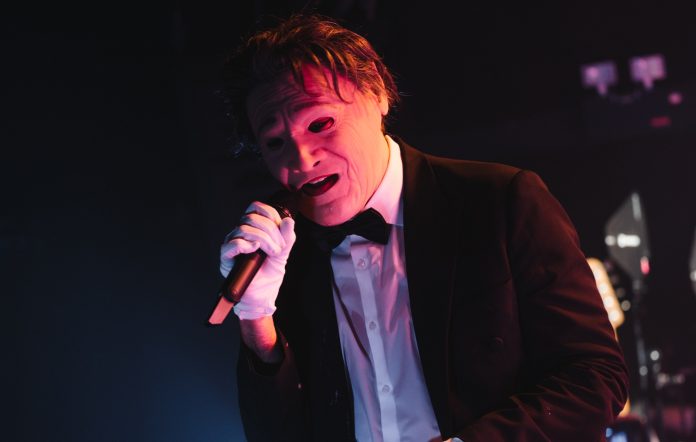
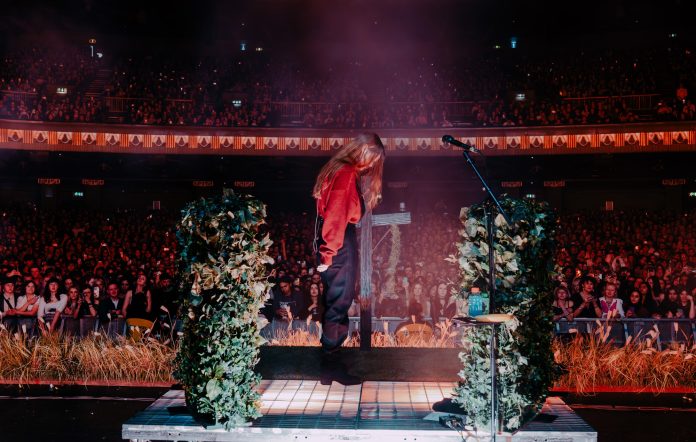
For the first of her five headline nights at Hammersmith Apollo, Hayden Anhedönia builds a scene that feels like a slightly playful, gently eerie B-movie graveyard. She spends most of the performance tucked inside a moss-covered altar, surrounded by dramatic lighting and a crucifix mic stand. The show is nearly silent when it comes to onstage chatter. The rare moments she does address the audience are understated and easy to miss. When a fan shouts their love for her, she responds with a simple “Thank you!” from the darkness.
Instead of walking the stage to build energy, the lighting design carries that weight, mirroring the intensity of her songs. During the gritty, heavy ‘Dust Bowl’, she sings inside a slowly circling beam of light that sweeps across the Apollo with piercing brightness, while strobing green and white lights heighten the tension during long instrumental passages.
 Ethel Cain. Credit: Connie Burke
As the warm, rough-edged guitars of ‘Knock At The Door’ fill the room, the production shows it can match the strange, atmospheric side of Cain’s catalogue, even if those moments are rare tonight. The set doesn’t lean heavily on ‘Perverts’, but brief pieces of ‘Houseofpsychoticwomn’ and the title track make their way in. The industrial ballad ‘Vacillator’ appears in full, bathed in stark white light as she softly sings, “If you love me, keep it to yourself,” on a track heavy with buried emotion.
For the most part, the night is devoted to ‘Willoughby Tucker, I’ll Always Love You’. The album slows the cinematic Southern Gothic of her debut ‘Preacher’s Daughter’ and explores the dizzying pull of a teenage love triangle. The shimmering synths of ‘Fuck Me Eyes’ and the lush strings of ‘Nettles’ bring an early glow, before the performance drifts into hazy ambient dream-rock reminiscent of Grouper. The mood is thick and steady, though it lacks big shifts in dynamics, leaving the set on a single emotional wavelength.
When ‘Tempest’ is briefly stopped and restarted so medics can help an audience member, ‘Waco, Texas’ follows as the main set closer. The encore then pivots toward older material, shifting the tone entirely. After a heartfelt ‘A House in Nebraska’, Anhedönia steps out from behind her green altar for the first and last time, moving into the brighter side of her discography with ‘Crush’ and ‘American Teenager’. Even though she has expressed discomfort with her most well-known tracks, their contrast with her darker material gives the finale a powerful lift. After holding the room in quiet tension for so long, their arrival feels like a release that lands with even greater impact.
MUSIC PREMIERES
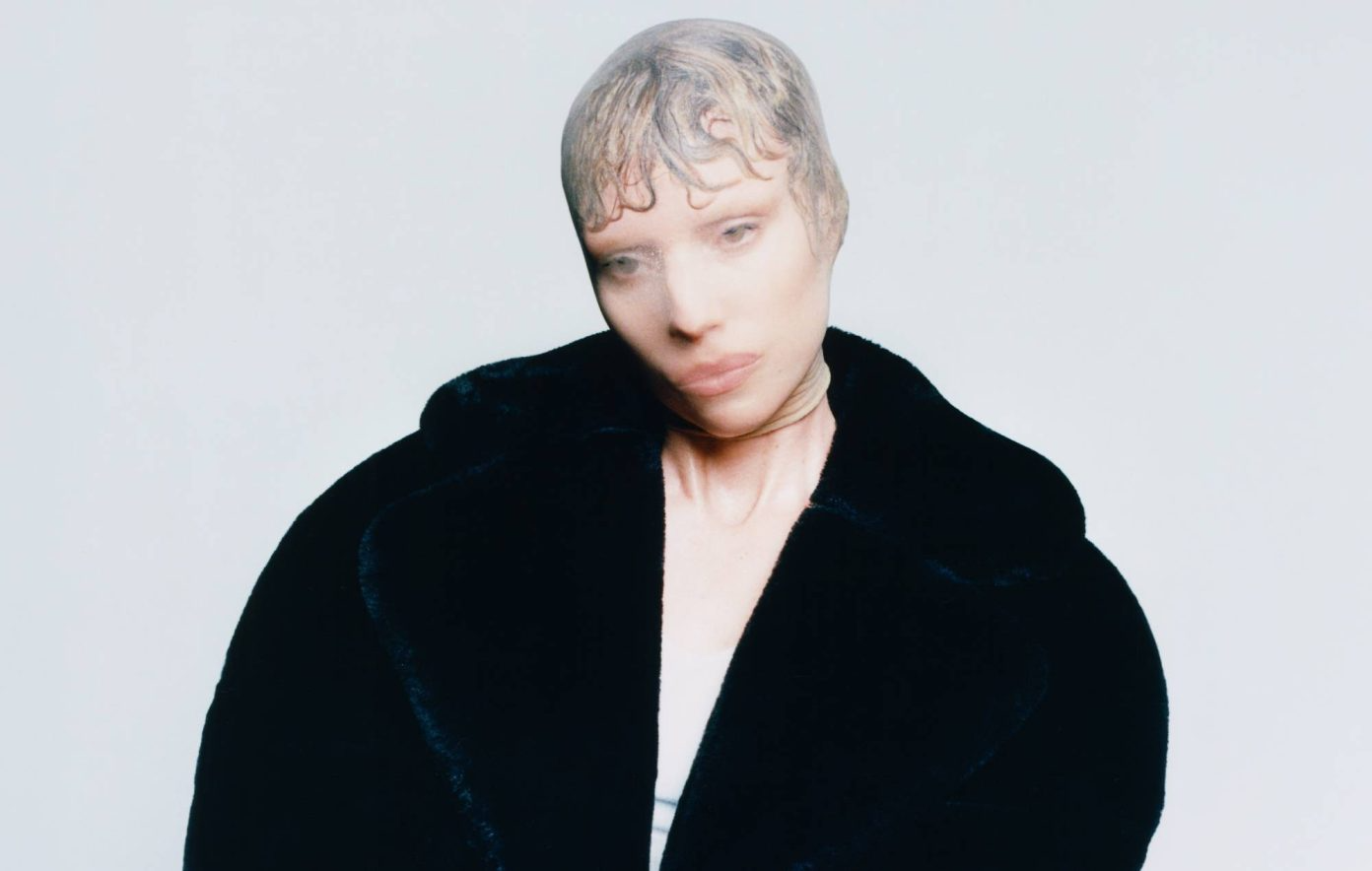
Lykke Li didn’t hold back when speaking about the making of her sixth studio album, ‘The Afterparty’, during a listening session in Los Angeles earlier this year. “Let’s talk about the album. It was a motherfucker to make,” she admitted to the crowd. While balancing motherhood, the chaos of modern culture shaped by Trump and AI, and her own desire to create something more “extroverted, impulsive and chaotic” than ‘EYEYE’, as she previously shared with NME, the Swedish alt pop star arrived at a headspace that “feels like it’s 4am and the sun is going to rise”. The record captures that blurry final moment before regret, exhaustion and reality settle in, which makes it even more emotional considering she has hinted this could potentially be her final album.
There is something fitting about how brief the project feels. With only nine tracks running across 24 minutes, it never overstays its welcome. Lykke immediately drops listeners into the atmosphere with opener ‘Not Gon Cry’, painting a picture of those lonely early morning hours with the line, “No angels here tonight, no dancing queens.” Alongside the shadowy pulse of ‘Happy Now’ and the twisted disco energy of ‘Lucky Now’, she revisits the emotional yet dance driven spirit of her earlier material while blending in the sharper, more confident attitude heard on ‘So Sad, So Sexy’ and the shimmering influence of her 2019 Mark Ronson collaboration ‘Late Night Feelings’.
The emotional fallout begins to settle in quickly. ‘Famous Last Words’ carries a lush orchestral sadness as Lykke reflects on lessons that only came after years of chaos and late nights, confessing, “I had to crash and burn to tell the tale.” Then comes ‘Future Fear’, a delicate acoustic track with robotic textures that stares directly into anxiety and uncertainty with the chilling question, “I’m going to a dark place, do you need anything?” Meanwhile, ‘So Happy I Could Die’ glows like sunrise after a sleepless night, holding onto fleeting moments as she sings about “slipping through the hourglass”.
Throughout the album, Lykke Li vividly captures the beauty and wreckage of reckless nights with the vulnerability that has always defined her music. On ‘Sick Of Love’, she channels heartbreak into revenge, wanting to “make you beg for it” after rejection in a way that feels spiritually connected to Robyn’s ‘Dancing On My Own’. One of the strongest moments arrives with ‘Knife In The Heart’, a track that fully embraces her desire to become the “rock god” and “fuck boy” she spoke about, firing back at anyone who tries to tear her down with the words “you can spit, you can walk on me” while delivering one of the catchiest songs she has created in years.
Closing track ‘Euphoria’ leaves behind the same bittersweet feeling that runs through the rest of the album. With sweeping strings, pulsing beats and emotional intensity, Lykke Li reminds listeners that nothing lasts forever as she sings, “Player play your song, waste the night away”. Like the fading energy of the perfect night out, ‘The Afterparty’ ends in a haze of beauty and uncertainty. If this truly is her farewell, she leaves with one final intoxicating statement, though it still feels like there could be another chapter waiting.