NEWS

In a new interview with Frazier Tharpe, for GQ, Pusha T said that he departed his longtime label home, Def Jam Recordings, over the company’s apparent reluctance to release a new Clipse song featuring a guest verse from Kendrick Lamar. “They wanted me to ask Kendrick to censor his verse, which of course I was never doing,” he claimed. “And then they wanted me to take the record off.” Ultimately, the parties agreed to go their separate ways, according to Pusha T, and Clipse’s new comeback album, Let God Sort Em Out, is being released in partnership with Jay-Z’s Roc Nation.
Pusha T’s longtime manager, Steven Victor, also discussed the rapper’s Def Jam departure in a new interview with Billboard. “Yeah, I don’t know what their concern is,” Victor said. “But they were like, ‘There’s a line here; we think it’s controversial; [Kendrick] needs to change it, or we’re not putting it out.’ We’re not going to ask him to change the verse. You guys are wrong. Stop looking at this this way. None of this makes any sense.”ss action waiver and arbitration provisions), and acknowledge our privacy policy.
According to Victor, Pusha T “had like three albums left” on his deal with Def Jam. In addition, he also claimed that the musician “had to pay seven figures to get out of the deal.”
Representatives for Def Jam Recordings and its parent company, Universal Music Group (UMG), did not respond to Pitchfork’s requests for comment.
Universal Music Group is facing active litigation from Drake, who claims that UMG “waged an unrelenting campaign” to promote Kendrick Lamar’s “Not Like Us,” the hit diss track that Drake believes is defamatory. Both Drake and Lamar also release music through UMG-owned labels, Republic Records and Interscope Records, respectively.
Labels owned by UMG released or co-released many of the songs in the Lamar-Drake feud of 2024. For Lamar, those officially sanctioned tracks were: “Like That,” “Euphoria,” “Meet the Grahams,” and “Not Like Us.” On Drake’s side of things, he released “Push Ups” and “Family Matters” in partnership with Republic.
Years before the Kendrick Lamar and Drake imbroglio, Pusha T shared his own vicious diss track against the Canadian hip-hop superstar. Notably, Pusha T did not go through his label to drop “The Story of Adidon,” instead posting it on SoundCloud. Speaking with Billboard, Steven Victor said that Pusha T shared his song independently, in part, “to avoid” objections from Def Jam and UMG.
The new Clipse song featuring Kendrick Lamar is called “Chains & Whips,” and it played during one of Pharrell Williams’ runway shows for Louis Vuitton. It is currently unclear if the song (with or without a Kendrick Lamar verse) will appear on Clipse’s Let God Sort Em Out, which gets released on July 11.
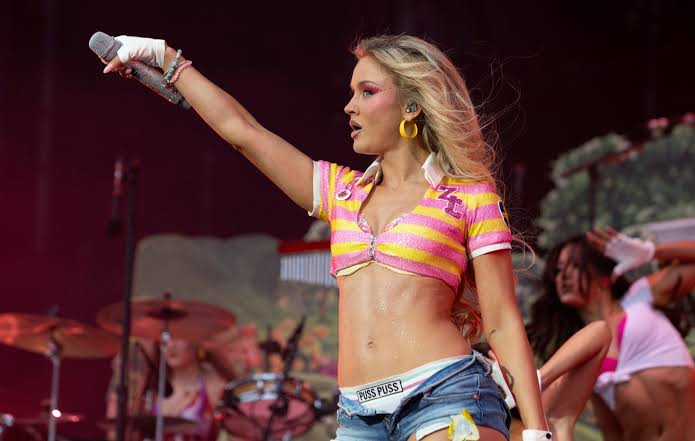
Zara Larsson has indicated that she may have cancelled her December 3 appearance at the Formula One Abu Dhabi Grand Prix. The singer initially confirmed that she would not attend, before removing the comment and sharing a more detailed explanation of why the performance no longer feels right for her.
The Swedish star was scheduled to take the stage at Etihad Live on Yas Island during the Yasalam After-Race Concerts. Zara and Lewis Capaldi were due to launch the weekend’s entertainment. However, supporters encouraged her to reconsider the booking because of concerns surrounding the United Arab Emirates’ reported connections to Sudan’s Rapid Support Forces, a paramilitary organisation accused of committing atrocities during the nation’s civil conflict.
A fan commented: “Please read about what UAE is doing to Sudan then cancel your Abu Dhabi show!” Zara responded: “I will not be going to Abu Dhabi.” Fans later realised that both comments had been removed.
She then shared that she had been considering what it means for her, as an artist, to perform in particular countries.
The Midnight Sun singer explained: “I think about that a lot in my life as an artist… I wanna perform and spread joy and music for people in every country, because no single person is their government.
“I’ve met so many wonderful people from every corner of the world and I know this to be true in my heart. I love people, and I love my fans soooo much.”
Zara acknowledged that her original comment “maybe came off as an impulsive response,” but explained that she had given the booking serious thought. She now believes withdrawing is the decision that “aligns with me the most right now, for many different personal reasons beyond politics.”
She continued: “Maybe I’ll delete both comments and do a better statement soon. I hope to sing with you in the beautiful future!”