ON THE RISE

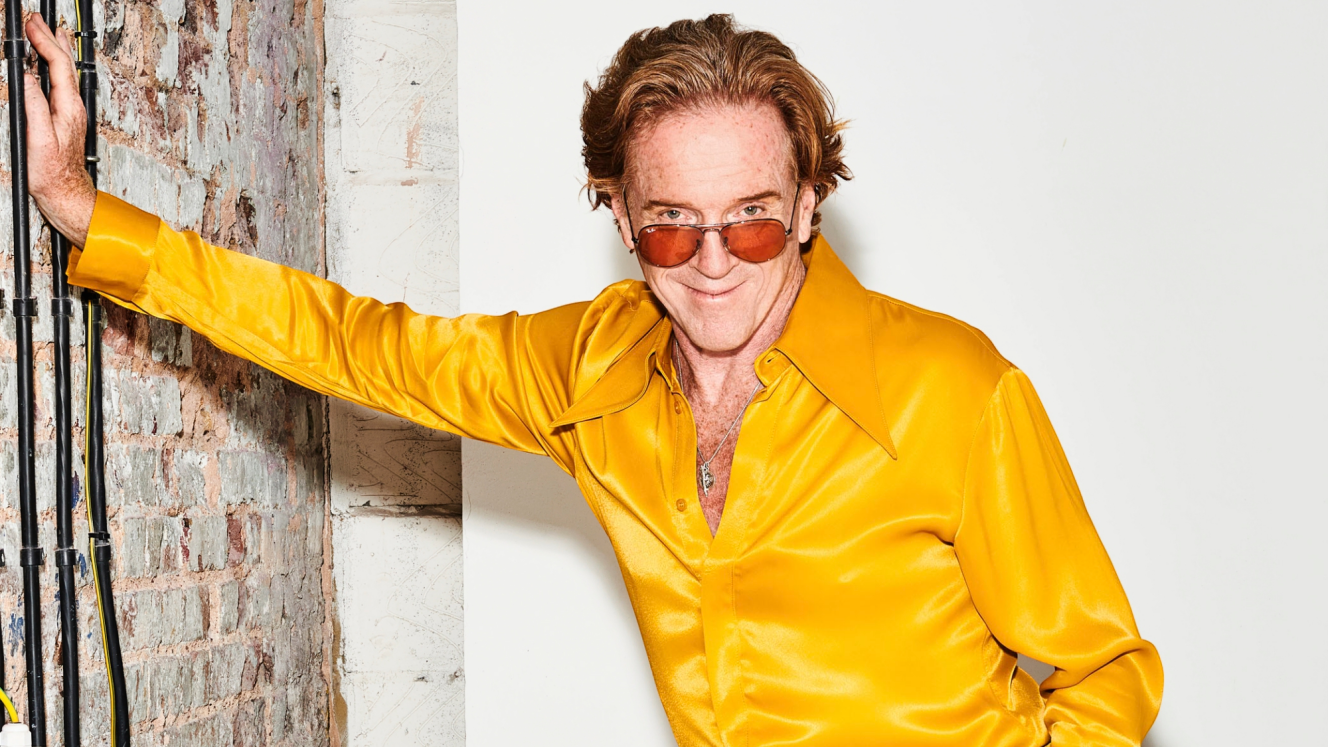
Ollie Byrd, a musician blending 1980’s new wave sounds with Hard Rock, shows how his musical output mirrors the different stages of his life through genres that mix, match, and mold with one another. His latest single, “the sun will bring the day again,” serves as a time capsule as one of his first written works, finally making its way to release.
From Ollie’s earliest memories of hearing music on the radio or the spin of his mom’s records, he recalls the dopamine rush that music gave him, a feeling he still experiences to this day. He shares that watching his heroes perform was profoundly inspiring, and with such resonance, he eventually felt compelled to do it for himself.
He recalls first riffing alongside recorded works, jamming with a friend who had a drumset in the 9th grade, to forming high school and college bands inspired by the 90’s grunge era. His first recordings were through cassette tape decks from stereos with a dinky microphone, that captured that raw and unpolished experimental stage. After reading an iconic Guitar Magazine article in which Led Zeppelin’s Jimmy Page shared insights into his creative techniques, innovative recording methods, and unique riffs, Ollie became further inspired to produce, write, and hone all the skills needed to make music on his own.
With the introduction of the Digital Audio Workstation (DAW) to mainstream users, Ollie recalls this laid the framework to make his first record. Influenced by Missing Persons, Blondie, and U2 (especially The Joshua Tree era), as well as Pink Floyd and The Police, Ollie’s music fuses the boldness of macho hard rock, bands like Mötley Crüe and Def Leppard, and the new wave, hypnotic sounds of The Cure and Joy Division for a unique and unusual sonic combination.
As his music has morphed over the years, Ollie gained an underground following with his album “Barrel of Fun.” He shared how much he enjoyed building out each track with hard rock guitars and simplistic new wave baselines that allowed him to be precise and intentional in shaping the overall tone, which has often been referred to as lo-fi emo.
When asked about the tone of his upcoming single, “the sun will bring the day again,” Ollie mentions that not only was it the first song he ever wrote, but he wanted to preserve its simplicity and bring that timeless style full circle. The track, a bittersweet reflection on love lost, tells the story of a girl he was once in love with and the devastation when the years they spent together ended. In the lyrics, “I know that you won’t be back this way again,” the song served as a pathway to coming to terms with the loss and being able to move on. To put it simply, Ollie jokes, “Boy meets girl, boy loses girl, boy cries.” He shared that it took a while for him to actually record the track, as he didn’t have much of a vision beyond wanting to stay true to its rawness. He detuned the electric guitar for an extra-low sound to preserve the authentic feel of where and how it was originally created. (In his bedroom, alone).
As he’s evolved through his music styles, creative outputs, and mental states over the years, he wanted to revisit the mellow, minimalistic feeling. Ollie also sees this music as a potential bridge beyond an angsty, grungy musical past and corresponding fan base, into a new lighter time of life, music, and listeners. Ollie reflects on a unique element from the original version of the song: a high-up fingerpicking technique, inspired by Van Halen’s “Little Guitars.” This staccato right-hand plucking style was unusual for his artistry at the time but gave the song a distinct character.
When asked if there were any recent revisions, he explained that one of his favorite parts of resurfacing the track was recording new guitars inspired by Brian Eno’s Here Come the Warm Jets. He describes overdriving the board, burning up the gain, and creating a distortion-heavy hum that added extra texture to the acoustic song, much like Eno’s experimental and ambient elements over traditional rock instrumentation. Lastly, Ollie added powerful drums to the track, noting, "You don’t usually hear that—acoustic, hard electric, and drums all together."
Parallel to how Ollie bridges contrasting musical elements from different genres and ends of the spectrum, he shares a parting sentiment with fans and readers: "Seek to overcome division. Despite the polarizing narratives that are all around us, seek to find connections over division. Keep looking for the patience to meet your fellow humans, and love your neighbors.”
Listen to “the sun will bring the day again” here.
Follow Ollie Byrd on social media for updates on new music coming out this year!
ON THE RISE
.png)
“A Girl Like Me,” the new dark pop single from Bulgarian duo Ksalba, might be a dream. Or possibly a nightmare. More likely it is something in between.
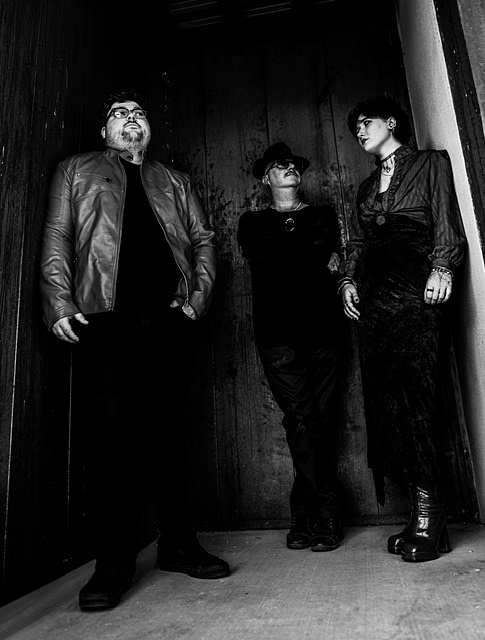
Ksalba is the brainchild of musicians Melina Krumova and Georgi Ivanov. Mastered by Grammy-winning NYC engineer Dave Kutch, “A Girl Like Me” is the opening track off the album Reaching For Darkness.
Dark bass synths open the track, swelling and joining Melina’s whispering vocals. The beat drops, and her voice rises into a twisting and seductive minor-key melody.
You need someone to show you the way
To all that you’d forgotten that had you in chains
You need a stranger who will say hello
To the one you were before the people you’ve become
It is a message of liberation, the mysterious, attractive woman offering salvation. But nothing is free. She quickly reminds you why you need “a girl like me”: to help you kneel. Whether the girl is within or without is a mystery. Melina describes the song as “a conversation between the superficial self and the deeper, darker unconscious self.”
As it goes on, “A Girl Like Me” gets heavier and more layered. Georgi’s deep baritone vocals double Melina on the thunderous chorus.
The group is preparing to drop their music video for “A Girl Like Me.” Filming involved keeping Melina underwater for hours in near-freezing temperatures, in a lake in Sofia, Bulgaria.
“A Girl Like Me” began as an instrumental loop Georgi had been building in his Sofia studio. The idea was incomplete. Melina suggested the addition of a dreamy pre-chorus. When she added the lyrics, everything came together.
Georgi says, “When one of us is stuck, the other tends to come in and help.” This collaboration is evident in the song’s credits. Both artists are listed as composer, producer, mixing engineer, and performer.
Ksalba was born out of Melina’s and Georgi’s previous work in the heavy metal group Grimaze. Both had been singer-guitarists in the busy touring band. When the COVID-19 pandemic shut down live music, Melina and Georgi found themselves as roommates who needed a new creative outlet.
Since 2021, Ksalba has released 11 singles. Reaching For Darkness is their debut album. The 13-song collection elaborates on the themes established in “A Girl Like Me”: liberation, sacrifice, desire, recklessness, emotion, the pull of darkness. Industrial and electronic elements evoke sources like Massive Attack, Chelsea Wolfe, Nine Inch Nails.
Ksalba’s musical range is apparent with the acoustic guitar of album tracks like “Long Gone.” “Till the End of Time” features Georgi’s screamed vocals starkly supported by distorted guitar power chords, closing the record with a nod to Ksalba’s metal roots.
About their music, Melina says, “I would like our listeners to feel understood about something that they don't even understand themselves."
In this way, the music of Ksalba reaches for the universal. It is for listeners feeling the pull of their souls while fighting the chains holding them down. “A Girl Like Me” may be the story of a nightmare, or it may be a dream. You’ll have to listen for yourself to find out.
“A Girl Like Me” out now with promotional support from Starlight PR. Follow Ksalba at the links below.
Instagram | YouTube | Spotify | Apple Music | Amazon Music
.jpg)
.png)