
ALBUM REVIEWS

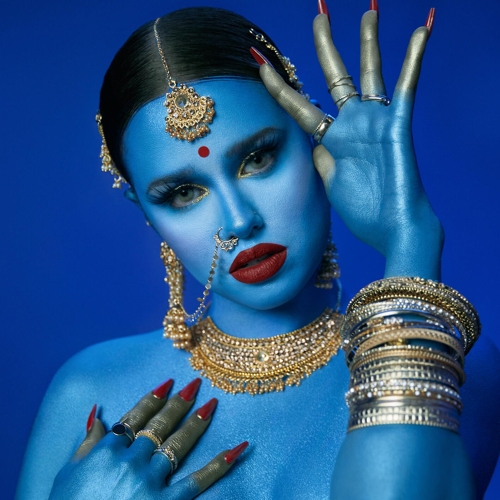
“Who actually are Two Shell?” It’s possibly the most frequently asked question amongst dance music fans since the mysterious group burst onto the scene with 2022 garage-pop hit ‘Home’. The group have never revealed their real identities, instead giving a handful of anonymous interviews – even being rumoured to hire actors to masquerade as Two Shell and play pre-recorded DJ sets.
Their elusive anonymity arguably adds to their mass appeal. They represent the everyman in the dance music world; someone who can not only enjoy club tracks, but also make it big by producing them. On their debut album, ‘Two Shell’, one thing is abundantly clear: a typical Two Shell track is immersive, experimental and playful, rejecting the rigid categorisation of dance genres.
Two Shell’s production shines. ‘hurt somebody’ is an almost 6-minute long song featuring striking synths and syncopated drum patterns, wistfully placed behind a looped vocal singing “can I really hurt somebody?” – enough to send a clubber into hypnosis on the dancefloor. Meanwhile, ‘inside’ captures emotional duality with its uplifting melodies juxtaposed against a more introspective undertone, inviting listeners into a reflective space.
The album also brings heat and pace by fusing popular dancefloor genres. ‘Be somebody’ brings elements of hyperpop, garage and broken beat together using a fragmented, pitched-up vocal sample against a rhythmic drum pattern. Meanwhile, ‘Mirror’ is a speedy track which takes the pace of electro and melds it with glitchy techno-like sounds and off-kilter beats, to maintain a body-moving flow.
Two Shell have a knack for using bold, attention-grabbing samples – the kind that interests not only eagle-eyed WhoSampled heads but also major-label lawyers with prestigious clients. ‘round’, a chopped-up and warped track using vocals from the Sugababes’ 2002 hit ‘Round Round’, was teased to fans during their DJ sets and always reportedly got roaring reactions. Excitingly, the Sugababes’ original (and current) lineup of Mutya, Keisha, and Siobhan re-recorded their vocals especially for Two Shell, placing a lot of faith in Two Shell and their sampling abilities.
There is slight room for improvement; these songs could be better stylistically blended and harmoniously married to make a more cohesive body. The jump from the frivolous, bouncy end notes of ‘rock solid’ is overly juxtaposed by the airy synth work at the start of ‘hurt somebody’, giving the flow of this album a slightly jarring feel.
Yet credit must be given for the album’s suitability to its intended home: played out through a sound system to sweaty, hedonistic crowds. At a time when dance music is becoming faster, sillier, and all-round headier, the overall sonic identity of ‘Two Shell’ is a true marker of the times. Packed with USB-ready tracks that are energetic and experimental, ‘Two Shell’ positions the enigmatic group as flag-bearers of a daring new era.

ALBUM REVIEWS

Grandeur sits at the heart of ‘This Music May Contain Hope’, RAYE’s second album, and the result feels nothing short of breathtaking. On this record, the singer born Rachel Keen explores a wide spectrum of sounds across its 73 minute length, moving from emotional ballads to lively funk moments and the jazz pop style she has become closely associated with. It can feel overwhelming at first, yet the magic that comes from RAYE fully committing to her vision makes the experience rewarding from start to finish.
‘This Music May Contain Hope’, a conceptual project about pushing through insecurity and heartbreak, unfolds like a lavish stage production. RAYE takes on the dual role of main character and guiding voice throughout the story. “Allow me to set the scene. Our story begins at 2:27am on a rainy night in Paris. Cue the thunder,” she says during the opening track ‘Girl Under The Grey Cloud’, which arrives with sweeping orchestral strings. Spoken passages appear across the album, helping shape the narrative and giving the project a sense of direction, almost like hearing the official recording of a Broadway show.
With this framework in place, the South London artist allows herself to fully explore the album’s diverse musical palette, and most of the time it works in her favor. Sometimes she fully embraces the theatrical side of the concept, especially during the closing section of the smooth R&B track ‘The WhatsApp Shakespeare’. Other moments are delivered more straightforwardly, such as the emotional slow building ballad ‘I Know You’re Hurting’. She also revisits her earlier dance influences with the impressive house track ‘Life Boat’.
Across the entire album, two things stand out clearly. RAYE’s flexible vocals sound better than ever, and her songwriting feels sharper than it has before. Take the playful highlight ‘I Hate The Way I Look Today’, a swing jazz inspired track reminiscent of Ella Fitzgerald, where she admits “I’m okay to be lonely / If I’m lonely and skinny / I have such silly self-loathing thoughts, it seems”. Then there is the emotional storytelling in ‘Nightingale Lane’: “It was right there, early June / Next to Old Park Avenue / Standing in the rain, I watched him walk away”.
Despite all the vulnerability and emotional struggles explored throughout the record, RAYE ultimately reaches a place of optimism, staying true to the album’s title. She gathers her close friends on ‘Click Clack Symphony’ with support from Hans Zimmer, finds closure with guidance from Al Green on the smooth seventies soul inspired ‘Goodbye Henry’, and reaches toward something greater alongside her sisters Amma and Absolutely on the uplifting ‘Joy’ as she searches to be “free of all the pain and every fear”. After the stormy opening imagery of that “rainy night” and “thunder”, RAYE eventually realizes that “the sun exists behind the clouds”, as she shares on ‘Happier Times Ahead’.
‘This Music May Contain Hope’ shows RAYE performing at her absolute peak. The album feels huge in scale and emotionally powerful, yet it remains rooted in honest experiences and real feelings. Yes, it asks a lot from the listener, but that is also what makes it so special. Every dramatic moment and musical shift feels like RAYE claiming her independence and finally creating music entirely on her own terms.