
ALBUM REVIEWS
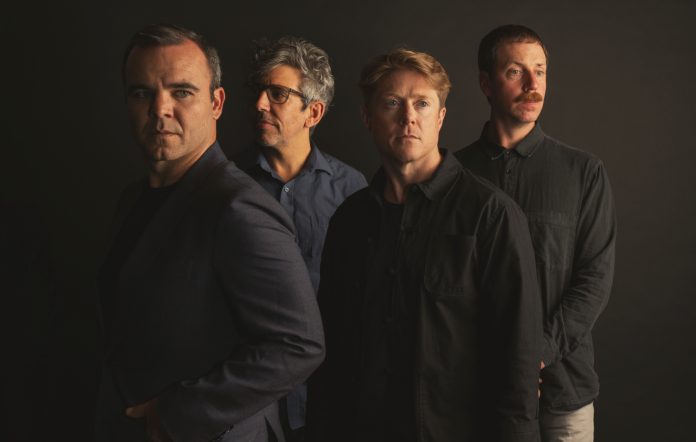
Future Islands have long blended moments of bliss and ecstasy with heartbreak. They thrive in this gap: the thoroughline of Baltimore band’s music is that their transcendent, New Wave-inspired songs have a tendency to end with a positive resolution, even if it doesn’t quite look that way in the beginning. The prevailing mood is of self-belief.
Having emerged in the early 2010s, some of the quartet’s biggest singles – particularly the masterful ‘Seasons (Waiting On You)’, which NME declared the best song of 2014 – continue to soundtrack exhilarating highs, both on-screen and at festivals across the globe. Most recently, the track was used in Season Two of British LGBTQ+ comedy Big Boys, heightening the emotion and romance of a pivotal scene that depicted the overwhelming feelings that emerge as a new relationship begins to cement itself.
Cynicism, therefore, has traditionally been absent in the world of Future Islands. Yet on the band’s seventh LP ‘People Who Aren’t There Anymore’, themes of divorce, grief and desperation loom large, inspired by breakups that both lead vocalist Samuel T Herring and bassist William Cashion have recently gone through. It feels appropriate that they would emerge from a period of personal upheaval with tracks that consider the cathartic potential of change, then. Album highlight ‘Thief’, a true meeting of music and message, pairs breathless confessions with a kinetic percussion section. “The pain is never ending / But I’m forgiving, at least,” Herring sings.
‘Peach’, ‘The Tower’ and ‘Say Goodbye’ are all classic Future Islands offerings, using upbeat textures from ‘80s pop and roaring to life off the back of a muscular groove or drum kick. The effect is warm but unshakably familiar, and it means that individual moments shine a little less: only the dusky atmospherics of ‘Deep In The Night’ feel like a true outlier here.
There’s no question that Herring still writes songs capable of evoking strong emotions, but this time around they can occasionally feel too twinkly and repetitive. What’s missing is some risk-taking; unpredictable production flourishes that could better reflect the overall mood of the album and all the ambiguities that accompany a major life change.
That’s why ‘People Who Aren’t There Anymore’ just falls short of its goal of becoming a transformative record for the band. It has its winning moments – ‘Iris’ pulls off a tricky balance of being irresistibly catchy and yet moving – but as big new beginnings go, Future Islands deliver a streamlined version.

ALBUM REVIEWS

Grandeur sits at the heart of ‘This Music May Contain Hope’, RAYE’s second album, and the result feels nothing short of breathtaking. On this record, the singer born Rachel Keen explores a wide spectrum of sounds across its 73 minute length, moving from emotional ballads to lively funk moments and the jazz pop style she has become closely associated with. It can feel overwhelming at first, yet the magic that comes from RAYE fully committing to her vision makes the experience rewarding from start to finish.
‘This Music May Contain Hope’, a conceptual project about pushing through insecurity and heartbreak, unfolds like a lavish stage production. RAYE takes on the dual role of main character and guiding voice throughout the story. “Allow me to set the scene. Our story begins at 2:27am on a rainy night in Paris. Cue the thunder,” she says during the opening track ‘Girl Under The Grey Cloud’, which arrives with sweeping orchestral strings. Spoken passages appear across the album, helping shape the narrative and giving the project a sense of direction, almost like hearing the official recording of a Broadway show.
With this framework in place, the South London artist allows herself to fully explore the album’s diverse musical palette, and most of the time it works in her favor. Sometimes she fully embraces the theatrical side of the concept, especially during the closing section of the smooth R&B track ‘The WhatsApp Shakespeare’. Other moments are delivered more straightforwardly, such as the emotional slow building ballad ‘I Know You’re Hurting’. She also revisits her earlier dance influences with the impressive house track ‘Life Boat’.
Across the entire album, two things stand out clearly. RAYE’s flexible vocals sound better than ever, and her songwriting feels sharper than it has before. Take the playful highlight ‘I Hate The Way I Look Today’, a swing jazz inspired track reminiscent of Ella Fitzgerald, where she admits “I’m okay to be lonely / If I’m lonely and skinny / I have such silly self-loathing thoughts, it seems”. Then there is the emotional storytelling in ‘Nightingale Lane’: “It was right there, early June / Next to Old Park Avenue / Standing in the rain, I watched him walk away”.
Despite all the vulnerability and emotional struggles explored throughout the record, RAYE ultimately reaches a place of optimism, staying true to the album’s title. She gathers her close friends on ‘Click Clack Symphony’ with support from Hans Zimmer, finds closure with guidance from Al Green on the smooth seventies soul inspired ‘Goodbye Henry’, and reaches toward something greater alongside her sisters Amma and Absolutely on the uplifting ‘Joy’ as she searches to be “free of all the pain and every fear”. After the stormy opening imagery of that “rainy night” and “thunder”, RAYE eventually realizes that “the sun exists behind the clouds”, as she shares on ‘Happier Times Ahead’.
‘This Music May Contain Hope’ shows RAYE performing at her absolute peak. The album feels huge in scale and emotionally powerful, yet it remains rooted in honest experiences and real feelings. Yes, it asks a lot from the listener, but that is also what makes it so special. Every dramatic moment and musical shift feels like RAYE claiming her independence and finally creating music entirely on her own terms.