
ALBUM REVIEWS
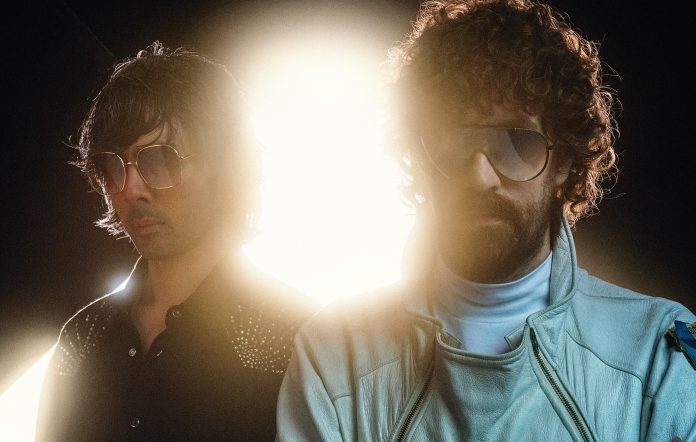
It will not shock you that, on an album appropriately titled ‘Hyperdrama’, Justice have absolutely put their laces through it. The French duo – made up of Xavier de Rosnay and Gaspard Augé – have surely sensed an opportunity with their first album in eight years, their brand of maximalist electronic thumpers sounds increasingly enticing in the post-whisper pop sphere, and having won fans in soon-to-be collaborator The Weeknd. There’s also the curious wrinkle of this being their first album since countrymen Daft Punk called it quits in 2021; comparisons are understandable – the duos are entwined by their Ed Banger label boss Busy P (who once managed The Robots) – but simplistic. Where Daft Punk made music for the heart and head, Justice’s rock-influenced imagery and abrasive material were more about taking one to the gut. This is their chance to put clear daylight between the two and, goodness me, have they taken it.
Speaking to NME in 2023, Busy P gave a ringing endorsement – well, he would – and said that ‘Hyperdrama’ gave him “goosebumps” and compared it to their 2007 debut ‘Cross’. Then came the announcement of starry guests: Tame Impala, Thundercat, Miguel. The material got its first live airing over the past fortnight at Coachella with a raved-about new stage production. The final teasers from de Rosnay are typically oblique: “A record is not meant to be fully understandable the first time you listen to it,” he recently told The New York Times.
‘Hyperdrama’ is a blockbuster release that meets the hype: flashy, over the top and keen to make a spectacle. It’s not a course correction as such, but smartly moves away from the proggier climes of 2011’s ‘Audio Video Disco’ and 2016’s sometimes-dull ‘Woman’. The band have mentioned the influence of gabber – a Dutch subgenre of hardcore techno – on their new material, but it mainly sounds like they’ve reconciled with the the sound of their debut, inviting pop tendencies to enter their own brutal world and not the other way around.
It’s evident on the record’s first two singles, the yin and yang of ‘One Night / All Night’ starring Tame Impala’s Kevin Parker on vocals, and the pummelling metallic chrome of ‘Generator’. While the aforementioned makes the most of a typically aloof but catchy Parker melody by pairing it with a pounding beat, ‘Generator’ is the finest track on the record, a track so deliciously stuffed with melodic switch-ups and garish production that it’s almost arrogant in displaying their capability. It’s the hardest studio recording they’ve release since cult favourite ‘Planisphère’, a 17-minute long bonus track from ‘Audio Video Disco’; to top it off, ‘Generator’’s music video features the images two cyborgs ripping the flesh of each other in the throes of passion. Mon dieu!
The remainder of ‘Hyperdrama’ follows suit, deftly weaving between vocal collaborators and pop structures. For every ‘Saturnine’, a slinky R&B jam featuring Miguel, there’s ‘Dear Alan’ which shows flashes of the French-touch sound they dabbled with in their early days. The Flints – an emerging duo from Manchester – shine on ‘Mannequin Love’ and Eritrean-born, Amsterdam-raised Rimon justifies the decision to bring in new vocalists on this record, occasionally a weak-point of ‘AVD’ and ‘Woman’. The song suite between ‘Moonlight Rendezvous’, featuring a saucy sax solo, and ‘Saturnine’ flows spectacularly.
Where those two past albums made up ground in the live space – as heard on 2013’s ‘Access All Arenas’ and 2018’s Grammy-winning ‘Woman Worldwide’ – their fourth album leaves nothing on the table. Viewers of their two Coachella sets will notice how the songs are already evolving and morphing into something gnarlier, but this studio version is equally realised and thrilling.
‘Hyperdrama’ is the type of release that the dance space – if you could even slot Justice in there – seldom sees. They duo show a passionate reverence for the album format, from the artwork that took over 18 months to create to the songs that boast both style and substance. It’s one of 2024’s most engrossing listening experiences.

ALBUM REVIEWS

Grandeur sits at the heart of ‘This Music May Contain Hope’, RAYE’s second album, and the result feels nothing short of breathtaking. On this record, the singer born Rachel Keen explores a wide spectrum of sounds across its 73 minute length, moving from emotional ballads to lively funk moments and the jazz pop style she has become closely associated with. It can feel overwhelming at first, yet the magic that comes from RAYE fully committing to her vision makes the experience rewarding from start to finish.
‘This Music May Contain Hope’, a conceptual project about pushing through insecurity and heartbreak, unfolds like a lavish stage production. RAYE takes on the dual role of main character and guiding voice throughout the story. “Allow me to set the scene. Our story begins at 2:27am on a rainy night in Paris. Cue the thunder,” she says during the opening track ‘Girl Under The Grey Cloud’, which arrives with sweeping orchestral strings. Spoken passages appear across the album, helping shape the narrative and giving the project a sense of direction, almost like hearing the official recording of a Broadway show.
With this framework in place, the South London artist allows herself to fully explore the album’s diverse musical palette, and most of the time it works in her favor. Sometimes she fully embraces the theatrical side of the concept, especially during the closing section of the smooth R&B track ‘The WhatsApp Shakespeare’. Other moments are delivered more straightforwardly, such as the emotional slow building ballad ‘I Know You’re Hurting’. She also revisits her earlier dance influences with the impressive house track ‘Life Boat’.
Across the entire album, two things stand out clearly. RAYE’s flexible vocals sound better than ever, and her songwriting feels sharper than it has before. Take the playful highlight ‘I Hate The Way I Look Today’, a swing jazz inspired track reminiscent of Ella Fitzgerald, where she admits “I’m okay to be lonely / If I’m lonely and skinny / I have such silly self-loathing thoughts, it seems”. Then there is the emotional storytelling in ‘Nightingale Lane’: “It was right there, early June / Next to Old Park Avenue / Standing in the rain, I watched him walk away”.
Despite all the vulnerability and emotional struggles explored throughout the record, RAYE ultimately reaches a place of optimism, staying true to the album’s title. She gathers her close friends on ‘Click Clack Symphony’ with support from Hans Zimmer, finds closure with guidance from Al Green on the smooth seventies soul inspired ‘Goodbye Henry’, and reaches toward something greater alongside her sisters Amma and Absolutely on the uplifting ‘Joy’ as she searches to be “free of all the pain and every fear”. After the stormy opening imagery of that “rainy night” and “thunder”, RAYE eventually realizes that “the sun exists behind the clouds”, as she shares on ‘Happier Times Ahead’.
‘This Music May Contain Hope’ shows RAYE performing at her absolute peak. The album feels huge in scale and emotionally powerful, yet it remains rooted in honest experiences and real feelings. Yes, it asks a lot from the listener, but that is also what makes it so special. Every dramatic moment and musical shift feels like RAYE claiming her independence and finally creating music entirely on her own terms.