
ALBUM REVIEWS

If you ever suspected this current wave of Irish guitar music had peaked with the likes of Fontaines D.C. and The Murder Capital, think again. With their impeccable debut album ‘Letter To Self’, Dublin quartet Sprints place themselves into the conversation, building on what’s been a steady rise through the live circuit, having sold out recent shows at London’s 800-capacity Scala and Dublin’s iconic Button Factory.
Marrying intricate alt-rock with fierce bursts of noise-punk and grunge, the four-piece (comprising vocalist Karla Chubb, guitarist Colm O’Reilly, bassist Sam McCann and drummer Jack Callan) last spoke to NME in the depths of lockdown, itching for the social interaction that intrinsically underpins their music. “It helps being around the energy and the buzz of the city, that’s what inspires most of the songs”, Chubb said at the time.
Yet, for all its moments that will no doubt incite chaos in the live arena, this is a record that unapologetically bares its soul. The opening verse of ‘Cathedral’ – a haunting track that sees Chubb vocalise her anxieties as a queer woman that grew up in the Catholic church – reaches its climax, before a blast of distortion heightens the tension: “Maybe living’s easy / Maybe dying’s the same,” she sings. The sense of catharsis that defines ‘Letter To Self’ is formidable and powerful.
The slow-burning intro of ‘Shadow Of A Doubt’ hangs in the darkness for what feels like an eternity, as Chubb comes to terms with her trauma. “Would you help me stop the screams,” she begs, as the track fades into nothingness; the midpoint of the album. A spiralling and queasy guitar line then leads in ‘Can’t Get Enough Of It’ – a mechanical chord progression that’s wholly resemblant of the vicious circle Chubb finds herself locked in: “And I can’t sleep / And I can’t dream / And I can’t sleep / And I can’t leave.”
Yet for all its heavy-hitting subject matter, the beauty in ‘Letter To Self’ is the optimism it leaves you with, the noise well and truly drowning out the pain in an empowering fashion. O’Reilly’s dynamic guitar lines battle against the lyrics, keeping things upbeat in the likes of ‘Literary Mind’ and maintaining the dramatic flair on the eerie ‘Shaking Their Hands.’ This is a dynamic album that is reflective of the muddled world we find ourselves in – delivered with a fortifying sense of honesty from an essential emerging band.

ALBUM REVIEWS

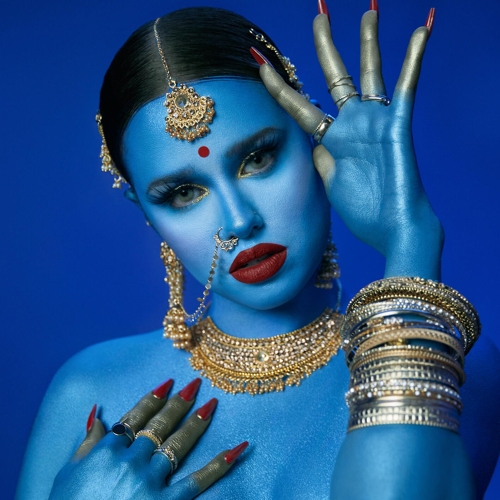
Grandeur sits at the heart of ‘This Music May Contain Hope’, RAYE’s second album, and the result feels nothing short of breathtaking. On this record, the singer born Rachel Keen explores a wide spectrum of sounds across its 73 minute length, moving from emotional ballads to lively funk moments and the jazz pop style she has become closely associated with. It can feel overwhelming at first, yet the magic that comes from RAYE fully committing to her vision makes the experience rewarding from start to finish.
‘This Music May Contain Hope’, a conceptual project about pushing through insecurity and heartbreak, unfolds like a lavish stage production. RAYE takes on the dual role of main character and guiding voice throughout the story. “Allow me to set the scene. Our story begins at 2:27am on a rainy night in Paris. Cue the thunder,” she says during the opening track ‘Girl Under The Grey Cloud’, which arrives with sweeping orchestral strings. Spoken passages appear across the album, helping shape the narrative and giving the project a sense of direction, almost like hearing the official recording of a Broadway show.
With this framework in place, the South London artist allows herself to fully explore the album’s diverse musical palette, and most of the time it works in her favor. Sometimes she fully embraces the theatrical side of the concept, especially during the closing section of the smooth R&B track ‘The WhatsApp Shakespeare’. Other moments are delivered more straightforwardly, such as the emotional slow building ballad ‘I Know You’re Hurting’. She also revisits her earlier dance influences with the impressive house track ‘Life Boat’.
Across the entire album, two things stand out clearly. RAYE’s flexible vocals sound better than ever, and her songwriting feels sharper than it has before. Take the playful highlight ‘I Hate The Way I Look Today’, a swing jazz inspired track reminiscent of Ella Fitzgerald, where she admits “I’m okay to be lonely / If I’m lonely and skinny / I have such silly self-loathing thoughts, it seems”. Then there is the emotional storytelling in ‘Nightingale Lane’: “It was right there, early June / Next to Old Park Avenue / Standing in the rain, I watched him walk away”.
Despite all the vulnerability and emotional struggles explored throughout the record, RAYE ultimately reaches a place of optimism, staying true to the album’s title. She gathers her close friends on ‘Click Clack Symphony’ with support from Hans Zimmer, finds closure with guidance from Al Green on the smooth seventies soul inspired ‘Goodbye Henry’, and reaches toward something greater alongside her sisters Amma and Absolutely on the uplifting ‘Joy’ as she searches to be “free of all the pain and every fear”. After the stormy opening imagery of that “rainy night” and “thunder”, RAYE eventually realizes that “the sun exists behind the clouds”, as she shares on ‘Happier Times Ahead’.
‘This Music May Contain Hope’ shows RAYE performing at her absolute peak. The album feels huge in scale and emotionally powerful, yet it remains rooted in honest experiences and real feelings. Yes, it asks a lot from the listener, but that is also what makes it so special. Every dramatic moment and musical shift feels like RAYE claiming her independence and finally creating music entirely on her own terms.