
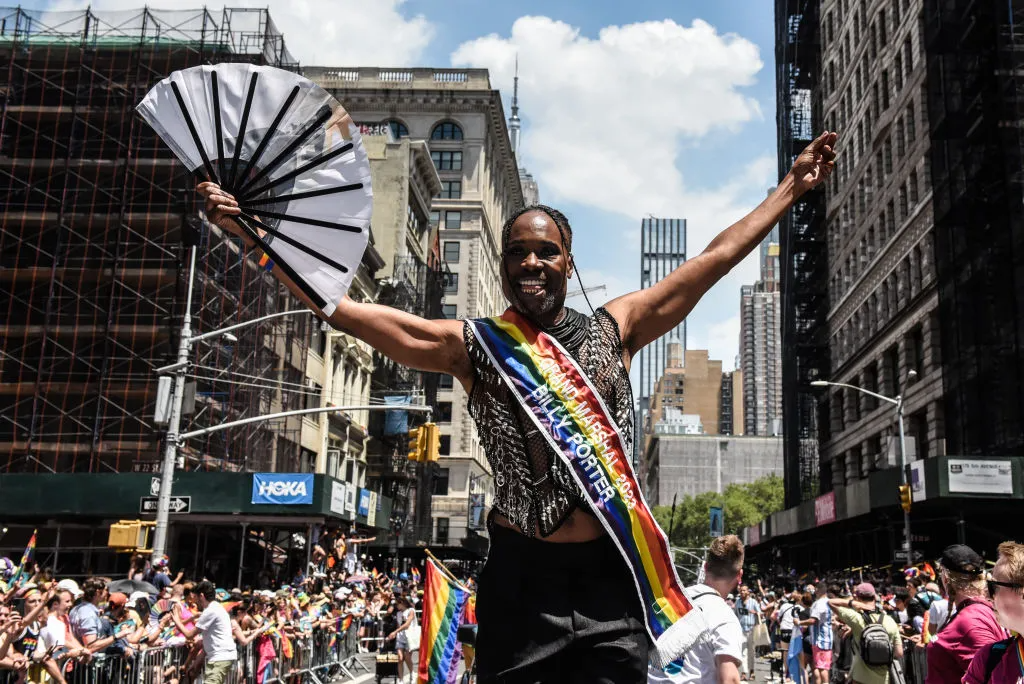
Billy Porter isn’t shy when it comes to talking about the ebbs and flows of his career. Before becoming an Emmy-Award-winning actor, he was a smooth-talking rising star in R&B. He even dropped a self-titled album in 1997. It spawned a single titled” Show Me,” which was well-received by fans. However, his music dreams came crashing down quite fast. Porter, who is openly gay, claimed his queerness is what led to him being pushed out of R&B.
In an interview with Evening Star, Porter says he was labeled as a “liability.” He added, “Not just in the music industry, but across the board. And it was a liability.” The actor would later pivot into Broadway, eventually earning himself a Tony Award for his role in Kinky Boots. “[I] made a name for myself, period,” he said. “Not just Broadway. I won an Emmy. I’m a fashion icon. Now they need me. Winners write their history, because I’m not supposed to be here looking like this,” he says.
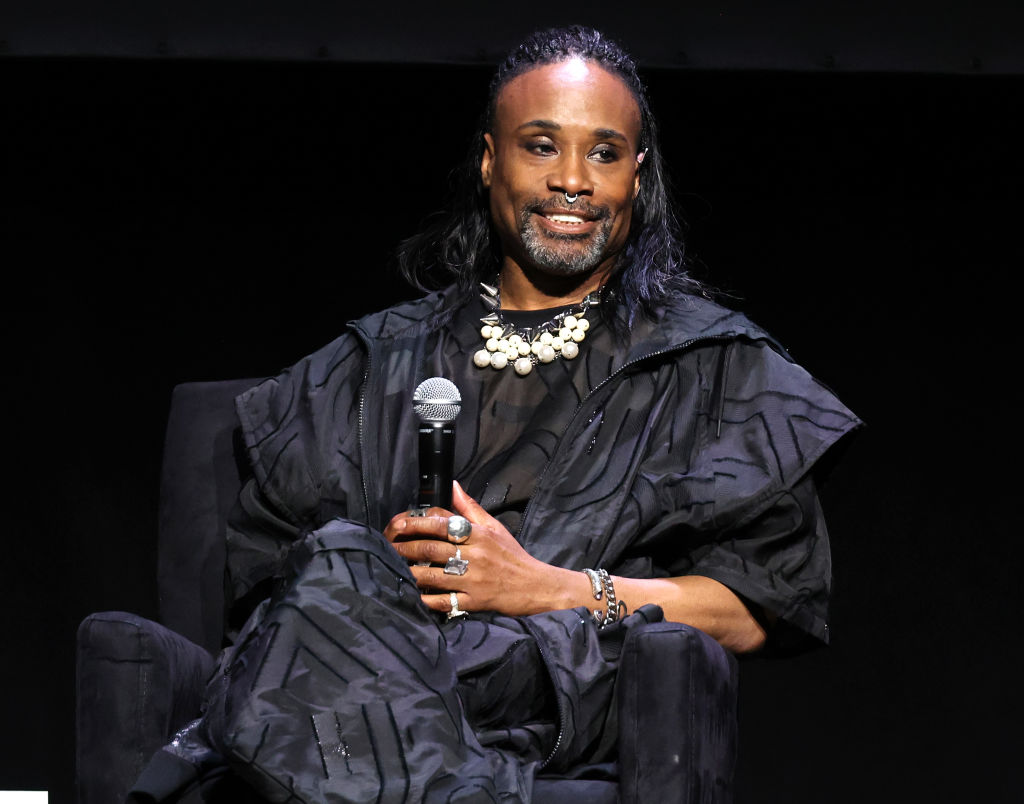
As of today, Porter is more confident than ever and ready to make his return to music. Last month, he dropped off a new single, “Break A Sweat.” The track is expected to be featured on his upcoming album, The Black Mona Lisa. “I lost my watch/I left it back in purgatory,” he sings on the upbeat tune. “Go on, call the cops/’Cause I don’t fit inside your story.” Porter also talked about the inspiration behind the project’s name.
“Being a pop star is about the imagery that you create. So what would be the strongest image? It’s the Mona Lisa — past, present, future, always relevant. The Black Mona Lisa: that’s what I am.” Throughout the rest of the interview, he opened up about surviving the AIDS crisis of the 1980s. The virus predominately affected queer men. A few years back, the actor revealed that he had been battling with the auto-immune disease since 2007. “I lived through the Aids crisis, honey! I lost a whole generation of folks. [But I] know that I’m part of the generation who kicked the door down.”
NEWS
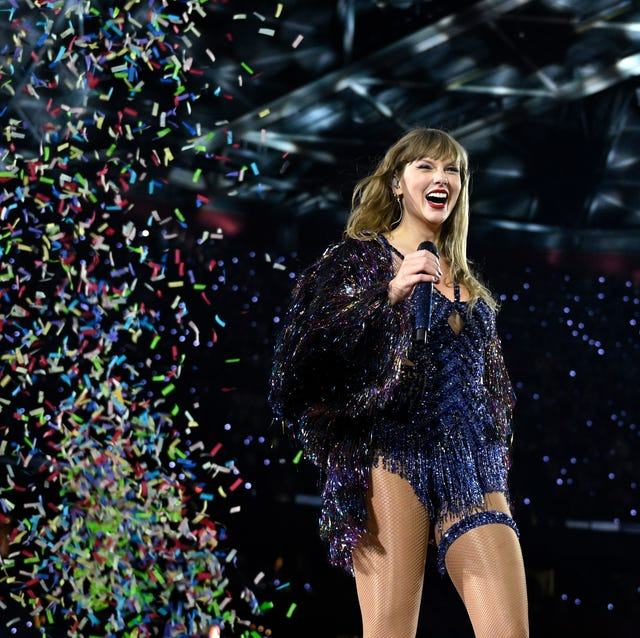
Taylor Swift is encouraging rising artists to stay away from reading social media comments too closely.
During a conversation with The New York Times about songwriting, the “Shake It Off” singer explained that although criticism can sometimes become a “creative writing prompt,” constantly checking comments online can leave artists overwhelmed by negativity.
“My favourite thing when I sit down with new artists or songwriters, I'm like, ‘Why are you reading your comments?’ Like, that's too much of it,” she said. “You're inundating yourself with too much criticism that doesn't really have a focus. But a little bit of it, you've got to just be like, this is part of (the job). Like, don't make this make you stop writing or make you edit yourself or whatever.”
Swift, 36, also shared that she often tells other musicians to channel criticism into music instead of firing back at people online or posting long responses in the Notes app.
“If it's an interesting point to you to kind of respond to, then that's a gift for you to be able to write something. Maybe you wouldn't have written something that day,” she continued. “But don't go to the Notes app and post it, like write (a song) about it. Make art about this. Don't respond to trolls in your comments. That's not what we want from you. We want your art.”
The global superstar went on to say that criticism has inspired some of the biggest songs throughout her career. She pointed to her 2014 hit “Blank Space,” saying it likely would not have happened without people constantly focusing on her dating life and creating “slideshow” style narratives about her relationships.
Speaking about her 2022 track “Anti-Hero,” Swift added, “That song doesn't exist if I don't get criticised for every aspect of my personality that people have a problem with or whatever.”