Lawrence “Kris” Parker’s creative monger, KRS-One, didn’t begin under the alias of music. A wild 16-year-old, he adopted the name when engaged in graffiti amongst the streets of the Bronx. KRS-One spent much of his childhood on the streets due to a rough home life, leading to him being temporarily homeless. However, he developed a deep love for the uprising culture of hip-hop throughout the late 1970s to early 1980s. By 1987, he had released his debut studio album Criminal Minded under Boogie Down Productions. Nearly a decade later, projects such as Return of the Boom Bap had catapulted KRS-One into a household name in the burgeoning New York rap scene.
However, KRS-One was more than your average Big Apple MC. While helping to popularize the boom-bap sound, he was also one of the first MCs to incorporate Jamaican style into hip-hop. In addition, he launched movements such as Stop The Violence and H.E.A.L (Human Education Against Lies). By 1997, KRS-One had hit the decade mark in his career. It was a crucial moment for the Bronx MC because, as he puts it, “In this world we live in, one’s only as good as his latest and greatest feat.” His self-titled 1995 project, KRS-One, was a gold-selling marker of popularity for the once-homeless MC. With the likes of DJ Premier on production, many wondered if he could live up to the lofty standards of the album with I Got Next.
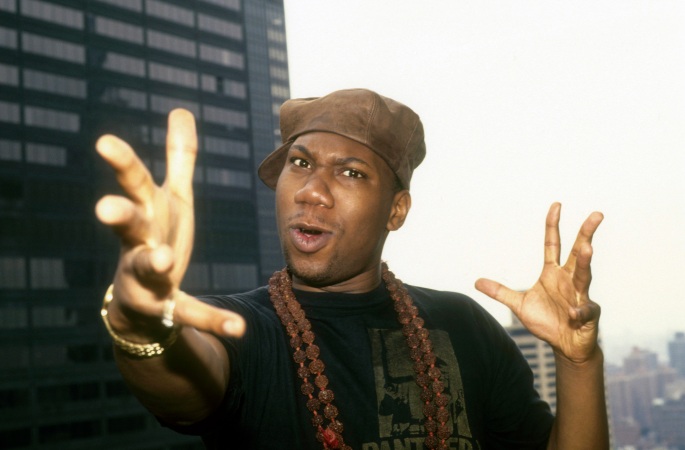
 Photo of KRS-One of Boogie Down Productions, circa 1990. Photo by Michael Ochs Archives/Getty Images
At its core, I Got Next is a sonic and narrative ode to the DNA of hip-hop. By 1997, hip-hop had begun to avoid the East vs. West Coast narratives. While the two sides were still beefing, the South’s block party anthems had emerged into the mainstream. At the 1995 Source Awards, Andre 3000 confidently boasted, “The South got something to say” in front of a booing crowd. Those words signified a commercial shift in the landscape of hip-hop. With I Got Next, KRS-One was looking to return to the core of the sound he fell in love with as a teenager.
I Got Next would debut at No. 3 on the Billboard charts, proving that there was still a sizeable audience for KRS-One. “The concept of this album is the celebration of hip-hop. I tried to do an album in production style, where it sounds like old hip-hop, but with a new twist to it,” he once explained. In an era where many MCs such as KRS-One would’ve felt pressure to cave into the genre’s new soundscapes, he could push forward to the genre by looking back.
The breakout single of I Got Next was undeniably “Step into a World (Rapture’s Delight).” Sampling the band Blondie, the track would become one of the highlight hits of his storied career. “The MC” carries a live feel, containing a rawness associated with KRS-One’s underground sound. He starts the record out, stating, “Who am I? / The MC, la-di da-di / I don’t wear Versace, I wear DJs out quickly at the party.” By 1997, New York’s hip-hop blueprint had shifted from basement DJ parties to dripped-out clothing in blockbuster music videos. KRS-One’s opening verse speaks volumes to his desire to pay homage to the era of hip-hop that he helped pioneer a decade ago.
 NEW YORK NEW YORK–AUGUST 22: Rapper KRS-One (aka Lawrence “Kris” Parker) appears in a portrait taken on August 22, 1990 in New York City. (Photo by Al Pereira/Getty Images/Michael Ochs Archives)
The majority of KRS-One fans don’t hold I Got Next up to the standards of Return of the Boom Bap or By All Means Necessary under Boogie Productions. However, the project would still become his best-selling and highest-charting album to date. KRS-One is at his best on I Got Next when he’s sonically focused on paying homage to New York boom-bap, rapping menacingly over drum-based production. The occasional moments of experimentation, such as the disastrous metal track “Just To Prove A Point,” move this project down the totem pole amongst his best records. However, I Got Next is rightfully remembered as a boom-bap essential on the 26th anniversary of its release.
NEWS
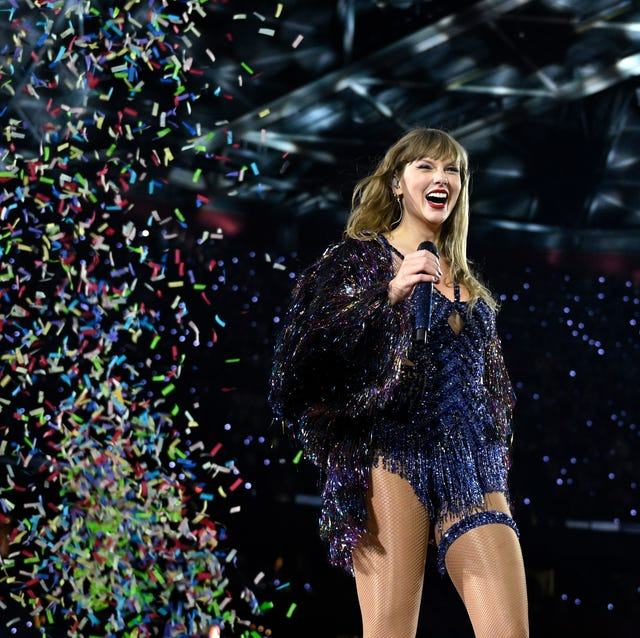
Taylor Swift is encouraging rising artists to stay away from reading social media comments too closely.
During a conversation with The New York Times about songwriting, the “Shake It Off” singer explained that although criticism can sometimes become a “creative writing prompt,” constantly checking comments online can leave artists overwhelmed by negativity.
“My favourite thing when I sit down with new artists or songwriters, I'm like, ‘Why are you reading your comments?’ Like, that's too much of it,” she said. “You're inundating yourself with too much criticism that doesn't really have a focus. But a little bit of it, you've got to just be like, this is part of (the job). Like, don't make this make you stop writing or make you edit yourself or whatever.”
Swift, 36, also shared that she often tells other musicians to channel criticism into music instead of firing back at people online or posting long responses in the Notes app.
“If it's an interesting point to you to kind of respond to, then that's a gift for you to be able to write something. Maybe you wouldn't have written something that day,” she continued. “But don't go to the Notes app and post it, like write (a song) about it. Make art about this. Don't respond to trolls in your comments. That's not what we want from you. We want your art.”
The global superstar went on to say that criticism has inspired some of the biggest songs throughout her career. She pointed to her 2014 hit “Blank Space,” saying it likely would not have happened without people constantly focusing on her dating life and creating “slideshow” style narratives about her relationships.
Speaking about her 2022 track “Anti-Hero,” Swift added, “That song doesn't exist if I don't get criticised for every aspect of my personality that people have a problem with or whatever.”