
NEWS

A new startup is offering to help solve what’s become an unlikely mystery for music's top artists and their business managers: how much money they’re actually making.
It’s a question that’s become surprisingly hard to answer in a world of micropayments from a fast-multiplying number of platforms and music distributors around the globe. But it’s one that’s taken on new urgency as artists scramble to replace the revenue they long earned from touring before the pandemic halted concerts a year ago. Many are turning to their future royalties for a lifeline and need to know exactly what they’re expected to earn altogether in order to borrow against it or to maximize the price their copyright interests can command on the soaring music-asset market.
Until recently, music’s business managers have largely had to manually input earnings into spreadsheets to track their clients’ proliferating revenue streams. But last July, HIFI, a new financial services company catering to the music community, quietly launched an invite-only royalty dashboard that pulls in data from publishers, distributors, performance rights organizations including DistroKid, TuneCore, AWAL, and SoundExchange. Eight months later, HIFI has become a popular tool among music’s business managers, and signed up thousands of mostly independent artists, tracking many “tens of millions” of dollars, says Matt Pincus, an investor and board member of HIFI.
Now HIFI founder and CEO Damian Manning is expanding access to its service called “Cash Flow” that allows artists to get paid a salary twice a month based on their expected royalty income for the year. He’s also building HIFI Enterprise, a version of the royalty dashboard designed for artists signed to major record labels, in collaboration with some of the music industry's top business managers, though getting the major labels to allow HIFI to access their full data presents a serious challenge.
“We initially built the solution to service indie artists, and indie artists' managers and their teams,” Manning said in an interview over Zoom. “What we've discovered is the artists in the major label system, the managers in the major label system, major publishing system, had the same set of challenges they're looking for solutions for.”
The three major record companies declined to comment for this story.
Currently, HIFI’s “Cash Flow” service works by rerouting an artist’s royalty revenue from labels, publishers, and distributors through the company's coffers, allowing HIFI to analyze how much an artist is expected to make throughout the year, and adjust compensation accordingly.
“[Cash Flow] looks at the pipeline and historical earnings of given artists, and forecasts what they're going to be earning over the next rolling 12 months,” Manning says. “Then we guarantee a payment to them that arrives every two weeks, no matter what. If they earn more than we guarantee, we pass through the rest as a bonus, and they can cancel at any time.”
HIFI charges a 2% administration fee for use of Cash Flow but does not charge a fee for access to its standard royalty dashboard. (Enterprise partners will be charged a fee, which HIFI has not disclosed.) Business managers around the industry say Cash Flow and products like it will provide artists with more leverage and flexibility as they move throughout their careers, and HIFI says there is strong demand -- even from major artists.
“The idea that someone who’s big doesn’t ‘need the money’ -- I don’t think it’s a question of needing the money, it’s not wanting someone else to be holding your money,” says Andrew McInnes, Diplo’s manager and CEO of TMWRK Management, who notes the business managers he works with have embraced HIFI. “Anything that makes a business on the scale of Diplo more efficient is good for me, it’s good for Diplo, and it’s good for his business manager.”
“Getting a big check for publishing every two years is not conducive to setting up a good financial flow for anyone,” Mike Merriman, the founder and president of PARR3, a consulting firm that specializes in business management for entertainers, including clients Kehlani, Dillon Francis and 6LACK. Merriman believes that services like Cash Flow will allow artists to reduce the need to take big advances from labels and maintain more leverage in contract negotiations. “Instead of doing a deal where the label takes 82% and you take 18% of sales, you can leverage that to something much more in your favor,” Merriman says.
HIFI, which is currently only available to U.S. residents, also has plans to expand its offerings internationally.
Some managers are hoping that the company, and other services like it, will pressure the majors into providing more information to its artists in a more accessible fashion. “[HIFI] can become much more interesting and more exciting and more of a game-changer if the payors move to more real-time information,” says Mark Kaplan, a music business manager and partner at Citrin Cooperman, whose clients include The Black Eyed Peas, Snow Patrol and Interpol.
“Sometimes these label statements are set up to be overly complicated and light on data,” another business manager, who wished to remain anonymous, tells Billboard. “It's a 300-page pdf, but it's not even really telling you what you want to know. We need more transparency and more accountability.”
NEWS
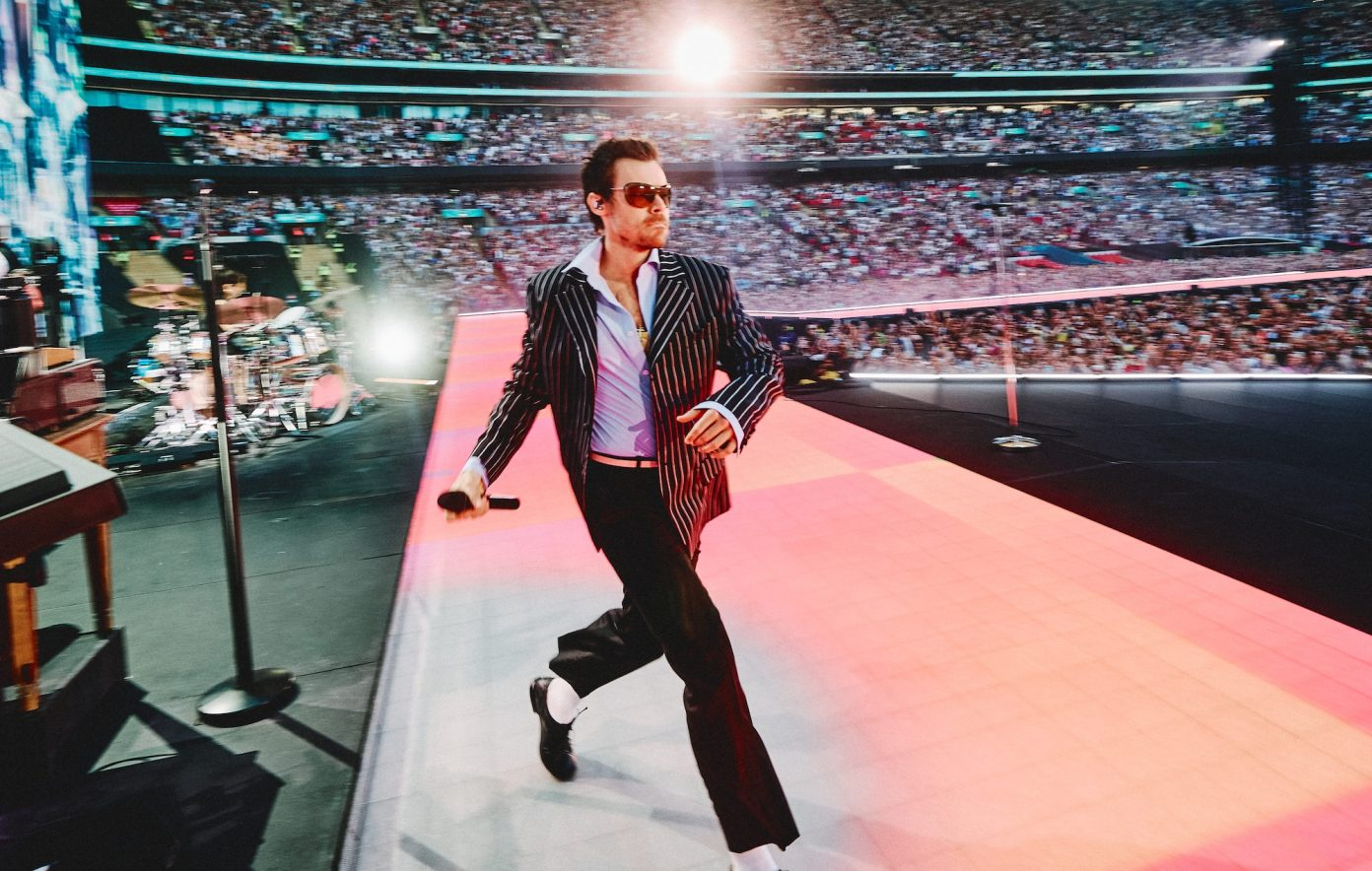
Harry Styles paid tribute to the late David Hockney and reflected on his time in One Direction last night (June 12), as he kicked off his record-breaking residency at Wembley Stadium.
Hockney – whose painting of Styles was displayed at the National Portrait Gallery in 2023 – died on June 11, aged 88, and the musician honoured him during his set by sharing a quote from the painter on the big screens.
“What an artist is trying to do for people is bring them closer to something, because of course art is about sharing,” the quote read. “You wouldn’t be an artist unless you wanted to share an experience, a thought.”
Styles’ gig last night marked the first of 12 gigs at Wembley, which will see the star break the record for the most shows at the venue in a single tour. Coldplay previously held the record, delivering 10 gigs at the stadium last year as part of their Music Of The Spheres tour.

The London residency follows the Together, Together tour beginning in Amsterdam in May, and will be followed by stops in São Paulo, Mexico City, New York, Melbourne and Sydney. He will be supported by a different artist in each city, joined by Shania Twain in London, who delivered a set of hits and new tracks from her upcoming album, ‘Little Miss Twain’.
As the sounds of Simon And Garfunkel’s ‘Bridge Over Troubled Water’ played over the stadium PA, Styles made his way to the stage, kicking off his set with ‘Are You Listening Yet?’, from his latest album, ‘Kiss All The Time. Disco Occasionally’. Between renditions of ‘Golden’ and ‘Adore You’, he addressed the crowd for the first time, saying: “Our job tonight is to entertain you. Your job is to have as much fun as you possibly can.
“If you want to sing, if you want to dance, please feel free. Please feel free to be whoever it is you’ve always wanted to be tonight. We’ve got each other’s backs.”
Throughout the night, Styles subtly reworked some of the songs on the setlist. He dedicated ‘Taste Back’ “to all the ravers in the house”, as a snippet of Underworld’s ‘Born Slippy’ was interpolated into the song, while a brief burst of Talking Heads’ ‘This Must Be The Place’ was introduced to ‘Treat People With Kindness’. During ‘Dance No More’, the pop star’s band played part of the groove from Happy Mondays’ ‘Step On’, while Styles sang a snatch of Gorillaz’s ‘Clint Eastwood’.
There were also nods to Styles’ days in One Direction early in the set. As the musician left the stage after ‘Fine Line’, the string section on stage played a medley featuring clips of the group’s hits ‘Night Changes’ and ‘History’, plus Styles’ own track ‘Falling’. After ‘Keep Driving’, he took the time to reflect on Wembley’s connections to his and the boyband’s journeys.
“Just outside of this building, just next door, is Wembley Arena, and 16 years ago, my sister brought me to London for the very first time for my X Factor audition,” he said. “So driving here today, and any time I come through Wembley, means so much to me, ‘cause right in that building next door, I was put into a band. We were called One Direction.
The Together, Together setlist features a different surprise song each night at the start of the encore. Last night, Styles treated the Wembley audience to ‘Little Freak’, taken from ‘Harry’s House’, for the first time since 2023. After the song, he spoke to the audience for the final time, saying: “I don’t know if you’ve been listening to me for a week, or a month, or a year, or five years, or 10 years, or 16 years, or whatever it is, but you have changed my life over and over again. Thank you so much for being here and allowing us to do these shows. Thank you, thank you, thank you.
“Finally, 16 years ago, my mother signed me up for the X Factor without my knowledge. I wouldn’t be here today if she hadn’t done that. She’s here today – thank you so much. You’ve changed my life, all of you.” Referencing a lyric in ‘Dance No More’, he added: “Remember – respect your mother.”
‘Are You Listening Yet?’
‘Golden’
‘Adore You’
‘Watermelon Sugar’
‘Music From A Sushi Restaurant’
‘Taste Back’
‘Coming Up Roses’
‘Fine Line’
‘Italian Girls’
‘American Girls’
‘Keep Driving’
‘Ready, Steady, Go!’
‘Dance No More’
‘Treat People With Kindness’
‘Pop’
‘Season 2 Weight Loss’
‘Carla’s Song’
‘Aperture’
‘Little Freak’
‘Sign Of The Times’
‘As It Was’

The Together, Together, London residency continues at Wembley Stadium tonight, with further dates on June 17, 19, 20, 23, 26, 27, 29 and July 1, 3, and 4. Visit here for any remaining UK tickets and check out doors and stage times here.
The gigs will see Styles donate £1 from every ticket sold to LIVE’s levy to help protect UK grassroots music venues and support emerging talent, and before Styles’ headline performance, the big screens at the venue encouraged fans to support Music Venues Trust.
The tour is in support of the star’s latest album, ‘Kiss All The Time. Disco Occasionally’, which was released in March. In a four-star review, NME described it as “an album that you’ll really want to spend a lot of time with, letting all its layers envelope you”. It added: “It’s the most exploratory album of his career so far, trying out new things and steering his ship in new directions.”
Meanwhile, Styles has also curated this year’s Meltdown Festival at the Southbank Centre. The line-up chosen by the star includes Stephen Fretwell, Nilüfer Yanya, Orlando Weeks, Bar Italia, Dev Hynes, Jon Hopkins, Getdown Services, LCD Soundsystem’s James Murphy, Soulwax and more, as well as an intimate gig from Styles himself.
The festival kicked off earlier this week (June 11) with a performance from Los Angeles’ Warpaint, whose show was their first in nearly two years. During the gig, they shared fan favourites like ‘Love Is To Die, ‘Billie Holiday’ and ‘Disco//Very’, plus a cover of Kate Bush’s ‘Running Up That Hill’.