
Portrait of singer Meat Loaf, 1987.
Dave Hogan/Getty ImagesMeat Loaf, the singer and actor best known for his bestselling Bat Out of Hell albums and roles in films as varied as The Rocky Horror Picture Show and Fight Club, died Thursday at the age of 74.
The news was confirmed by the singer’s family in a post on his official Facebook page. A cause of death was not given.
“Our hearts are broken to announce that the incomparable Meat Loaf passed away tonight surrounded by his wife Deborah, daughters Pearl and Amanda, and close friends,” the family wrote. “We know how much he meant to so many of you and we truly appreciate all of the love and support as we move through this time of grief in losing such an inspiring artist and beautiful man. We thank you for your understanding of our need for privacy at this time.”
Meat Loaf first found success on the Broadway stage in the groundbreaking musical Hair, and he had a brief, but memorable role in The Rocky Horror Picture Show as the ill-fated delivery boy Eddie — but it was his 1977 album Bat Out of Hell that turned him into a superstar and rock & roll icon.
The songs on Bat Out of Hell were written by stage composer Jim Steinman, but Meat Loaf’s boundless passion and bravado brought them to life in incredible ways. “I sang every song we ever did in character,” Meat Loaf told Rolling Stone in 2021. “I left me. I was not method. I didn’t have to find something in my past life to be able to sing his songs. I became the song.”
That explains why Meat Loaf always saw himself as a very unique figure in the rock world. “I’m different from Bette [Midler] or Cher or Sinatra,” Meat Loaf told Rolling Stone in 1993. “This might be a huge ego thing, but I tend to think of myself as the Robert De Niro of rock. I know that’s absurd, but my idols are either sports figures or Robert De Niro.”
The Robert De Niro of rock saw Bat Out of Hell go platinum 14 times over thanks to the hit singles “Paradise by the Dashboard Light,” “You Took the Words Right Out of My Mouth (Hot Summer Nights),” and “Two Out of Three Ain’t Bad.” But the pressure to create a follow-up caused Meat Loaf to have an emotional breakdown, and he temporarily lost his singing voice.
It was the beginning of a dark chapter of his life marked by lawsuits, commercially disastrous records, and significant financial woes. “I felt like a leper,” Meat Loaf said in 1993. “I felt like I was on an island with my wife and my two daughters.”
But a miracle took place in 1993 when he re-teamed with Steinman to record Bat Out of Hell II: Back Into Hell. The album went on to sell an astounding 14 million copies, thanks in large part to the worldwide hit single “I Would Do Anything for Love (But I Won’t Do That).” It’s one of the most stunning comebacks in rock history.
Marvin Lee Aday was born in Dallas, Texas, on Sept. 27, 1947. He was a chunky baby, and he claimed his father named him “Meat” when he was just four days old. His father was also a violent alcoholic that regularly beat him, and things at school weren’t much better since his large size caused the kids to mercilessly tease him. Things turned around in high school when his stature proved to be an asset on the football team. He also discovered he suddenly had a three-and-a-half-octave vocal range his sophomore year after a 12-pound shot landed on his head during a track and field event. (For the rest of his life, he believed the accident somehow created his singing voice.)
When Meat Loaf was just 18, his mother died after a long battle with breast cancer. Shortly after the funeral, his father lunged into the teenager’s bedroom in a state of drunken fury with a butcher knife in his hand. “I rolled off the bed just as he put that knife right in the mattress,” he said in 2018. “I fought for my life. Apparently I broke three ribs and his nose, and left the house barefoot in a pair of gym shorts and a T-shirt.
Seeing no reason to remain in Texas, Meat Loaf moved to Los Angeles to seek out a career in show business. He formed a group called Meat Loaf Soul and opened up for acts like Taj Mahal and Janis Joplin, but he didn’t find any traction until he was cast in Hair in 1968. That led to a record contract with the Motown subsidiary Rare Earth and a 1972 album of duets with female singer Shaun Murphy under the banner Stoney & Meatloaf.
When the album failed to find an audience, he moved to New York and was cast in the Public Theater’s production of More Than You Deserve, a musical created by Steinman. Meat Loaf’s big moment in the show was “More Than You Deserve.” “When I sang [that] song, everyone stood on their feet and went crazy,” Meat Loaf told Rolling Stone last year. “That happened every night, all week. By the end, I was going, ‘Maybe I should work with this guy Steinman. People tell me I can sing, but I’ve never sang like that.'”
Steinman and Meat Loaf formed a tight bond that only strengthened when they hit the road with the National Lampoon road show. Steinman played piano and Meat was the understudy to John Belushi, but during downtime they started to work on songs and dream of a collaborative album. It took a while to actualize, and in 1975, the partnership took a slight pause when Meat Loaf took the role of pompadoured motorcycle freak Eddie in The Rocky Horror Picture Show. The duo finally managed to release Bat Out of Hell in October 1977, thanks to help from Steve Popovich of Cleveland International Records and producer Todd Rundgren.
Critics dismissed Bat Out of Hell as a ludicrously overblown mess, but relentless touring and an appearance on Saturday Night Live managed to win over a huge fan base. “Saturday Night Live broke the egg, and Bat Out of Hell spilled out all over the world,” Meat Loaf said last year. “We went from selling no records at the end of May to being five-times platinum. From that point on, I was always at 11. I would get up, go the morning radio, go to soundcheck, do interviews, do the show, sometimes go to a radio station after the show. I’d go to the Rocky Horror Picture Show screenings.”
The attempt to record a follow-up was an absolute disaster. “The problem was with a million different forces — his manager, his lawyers, his vocal cords, his brain,” Steinman told Rolling Stone in 1993. “I actually just left. I spent seven months trying to make a follow-up to Bat out of Hell with him, and it was an infernal nightmare. He had lost his voice, he had lost his house, and he was pretty much losing his mind.”
By the time he emerged from the madness in 1981 with Dead Ringer, Meat Loaf’s fans had moved on and the album was a huge commercial disappointment. Follow-up albums Midnight at the Lost and Found, Bad Attitude, and Blind Before I Stop fared even worse and Meat Loaf wound up declaring bankruptcy.
“It was horrible,” Meat Loaf said in 1993. “The kids took a beating. My wife would try to write a check at the grocery store, and they wouldn’t take it, even though it was fine. So I just worked. I always have. No big deal.”
But he never stopped touring, particularly in Europe where he maintained a loyal audience, and he found acting work in movies like Wayne’s World, Leap of Faith, and The Gun in Betty Lou’s Handbag.
Throughout this time, Steinman continued to write hits for the likes of Air Supply, Bonnie Tyler, and Barbra Streisand. After years of talk and false starts, he finally got back together with Meat Loaf in 1993 for Bat Out of Hell II: Back Into Hell.
“Jim doesn’t know this,” Meat Loaf told Q before the album came out, “But a psychic told me that Jim has written his best stuff already and he’ll never write like it again. If this doesn’t do 3 or 4 million, it’ll be a cold day in hell before they let us do another.”
The psychic was a bit off. Bat Out of Hell II became the least likely hit album of the grunge era, and leadoff single “I Would Do Anything for Love (But I Won’t Do That)” was, far and away, the biggest song of his entire career. The album hit Number One on the Hot 100 and he won a Grammy for Best Solo Rock Vocal Performance.
Meat Loaf was suddenly a household name again, and he landed acting jobs in everything from Spiceworld to Nash Bridges — including a memorable role as Bitch Tits in Fight Club.
The follow-up albums to Bat Out of Hell II: Back Into Hell were largely underwhelming affairs that were made without the cooperation of Steinman, and their attempt to craft a true Bat III fell apart when Steinman had a stroke. There were also many lawsuits between the two parties, but Meat Loaf felt the public didn’t truly understand them.
“We never sued each other, no matter what people write,” he said in 2021. “It’s a fuckin’ lie to say otherwise. I never sued Jim. Jim never sued me. Our managers sued each other. But my heart never sued Jim. And I know Jim’s heart never sued me.”
Meat Loaf continued his heavy tour schedule through the 2000s, but the sheer physicality of his stage show began taking a toll on his health. He collapsed onstage in 2016 while singing “I Would Do Anything for Love (But I Won’t Do That)” at a show in Edmonton, Canada. It wound up being the last tour of his career.
When Rolling Stone caught up with him at his Texas home in 2018, he said he spent much of his time watching reruns of Law and Order and Blue Bloods, playing the online role-playing game Gladiator, and arguing with fans on his Facebook page. But he did acknowledge that his once-mighty singing voice wasn’t what it used to be.
“What’s different now is the tone of my voice,” he said. “They call it flat or out of key. It’s not. It’s just that my tone is completely different from what it was, and there’s nothing I can do about it.”
When Steinman died in 2021, Meat Loaf spent two days on the phone with Rolling Stone talking about their long partnership, pausing occasionally to cry. “I don’t want to die, but I may die this year because of Jim,” he said. “I’m always with him and he’s right here with me now. I’ve always been with Jim and Jim has always been with me. We belonged heart and soul to each other. We didn’t know each other. We were each other.”
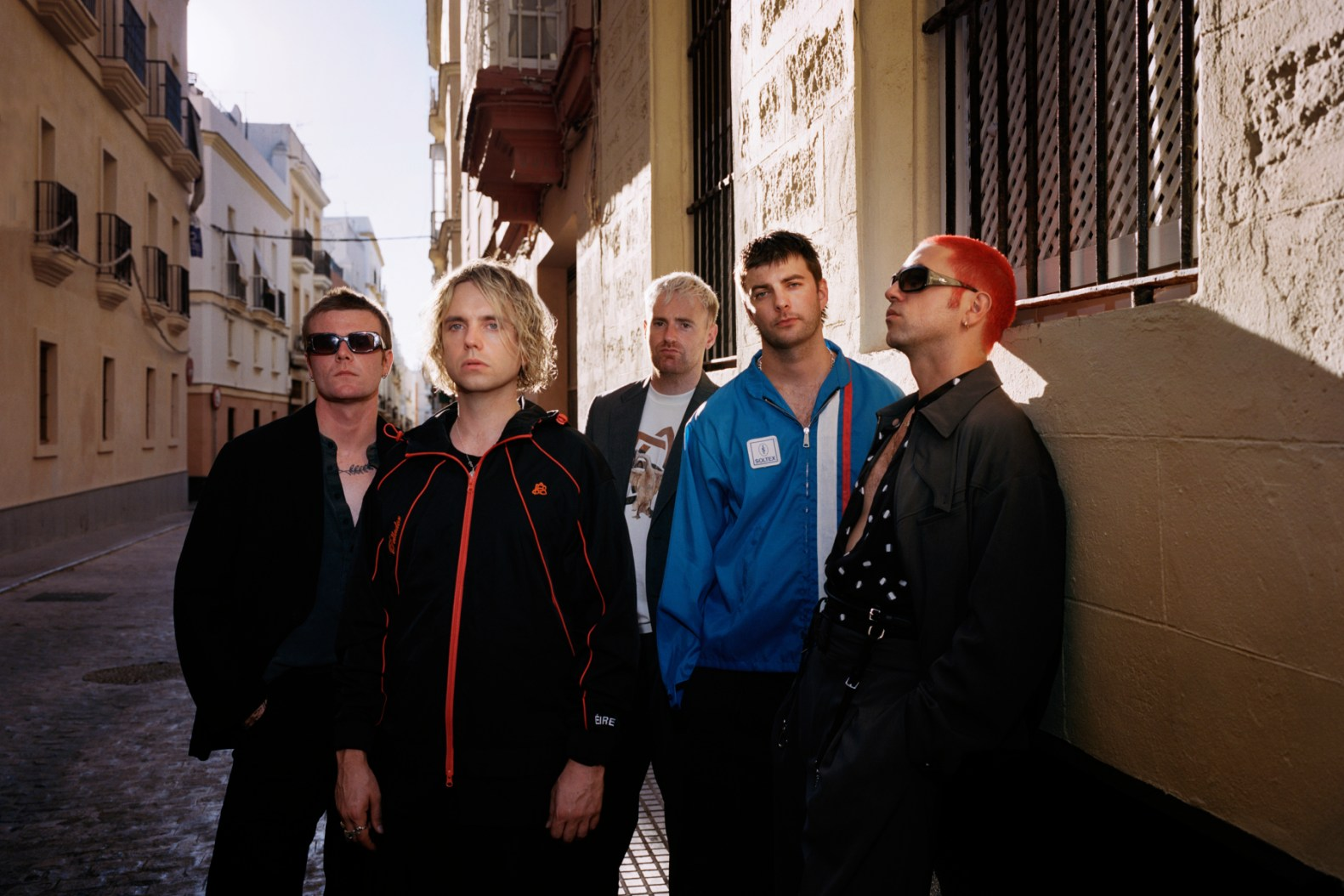
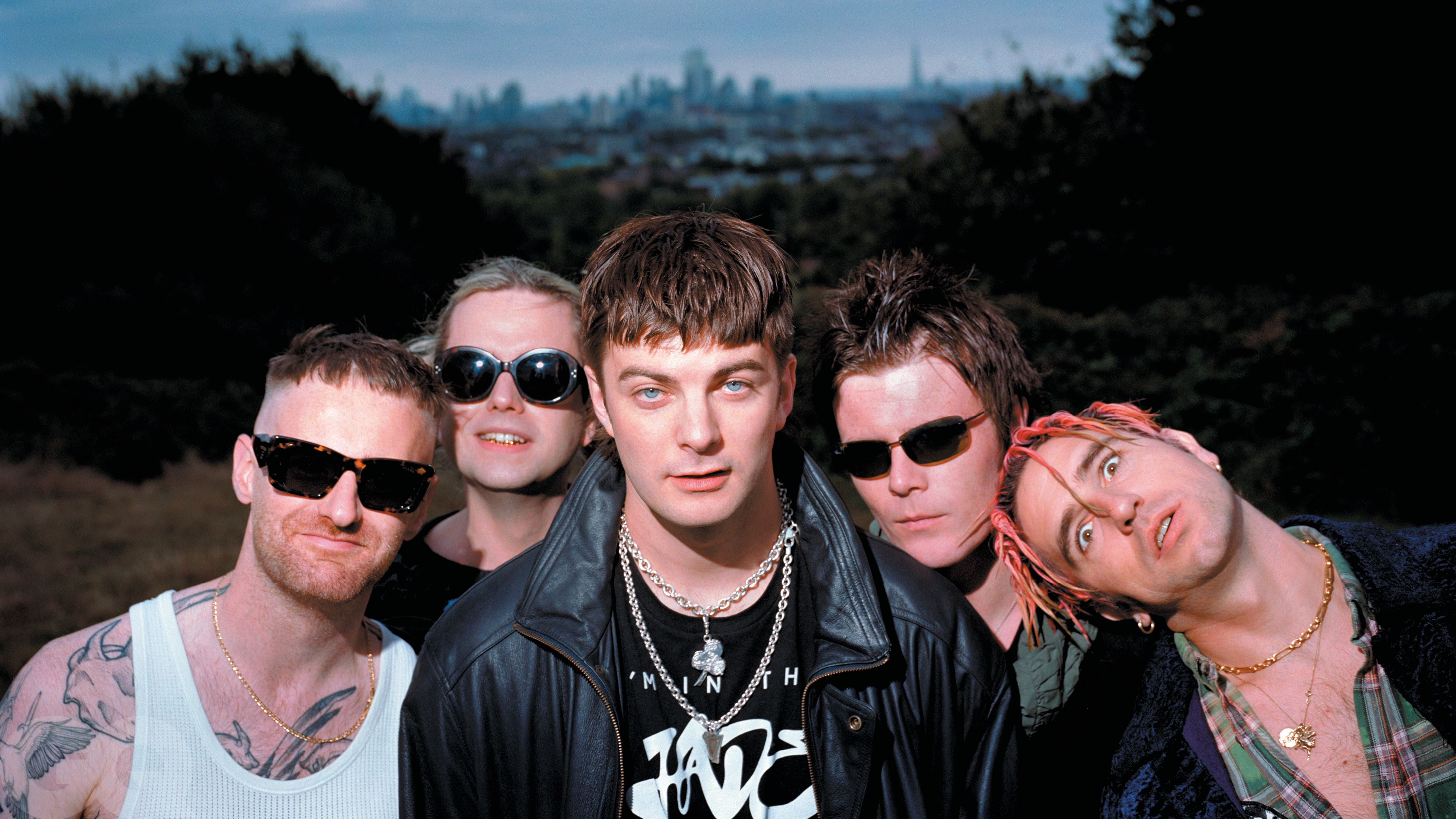
Fontaines D.C. have teamed up with Rosalía for their new collaboration, Where Is Gone?.
The song features on the Irish rock band's forthcoming album, Dopamine Chamber, which arrives on Friday (16.10.26). For guitarist Carlos O’Connell, working with the Spanish superstar is particularly special because of his own Spanish roots.
He explained: “I’ve admired Rosalía ever since her debut album, which I thought was absolutely beautiful.
“What excited me most was the way she continued to preserve Spain's musical traditions, something that felt spiritually connected to what we've been trying to achieve with Irish music. Having roots in both countries, it's been really special to witness. "She's an artist who has continued to amaze me at every point in her career.”
Frontman Grian Chatten has also described the collaboration with Rosalía as one of the most memorable achievements of his career.
He revealed that he felt "humbled" when she agreed to lend her voice to the band's album.
Speaking to NPR, Grian said: “I've always felt there's something almost like a single big idea that I'm personally trying to communicate to the world before I get old and die, if that makes sense. There's one thing I think I'll spend my life trying to express. I have a feeling she has a similar outlook. … I mean, she's an amazing arranger, composer and lyricist. It means so much that she wanted to sing on something we'd put together. It's definitely one of the highlights of my career.”
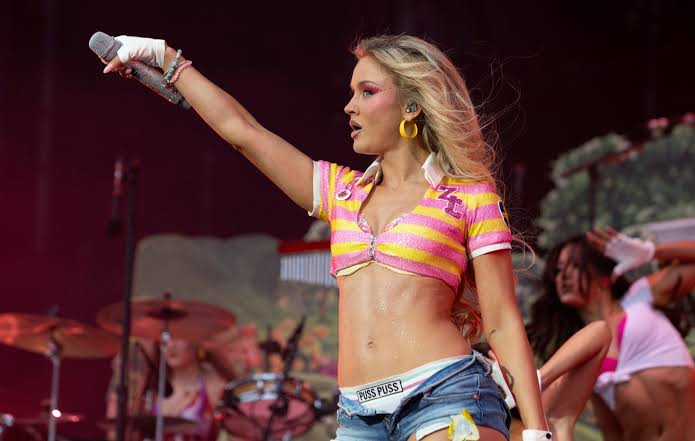
Rosalía's links to Irish rock music extend beyond Fontaines D.C. She also offered inspiration and helped develop the Spanish lyrics for U2's The Mirror Maker (Rosalía), a track from their forthcoming album, Carnaval de Luz.
During an appearance on The Tonight Show Starring Jimmy Fallon last week, she spoke about frontman Bono, saying: “I don't know him personally, but he sent me a text explaining that he was working on a new project and had written a song called The Mirror Maker."
Rosalía joked that Bono had invented a few words of his own.
She recalled telling him: “I wasn't sure what to make of it, but I told him he could create his own language if he wanted to.”
She described the opportunity to collaborate with the 66 year old music veteran as a real privilege.
She added: “Bono is a legend.
“It's amazing.”
Bono recently revealed that he was worried about seeming like a stalker when he reached out to Rosalía to ask whether he could name the song after her.