
NEWS

Dallas Frazier
Courtesy of the Country Music Hall of Fame and MuseumSongwriter Dallas Frazier, known for penning hits including The Oak Ridge Boys‘ 1981 classic “Elvira,” and Gene Watson‘s “Fourteen Carat Mind,” died Friday (Jan. 14). Frazier was 82.
Frazier was born in Spiro, Okla., on Oct. 27, 1939, and raised in Bakersfield, California. At age 12, he was already writing songs and won a talent competition hosted by Ferlin Husky. By age 14, Frazier was recording for Capitol Records. In 1960, Frazier had his first success as a songwriter, when “Alley Oop” became a pop hit for the Hollywood Argyles. Three years later, he moved to Nashville.
In 1967, the Frazier-penned “There Goes My Everything,” recorded by Jack Greene, was named song of the year by the Country Music Association.
Frazier also found success co-writing songs with A.L. “Doodle” Owens, including Charley Pride‘s first No. 1 Billboard Hot Country Songs hit, 1969’s “All I Have to Offer You (Is Me).” Pride also had No. 1 country hits with the Frazier/Owens collaborations “(I’m So) Afraid of Losing You Again,” “I Can’t Believe That You’ve Stopped Loving Me” and “Then Who Am I.”
Connie Smith and George Jones were also among those who recorded several of Frazier’s hits, such as Jones’ 1967 hit “If My Heart Had Windows.” (Jones also recorded an entire album of Frazier’s songs on Sings the Songs of Dallas Frazier.) Among the Frazier-penned Smith recordings are “Ain’t Had No Lovin’,” “Run Away Little Tears,” “Ain’t Love a Good Thing” and more.
Another’s of Frazier’s best-known songs, “Elvira,” was previously recorded by Rodney Crowell before it became a smash hit for the Oak Ridge Boys in 1981. The group’s recording of the song earned the Country Music Association’s single of the year honor.
“I’ve noticed this all my life in writing songs, there’s a thing called feel, and it’s magic when you get ahold of it,” Frazier told journalist Tom Roland in a 2018 interview. “It can make or break a record. You can have a great song and all, but if it doesn’t have that feel, it just doesn’t do anything. ‘Elvira’ had the feel. And The Oaks, what a tremendous cut. With Richard Sterban doing his thing on it and the horns just making it first class…it had so much magic in it, it’d just raise the hair on your arms.”
During his career, Frazier earned three Grammy nominations, for his work on “There Goes My Everything,” “All I Have To Offer You (Is Me),” and “Elvira.”
In 1980, Frazier’s “Beneath Still Waters” became a No. 1 country hit for Emmylou Harris, and Frazier also co-wrote Tanya Tucker‘s first No. 1 hit, “What’s Your Mama’s Name?”
Frazier was inducted into the Nashville Songwriters Hall of Fame in 1976.
“Dallas Frazier is among the greatest country songwriters of all time,” said Kyle Young, CEO of the Country Music Hall of Fame and Museum. “He could convey infectious fun with ‘Elvira,’ and then write something as stunningly sad and true as ‘Beneath Still Waters.’ His songs helped Connie Smith to become a member of the Country Music Hall of Fame. He was a man of kindness, generosity, and faith, who overcame a hardscrabble upbringing to offer smiling gifts to all of us. He lived a beautiful life of a beautiful mind.”
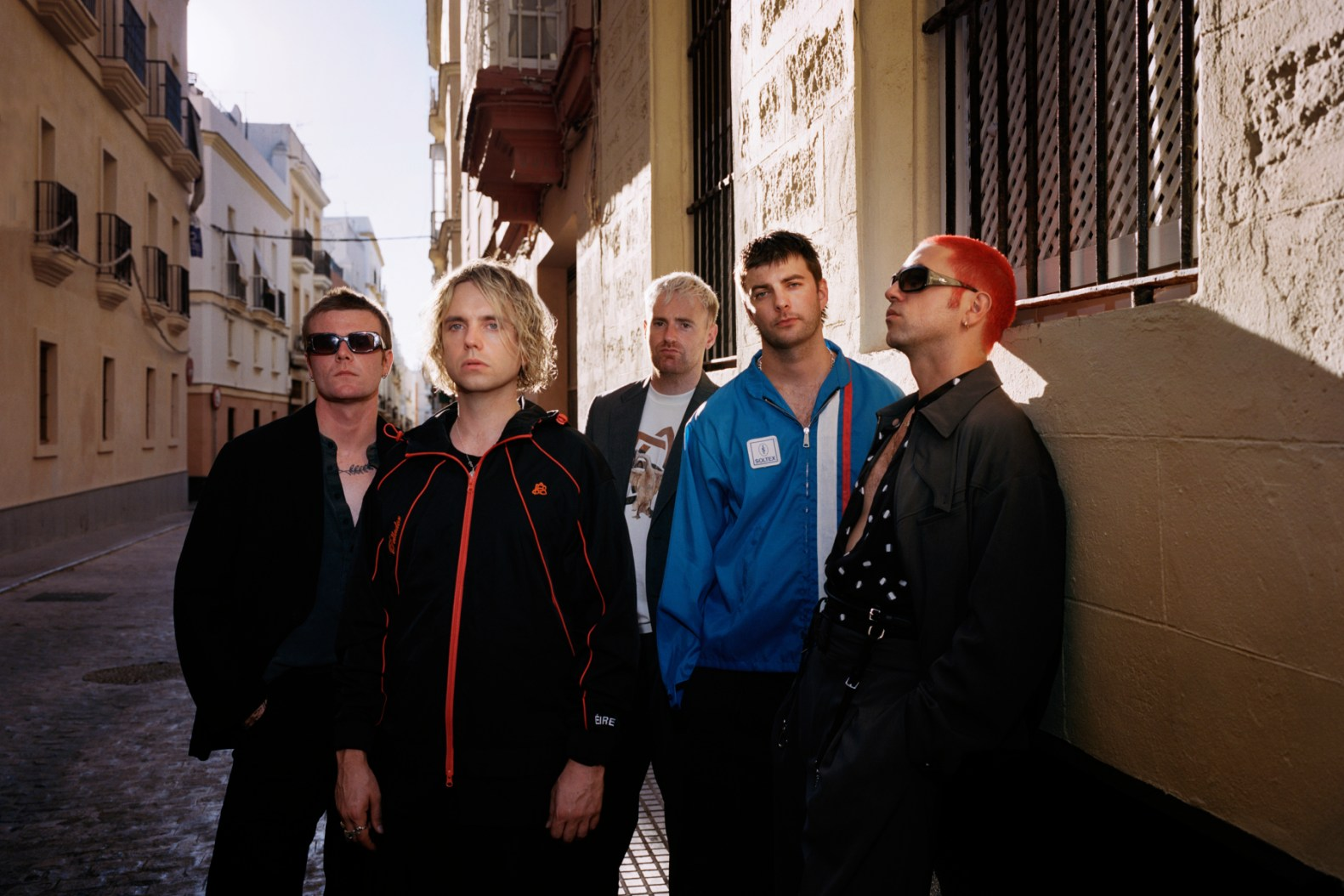
Fontaines D.C. have teamed up with Rosalía for their new collaboration, Where Is Gone?.
The song features on the Irish rock band's forthcoming album, Dopamine Chamber, which arrives on Friday (16.10.26). For guitarist Carlos O’Connell, working with the Spanish superstar is particularly special because of his own Spanish roots.
He explained: “I’ve admired Rosalía ever since her debut album, which I thought was absolutely beautiful.
“What excited me most was the way she continued to preserve Spain's musical traditions, something that felt spiritually connected to what we've been trying to achieve with Irish music. Having roots in both countries, it's been really special to witness. "She's an artist who has continued to amaze me at every point in her career.”
Frontman Grian Chatten has also described the collaboration with Rosalía as one of the most memorable achievements of his career.
He revealed that he felt "humbled" when she agreed to lend her voice to the band's album.
Speaking to NPR, Grian said: “I've always felt there's something almost like a single big idea that I'm personally trying to communicate to the world before I get old and die, if that makes sense. There's one thing I think I'll spend my life trying to express. I have a feeling she has a similar outlook. … I mean, she's an amazing arranger, composer and lyricist. It means so much that she wanted to sing on something we'd put together. It's definitely one of the highlights of my career.”
Rosalía's links to Irish rock music extend beyond Fontaines D.C. She also offered inspiration and helped develop the Spanish lyrics for U2's The Mirror Maker (Rosalía), a track from their forthcoming album, Carnaval de Luz.
During an appearance on The Tonight Show Starring Jimmy Fallon last week, she spoke about frontman Bono, saying: “I don't know him personally, but he sent me a text explaining that he was working on a new project and had written a song called The Mirror Maker."
Rosalía joked that Bono had invented a few words of his own.
She recalled telling him: “I wasn't sure what to make of it, but I told him he could create his own language if he wanted to.”
She described the opportunity to collaborate with the 66 year old music veteran as a real privilege.
She added: “Bono is a legend.
“It's amazing.”
Bono recently revealed that he was worried about seeming like a stalker when he reached out to Rosalía to ask whether he could name the song after her.