

James Brown’s estate has sold the late singer’s music assets to Primary Wave, the publishing and management company announced on Monday, marking the latest blockbuster deal in the booming song acquisition market.
Primary Wave didn’t comment on the financial details of the deal or how much of a stake it purchased, but a source familiar with the deal tells Rolling Stone Primary Wave bought the entirety of Brown’s publishing, master income stream, and name and likeness rights that were owned by the estate. As the New York Times reports, the deal is estimated at $90 million.
The sale is the latest development in settling 15 years of dispute over Brown’s estate. Brown left most of his assets in a will to establish scholarships for underprivileged children in South Carolina and Georgia, but contention among Brown’s heirs — who were given only Brown’s possessions and stage costumes, along with $2 million earmarked for Brown’s grandchildren’s education — delayed that fund.
Another complication in the will involved Brown’s marriage to singer Tommie Rae Hynie, who was already married to another man when she married Brown. South Carolina’s supreme court ruled in 2020 that she was never officially Brown’s wife.
With the estate sale, Brown’s scholarship fund is that much closer to coming to fruition. As the Times reported, the money from the sale will fund the scholarships, and Primary Wave’s founder and CEO Larry Mestel told the paper the company will contribute small percentages of earnings from future deals from Brown’s music to the scholarships. Still, Adele Pope, a former executor of Brown’s will, has an ongoing lawsuit against Brown’s estate. And Russell Bauknight, the fiduciary for the James Brown Estate and Trust, filed another against Pope. Until those suits are resolved, the Times reported, the scholarships can’t move forward.
“The James Brown Estate and related Trust are very proud and excited to work with Larry Mestel and Primary Wave,” Bauknight said in a statement. “We believe that our choice of professionals to take the James Brown Legacy to the next level is going to prove to be one of the most successful events in Mr. Brown’s long history in show business.”
Brown, one of the most influential artists of his generation and a central figure in soul music, has an extensive catalog of hits that includes “I Got You (I Feel Good),” “The Comeback,” and “Get Up (I Feel Like Being a) Sex Machine.” Brown’s career-spanning compilation record Star Time is ranked 54th in Rolling Stone’s 500 Greatest Albums of All Time list.
Primary Wave will be looking to further promote the music and bring it to a new generation of fans. They previously closed deals with artists like Stevie Nicks and Paul Anka, along with the estates of Whitney Houston and Prince among many others.
Primary Wave is one of several notable dealmakers in the hyper-competitive song acquisition market. The market has heated up in the past several years as companies like Primary Wave and Hipgnosis Songs Fund have been willing to shell out previously unheard-of offers to buy rights from artists, songwriters, and producers. The sellers choose an immediate payout rather than gamble on their future royalty earnings, while buyers hope to boost songs’ earnings. Selling song rights has been attractive to major legacy artists as they plan their own estates, leaving money to their loved ones while entrusting music companies to handle their musical legacies.
Primary Wave is far from alone as deep-pocketed corporations are also looking to jump in. Hipgnosis established a billion-dollar partnership with investment giant Blackstone earlier this year to fund more acquisitions, while BMG, who announced the purchase of all of Mötley Crüe’s recorded music catalog at the end of November, has a similar partnership with investment firm KKR. The major publishing companies are active, too, with Paul Simon selling his catalog to Sony Music Publishing, and Bob Dylan selling to Universal Music Publishing for over $300 million.
“Wow, I am awed that Primary Wave has been chosen by the estate of James Brown to partner with the Godfather of Soul,” Mestel said in a statement. “We are thrilled to help continue the expansion of his influence and further his legacy through both his music and The James Brown 2000 Trust.”
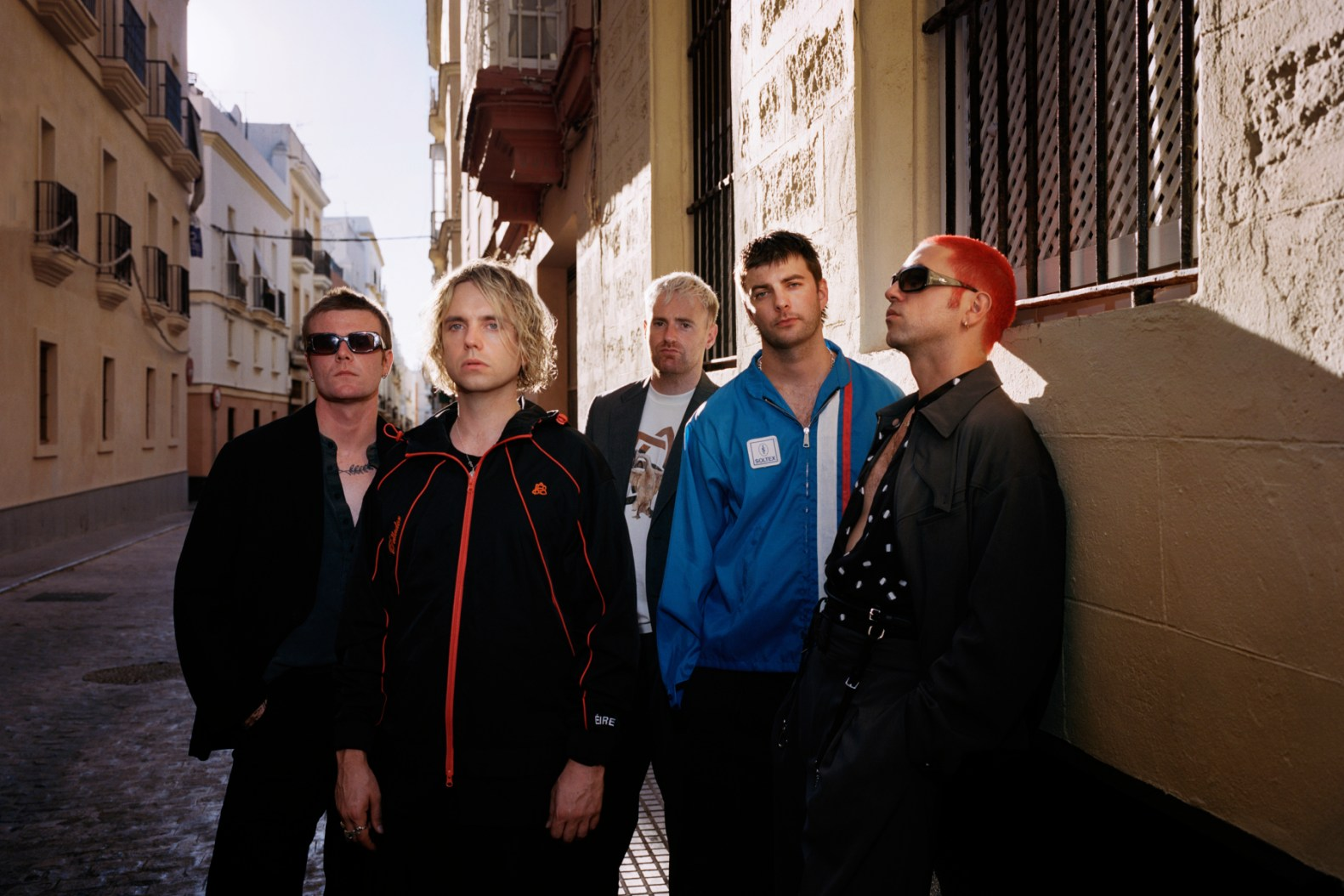
Fontaines D.C. have teamed up with Rosalía for their new collaboration, Where Is Gone?.
The song features on the Irish rock band's forthcoming album, Dopamine Chamber, which arrives on Friday (16.10.26). For guitarist Carlos O’Connell, working with the Spanish superstar is particularly special because of his own Spanish roots.
He explained: “I’ve admired Rosalía ever since her debut album, which I thought was absolutely beautiful.
“What excited me most was the way she continued to preserve Spain's musical traditions, something that felt spiritually connected to what we've been trying to achieve with Irish music. Having roots in both countries, it's been really special to witness. "She's an artist who has continued to amaze me at every point in her career.”
Frontman Grian Chatten has also described the collaboration with Rosalía as one of the most memorable achievements of his career.
He revealed that he felt "humbled" when she agreed to lend her voice to the band's album.
Speaking to NPR, Grian said: “I've always felt there's something almost like a single big idea that I'm personally trying to communicate to the world before I get old and die, if that makes sense. There's one thing I think I'll spend my life trying to express. I have a feeling she has a similar outlook. … I mean, she's an amazing arranger, composer and lyricist. It means so much that she wanted to sing on something we'd put together. It's definitely one of the highlights of my career.”
Rosalía's links to Irish rock music extend beyond Fontaines D.C. She also offered inspiration and helped develop the Spanish lyrics for U2's The Mirror Maker (Rosalía), a track from their forthcoming album, Carnaval de Luz.
During an appearance on The Tonight Show Starring Jimmy Fallon last week, she spoke about frontman Bono, saying: “I don't know him personally, but he sent me a text explaining that he was working on a new project and had written a song called The Mirror Maker."
Rosalía joked that Bono had invented a few words of his own.
She recalled telling him: “I wasn't sure what to make of it, but I told him he could create his own language if he wanted to.”
She described the opportunity to collaborate with the 66 year old music veteran as a real privilege.
She added: “Bono is a legend.
“It's amazing.”
Bono recently revealed that he was worried about seeming like a stalker when he reached out to Rosalía to ask whether he could name the song after her.