

Paul Franklin performs during the 2015 Celebrity Barn Dance a Benefit Concert at The Jaeckle Centre on March 28, 2015 in Thompson's Station, Tenn.
Rick Diamond/Getty ImagesWhen the Country Music Association unveiled its ballot for the organization’s 55th annual awards on Sept. 9, steel guitarist Paul Franklin picked up the 30th nomination of his career.
A whopping 29 of those nods — including this year’s — were for musician of the year. His one nod outside of that category was for musical event of the year for Bakersfield, a 2014 collab with Vince Gill. Bottom line: Franklin has been a candidate in more than half of the CMA's competitions.
All that attention hasn’t done much for his trophy case, though. Franklin has yet to take home a CMA Award, and he’s somewhat resigned to that outcome.
"I gave up on winning," he says candidly.
But there’s no malice or self-pity in his response. At age 67, he’s still a first-call studio musician, playing on such recent hits as Thomas Rhett’s "Country Again," Kane Brown’s "Homesick," Brett Young’s "Catch" and Justin Moore’s "Why We Drink." When Franklin listens to country radio, he rarely goes an hour without hearing himself, and that confirmation of his daily successes in the studio trenches outstrips the once-a-year status as an also-ran.
"Everybody that gets nominated wants to win, of course," he says. "But I can’t believe at my age that I’m still being nominated. That’s flattering."
Franklin’s absence from the winner’s circle may have something to do with the instrument itself. Pedal steel guitar requires a musician to use both hands and both feet — the classic image of a pedal-pusher is a guy hunched over the box, wavering a bar over the fretboard with his left hand, picking strings with his right while both feet rock subtly across four tone and volume controls. The steel guitarist can’t really move around onstage, and is thus easily overlooked.
"The instrument’s too hard to play to be visual," notes Franklin. "If you’re visual, then typically you’re not playing much."
In fact, a steel guitarist has never won the CMA’s musician of the year honor. And only this year, with the announcement that Pete Drake is bound for the Country Music Hall of Fame, is a steel player finally going to be enshrined in country’s most hallowed institution. The longtime omission is not lost on Franklin.
"If you set a steel guitar up amid a bunch of ordinary music fans, they look at that and they say, ‘Country music. That’s that country instrument’ — if they don’t know what to call it, they ID it with country music," he says. "That’s why it always struck me [that] country music has not really acknowledged the instrument as much. The producers and artists all do, but as far as these [awards] things go, it’s not typical."
Appropriately, neither is Franklin’s backstory. A native of Detroit, he started playing steel guitar in 1962 after being inspired by a major country crossover hit, Skeeter Davis’ "The End of the World." (It was recorded that June, entered the country singles chart that December.) The steel guitarist, not so ironically, was Drake. By the end of the decade, steel had quietly found prominence with folk and pop artists — Poco; Crosby, Stills, Nash & Young; and Bob Dylan, who loaded up "Lay Lady Lay" with steel guitar, supplied by Drake.
Franklin’s father was an auto worker, a proud union man, and when he recognized his son’s expertise, he figured the best way to help the kid get work was to have him join the union. That was fortuitous — as interest in the steel picked up, Franklin was the only player listed on the instrument with the Detroit chapter of the American Federation of Musicians. Thus, he got work while he was still in high school, where the kids derisively called him "Hee Haw." Franklin figured prominently in a 1970 track by Parliament, "Little Ole Country Boy"; got hired by Marvin Gaye’s musical director, McKinley Jackson; and picked up work with producer Dennis Coffey, best known as the artist on a 1971 pop instrumental, "Scorpio." Coffey hired Franklin to play on four tracks by an unsigned band named Gallery, which ultimately included a top five 1972 single, "Nice to Be With You."
Franklin moved to Nashville that year, but didn’t tell anyone he had played on a pop hit — he didn’t think it would help him get work. Drake, however, provided Franklin some studio gigs and encouraged him to tout his highlights. He began playing road dates for Barbara Mandrell, Dottie West, Jerry Reed and Mel Tillis, and appeared on his first country hit with George Strait’s 1985 single "The Chair." The Bakersfield influence Franklin brought to Rodney Crowell’s "Above and Beyond," a No. 1 1989 single, cemented his reputation: He won his first musician of the year nomination and has never looked back.
Franklin practically owned both the traditional and pop sides of country steel playing. He participated, for example, on Strait’s gentle "I Just Want to Dance With You" and Shania Twain’s then-edgy "That Don’t Impress Me Much" in the same year, 1998. His credits would stretch from Alan Jackson and Mark Chesnutt to Barbra Streisand, Dire Straits and Megadeth.
Some of that flexibility comes from his ability to "read the room," a trait he says was heavily encouraged by… well, Drake.
"It’s a really quick assessment of the room — ‘Which way are we going today?’ " he says. "You can’t just assume, even though it may sound like a traditional song, that you can play traditional parts on it. If the artist is trying to be experimental, you’re going to have to go somewhere else."
Ultimately, Franklin still loves his instrument, playing weekly Monday-night dates with the western swing act The Time Jumpers and, of late, touring with Chris Stapleton, where the change of pace from the usual Nashville studio circuit is a good refresher.
"It’s like therapy for me," says Franklin.
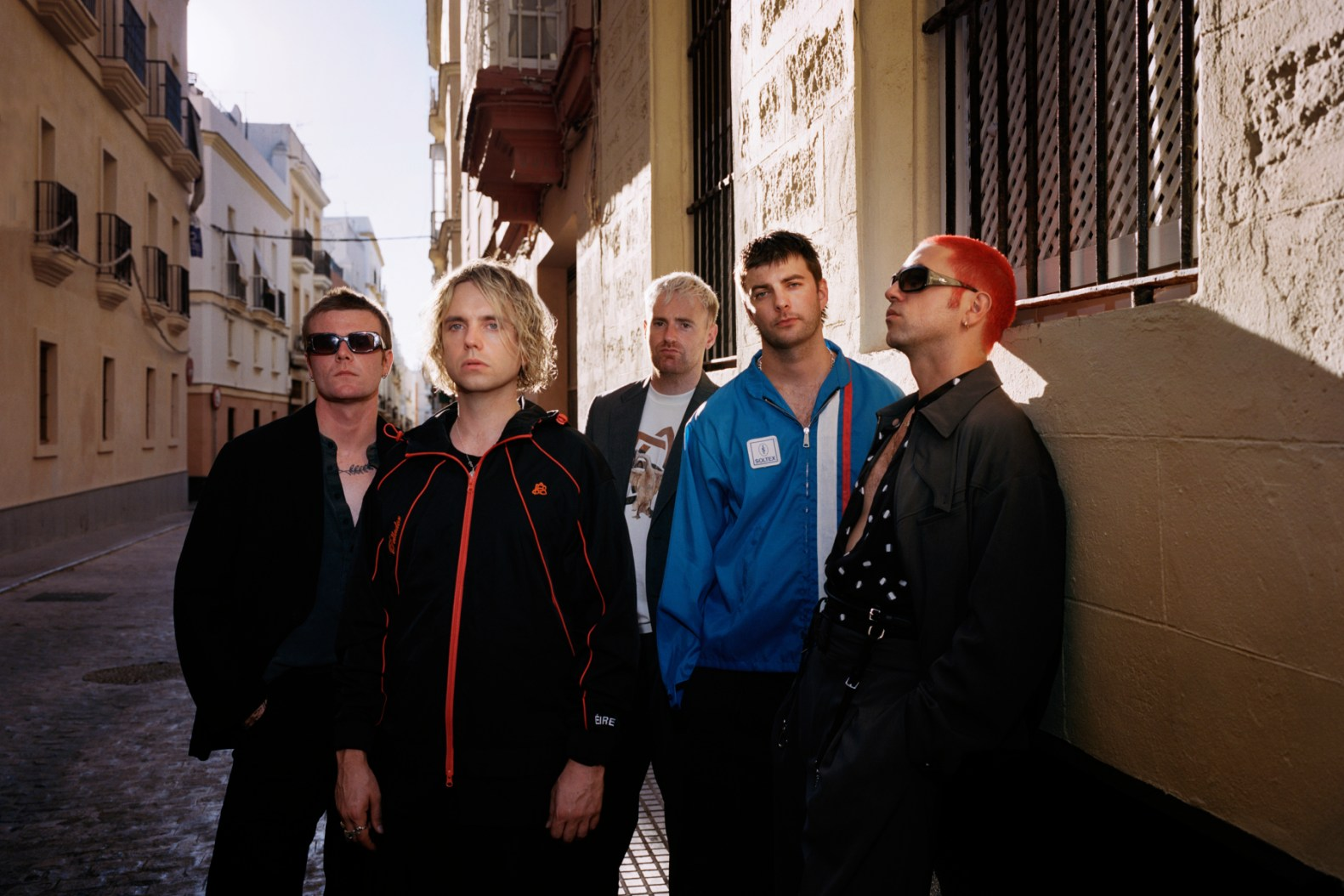
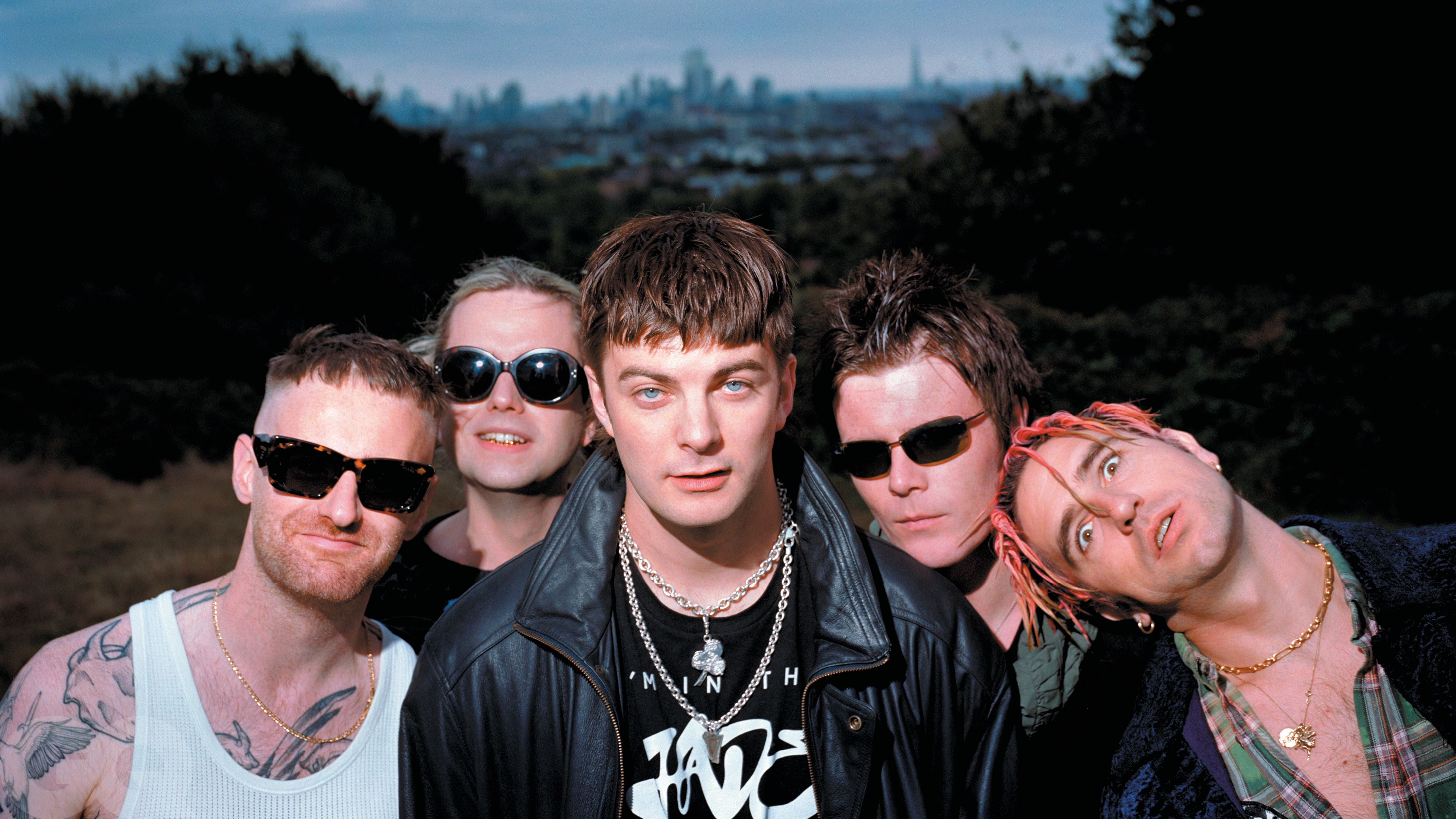
Fontaines D.C. have teamed up with Rosalía for their new collaboration, Where Is Gone?.
The song features on the Irish rock band's forthcoming album, Dopamine Chamber, which arrives on Friday (16.10.26). For guitarist Carlos O’Connell, working with the Spanish superstar is particularly special because of his own Spanish roots.
He explained: “I’ve admired Rosalía ever since her debut album, which I thought was absolutely beautiful.
“What excited me most was the way she continued to preserve Spain's musical traditions, something that felt spiritually connected to what we've been trying to achieve with Irish music. Having roots in both countries, it's been really special to witness. "She's an artist who has continued to amaze me at every point in her career.”
Frontman Grian Chatten has also described the collaboration with Rosalía as one of the most memorable achievements of his career.
He revealed that he felt "humbled" when she agreed to lend her voice to the band's album.
Speaking to NPR, Grian said: “I've always felt there's something almost like a single big idea that I'm personally trying to communicate to the world before I get old and die, if that makes sense. There's one thing I think I'll spend my life trying to express. I have a feeling she has a similar outlook. … I mean, she's an amazing arranger, composer and lyricist. It means so much that she wanted to sing on something we'd put together. It's definitely one of the highlights of my career.”
Rosalía's links to Irish rock music extend beyond Fontaines D.C. She also offered inspiration and helped develop the Spanish lyrics for U2's The Mirror Maker (Rosalía), a track from their forthcoming album, Carnaval de Luz.
During an appearance on The Tonight Show Starring Jimmy Fallon last week, she spoke about frontman Bono, saying: “I don't know him personally, but he sent me a text explaining that he was working on a new project and had written a song called The Mirror Maker."
Rosalía joked that Bono had invented a few words of his own.
She recalled telling him: “I wasn't sure what to make of it, but I told him he could create his own language if he wanted to.”
She described the opportunity to collaborate with the 66 year old music veteran as a real privilege.
She added: “Bono is a legend.
“It's amazing.”
Bono recently revealed that he was worried about seeming like a stalker when he reached out to Rosalía to ask whether he could name the song after her.