

Give it up to Sturgill Simpson: In a music world that doesn’t always value artistic left turns, he’s been making them relentlessly for nearly a decade. When his 2013 hard-country debut High Top Mountain arrived, who would have predicted that it would be followed by forays into soul, headbangers, and straight-up bluegrass? With few exceptions — Taylor Swift comes to mind — it’s hard to summon up too many others who willfully change directions with almost each new album.
The creative success of each of these projects is another matter altogether: As 2019’s Sound & Fury demonstrated, a lurch into metal-riff bombast maybe wasn’t the best idea for Simpson. Now comes The Ballad of Dood and Juanita, which is both the most natural and most baffling record he’s ever made.
Inspired by both his real-life grandpa and Willie Nelson’s landmark Red Headed Stranger, Simpson, who’s something of an old soul, has made an old-soul record: a concept album, and a mini-Western at that. Set about 150 years ago, during the Civil War, it lays out the story of Dood, a hardened, uber-rugged military vet who can “shoot the balls off a bat” but hangs up his rifle (more or less) and settles down with his wife and kids on a farm. To ensure we all know what time frame we’re entering, a “Battle Hymn of the Republic”-style marching song (clomping boots included) opens the album, setting up that story.
All is well, frontier-wise, until a “bandit” sneaks onto the property, shoots Dood and leaves him for dead, and abducts his wife Juanita. Recovering from his wound, Dood gathers up his mule and dog and goes in search of Juanita. Along the way his trail hits a dead end, his dog dies, and he’s rescued by a Native American tribe (for that Dances with Wolves touch). After reuniting with his wife, Dood goes in search of the villain, culminating in a violent brawl. As in the movies, things end happily ever after, but not necessarily for everyone.
As anarchistic and slightly WTF as all that sounds, there’s nothing remotely lighthearted or offhanded about the album. Using a small acoustic band, Simpson sets the songs to mountain music, hangdog country and spry bluegrass, the latter heavy on fiddle and banjo. “Juanita,” steeped in cantina guitars (including guest Willie Nelson’s lead), has the feel of one of Marty Robbins’ vintage cowboy ballads. Simpson is clearly invested in each word he wrote, even somewhat clunky lines like, “He was a deadly warring daddy with a gun gleam in his eye/Until he found him a good woman that calmed down the rage.” And the austere and often lovely arrangements bring out the best in Simpson’s voice, which has deepened and toughened up since his first record.
At a mere ten songs and a half-hour playing time, The Ballad of Dood and Juanita doesn’t pretend to be anything other than another step on Simpson’s creatively restless journey. Melodically, the songs are slight, as if Simpson spent more time on the story and imagery than the melodies; “Sam,” the song about Dood’s departed doggie, won’t make you mist up the way the Byrds’ “Bugler” will.
As much as you have to admire Simpson for making such an oddball and ambitious record, the album rarely transcends its tale. The best thematic records — even muddled ones like Quadrophenia or American Idiot— feel timeless in spite of their settings. The Ballad of Dood and Juanita is akin to stumbling upon an old Western on a streaming service. It returns you to a time when men were rifle-wielding men (whose enemies would “damn shore get slayed”), women had to be rescued, and bloody payback came if you were pushed too far. The album isn’t just an elegy for the concept album but for the very culture it chronicles.
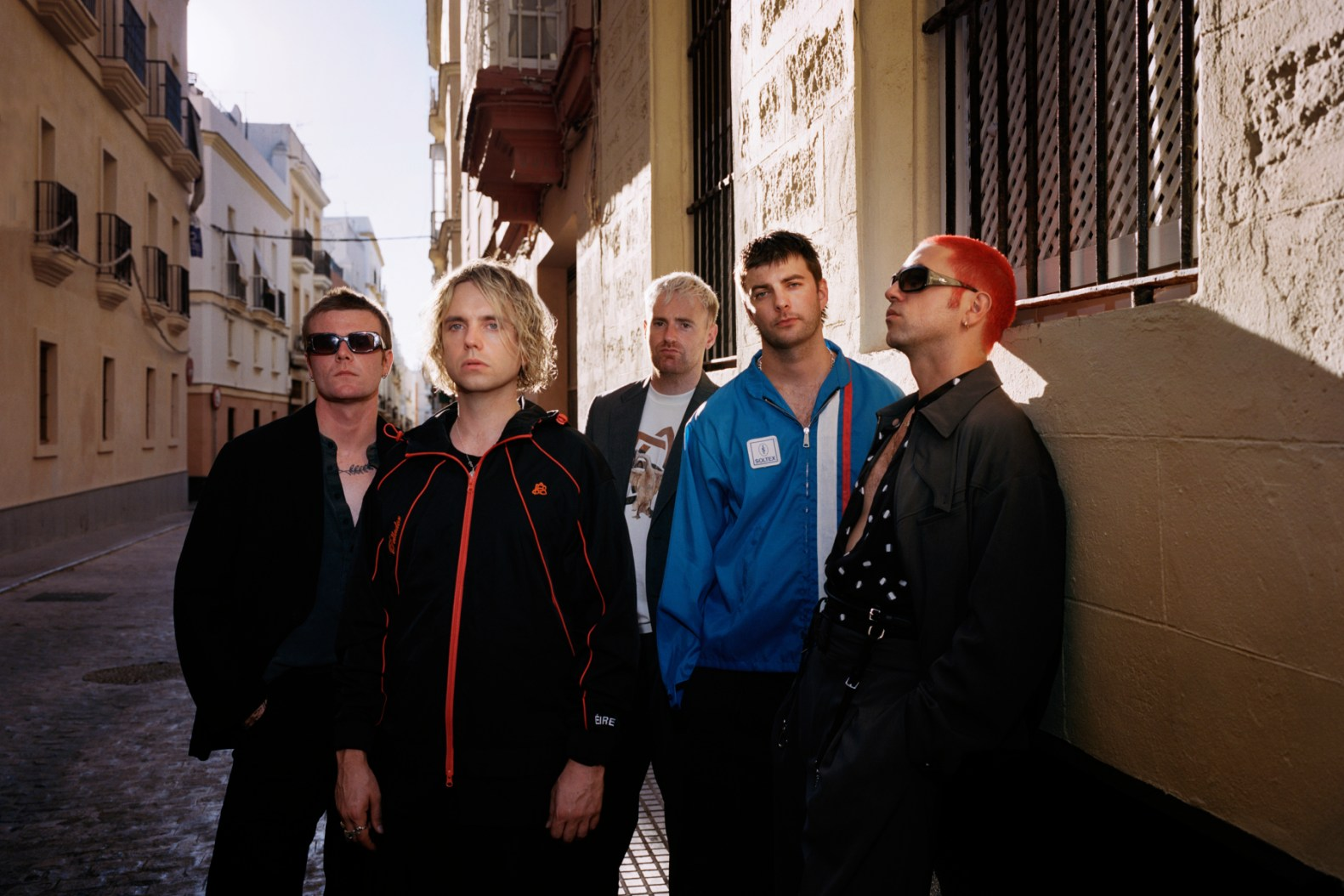
Fontaines D.C. have teamed up with Rosalía for their new collaboration, Where Is Gone?.
The song features on the Irish rock band's forthcoming album, Dopamine Chamber, which arrives on Friday (16.10.26). For guitarist Carlos O’Connell, working with the Spanish superstar is particularly special because of his own Spanish roots.
He explained: “I’ve admired Rosalía ever since her debut album, which I thought was absolutely beautiful.
“What excited me most was the way she continued to preserve Spain's musical traditions, something that felt spiritually connected to what we've been trying to achieve with Irish music. Having roots in both countries, it's been really special to witness. "She's an artist who has continued to amaze me at every point in her career.”
Frontman Grian Chatten has also described the collaboration with Rosalía as one of the most memorable achievements of his career.
He revealed that he felt "humbled" when she agreed to lend her voice to the band's album.
Speaking to NPR, Grian said: “I've always felt there's something almost like a single big idea that I'm personally trying to communicate to the world before I get old and die, if that makes sense. There's one thing I think I'll spend my life trying to express. I have a feeling she has a similar outlook. … I mean, she's an amazing arranger, composer and lyricist. It means so much that she wanted to sing on something we'd put together. It's definitely one of the highlights of my career.”
Rosalía's links to Irish rock music extend beyond Fontaines D.C. She also offered inspiration and helped develop the Spanish lyrics for U2's The Mirror Maker (Rosalía), a track from their forthcoming album, Carnaval de Luz.
During an appearance on The Tonight Show Starring Jimmy Fallon last week, she spoke about frontman Bono, saying: “I don't know him personally, but he sent me a text explaining that he was working on a new project and had written a song called The Mirror Maker."
Rosalía joked that Bono had invented a few words of his own.
She recalled telling him: “I wasn't sure what to make of it, but I told him he could create his own language if he wanted to.”
She described the opportunity to collaborate with the 66 year old music veteran as a real privilege.
She added: “Bono is a legend.
“It's amazing.”
Bono recently revealed that he was worried about seeming like a stalker when he reached out to Rosalía to ask whether he could name the song after her.