
NEWS

Grammy statues photographed on Jan. 12, 2019.
Andy Cross/MediaNews Group/The Denver Post via Getty ImagesAfter years of scrutiny for spending millions of dollars on outside legal counsel, the Recording Academy has begun a search for an in-house general counsel, Billboard has learned.
Recording Academy president/CEO Harvey Mason Jr. confirmed the search in an interview with Billboard on Monday, saying when asked about the role, “Yes. We have started that process.”
It has been a source of controversy in recent years that a nonprofit organization the academy's size and stature didn’t have an in-house general counsel and instead paid high yearly fees to outside law firms. The academy paid high fees to two law firms in particular -- Greenberg Traurig, where Joel Katz was, until Dec. 31, 2020, the founding chairman of its global entertainment and media practice; and Proskauer Rose, where Chuck Ortner, another attorney with deep ties to the academy, is a partner. Billboard reported that those fees average almost $3 million a year and totaled more than $7 million in 2017 -- hefty payouts for a nonprofit organization.
Katz (who now works at Barnes & Thornburg) and Ortner were listed as advisors to the academy in the program book that was distributed at the 62nd annual Grammy Awards in January 2020. Katz was listed as general counsel; Ortner as national legal counsel. Two other lawyers were also listed as advisors -- Bobby Rosenbloum (deputy general counsel) and Sandra Crawshaw-Sparks (deputy national legal counsel).
No lawyers were listed as advisors in the program book for the 63rd annual Grammy Awards in March 2021.
In a roundtable conversation that appeared in the Sept. 19, 2020, issue of Billboard, Mason (who was then interim president/CEO) spoke to the issue of what consideration had been given to hiring an in-house counsel.
“We’ve considered it for probably the last five or so years,” Mason said. “[But] it’s not something where I can just say, ‘We’re hiring in-house counsel.’ The finance committee, the trustees -- these are decisions that would go beyond just the CEO or even the chair. It is something that we are evaluating.... I’ve always been one to try to cut legal costs, but as I get into it, I see that the needs of the academy are very diverse. There’s employment law. There’s corporate law. There’s intellectual property law. There are so many different legal specialties that if we were to bring in a house counsel, that person would have to be an expert in a lot of things. So we do have to outsource some of our needs. We’re trying to cut that back.”
Mason also sought to clarify that the high fees paid to outside counsel included their commissions on big negotiations they worked on. “When it comes to legal costs, you have to extract the amount that we pay in commission for big negotiations, and I think that’s where some people get a little bit twisted around on the number. We’ve done two contracts with CBS -- deals that were in the hundreds of millions of dollars — and the commissions from those deals are part of the legal fees we paid over the last few years.”
Another participant in the roundtable, Binta Brown, founder of management and production company omalilly projects and co-chair of the Black Music Action Coalition (and an academy member), said in response: “A general counsel coordinates the amount of commissions that are paid, which, in the academy’s case, would have been substantially less over the years if there was a strong, competent deal-maker on the inside. I’m saying this to encourage you. It doesn’t take five years to decide to bring in a general counsel. It’s something that everybody on the board and everybody who is an executive member should want, and you could make it happen like that.
“And not only that, it should be the purview of the CEO to hire or fire the general counsel. I’ve sat on maybe 15 boards over the last 25 years. Not once have I seen a president, executive director or CEO have to check in with a board or an executive committee member to say, “Is it OK if I do this?” The board’s job is oversight. That’s it. I really hope that you will think carefully about bringing in someone relatively soon. Most organizations moved toward this over a decade ago.”
A third participant, Jennifer Justice, co-founder/CEO of The Justice Dept, a female-focused consulting firm, was also critical of the academy’s practice of paying high retainers when it didn’t have an in-house counsel.
“Look, I’m a music attorney. I’m not opposed to getting paid for what you do, but I’ve never heard of an organization this big that doesn’t have an in-house counsel [when] that could save so much money.”
Katz, who served as chair of the Recording Academy's board of trustees from 1995-97, began serving as the Academy’s outside general counsel in 2002. There, in 2019, he clashed with incoming CEO Deborah Dugan in what became a public matter when Dugan accused him of sexual harassment in a discrimination complaint with the Equal Employment Opportunity Commission after she was placed on administrative leave in January 2020. In her EEOC complaint, Dugan alleged that she has been subjected to sexual harassment by Katz. Katz denied the claims. The EEOC is still investigating Dugan's complaint.
Dugan also said she complained during her tenure about the "exorbitant amount of money" paid by the academy to Katz and his firm. She alleged that Katz was personally paid $250,000 per year "simply to be on call in the event the Board needs any legal advice." Shortly before she was put on administrative leave, Dugan had been exploring employing an in-house counsel for the academy to bring down costs.
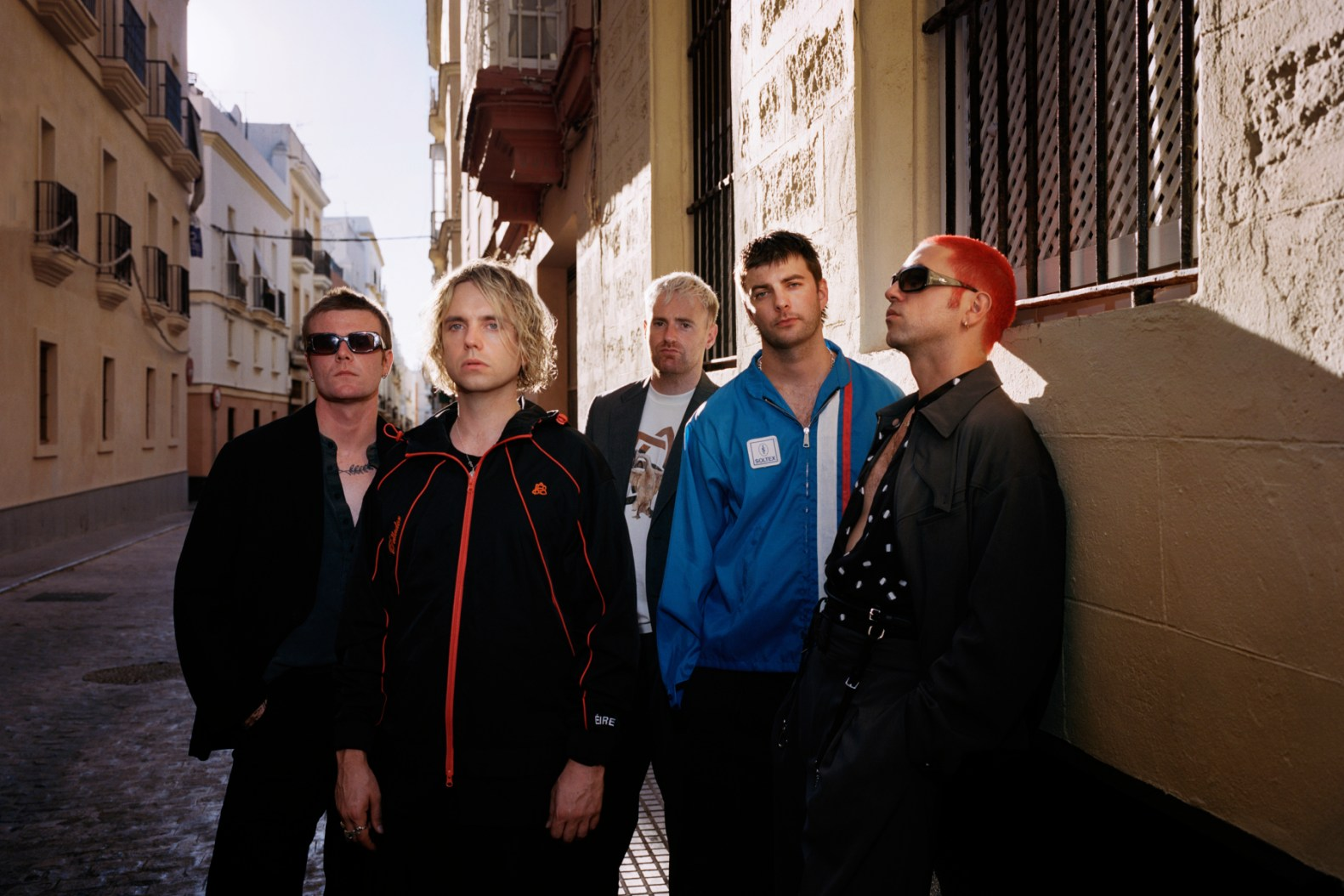
Fontaines D.C. have teamed up with Rosalía for their new collaboration, Where Is Gone?.
The song features on the Irish rock band's forthcoming album, Dopamine Chamber, which arrives on Friday (16.10.26). For guitarist Carlos O’Connell, working with the Spanish superstar is particularly special because of his own Spanish roots.
He explained: “I’ve admired Rosalía ever since her debut album, which I thought was absolutely beautiful.
“What excited me most was the way she continued to preserve Spain's musical traditions, something that felt spiritually connected to what we've been trying to achieve with Irish music. Having roots in both countries, it's been really special to witness. "She's an artist who has continued to amaze me at every point in her career.”
Frontman Grian Chatten has also described the collaboration with Rosalía as one of the most memorable achievements of his career.
He revealed that he felt "humbled" when she agreed to lend her voice to the band's album.
Speaking to NPR, Grian said: “I've always felt there's something almost like a single big idea that I'm personally trying to communicate to the world before I get old and die, if that makes sense. There's one thing I think I'll spend my life trying to express. I have a feeling she has a similar outlook. … I mean, she's an amazing arranger, composer and lyricist. It means so much that she wanted to sing on something we'd put together. It's definitely one of the highlights of my career.”
Rosalía's links to Irish rock music extend beyond Fontaines D.C. She also offered inspiration and helped develop the Spanish lyrics for U2's The Mirror Maker (Rosalía), a track from their forthcoming album, Carnaval de Luz.
During an appearance on The Tonight Show Starring Jimmy Fallon last week, she spoke about frontman Bono, saying: “I don't know him personally, but he sent me a text explaining that he was working on a new project and had written a song called The Mirror Maker."
Rosalía joked that Bono had invented a few words of his own.
She recalled telling him: “I wasn't sure what to make of it, but I told him he could create his own language if he wanted to.”
She described the opportunity to collaborate with the 66 year old music veteran as a real privilege.
She added: “Bono is a legend.
“It's amazing.”
Bono recently revealed that he was worried about seeming like a stalker when he reached out to Rosalía to ask whether he could name the song after her.