ON THE RISE
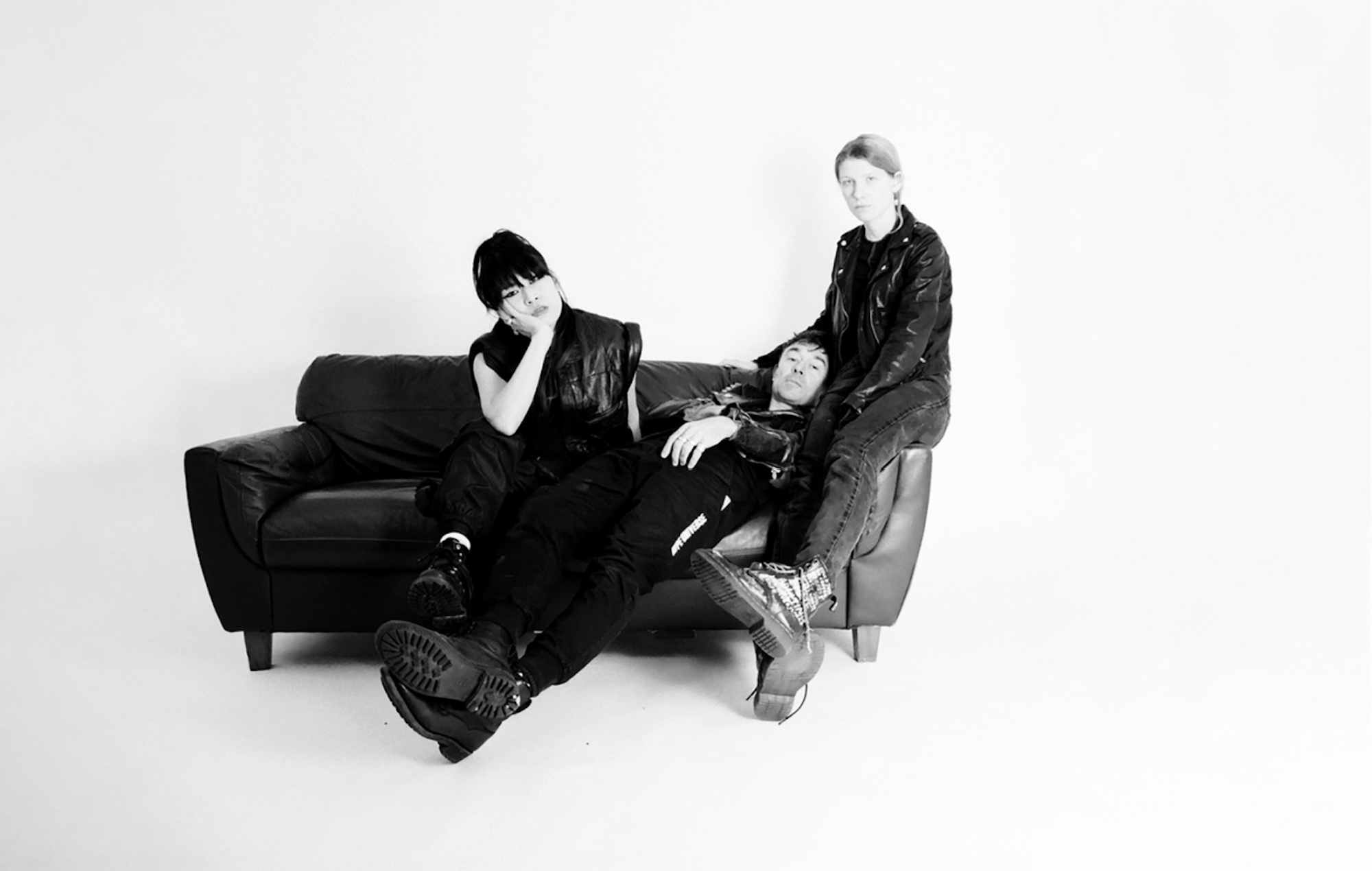
M.O.T.H.E.R. – the new collaborative band helmed by Robbie Furze of The Big Pink and currently featuring Jamie T and Jamie Hince of The Kills – have given their first proper interview, talking to NME about the emotional origins of the project, their aim to be “the guitar version of N.E.R.D.”, and their hit-list of future collaborators.
Revealing the new project at the end of May alongside the blistering anthemics of debut single ‘My Love’, Furze shared that the seeds of M.O.T.H.E.R. had come from losing his own parent after a prolonged illness. “My mum got sick about five years ago and was ill for about four years before she died,” he told NME.
“In that period I had a daughter, which was this real juxtaposition of death and birth. My mates – Jamie T and Jamie Hince – came together for me, and then sadly Jamie [Hince] lost his dad too,” Furze went on, sitting in a West London pub alongside Hince.
Hince continued: “I lost my dad four days after Robbie [lost his mum], and it felt like, if ever there was a calling, it was that. But it didn’t all come out of that doom and gloom. I hate mentioning COVID but everyone had so much time on their hands and there was this open creativity back then. I was working on music with Jamie T, sending each other stuff, and the idea for the three of us to do something together came out of that. It felt nice, like we were buying into this camaraderie, and this gang.”
The three musicians have previous credits together, with the two Jamies also writing on The Big Pink’s most recent album, 2022’s ‘The Love That’s Ours’. Fully collaborating on M.O.T.H.E.R., Furze joked, was like “the clash of three egos”. “Everyone wants to work with each other because you like what each other does, and so it’s not quite imposter syndrome but you have to live up to [that idea] and jump in and be a character,” Hince continued. “You can’t be too humble about it.”
Recording between Hince’s studio in LA and Furze’s studio in London’s Bethnal Green, the current trio have also dropped their self-titled debut EP featuring three further tracks: ‘Real Human’, ‘Traitor’, and ‘Surrender’. The ethos of the band, meanwhile, is for the line-up to shift with each release, bringing in familiar faces from other groups and working with whoever might be available at the time.
“We did a little bit [of recording] with Jenny [Lee Lindberg, bassist] from Warpaint who I love; I really want to get something solid down with her,” revealed Hince, while Furze suggested that names including Zach Hill of industrial hip-hop trio Death Grips, and electronic producer Skream have all been in the mix for future iterations of the band.
“We ran into Zach and he seemed into it but then he started ghosting me,” he noted. “Whether or not he decides to text me back, it would be wonderful to have that kind of thing. Jamie Hince, Skream, Rhys Webb from The Horrors [who played on their recent radio session], and Zach – if I saw that, I’d wanna hear what that nonsense sounds like!”
Check out the rest of the interview with Furze and Hince below, as they discuss their endearing bromance, their admiration for Jamie T, and why the band are unlikely to ever make an album.
NME: Hello Robbie and Jamie! You must have been kicking about at a lot of ‘00s parties, how far does your friendship go back?
Robbie Furze: “Me and Jamie T started becoming friends on the circuit of festivals when the first Big Pink record came out in 2009. Then me and Jamie Hince met at Corona Capital in Mexico in 2012.”
Jamie Hince: “He had a reputation – I think we all had reputations… I remember his wife giving me these dried insect snacks and I didn’t eat them because I thought he might have laced them with something…”
Furze: “Every band playing Corona Capital was staying in this massive hotel, so it was just chaos.”
Hince: “It was at the height of ego. Everyone had bodyguards. Bands were trying to outdo other bands. Like, The Black Keys – you’re two guys from Ohio, you don’t need armed bodyguards…”

Where does Jamie T fit into all this?
Hince: “Our orbits crossed quite a bit. I remember seeing him at some tiny little pub when he was probably about 19, and I love how it’s come full circle. My heart sinks a little bit when I see Jamie T working because I know I’m nowhere near [as good as] that. I have to chip away at things and stand back and then dive in again to get the feeling, whereas he’s just got the feeling from the start.”
Furze: “He’s pretty incredible. The song ‘Traitor’ on the EP was supposed to be for my vocal, and he was almost getting pissed off that we couldn’t get the verses right. He was just like, ‘I’ll sort it out’, goes up to the mic, does one take and it’s done. See you later. He’s that kind of guy.”
Do you have to leave your ego at the door in those situations?
Hince: “I did this amazing beat for ‘Traitor’ that I loved, and I sent it to Jamie T and got back a text saying: ‘One pound fish’. Fuck! I mean talk about leaving your ego at the door… I know what he was saying, he thought it was a bit ‘cor blimey’ waltz. But some of the shit he ends up doing, it’s totally ‘cor blimey one pound fish’!”
Furze: “But whatever works for the track works, and everyone has to be happy with it. You push each other without really knowing it.”
How did you envision the project?
Hince: “These things just come together. It sounds cheesy, but I wanted it to be the guitar version of N.E.R.D. – a production team of people that love each other.”
Furze: “We’ve got songs in the pipeline with other artists already, and it makes it like an N.E.R.D. or Unkle or Massive Attack thing. Being collaborative makes me more excited.”
Hince: “It feels like that time has gone where albums really last. Records seem to come and go quite quickly now. So I’ve shifted my enthusiasm because I think the attention span has gone. You spend so much time making records and so little time getting any reward.”
Furze: “I’d like to do standalone singles, or another EP of four or five tracks as a batch. I wouldn’t wanna go further than that.”
None of your individual bands and projects sound that alike – where do you think your tastes align?
Hince: “There’s something unspoken that we all seem to agree on which is this epic-ness. There’s a line in one of the songs that talks about ‘the last of the hooligans‘ and that seemed to be the feeling behind it all. If there’s a similarity with what everyone wanted, it was maybe just being a bit romantic and epic.”

Why do you think you were drawn to that?
Hince: “I don’t know, maybe we’re just lonely men?”
Furze: “Beaten down but being pulled up by hope…”
Hince: “We’ve all been bashing around, making all this noise and spending so much time doing it; I think it gives you that feeling. There’s something tiny and irrelevant about what you do but something life and death about what you do too, and I think the cocktail of that makes it… well, the last of the hooligans.”
Tell us a bit about ‘My Love’ – the first proper single.
Furze: “It’s one of the most basic songs. It’s a love song about hope, but it just has such an incredible energy to it with its simplicity. I’m not a massive Beatles fan but it has this relatable energy [like their early music]. ‘I wanna hold your hand’ – you don’t get more basic than that, in a great way. I think simplicity is power. Sometimes less is more, and if you mean it you can get away with it.”
Are there going to be live shows?
Furze: “Definitely. We’re playing a bit of catch up because we didn’t think ‘My Love’ would get the reaction it has, but we’re desperate to get out and do gigs.”
Hince: “In the spirit of the collaborative project, I’m really liking the idea of having different people in different countries playing with us; having a different vibe each time.”
Furze: “It would be really exciting to see different characters that you know from different bands. For the radio session [with Steve Lamacq on BBC 6 Music] we had Rhys Webb from The Horrors on bass, and I love that idea.”

You’re obviously very close – what are your favourite memories of this charming bromance?
Furze: “Jamie’s probably my best friend in the world and we’ve been through a lot together. In 2015 we both uprooted and went out to LA together, I went out there for about five years and he stayed, so we were pretty inseparable. It got to a point where it was breakfast, lunch and dinner together.”
Hince: “We just became one person. People would confuse us even though we don’t look the same. He had an ex-girlfriend who he went to say hello to and she said, ‘Hello Jamie’. We just started having the same vibe. The same embarrassing energy. We’ve chilled out a bit recently but when I was in LA and Robbie was in London we’d speak to each other for four hours a day. I was getting complaints from his wife.”
The ‘M.O.T.H.E.R. EP’ is out now.
The Big Pink returned with their third studio album, ‘The Love That’s Ours’, in 2022. It marked their first full-length effort in over 10 years. T and Hince worked on that LP, too, co-writing the single ‘Love Spins On Its Axis’.
The Kills released their sixth and latest record, ‘God Games’, in 2023.
Jamie T, meanwhile, made a comeback with ‘The Theory Of Whatever’ the previous year. He recently joined forces with Fred Again.. on the track ‘Lights Burn Dimmer’, and performed with The Maccabees at their big London reunion gig last summer.
ON THE RISE
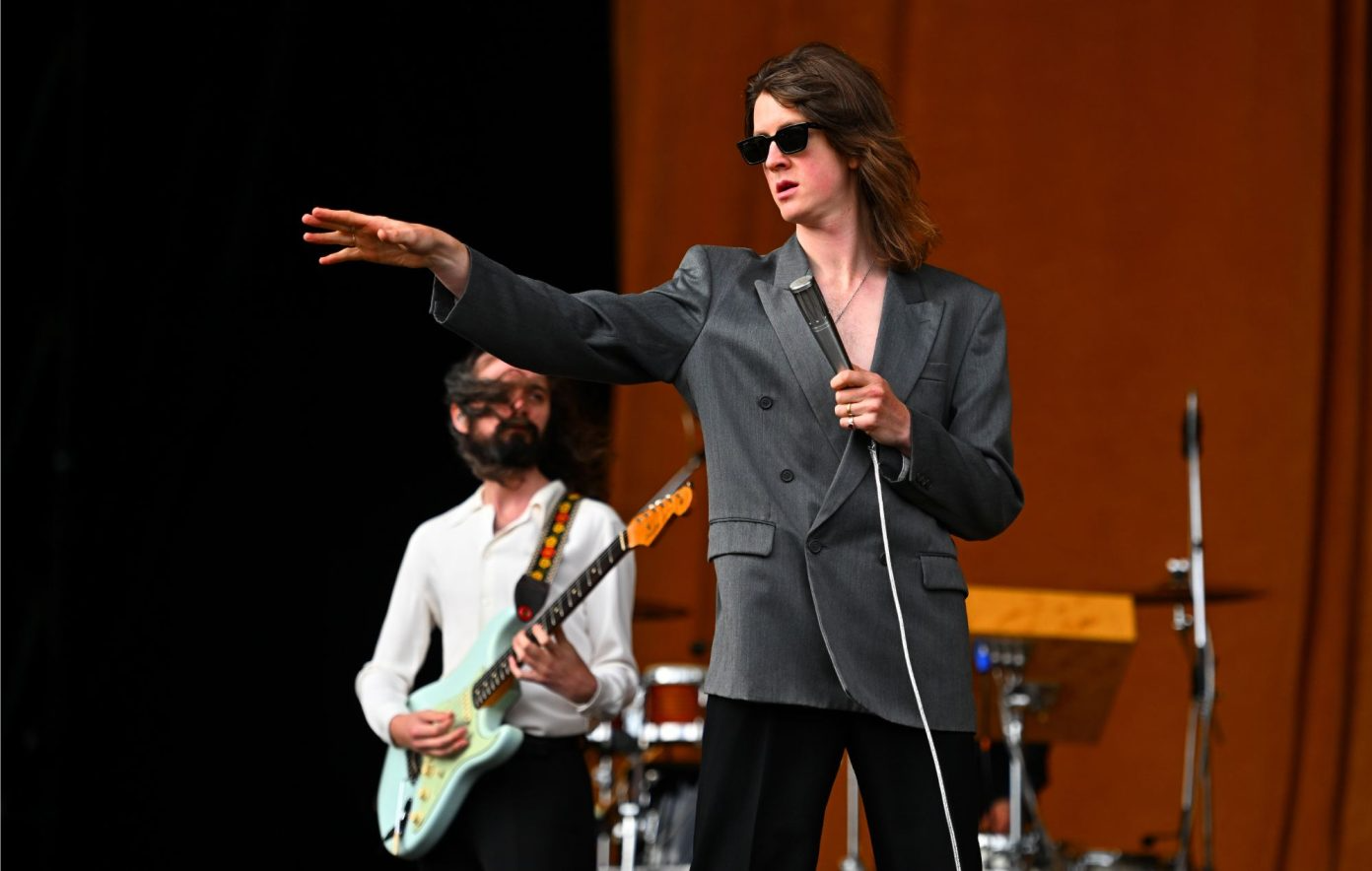
Blossoms caught up with NME to discuss competing with The Beatles and Johnny Marr for this week’s Number One album. With ‘Songs From The Wedding Cake’ in the running, the band also explained why making things themselves remains such an important part of their work as AI becomes more common.
The Stockport group put out their sixth album last Friday, October 2. By the midweek update, it was sitting at Number Two, between The Beatles’ expanded edition of ‘Rubber Soul’ and Johnny Marr’s latest solo album, ‘The Age Of Everything’.
“It’s mad, to be honest,” singer Tom Ogden said to NME about the chart race. “Liverpool on one side, Manchester on the other and Stockport in the middle. If you’d told us this 10 years ago, when we were releasing our debut, I wouldn’t have believed you. But I mean, we’re in good company aren’t we?”
Discussing the stories behind the album, Ogden described ‘Songs From The Wedding Cake’ as “about being married and all the everyday stuff that comes with it”. He married Katie Donovan, the sister of Blossoms drummer Joe, in 2021. Married life has since given him a new appreciation for what he describes as “the extraordinary ordinary”.
“Saying the wrong thing in an argument, losing your wife’s no claims bonus, crying at the Kardashians, it’s all in there,” he explained. “The album is named after Stockport Town Hall, which everyone round where we live calls the Wedding Cake, and it’s where I got married, so it couldn’t be much closer to home.
“The last album [‘Gary’, 2024] had a song about a stolen fibreglass gorilla, which everyone loved, and that gave us the confidence to bring the same playfulness to this one, just with more personal subject matter this time.”
Alongside tracks that came out of writing sessions with Declan McKenna in a hot tub, the album reflects the band’s desire to stay involved in every part of the creative process.
“It started with the recording,” Ogden explained. “We made the album with Shawn Lee, playing live straight to tape, and once you’ve done it that way you can’t really go and fake everything else. We sat down as a band and picked the colour palette, and everything visual followed from that. We had body scans taken of ourselves and cake toppers of the five of us 3D printed, put them on a real cake and photographed it. I’ve directed and edited the videos, and the sets are all built by hand, no green screen. For the pop-up shop on launch weekend, a local artist hand-painted the album cover for the sign outside.
“It’s more work, but you end up with a world that’s yours, and I think people can tell when a band’s had its hands on everything.”
With AI tools and digital effects becoming increasingly widespread, that approach feels particularly relevant. For Blossoms, though, the motivation is simple: “the fun is in the making”.
“Tape doesn’t let you cheat and neither does a real cake,” Ogden said. “If a set’s a bit wonky, it’s because one of us or our mates built it. I think the more stuff gets generated, the more people want to know a human being actually did it. We’ve been in this band together for over 10 years, five lads from Stockport, and that isn’t something you can ‘prompt’.”
Maya Jama also appeared in the video for the album’s first single, ‘Meet Me In Love’. Her appearance came shortly before the UK launch of Celebrity Traitors, where she took on the role of a traitor alongside a cast that included Richard E Grant and James Acaster.
“She was brilliant,” Ogden recalled of working with Jama. “We’d met her at the MTV EMAs in Manchester a couple of years ago, so we took a chance and sent her a DM …and she said yes. Next thing she’s in a theatre in Cheadle miming my vocals while a load of people dressed as me serenade her. She got the idea straight away and was a proper laugh about it.”
The conversation then turned to whether he thought Jama could take home the win on Celebrity Traitors.
Ogden joked: “As for Traitors, she spent a whole day pretending to sing my song and I almost believed her, so I’d say she’s got every chance.”
Fans can listen to ‘Songs From The Wedding Cake’ now. In November, Blossoms head out on a UK arena tour with The Royston Club. Tickets and further details are available here.
Before the tour begins, the group is also scheduled to appear on SNL UK on Saturday, October 24.