ON THE RISE
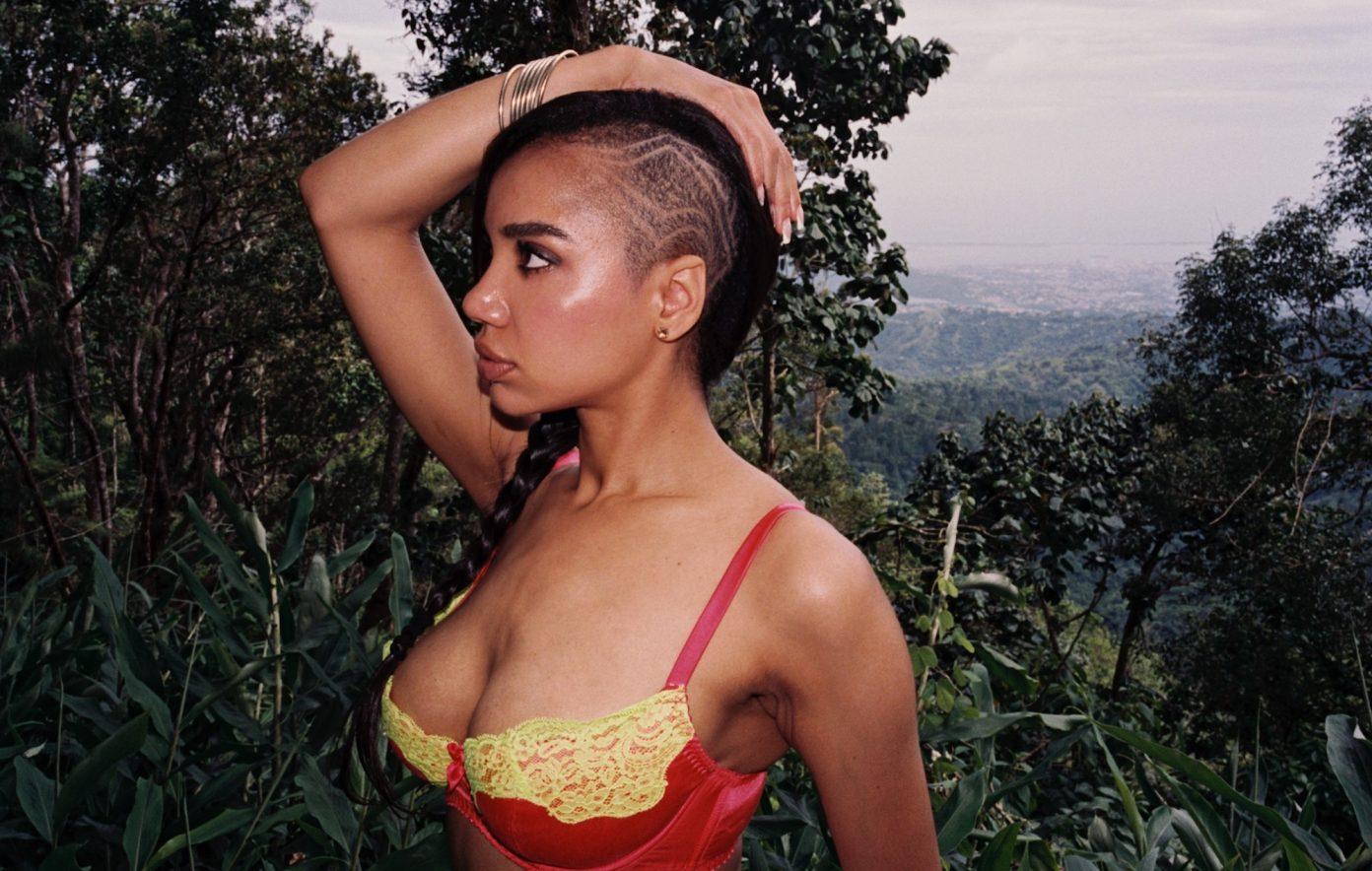
Even more than 6,000km away from her hometown of Santurce, Puerto Rico, RaiNao still manages to keep a piece of home with her. It’s Monday morning in Madrid, and the 32-year-old, born Naomi Ramírez Rivera, is calmly sipping on a cup of black coffee surrounded by fan palms and chestnut trees inside the terrace of her hotel. Coffee is her morning ritual back home, and things don’t change even if mere hours ago she was performing in front of 70,000 people as a guest on Bad Bunny’s ‘Debí Tirar Más Fotos’ residency in the city.
“I think it was the biggest venue I’ve ever performed at, or maybe it was Brazil,” RaiNao gushes, referring to her February appearance on the tour in São Paulo. Ultimately, the numbers don’t matter; for her, it’s all about the experience. “Even if I had done it 10 times over, it’s always beautiful and a different surprise.”
Music has always been a constant in RaiNao’s life. She began playing the saxophone at 11, but she never thought it would be the way she would make a living. “It’s all Wiso Rivera’s fault,” she says with a laugh. During the pandemic, her then-boyfriend and now creative partner and go-to co-producer encouraged her to go for it. She was stuck in a rut, juggling part-time jobs, when she realised that was not the life she wanted to lead.
“I felt overwhelmed that I thought, ‘Am I really going to spend the rest of my life working inside a bank?’ Wiso told me, ‘We have the tools, the studio is right there. Let’s just do it.’ And we did it.” Her stage name followed naturally. The moniker, a play on her nickname “Nao” with the creolisation of “right now,” is her own carpe diem. “It’s become a mantra for me,” she explains. “I’m in the moment all the time now. It’s a goal and a way of life.”
That now is what has taken RaiNao to global stages, performing ‘PERFuMITO NUEVO’ across the world, on US television, and gaining new listeners along the way. The song is what has put her on the map, and she’s more than grateful to Bad Bunny for the exposure. “He’s an artist who knows what he wants but also gives you your space to create,” she says, adding that their collaboration flowed as smoothly as a hot knife through butter. “I had a lot of freedom, and I’m always going to be thankful for that. I love that type of creative connection; it’s intuitive. We listen to each other. It’s great when anyone connects with your music, but he’s obviously a very important artist for Puerto Rico. Knowing he appreciates my music and my art, and that he says it every time he gets the chance, is incredible.”
She believes it’s precisely this type of interdependent local network that makes the Puerto Rican music scene as special as it is. “The support between artists has been key in careers that blow up,” she says. “We really do rely on each other and uplift each other constantly. It’s beautiful.”
The same way she got the cosign from Bad Bunny, RaiNao is also sharing the spotlight with Puerto Rican talent on her latest project, her second studio album, ‘Marcría’, a play on words that refers to both the PR slang for “spoiled brat” and “sea-raised”. In the 16-track album, RaiNao lends the mic to up-and-coming local musician Frido Vargas, who released his first song, ‘Mareo’, as part of the project.
“I’ll always make space to draw attention to the talent coming from my island, which I know goes hard and deserves as many ears and eyes as I do,” she says. Her debut studio album, ‘Capicú’, followed a similar pattern with the inclusion of Gyanma’s ‘Bajo Candau’.
“I’ll always make space to draw attention to the talent coming from my island, which I know deserves as many ears and eyes as I do”
“Puerto Rico’s indie scene is bustling, and you need to be on the island, soaking it up, to know [local artists],” RaiNao shares. Her label was “sweating” when she proposed including ‘Mareo,’ but when Vargas played the song for her, she knew it belonged in ‘Marcría’.
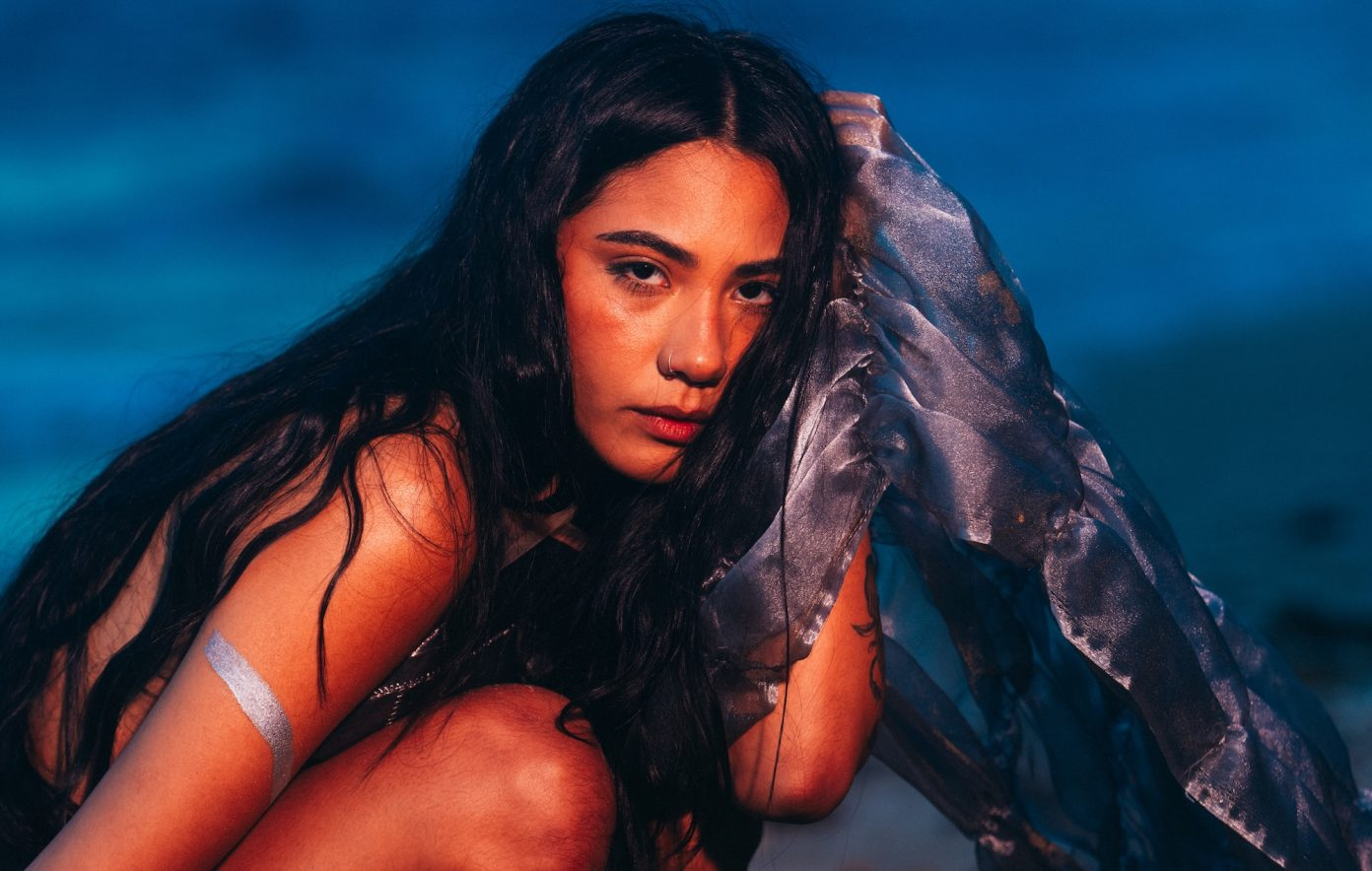
That’s not to say the project isn’t entirely RaiNao’s. Though it borrows its name from the sea, her ultimate “safe space”, ‘Marcría’ is born from RaiNao’s experience at 10, when her mother enrolled her in a school for the visually impaired. The album is a sensory journey accompanied by guided meditation, colour visualizers, and more to tell the full picture. You’ll notice green is a predominant theme. Emerald is RaiNao’s birthstone and the central piece of a ring she received in sixth grade, when she graduated from said school. As such, the hue has tinged the entire album, manifesting in music videos and in the small orb featured on the cover art.
On YouTube, she has microstories for each song that complement the sensory experience. “Not everyone has seen those, and they form a little story that I wrote based on the sensorial treatments,” she explains. “That came first, and then came the songs. It was an experiment.”
Only two tracks were created before the overarching theme was set: ‘Chamberí’ and the single ‘Gris’, which the artist initially intended to give to someone else. Legendary producer Tainy reached out and asked her to send over a few songs for his repertoire, and RaiNao obliged. “I sent him a few, but I kept going back to ‘Gris’ and thinking it was my song; someone else might like it, but they aren’t going to like it as much as I do.” It wasn’t until she was already structuring the project’s concept that she felt she needed to ask for it back. “I felt no other song exemplified water as much as ‘Gris’ did.”

Another emotional crux on the album is ‘Cántaro’, featuring salsa legend Andy Montañez, one of many remarkable collaborations alongside the likes of Omara Portuondo and Cultura Profética. The song marked the first time RaiNao recorded her own sax in her career. “I know that there are better sax players in Puerto Rico whose sound is way better than mine, and I always tap them to record,” she explains, “but this was a very personal song, and it needed to be me even if the result is not the best.”
The melody for the track was born from a sample of her voice and was later re-envisioned and reworked into a brass comp. Her sax is complemented by a bassoon, played by her best friend, who sent in recordings from Jacksonville, Florida. The result is her take on the “Death of the Author” literary theory and, in a way, her own eulogy. “Once you put out a project, it dies for you,” RaiNao explains, “but with that death comes another birth, another interpretation.”
‘Marcría’ comes to a close with the track that lends it its name, which sees RaiNao reciting a poem by the late Puerto Rican artist Ángelamaría Dávila, included in the 1966 poemario ‘Homenaje al ombligo’. RaiNao serendipitously came across Dávila’s work while working on the album. Upon reading this poem, she was stunned. It perfectly encapsulated the project. “It’s remarkable that this poem was born years ago from the mind of another Puerto Rican woman who’s no longer with us.”
RaiNao toyed with the idea of borrowing from the poem and playing around with vocal layering to use it as an interlude in a song that she’d call ‘Garabato’ (slang for “scribble”). “I wanted something simple that’d bridge the project from its more danceable side to its darker side,” she recalls. Ultimately, she felt the poem, as it was, was the perfect summary, a bio to ‘Marcría’.
Throughout the process of working on this album and the accolades it’s brought her, including a spot in YouTube’s Foundry Class, RaiNao feels “blessed and happy”, but she knows the final word no longer belongs to her; it belongs to the world. “For me, art is very spiritual. I knew I came into this world to leave it a better place with my art,” she says. “I’m always going to try not to dehumanise myself, not to stray too far away from myself to create.”
RaiNao’s ‘Marcría’ is out now via Rimas Entertainment.
ON THE RISE
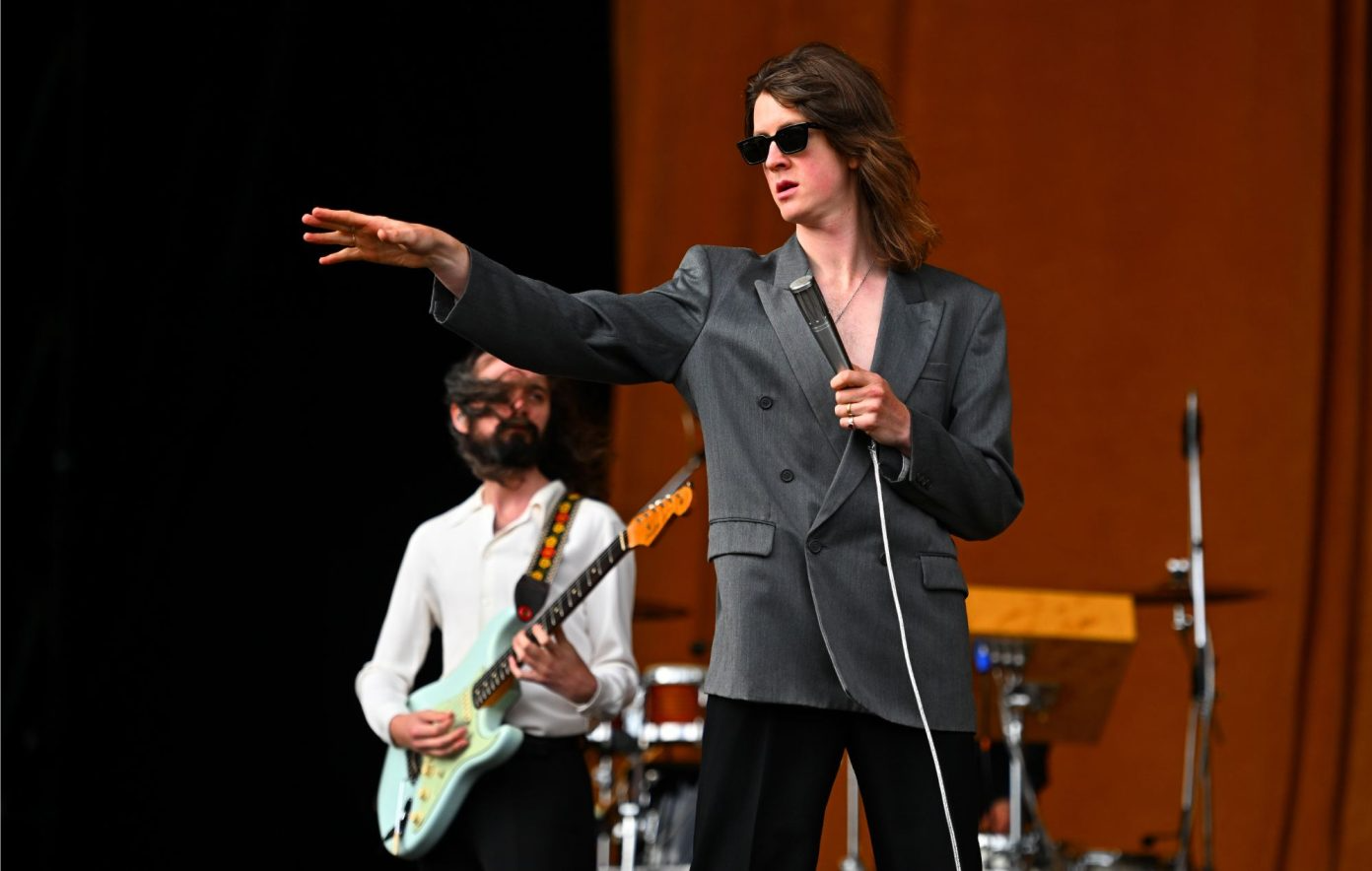
Blossoms caught up with NME to discuss competing with The Beatles and Johnny Marr for this week’s Number One album. With ‘Songs From The Wedding Cake’ in the running, the band also explained why making things themselves remains such an important part of their work as AI becomes more common.
The Stockport group put out their sixth album last Friday, October 2. By the midweek update, it was sitting at Number Two, between The Beatles’ expanded edition of ‘Rubber Soul’ and Johnny Marr’s latest solo album, ‘The Age Of Everything’.
“It’s mad, to be honest,” singer Tom Ogden said to NME about the chart race. “Liverpool on one side, Manchester on the other and Stockport in the middle. If you’d told us this 10 years ago, when we were releasing our debut, I wouldn’t have believed you. But I mean, we’re in good company aren’t we?”
Discussing the stories behind the album, Ogden described ‘Songs From The Wedding Cake’ as “about being married and all the everyday stuff that comes with it”. He married Katie Donovan, the sister of Blossoms drummer Joe, in 2021. Married life has since given him a new appreciation for what he describes as “the extraordinary ordinary”.
“Saying the wrong thing in an argument, losing your wife’s no claims bonus, crying at the Kardashians, it’s all in there,” he explained. “The album is named after Stockport Town Hall, which everyone round where we live calls the Wedding Cake, and it’s where I got married, so it couldn’t be much closer to home.
“The last album [‘Gary’, 2024] had a song about a stolen fibreglass gorilla, which everyone loved, and that gave us the confidence to bring the same playfulness to this one, just with more personal subject matter this time.”
Alongside tracks that came out of writing sessions with Declan McKenna in a hot tub, the album reflects the band’s desire to stay involved in every part of the creative process.
“It started with the recording,” Ogden explained. “We made the album with Shawn Lee, playing live straight to tape, and once you’ve done it that way you can’t really go and fake everything else. We sat down as a band and picked the colour palette, and everything visual followed from that. We had body scans taken of ourselves and cake toppers of the five of us 3D printed, put them on a real cake and photographed it. I’ve directed and edited the videos, and the sets are all built by hand, no green screen. For the pop-up shop on launch weekend, a local artist hand-painted the album cover for the sign outside.
“It’s more work, but you end up with a world that’s yours, and I think people can tell when a band’s had its hands on everything.”
With AI tools and digital effects becoming increasingly widespread, that approach feels particularly relevant. For Blossoms, though, the motivation is simple: “the fun is in the making”.
“Tape doesn’t let you cheat and neither does a real cake,” Ogden said. “If a set’s a bit wonky, it’s because one of us or our mates built it. I think the more stuff gets generated, the more people want to know a human being actually did it. We’ve been in this band together for over 10 years, five lads from Stockport, and that isn’t something you can ‘prompt’.”
Maya Jama also appeared in the video for the album’s first single, ‘Meet Me In Love’. Her appearance came shortly before the UK launch of Celebrity Traitors, where she took on the role of a traitor alongside a cast that included Richard E Grant and James Acaster.
“She was brilliant,” Ogden recalled of working with Jama. “We’d met her at the MTV EMAs in Manchester a couple of years ago, so we took a chance and sent her a DM …and she said yes. Next thing she’s in a theatre in Cheadle miming my vocals while a load of people dressed as me serenade her. She got the idea straight away and was a proper laugh about it.”
The conversation then turned to whether he thought Jama could take home the win on Celebrity Traitors.
Ogden joked: “As for Traitors, she spent a whole day pretending to sing my song and I almost believed her, so I’d say she’s got every chance.”
Fans can listen to ‘Songs From The Wedding Cake’ now. In November, Blossoms head out on a UK arena tour with The Royston Club. Tickets and further details are available here.
Before the tour begins, the group is also scheduled to appear on SNL UK on Saturday, October 24.