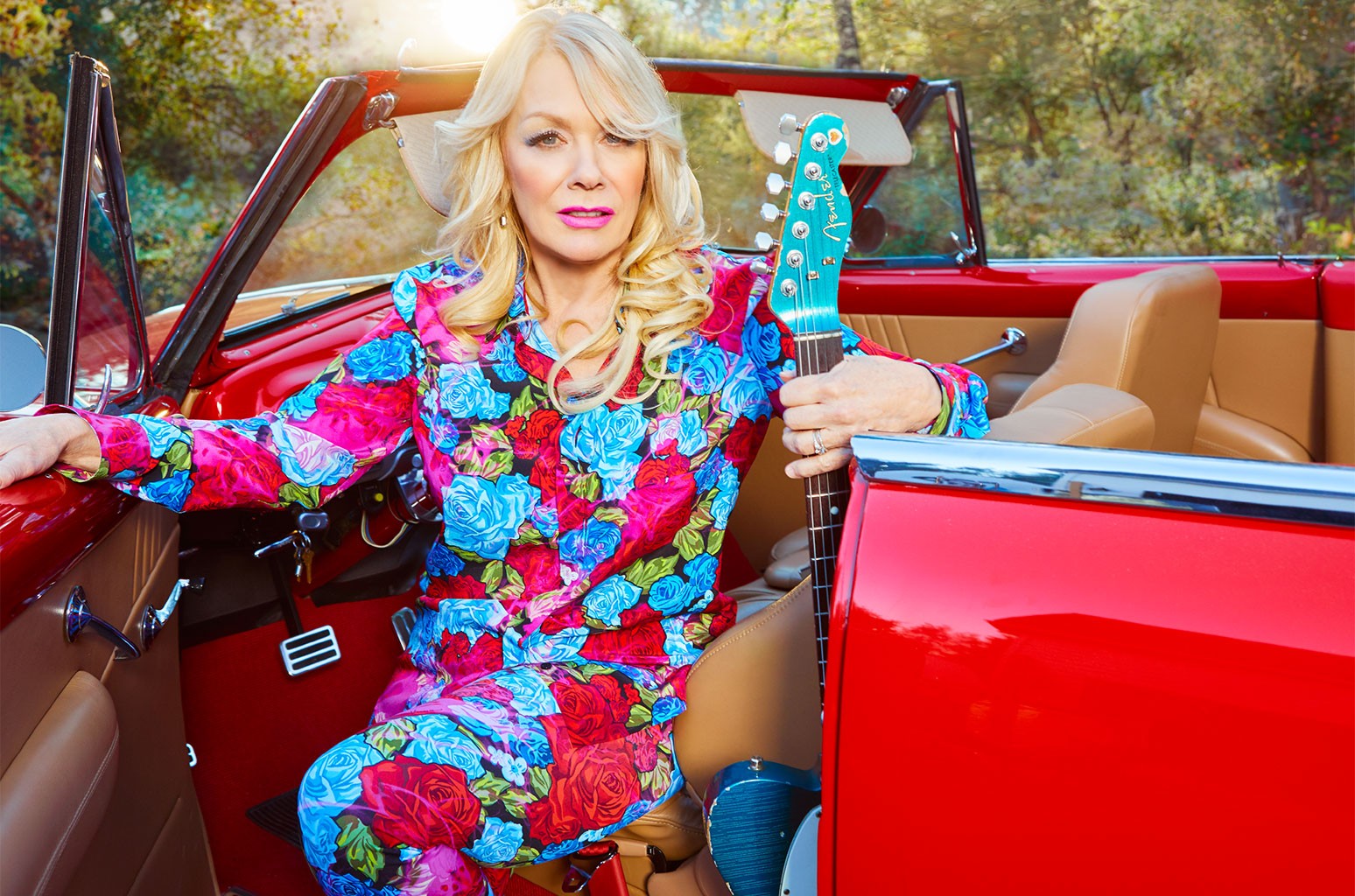
Nancy Wilson
Jeremy DangerMaking her first-ever solo album was a "saving grace" for Heart's Nancy Wilson during the COVID-19 pandemic.
Wilson releases You and Me on May 7 via her new Carry On Music label. The 12-song set blends originals with covers -- Bruce Springsteen's "The Rising," Simon & Garfunkel's "The Boxer" with Sammy Hagar, Pearl Jam's "Daughter" and the Cranberries' "Dreams" with Roadcase Royale bandmate Liv Warfield. It was recorded at Wilson's home studio in northern California, with band members and other guests, including Guns N' Roses' Duff McKagan and Foo Fighters' Taylor Hawkins, contributing remotely.
"Being able to be creative in the most horrific year we've been in... was like a godsend," Wilson tells Billboard. "I've never really had my own space away from the main house, where I could make all the racket my heart desires -- to sing at the top of my lungs if I wanted to, play whatever, however loud I wanted and just have the creative freedom to experiment. I mean, I like cooking. I like doing stuff around the house. But this (album) really saved my life, on so many levels."
Wilson, who was honored at the She Rocks Awards during January, does credit the pandemic with prodding her toward a solo effort, though she's worked outside of Heart in Roadcase Royale, the Lovemongers and film projects.
"It's really an interesting result of the situation, the shutdown," Wilson explains. "I probably would've been vortexed into the Heart touring life.... That's a full-time travel job which is punctuated with the beautiful reward system of being able to play a rock show on a nice, big stage. But now, having this open-ended window of time was really in so many ways just a great thing. It was wonderful to be able to have the time to do this (solo album), something people have always been asking me about doing."
Wilson acknowledges that remote recording -- "not doing it in the same room with other people" -- was not her preference, but it wasn't foreign to her, either. And her 45 years of recording certainly girded her for the process.
"I've been around the block a few times," Wilson says. "I'm a studio dog. I love working in the studio. I know what it is I want to hear. I know how to delegate and make decisions. I can be decisive and not be vacillating for hours and days and weeks on end. You have to commit to a sound and record it that way, not just 'Oh, let me just roll along in all the many options I can explore forever.' So that was helpful."
Among the album's most significant tracks is the closing instrumental "4 Edward," a short acoustic instrumental dedicated to and inspired by the late Edward Van Halen, which was a late addition after his death in Oct. 2020. Wilson had famously gifted Van Halen an acoustic guitar -- his first, as legend has it -- while Heart and Van Halen toured together during the '80s. He stayed up with it that night and composed an instrumental piece that he played for Wilson over the phone the next morning.'
"It was an amazing piece of music," Wilson recalls. With what she calls a "vague" memory of the structure and melody, Wilson used elements of Van Halen's composition during her introduction to "Crazy On You" at Heart concerts and was moved to record something to pay tribute to him for You and Me. "Somebody asked me if I would do an instrumental on this album, and I said, 'Yes I will, and I will dedicate it to Edward Van Halen.' Then I immediately said, 'Oh no, what did I just get myself into?!'" Wilson remembers with a laugh.
"So I had to come up with something worthy to dedicate to Eddie. I scanned all my notes on my recorder on my phone and various bits and bobs I had laying around, and I said, 'OK, there's that one part I've used on stage that's never been recorded...' So that was a blueprint, but it was no easy task."
Wilson recalls Van Halen as "a beautiful soul, a great inspiration... just so much joyfulness. When you see a picture of him and that smile, it looks like he was getting away with something, like illegal fun." She also remembers that Heart learned a bit from being in the Van Halen orbit.
"We'd be at the bar in the hotel with those guys, and we were kind of novices in world of imbibing, comparatively speaking," she says. "They introduced us to our first kamikazes -- 'Whoa! What's in this thing, and how are you having your second or third one right now?' They were the masters. They'd get all emotional about something and get into this big argument, almost ready to start a fight, then they'd be hugging and, 'I love you, man!' There was a lot of primal energy."
Having made the most of her enforced time off Wilson is, like so many others, looking forward to hitting the road again. She has some shows in the works, including summer collaboration with the Seattle Symphony Orchestra. And, she says, there's a "really nice" 2022 tour offer for Heart on the table that she expects to pan out.
"We're just gonna push forward with getting back to the live music thing, with our fingers crossed," says Wilson. Any decisions about a new Heart record, the group's first since 2016, will wait until then, she adds.
"I think the first thing would be to get Heart on the road," Wilson says. "Ann's been doing her own solo work and I've been doing my own solo work, and there's a good chance a couple of those things might fit into the Heart format for that tour. The last Heart tour (in 2019) was really well-received, so I think it's best to do some live playing first and then see where that leads us."
ALBUM REVIEWS
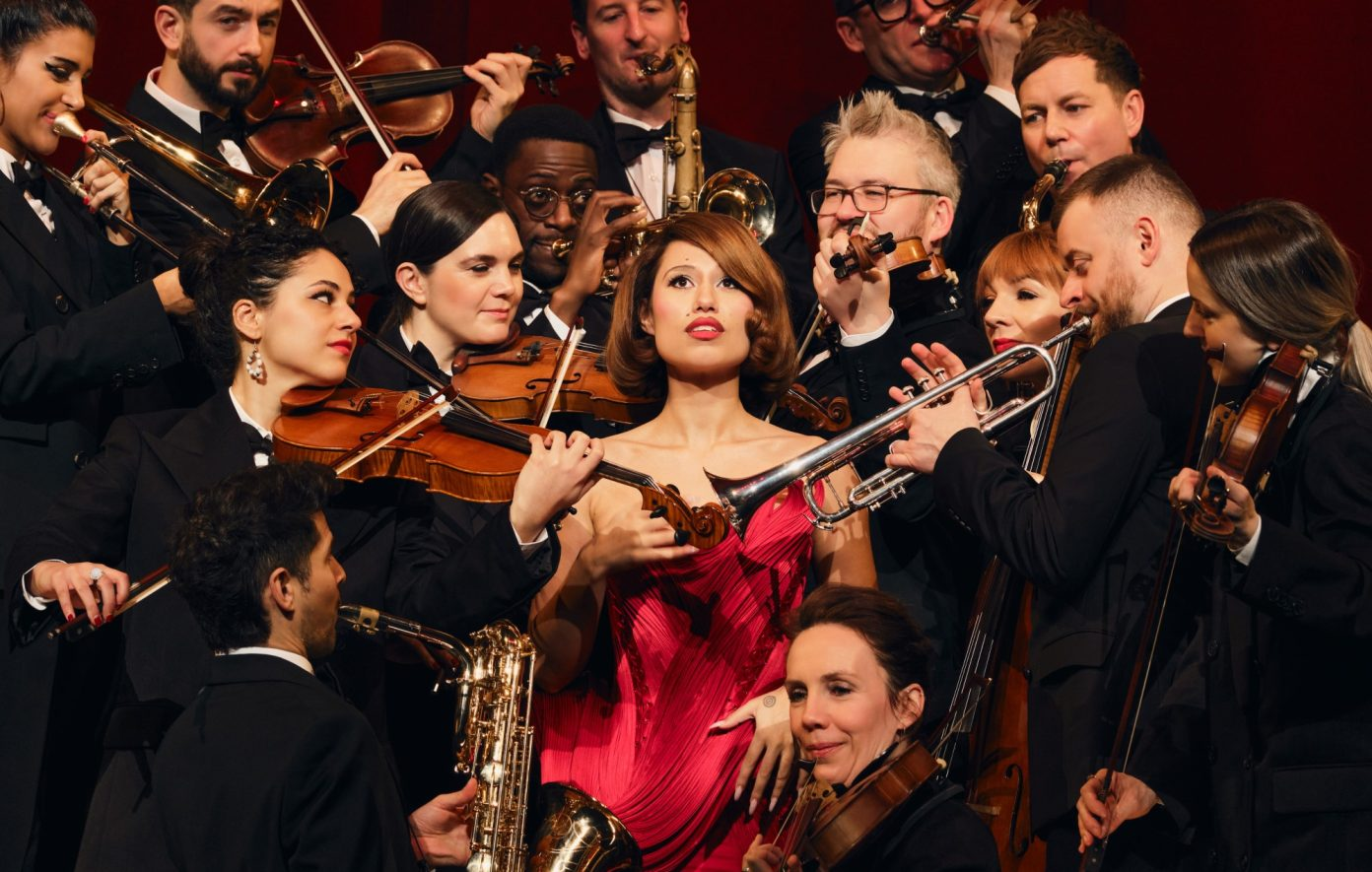
Grandeur sits at the heart of ‘This Music May Contain Hope’, RAYE’s second album, and the result feels nothing short of breathtaking. On this record, the singer born Rachel Keen explores a wide spectrum of sounds across its 73 minute length, moving from emotional ballads to lively funk moments and the jazz pop style she has become closely associated with. It can feel overwhelming at first, yet the magic that comes from RAYE fully committing to her vision makes the experience rewarding from start to finish.
‘This Music May Contain Hope’, a conceptual project about pushing through insecurity and heartbreak, unfolds like a lavish stage production. RAYE takes on the dual role of main character and guiding voice throughout the story. “Allow me to set the scene. Our story begins at 2:27am on a rainy night in Paris. Cue the thunder,” she says during the opening track ‘Girl Under The Grey Cloud’, which arrives with sweeping orchestral strings. Spoken passages appear across the album, helping shape the narrative and giving the project a sense of direction, almost like hearing the official recording of a Broadway show.
With this framework in place, the South London artist allows herself to fully explore the album’s diverse musical palette, and most of the time it works in her favor. Sometimes she fully embraces the theatrical side of the concept, especially during the closing section of the smooth R&B track ‘The WhatsApp Shakespeare’. Other moments are delivered more straightforwardly, such as the emotional slow building ballad ‘I Know You’re Hurting’. She also revisits her earlier dance influences with the impressive house track ‘Life Boat’.
Across the entire album, two things stand out clearly. RAYE’s flexible vocals sound better than ever, and her songwriting feels sharper than it has before. Take the playful highlight ‘I Hate The Way I Look Today’, a swing jazz inspired track reminiscent of Ella Fitzgerald, where she admits “I’m okay to be lonely / If I’m lonely and skinny / I have such silly self-loathing thoughts, it seems”. Then there is the emotional storytelling in ‘Nightingale Lane’: “It was right there, early June / Next to Old Park Avenue / Standing in the rain, I watched him walk away”.
Despite all the vulnerability and emotional struggles explored throughout the record, RAYE ultimately reaches a place of optimism, staying true to the album’s title. She gathers her close friends on ‘Click Clack Symphony’ with support from Hans Zimmer, finds closure with guidance from Al Green on the smooth seventies soul inspired ‘Goodbye Henry’, and reaches toward something greater alongside her sisters Amma and Absolutely on the uplifting ‘Joy’ as she searches to be “free of all the pain and every fear”. After the stormy opening imagery of that “rainy night” and “thunder”, RAYE eventually realizes that “the sun exists behind the clouds”, as she shares on ‘Happier Times Ahead’.
‘This Music May Contain Hope’ shows RAYE performing at her absolute peak. The album feels huge in scale and emotionally powerful, yet it remains rooted in honest experiences and real feelings. Yes, it asks a lot from the listener, but that is also what makes it so special. Every dramatic moment and musical shift feels like RAYE claiming her independence and finally creating music entirely on her own terms.