
MUSIC PREMIERES

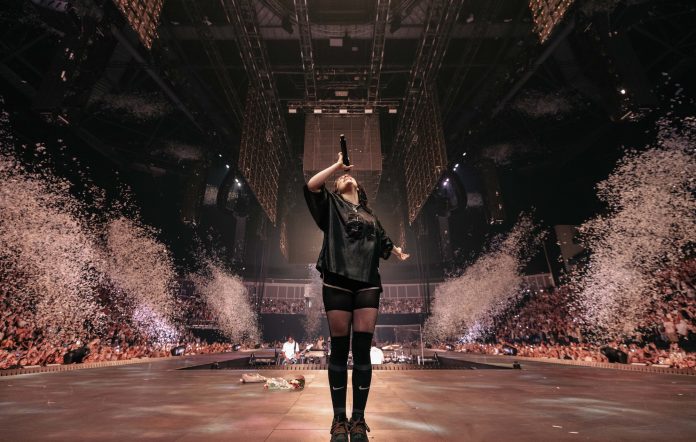
Tyler, The Creator hasn’t performed in London for six long years. Back then, the genre-warping ‘Igor’ had just dropped, later landing him a Grammy and cementing his status as rap’s most poignant auteur. Now, a restless sea of teens surge forward, desperate to catch a rare glimpse of the star in action. The lights drop. A sickly green glow seeps through the pleated curtain like a dystopian warning: our favourite creator is moments away.
“‘Chromakoooooopia’! ‘Chromakoooooopia’!” fans chant as the titular album’s opener, ‘St. Chroma’, floods the arena. The accordion-style curtain lifts, revealing Tyler in a venom-green, exaggerated ‘Thriller’-style pantsuit and an afro pointed into horns, striding like he’s leading his fleet into a place where chaos and celebration blur. Endless flames and flashing lights accompany the industrial, growling sound Tyler crafted with ‘Chromakopia’ – riot-friendly and the perfect soundtrack for The O2’s frenzy tonight.
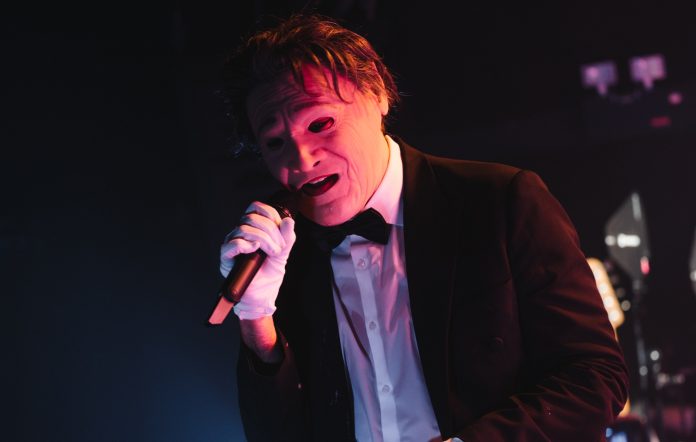
The rapper fully embodies Saint Chroma – the newest character in the Tyler universe. His mask is ominous, his feet (adorning his signature loafers) jittery, and his knees knocking like a Disney kid in a musical meltdown. The only time he reins himself in is during ‘Judge Judy’, sitting on a crate-like runway. “This shit sounds like what your mum would play in the house. This is real black music,” he declares, paying homage to late soul legends like Angie Stone and Roy Ayers who “laid the groundwork” for him.
But Chroma’s biggest moment comes during ‘Sticky’, as he surveys his minions going feral, making it rain with his own doctored bills and lip-syncing wildly to the ‘Chromakopia’ highlight. Later, he apologises for hitting a fan in the head when his mic dropped out of his pocket, asking the crowd, “Boo me?”

The conceptual Chroma act doesn’t continue the whole way through. Before ‘Take Your Mask Off’, a mock living room appears on the B-stage in the middle of the crowd. Still in character, the star hides behind white sheets onto which a house is projected – the slits between them like intrusive windows, as if we’re stalking him. Then he disappears, confusion swirling before Tyler returns in his old uniform: t-shirt, open button-up, slacks, and cap for a trip down memory lane.
Tyler finally talks – well, berates us and himself – as he flicks through a pile of vinyl nestled in the corner of his makeshift saloon. Some honour legends in his eyes like Erykah Badu and Lauryn Hill. When Outkast’s ‘Stankonia’ is revealed, Tyler praises the crowd’s “cool” rendition of ‘Ms Jackson’. The LA rapper stumbles upon his own albums in the pile, too, each new find signalling a track from that record dropping into the setlist. First, ‘Igor’ reinvigorates the crowd, then in comes ‘Goblin’ and the moshpits open from wall to wall. When he picks up ‘Bastard’ – the debut album that got him banned from the UK for six years – Tyler recalls the moment: “For all you young n****s in the crowd, this album got me kicked out your country.
“All the ‘Flower Boy’ and the gay shit and the ‘Ooh, loafers and ooh, bikes!’ N****, I was a menace, bro,” he continues, ending with a dramatic “Dayyuummm” and “Thank you” to everyone who came to the opening night of his three-night London residency. The audience responds tenfold as Tyler queues his other albums, ‘Wolf’, ‘Call Me If You Get Lost’, and ‘Flower Boy’. As he raps and dances to the sultry ‘Wusyaname’, yellow and red lights swirl over a crowd twirling and grooving like an ‘80s disco.
Back on the main stage – no longer Chroma, but as himself – Tyler finally revels in his glory as he plays a medley of his most high-octane fan-favourites: ‘Thought I Was Dead’ becomes an anthemic assertion of his worth, while the vulnerable ‘Like Him’ sees Tyler’s inner child showered in sprinkling pyros. If you’ve come to a Tyler show before, you know that ‘See You Again’ and ‘New Magic Wand’ rattle the floor, but it’s so mesmerising to watch frailing bodies collide beneath the burgeoning bassline of the latter each time.

As Tyler wishes us a farewell, he remains humble, but tonight is no small feat. With outfit changes, multiple stages and live vocals front-and-centre, Tyler flips through his eras like a masterclass in fearless reinvention. From the raw menace of ‘Goblin’ to the kaleidoscopic chaos of ‘Chromakopia’, tonight is a vivid, wild ride through the mind of rap’s ultimate maverick – and London is lucky to be along for the journey.
‘St. Chroma’
‘Rah Tah Tah’
‘Noid’
‘Darling, I’
‘I Killed You’
‘Judge Judy’
‘Sticky’
‘Take Your Mask Off’
‘Tomorrow’
‘Igor’s Theme’
‘Earfquake’
‘A Boy Is A Gun*’
‘Thank You’
‘I Think’
‘Yonkers’
‘Tron Cat’
‘She’
‘Tamale’
‘Rusty’
‘IFHY’
‘Lumberjack’
‘I Thought You Wanted To Dance’
‘Dogtooth’
‘Sorry Not Sorry’
‘Who Dat Boy’
‘Wusyaname’
‘Thought I Was Dead’
‘Like Him’
‘See You Again’
‘New Magic Wand’
‘I Hope You Find Your Way Home’
MUSIC PREMIERES
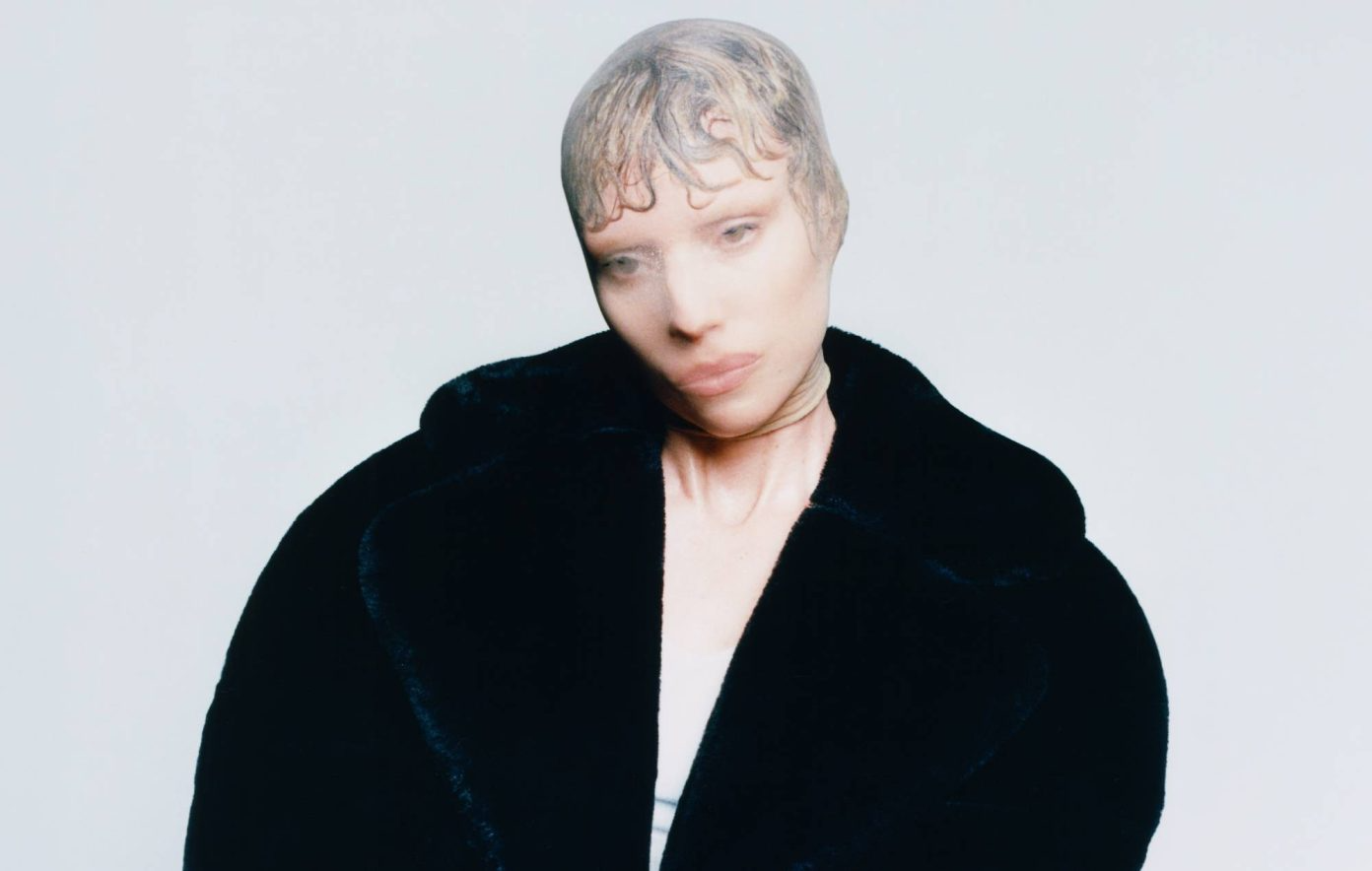
Lykke Li didn’t hold back when speaking about the making of her sixth studio album, ‘The Afterparty’, during a listening session in Los Angeles earlier this year. “Let’s talk about the album. It was a motherfucker to make,” she admitted to the crowd. While balancing motherhood, the chaos of modern culture shaped by Trump and AI, and her own desire to create something more “extroverted, impulsive and chaotic” than ‘EYEYE’, as she previously shared with NME, the Swedish alt pop star arrived at a headspace that “feels like it’s 4am and the sun is going to rise”. The record captures that blurry final moment before regret, exhaustion and reality settle in, which makes it even more emotional considering she has hinted this could potentially be her final album.
There is something fitting about how brief the project feels. With only nine tracks running across 24 minutes, it never overstays its welcome. Lykke immediately drops listeners into the atmosphere with opener ‘Not Gon Cry’, painting a picture of those lonely early morning hours with the line, “No angels here tonight, no dancing queens.” Alongside the shadowy pulse of ‘Happy Now’ and the twisted disco energy of ‘Lucky Now’, she revisits the emotional yet dance driven spirit of her earlier material while blending in the sharper, more confident attitude heard on ‘So Sad, So Sexy’ and the shimmering influence of her 2019 Mark Ronson collaboration ‘Late Night Feelings’.
The emotional fallout begins to settle in quickly. ‘Famous Last Words’ carries a lush orchestral sadness as Lykke reflects on lessons that only came after years of chaos and late nights, confessing, “I had to crash and burn to tell the tale.” Then comes ‘Future Fear’, a delicate acoustic track with robotic textures that stares directly into anxiety and uncertainty with the chilling question, “I’m going to a dark place, do you need anything?” Meanwhile, ‘So Happy I Could Die’ glows like sunrise after a sleepless night, holding onto fleeting moments as she sings about “slipping through the hourglass”.
Throughout the album, Lykke Li vividly captures the beauty and wreckage of reckless nights with the vulnerability that has always defined her music. On ‘Sick Of Love’, she channels heartbreak into revenge, wanting to “make you beg for it” after rejection in a way that feels spiritually connected to Robyn’s ‘Dancing On My Own’. One of the strongest moments arrives with ‘Knife In The Heart’, a track that fully embraces her desire to become the “rock god” and “fuck boy” she spoke about, firing back at anyone who tries to tear her down with the words “you can spit, you can walk on me” while delivering one of the catchiest songs she has created in years.
Closing track ‘Euphoria’ leaves behind the same bittersweet feeling that runs through the rest of the album. With sweeping strings, pulsing beats and emotional intensity, Lykke Li reminds listeners that nothing lasts forever as she sings, “Player play your song, waste the night away”. Like the fading energy of the perfect night out, ‘The Afterparty’ ends in a haze of beauty and uncertainty. If this truly is her farewell, she leaves with one final intoxicating statement, though it still feels like there could be another chapter waiting.