.jpg)
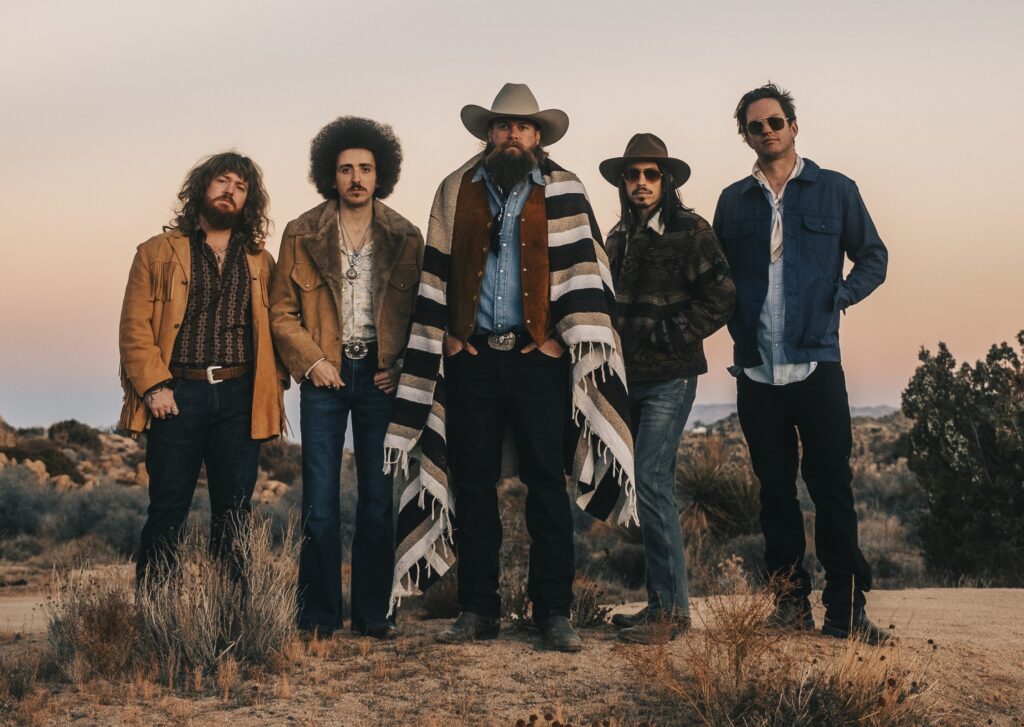
More than most bands that began in the backseat of the family car, Car Seat Headrest seem well-suited for a high-concept rock opera. From the band’s earliest days, when the project was just Will Toledo recording alone in Virginia, songs were never just as simple as singer and subject—his 2011 album Twin Fantasy was a romantic epic sheepishly masquerading as a ramshackle emo record. His 2020 record Making a Door Less Open was essentially a treatise on fame itself, and culminated in Toledo adopting the persona “Trait,” a gas-masked, bunny-eared protagonist previously introduced in a Car Seat Headrest side project called 1 Trait Danger. When Car Seat Headrest began teasing their new record, The Scholars, via an alternate reality game-style website, it felt like an appropriately elaborate rollout for a band who’s rarely taken reality at face value.
And yet, Toledo was hesitant to dive head-on into the full-scale world-building of a rock opera. To hear him tell it, he seemed afraid that he might stumble into one of the genre’s many pitfalls. “You pull something off of The Wall—it’s not necessarily going to be banging on its own. It needs that context,” he told the podcast How Long Gone. “I like when you can pull a song out and have that individual piece.” It’s a brutal assessment of Pink Floyd, though it comes from a deep respect (the original version of Twin Fantasy’s “High to Death” interpolated “Jugband Blues,” after all).
On The Scholars, every song aims to be an “Another Brick in the Wall Pt. 2”—nine self-contained epics that, Toledo hopes, will sum to a greater whole. But overburdened by a confusing plot, with no room for a listener to digest the bevvy of settings and characters he’s just introduced, The Scholars is mired in and muddied by the madcap impulses of its creator, drowning out what would otherwise be some of the band’s most inspired, experimental compositions to date. The Scholars is a rock opera for the playlist era; it wants to contain both a richly textured narrative—with all the character development, internal motivations, and rising and falling action required therein—and also nine songs that can stand alone, plucked out of context and jutted up against whatever other songs happen to land on Spotify’s autoplay.
So, the plot: The Scholars takes us to the imaginary Parnassus University, where we meet a cast of students who are all on parallel searches for meaning: our narrator, the Chanticleer; Beolco, a playwright who’s paranoid his best ideas are behind him: “A thousand ideas piled up in the tomb,” he says on “CCF (I’m Gonna Stay With You)”; Devereaux, the “son of a backwaters religious conservative” who hopes to find higher meaning on the libertine lawns of the American university (“Devereaux”); and Rosa, a medical student who can revive the dead (“Gethsemane”). There is also, of course, a local community based on dressing in furs and feathers (“Lady Gay Approximately”), which I’ll let the Redditors decipher.
These plot points matter as much as you care to listen closely: There are pivotal moments in the form of a deadly plant and clown raid that I somehow missed in the first listen, too distracted by the stylistic changeups and clouded metaphors crammed into every song. Most of the key narrative drivers are buried in liner notes on the lyric sheet but aren't represented anywhere in the music. Certain songs carry enough momentum to warrant repeat listens out of the album context: “The Catastrophe (Good Luck With That, Man)” takes the familiar punk-leaning pop shape that has defined Car Seat Headrest, the chiming strums of an acoustic guitar giving way to drum fills, reverb, and Toledo’s fuzzy, clipped vocals. The same goes for “True/False Lover,” which careens from guitar solo to verse with the practiced ease of someone who’s spent the past 15 years writing hooks.
But the preceding three songs, which range from 10 minutes on the short end to 18 at the longest, test the premise of the album and the patience of the listener. “Gethsemane” begins quietly with just a synth and Toledo’s voice; “Reality” brings to mind Air’s Moon Safari; “Planet Desperation” is the most forthrightly self-serious, with somber piano and the slow beat of a kick drum. Yet they all manage to wind up in about the same place at their halfway points—stuttering prog interludes, towering electric guitar solos, belted refrains that seem to come out of nowhere and fade just as quickly. Storylines are lost in the mayhem: I feel like I’m catching the plot but then as soon as guitarist Ethan Ives, as Parnassus’ Liberal Arts school dean Hyacinth, sings “I would go out/But there’s a world war,” I feel totally lost again. It’s almost impressive how much these disparate modes seem to converge on a central sound, and how much that sound boils down to: play loud, play fast, repeat. There’s a reason, it seems, that The Wall includes comparatively quieter tracks like “Empty Spaces” or “One of My Turns”—if every song needs to stand alone, they each require some sort of internal climax, a summit that feels exhausting to climb song after song.
Still, The Scholars is filled with compelling experimentation and glimpses of greater potential. Toledo’s voice sounds stronger than ever here, warmly recorded in analog, and songs like “Devereaux,” which lean into power pop influences like the Cars and Cheap Trick, feel like the most successful attempt to combine narrative with concise songcraft. “CCF,” one of the album’s standout songs, sounds like a potential future path for Car Seat Headrest—one that introduces elements of jazz and funk to his fundamentally scrappy sound without overpowering it with heavy-handed signifiers and seemingly endless trips up and down the neck of his guitar. Car Seat Headrest is a band almost predestined for the kind of high-stakes storytelling a rock opera requires—if only Toledo could let his own ideas breathe.
ALBUM REVIEWS
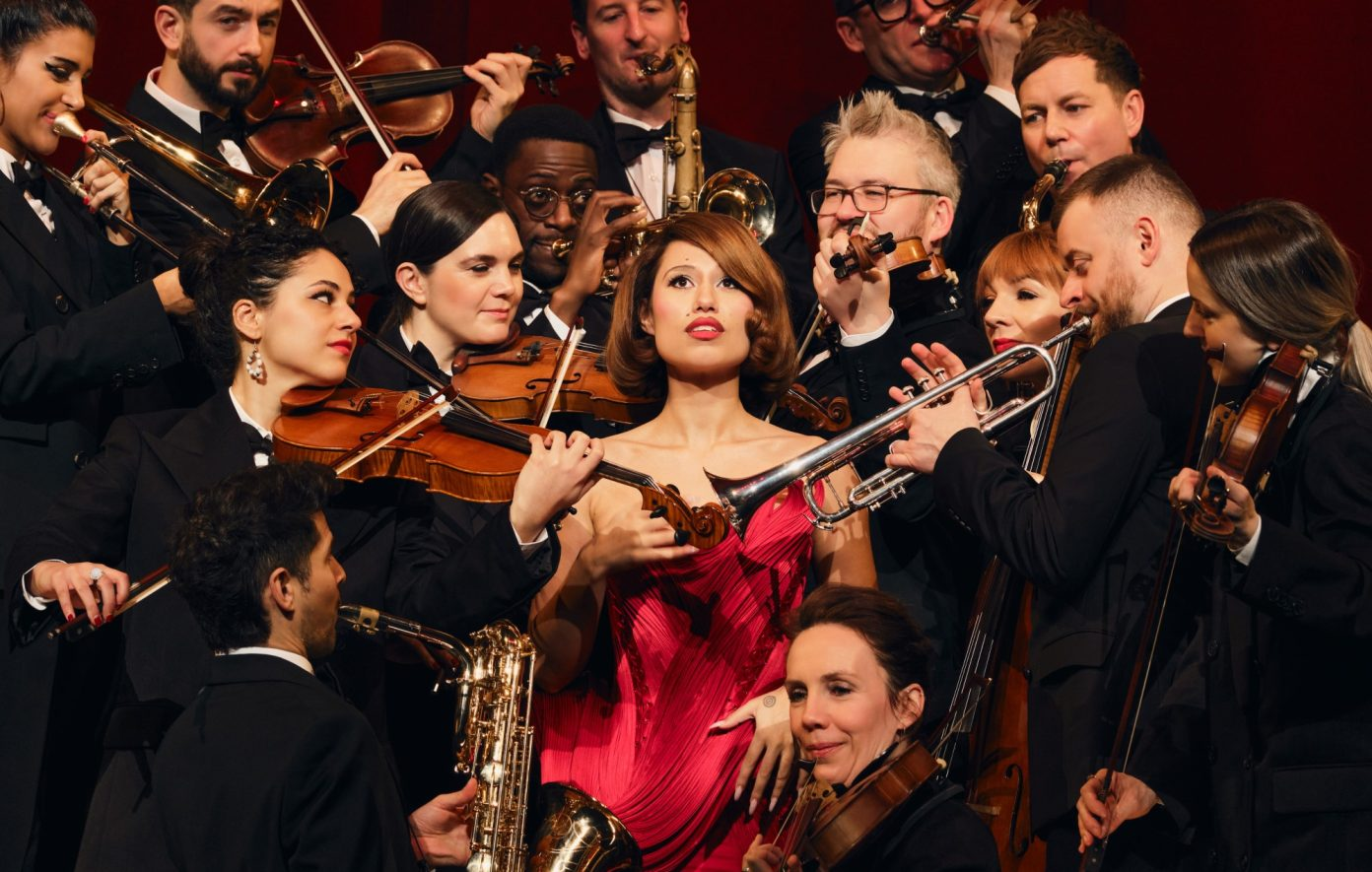
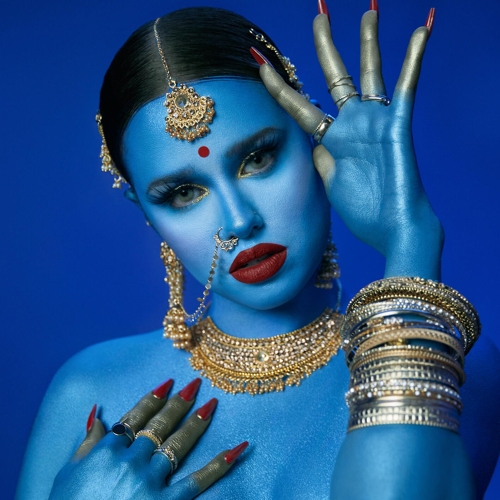
Grandeur sits at the heart of ‘This Music May Contain Hope’, RAYE’s second album, and the result feels nothing short of breathtaking. On this record, the singer born Rachel Keen explores a wide spectrum of sounds across its 73 minute length, moving from emotional ballads to lively funk moments and the jazz pop style she has become closely associated with. It can feel overwhelming at first, yet the magic that comes from RAYE fully committing to her vision makes the experience rewarding from start to finish.
‘This Music May Contain Hope’, a conceptual project about pushing through insecurity and heartbreak, unfolds like a lavish stage production. RAYE takes on the dual role of main character and guiding voice throughout the story. “Allow me to set the scene. Our story begins at 2:27am on a rainy night in Paris. Cue the thunder,” she says during the opening track ‘Girl Under The Grey Cloud’, which arrives with sweeping orchestral strings. Spoken passages appear across the album, helping shape the narrative and giving the project a sense of direction, almost like hearing the official recording of a Broadway show.
With this framework in place, the South London artist allows herself to fully explore the album’s diverse musical palette, and most of the time it works in her favor. Sometimes she fully embraces the theatrical side of the concept, especially during the closing section of the smooth R&B track ‘The WhatsApp Shakespeare’. Other moments are delivered more straightforwardly, such as the emotional slow building ballad ‘I Know You’re Hurting’. She also revisits her earlier dance influences with the impressive house track ‘Life Boat’.
Across the entire album, two things stand out clearly. RAYE’s flexible vocals sound better than ever, and her songwriting feels sharper than it has before. Take the playful highlight ‘I Hate The Way I Look Today’, a swing jazz inspired track reminiscent of Ella Fitzgerald, where she admits “I’m okay to be lonely / If I’m lonely and skinny / I have such silly self-loathing thoughts, it seems”. Then there is the emotional storytelling in ‘Nightingale Lane’: “It was right there, early June / Next to Old Park Avenue / Standing in the rain, I watched him walk away”.
Despite all the vulnerability and emotional struggles explored throughout the record, RAYE ultimately reaches a place of optimism, staying true to the album’s title. She gathers her close friends on ‘Click Clack Symphony’ with support from Hans Zimmer, finds closure with guidance from Al Green on the smooth seventies soul inspired ‘Goodbye Henry’, and reaches toward something greater alongside her sisters Amma and Absolutely on the uplifting ‘Joy’ as she searches to be “free of all the pain and every fear”. After the stormy opening imagery of that “rainy night” and “thunder”, RAYE eventually realizes that “the sun exists behind the clouds”, as she shares on ‘Happier Times Ahead’.
‘This Music May Contain Hope’ shows RAYE performing at her absolute peak. The album feels huge in scale and emotionally powerful, yet it remains rooted in honest experiences and real feelings. Yes, it asks a lot from the listener, but that is also what makes it so special. Every dramatic moment and musical shift feels like RAYE claiming her independence and finally creating music entirely on her own terms.