
MUSIC PREMIERES

Are we in a golden age for acoustic music? You’d just about have to think so, if you are privy to a couple of significant tours coming through California right now, one by the duo of Gillian Welch and David Rawlings, another by solo artist Jason Isbell, trading coastal cities like capos at a guitar pull. Isbell has been in the review headlines, shining a light on just how good lonesome finger-picking can sound on record with his first band-less album, “Foxes in the Snow.” But the Los Angeles re-arrival of Welch and Rawlings — who are more than six months into touring behind their excellent 2024 joint effort, “Woodland” — is a reminder not just of what an influence they’ve surely been on someone like Isbell, but how they remain the unshakable queen and king of this idiom.
Of course, while Isbell and some of their other contemporaries might dip their toes in and out of a purely acoustic mode, Welch and Rawlings have been keeping it quiet for close to 30 years now. Every once in a while, they threaten to go electric, in their own still-modest fashion, but thankfully, it never quite seems to completely take. Because the mystery in the timeless tales they tell generally does work best on a lower boil, even as nothing electrifies quite like Rawlings’ 1935 Epiphone, when he really lets his fingers do the amplifying.
Their sold-out appearance Friday night at the Wiltern was an exercise in just how sustained a grip two very unassuming people can have on a captivated audience for the better part of two-and-a-half hours, with not much more arsenal at their disposal than talent, a distinct sense of shared personal identity and a great knack for vintage gear finds. (And on some of the songs, for a real turbo boost, a guest bassist.) Even generously portioned into two sets with an intermission, their 23-song show almost seemed over too fast, but that’s a testament generally to their clock-stopping spell. It almost seemed appropriate that they were performing on the same weekend as America’s switch to Daylight Saving Time, so the audience had multiple chances to wonder where the time went.
For as many years as these two have been at this now, this tour marks the first time that the formatting of the new album matches the formatting of their live show. In the past, concerts would find Rawlings and Welch alternating songs from the respective albums that came out under their individual names (each of which they’d both worked on anyway). Last year’s “Woodland” found them co-billed on record for the first time, too, trading turns at doing lead vocals (with an occasional true duet or pure harmony number) just as they always have live. It’s a welcome synchronization of studio and stage modes, with no drawbacks for the audience; although “Gillian Welch” has been more of a household name in the ‘90s and 2000s, it’s safe to say that anyone who’s a fan of one is a fan of both at this late date.
The dynamics of having a “band” with two effective lead singers keeps things from ever remotely becoming stale, even with a nearly comical lack of bells and whistles, musically or visually. (“Dave might take his jacket off,” Welch warned. “That’s about it, for show business.”) And when their voices blend together at length, as they did during the time-tested slow-burner “The Way It Will Be,” the effect is eerie, for lack of a better word — not quite blood harmony, but something equally pretty, and pretty spooky.
Currently they have a third wheel on stage for a majority of the tunes: upright bassist Paul Kowert, who’s also a long-standing member of Punch Brothers and Hawktail. His presence alone lends a kind of variety to the material, since there are numbers like “Bells of Harlem” where he begins by playing the bass with a bow and switches to plucking it to pick up the pace, or vice versa, or goes from not playing at all to creating a percussive crescendo in the second half of a song. When there’s not that much else happening on stage, these little switch-ups create more tension or movement within a song than you’d initially think possible.
Welch switches effectively between guitar and banjo. The whoops she got for picking up the latter led her to remark, “Some people find the banjo unaccountably sexy.” Rawlings was about to pick up his own banjo at one point when there was a loud snap, followed by the shocked comment, “Everybody knows that sound” — and after a bit of prevaricating, because there was no roadie about to ride out to the rescue with a new one, a switch back to guitar and a change of setlist. “We were gonna play a happy number,” Welch informed the crowd, “but instead we’re gonna play a real sad one.” Which, at a Welch/Rawlings show, is like suddenly announcing you’re going to serve dessert. That’s when the crowd got “The Way It Will Be” as an audible, and thanked God for broken strings.
As a guitarist, Rawlings is not just a master technician but a Monster of Folk, soloing around his partner’s rhythm guitar or lead vocals like someone caught up in a sweet delirium, though he knows when to dole out the insanity. If you appreciate folk, you probably already have these people as heroes, but if you’re more of a rock person, there are intuitive moves here that make the music feel like it almost belongs as much in that idiom, too. Rawlings was at peak flex when he moved from virtuosic dexterity to just slamming hard on the strings during the seven-minute penultimate number, “Revelator,” which can usually be counted on as a climax when they play it. (They don’t always.) He’s doing that stuff on his trademark Epiphone, and maybe for a moment you’ll wish that whoever carefully manufactured that instrument back in 1935 could be brought back from the dead, just so you could see the looks on their faces as they witnessed the wild things Rawlings does with it.
Other highlights included two Rawlings-sung songs that the duo haven’t even released on a record, but are bringing out occasionally on tour anyway, as is their wont. One of these, “Lazarus,” seems to be from the point of view of a friend or lover of the biblical resurrectee, wondering whether being bought back from the dead was too painful an experience to be worth it. I was wondering during the performance if this was a cover of a Grateful Dead song I hadn’t heard; I was glad to see fan comments afterward indicating I was not alone in that crazy notion. Another new song showed up in the encores, “Goodnight,” such a sweet send-off that you could imagine the pair eventually adopting it into a farewell number every night.
At some point, someone who’s a newcomer to all this might wonder: Is this all a period piece? That would be a hard question to answer, which is part of what has made the whole Welch/Rawlings ethos so beguiling. The old-timey-ness of many of the melodies or lyrics seems to cast the songs in a nostalgic light… if you’re nostalgic for the good old days of the Depression. But then Welch will sing something like “Hashtag,” a tribute to their late songwriter friend Guy Clark that clearly, from its title, isn’t trying to pull any time-travel tricks. (“When will we become ourselves?” they wonder, in the chorus, lifting the song from an anecdotal homage to a famous, fallen friend to some kind of greater cosmic query.) These songs are really mostly unmoored from time in a wonderful way, aided by the fact that Welch’s voice in particular seems neither modern nor antiquated. There’s warmth to her vocals, and also room for ambiguity, like she might be skirting the line between friendly assurances and telling you a ghost story.

She brings a sense of hope to even some of the sadder tales, anyway — like “Hard Times,” which is not the Stephen Foster song of the same name, though it sounds about as old, but one of their own. “Hard times ain’t gonna rule my mind, Bessie,” she sang, and in the hard times we’re currently experiencing, there was plenty of shared impetus to sing along, aspirationally. Even if, by the end of the tune, the plowman who sings it has lost his farm, and Bessie’s missing and presumably buried on it somewhere.
The Wiltern audience was in for one last treat before it was all over. Rawlings started playing some circular guitar parts that sounded suspiciously like the opening to Jefferson Airplane’s “White Rabbit,” but no, it probably wasn’t… and then Welch finally broke into Grace Slick’s opening line, while he broke into a slight smile. The two partners really don’t do that many covers, and they’d only busted this one out about a dozen times in the last 20 years. But something about L.A. got them in a surrealistic mood, and we got a version that sounded about as cool as the Airplane’s. You could say that everyone exiting the building had been transformed into a Fed-head.
Setlist for Gillian Welch & David Rawllings, the Wiltern in Los Angeles, March 7, 2025:
(set 1)
Elvis Presley Blues
Midnight Train
Empty Trainload of Sky
Cumberland Gap
North Country
Howdy Howdy
Bells of Harlem
The Way It Goes
Ruby
Wayside/Back in Time
(set 2)
Lawman
What We Had
Hard Times
Hashtag
The Day the Mississippi Died
The Way It Will Be
Lazarus
Red Clay Halo
(encore 1)
Look at Miss Ohio
I’ll Fly Away
(encore 2)
Goodnight
Revelator
White Rabbit
MUSIC PREMIERES
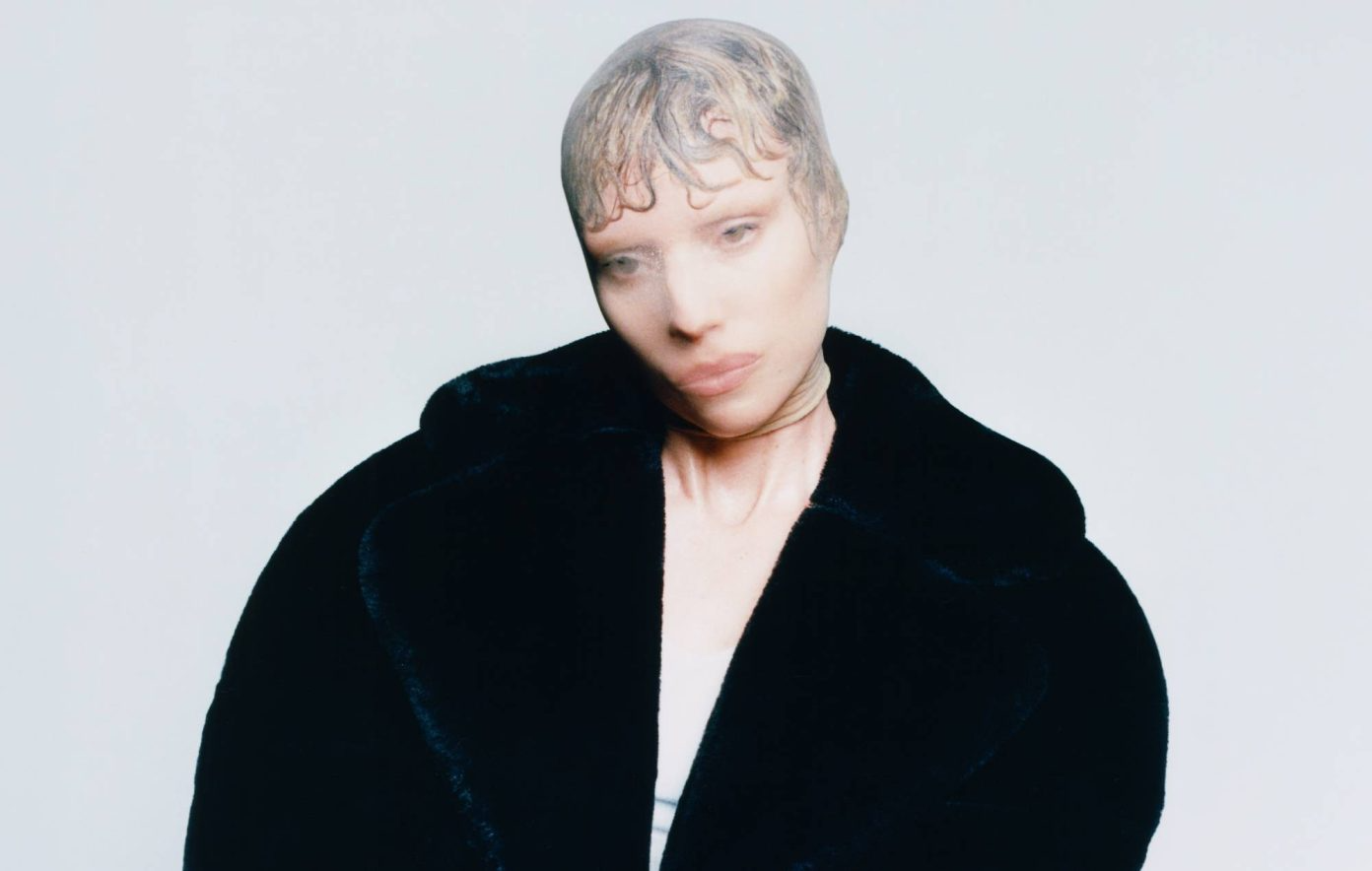
Lykke Li didn’t hold back when speaking about the making of her sixth studio album, ‘The Afterparty’, during a listening session in Los Angeles earlier this year. “Let’s talk about the album. It was a motherfucker to make,” she admitted to the crowd. While balancing motherhood, the chaos of modern culture shaped by Trump and AI, and her own desire to create something more “extroverted, impulsive and chaotic” than ‘EYEYE’, as she previously shared with NME, the Swedish alt pop star arrived at a headspace that “feels like it’s 4am and the sun is going to rise”. The record captures that blurry final moment before regret, exhaustion and reality settle in, which makes it even more emotional considering she has hinted this could potentially be her final album.
There is something fitting about how brief the project feels. With only nine tracks running across 24 minutes, it never overstays its welcome. Lykke immediately drops listeners into the atmosphere with opener ‘Not Gon Cry’, painting a picture of those lonely early morning hours with the line, “No angels here tonight, no dancing queens.” Alongside the shadowy pulse of ‘Happy Now’ and the twisted disco energy of ‘Lucky Now’, she revisits the emotional yet dance driven spirit of her earlier material while blending in the sharper, more confident attitude heard on ‘So Sad, So Sexy’ and the shimmering influence of her 2019 Mark Ronson collaboration ‘Late Night Feelings’.
The emotional fallout begins to settle in quickly. ‘Famous Last Words’ carries a lush orchestral sadness as Lykke reflects on lessons that only came after years of chaos and late nights, confessing, “I had to crash and burn to tell the tale.” Then comes ‘Future Fear’, a delicate acoustic track with robotic textures that stares directly into anxiety and uncertainty with the chilling question, “I’m going to a dark place, do you need anything?” Meanwhile, ‘So Happy I Could Die’ glows like sunrise after a sleepless night, holding onto fleeting moments as she sings about “slipping through the hourglass”.
Throughout the album, Lykke Li vividly captures the beauty and wreckage of reckless nights with the vulnerability that has always defined her music. On ‘Sick Of Love’, she channels heartbreak into revenge, wanting to “make you beg for it” after rejection in a way that feels spiritually connected to Robyn’s ‘Dancing On My Own’. One of the strongest moments arrives with ‘Knife In The Heart’, a track that fully embraces her desire to become the “rock god” and “fuck boy” she spoke about, firing back at anyone who tries to tear her down with the words “you can spit, you can walk on me” while delivering one of the catchiest songs she has created in years.
Closing track ‘Euphoria’ leaves behind the same bittersweet feeling that runs through the rest of the album. With sweeping strings, pulsing beats and emotional intensity, Lykke Li reminds listeners that nothing lasts forever as she sings, “Player play your song, waste the night away”. Like the fading energy of the perfect night out, ‘The Afterparty’ ends in a haze of beauty and uncertainty. If this truly is her farewell, she leaves with one final intoxicating statement, though it still feels like there could be another chapter waiting.