
ALBUM REVIEWS
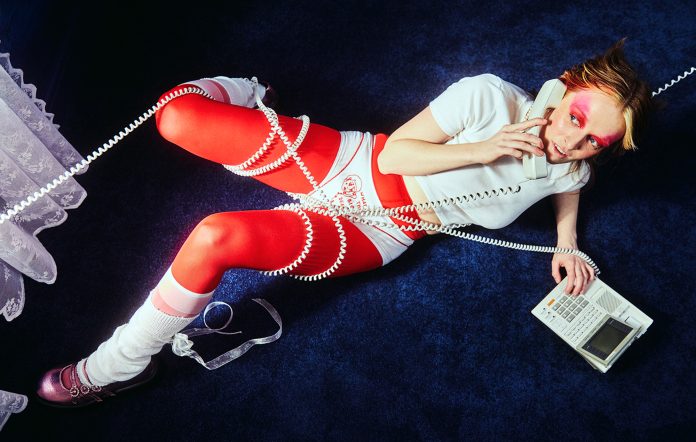
Orla Gartland’s songwriting is filled with warmth and humour. Gut-punch couplets sit alongside brilliantly witty quips, and the Irish musician creates tracks filled with personal realisations that lay herself bare, while always remaining in on the joke.
Since first emerging on YouTube in her early teens, the Dublin-born, London-based artist has won over fans with this personable brand of songwriting. From the earnest admission on 2015’s fizzing nugget of Two Door Cinema-inflected indie-pop ‘Lonely People’ (the titular track of one of Gartland’s earliest EPs) to the conversational delivery of lines like “Life is short until it’s not/Honestly, it’s kinda long” in ‘You’re Not Special, Babe’ – a highlight of 2021 debut record ‘Woman On The Internet’ – her razor-sharp pen has prevailed.
It continues to persist in Gartland’s latest record, ‘Everybody Needs A Hero’. Take ‘Kiss Ur Face Forever’ – an explosion of pop-punk riffs and half-spoken come-ons. In the electric bridge, she teases: “Let’s play a game of emotional Monopoly in the name of monogamy/Walls down and, now, there’s no stopping me.” It’s a frank assessment of flourishing romance and the indecision of going all in, but just in case there were any doubts, she makes her intentions totally clear: “I want the weight of you on top of me”.
This distinct approach is a thread throughout Gartland’s second album: even the title ‘Everybody Needs A Hero’ plays into it. For the LP, she draws on themes of womanhood and, as she explained to NME earlier this year, it explores “women doing it all”, navigating a life where you weigh up the choice between having a career, a social life and being someone’s partner, and choose the lot. Running in parallel to this is the comical image of Gartland as a “self-appointed hero”, summing up the record’s themes in what she terms “quite a slapstick way”.
It’s an exploration of life as both an individual and in a relationship, looking at the tightrope you walk as a woman and how it can impact every aspect of your life. Or, as she sums up on the aptly titled record opener, ‘Both Can Be True’: “I fucking love you/But this shit is hard.”
The album also sees Gartland dive further into the production world. While she co-produced her debut, with its follow-up, she wanted to “take the reins even more [and] be a bit bolder”. Inspired by multifaceted artists like St. Vincent, Gartland took the songs from their earliest kernels, through production, and onto the final products with accompanying visuals.
These production choices result in wider sonic worlds, with genre used as a vehicle to bolster lyrical content. ‘Backseat Driver’ – a takedown of intrusive thoughts that sees Gartland demand: “Shut up backseat driver, this has gone too far/You’ve taken up enough space, now get out of my car” – is a driving slab of indie sleaze, complete with LCD Soundsystem-evoking cowbells and a stonking bassline. The euphoric chorus is the sound of driving fast with the windows down, its rocked-up instrumentals and belted vocals capturing the anger of the lyrics.
Elsewhere there’s Counting Crows-laced alt-rock (‘Simple’), late noughties British indie (‘Late To The Party’), Kasabian and Royal Blood-adjacent rock (‘Three Words Away’), and lovely lilting indie à la Clairo or Beabadoobee (‘Who Am I?’). The often high-octane landscape Gartland creates means more subdued cuts like the waltzing ‘Mine’ or the title track struggle to cut through, but the switch-up works for ‘The Hit’, a lush earworm of dancing acoustic guitars and gorgeous vocal melodies.
‘Everybody Needs A Hero’ lives in grey areas, not shying away from the messiness of life. The floor-shaking ‘Sound Of Letting Go’, all feral riffs and ethereal choruses of layered vocals, distils this idea. Ultimately, it concludes, you can’t control everything, the musician unveiling: “I can’t change you, can’t change me/Can’t change anything/So I guess I gotta let it go.” From where we’re standing, it doesn’t sound like Gartland needs to change a thing.

ALBUM REVIEWS

Grandeur sits at the heart of ‘This Music May Contain Hope’, RAYE’s second album, and the result feels nothing short of breathtaking. On this record, the singer born Rachel Keen explores a wide spectrum of sounds across its 73 minute length, moving from emotional ballads to lively funk moments and the jazz pop style she has become closely associated with. It can feel overwhelming at first, yet the magic that comes from RAYE fully committing to her vision makes the experience rewarding from start to finish.
‘This Music May Contain Hope’, a conceptual project about pushing through insecurity and heartbreak, unfolds like a lavish stage production. RAYE takes on the dual role of main character and guiding voice throughout the story. “Allow me to set the scene. Our story begins at 2:27am on a rainy night in Paris. Cue the thunder,” she says during the opening track ‘Girl Under The Grey Cloud’, which arrives with sweeping orchestral strings. Spoken passages appear across the album, helping shape the narrative and giving the project a sense of direction, almost like hearing the official recording of a Broadway show.
With this framework in place, the South London artist allows herself to fully explore the album’s diverse musical palette, and most of the time it works in her favor. Sometimes she fully embraces the theatrical side of the concept, especially during the closing section of the smooth R&B track ‘The WhatsApp Shakespeare’. Other moments are delivered more straightforwardly, such as the emotional slow building ballad ‘I Know You’re Hurting’. She also revisits her earlier dance influences with the impressive house track ‘Life Boat’.
Across the entire album, two things stand out clearly. RAYE’s flexible vocals sound better than ever, and her songwriting feels sharper than it has before. Take the playful highlight ‘I Hate The Way I Look Today’, a swing jazz inspired track reminiscent of Ella Fitzgerald, where she admits “I’m okay to be lonely / If I’m lonely and skinny / I have such silly self-loathing thoughts, it seems”. Then there is the emotional storytelling in ‘Nightingale Lane’: “It was right there, early June / Next to Old Park Avenue / Standing in the rain, I watched him walk away”.
Despite all the vulnerability and emotional struggles explored throughout the record, RAYE ultimately reaches a place of optimism, staying true to the album’s title. She gathers her close friends on ‘Click Clack Symphony’ with support from Hans Zimmer, finds closure with guidance from Al Green on the smooth seventies soul inspired ‘Goodbye Henry’, and reaches toward something greater alongside her sisters Amma and Absolutely on the uplifting ‘Joy’ as she searches to be “free of all the pain and every fear”. After the stormy opening imagery of that “rainy night” and “thunder”, RAYE eventually realizes that “the sun exists behind the clouds”, as she shares on ‘Happier Times Ahead’.
‘This Music May Contain Hope’ shows RAYE performing at her absolute peak. The album feels huge in scale and emotionally powerful, yet it remains rooted in honest experiences and real feelings. Yes, it asks a lot from the listener, but that is also what makes it so special. Every dramatic moment and musical shift feels like RAYE claiming her independence and finally creating music entirely on her own terms.