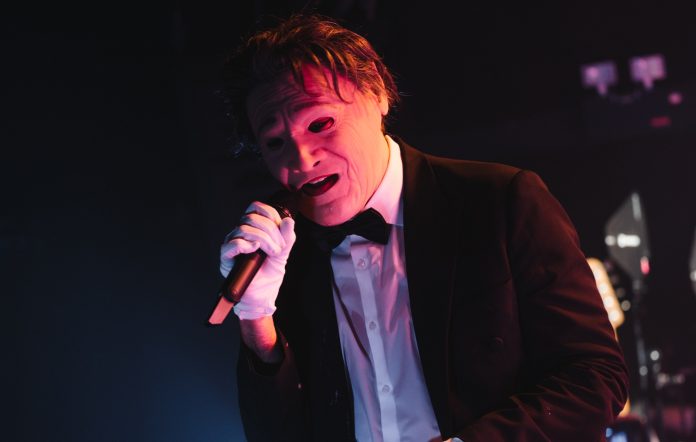


Mach-Hommy has accomplished a rare form of anonymity in the digital age. He’s rarely seen without a mask or Haitian flag bandana adorning his face, plus it’s borderline impossible to find his government name online. But even in candid moments, he keeps his cards close. Mach’s virtual listening event for #RICHAXXHAITIAN, which was designed to welcome listeners into his world, felt shrouded in intentional secrecy: A pair of streams that ran the album once, with no fast-forwarding or rewinding available, no lyrics provided, and buffering and skipping to be expected. The brand of confidentiality he’s built as part of his public persona—marked by a refusal to explain himself, instead letting his knowledge and skill say it all—is akin to a tenured professor who is allergic to slowing down as they blister through lectures. Only if you engage with the material with attention and care will the image of Mach become a little clearer.
#RICHAXXHAITIAN is Mach’s first solo venture in nearly three years, since the critically acclaimed Pray for Haiti and Balens Cho (Hot Candles) dropped in 2021. The list of collaborators is packed with familiar faces: Fellow underground darlings, like Sadhugold, Conductor Williams, and Quelle Chris, help out on production duties, while Tha God Fahim, Your Old Droog, and other guests contribute verses. But the close-knit circle doesn’t mean Mach needs to rely on old tricks; instead, he’s thrillingly meticulous, putting his talent for daisy-chaining raps and concepts on full display. #RICHAXXHAITIAN is his most expansive project since 2016’s HBO (Haitian Body Odor); it’s an opus executed with a level of precision that’s come to be expected of the prolific rapper.
Mach has cemented himself as a shapeshifter, contorting his voice to rap, sing, and glide over the grainy surface of his beats. And while #RICHAXXHAITIAN is a quintessential Mach-Hommy project—the mixing makes his words garble through the muddiness as if they’re hazy memories, similar to previous records—the production landscape is vast enough to evoke all of his vocal personalities. The percussive crashes and soothing scales from the hands of pianist Georgia Anne Muldrow create the perfect foil for Mach’s morose bars on “Sonje.” His crooning against the accordion on “The Serpent and the Rainbow,” the storybook piano loops of the Quelle Chris-composed “Copy Cold,” and the trudging drums of “Antonomasia” are perfect for headphones on a sub-zero day in Newark in 1997. All register as adventures born out of ease and supreme confidence.
His meandering style turns his verses into close reading exercises. Mach’s raps are effective because of his trilateral approach: The man possesses an encyclopedic knowledge of cultural touchstones, an innate sense of timing that catches the listener off-balance, and a gallows humor that is ripe for comical punchlines. Even if some seem unspectacular in a vacuum (“Flip you on the track like Tyshawn Jones,” he spits with delight to open “Padon,” and “blue cheese” bars on “Gorgon Zoe Lan”), the precision and detail with which he strings the references together is one of his strongest artistic gifts. When you recognize the wordplay hidden in the depths of “Antonomasia,” or lose yourself in the parallelism of “Guggenheim Jeune,” you’ll realize that Mach is a master manipulator of structure. Like a virtuoso of martial arts, his flurries of bars are not aimless swings or lucky punches—but pinpoint jabs that land harder with every hit.
Across its 17 tracks and 47 minutes, #RICHAXXHAITIAN feels like the closest to a biographical work for Mach-Hommy. That’s not to say the album is rife with sordid details and tell-all tales. His signature caginess and opacity remain; personal histories are contained to topics already known to fans, like his immigration journey from Port-au-Prince to New Jersey. As on previous projects, he’ll launch into Kreyòl without a lick of concern about the potential need for translation. But the choice causes his more forthright statements and vignettes to land with more vigor, especially when he delivers them with a bristling rancor. There are hooks about the International Monetary Fund and interludes about how the scourge of late-stage capitalism is keeping Haiti from achieving revolutionary change. When Mach spits, “White phosphorus fell on civilians in Gaza/Troglodytes squadron yelling epithets in a jogger,” with ferocity on “POLITickle,” it lands with the impact of an expanding bullet. A particular line rings in your ears on “Lon Lon,” as his rambling brushes against the angelic flute of the 1970 Archie Whitewater sample; it’s a proclamation of who Mach is and why he does this: “I’m not your token Nigger boy rapping/I’m a charming-ass composer.”
For long stretches of its runtime, #RICHAXXHAITIAN cruises around like a victory lap, for better or for worse. Mach spars with Roc Marciano, Tha God Fahim, and Black Thought, the legendary emcees blistering over sample loops stride-for-stride, as if their chemistry sliders are turned up to the max. The album is not without missteps, like a regrettable Your Old Droog verse on “Empty Spaces” and a Kaytranada-produced single that would have been better as a loosie. But enough peaks overcome the project’s shallow valleys. Take the finale, “Holy ___,” with its lush choral arrangements and decadent orchestral strings, which feel like a biblical exaltation of his journey as an artist and adherence to the values that have allowed him to retain his soul. Mach departs with final pieces of wisdom about the realities of the streets he grew up in, sneaking in a sly qualifier: “Just an observation from a Haitian teaching all the Yanks,” he raps. It arrives with an aimless shrug, as if Mach holds all the truths you may need. He doesn’t care about what direction you believe his sound should go into, or if you’re convinced about the gospel he’s doling out—the moment his voice hits your eardrum, he will command your full attention.
MUSIC PREMIERES
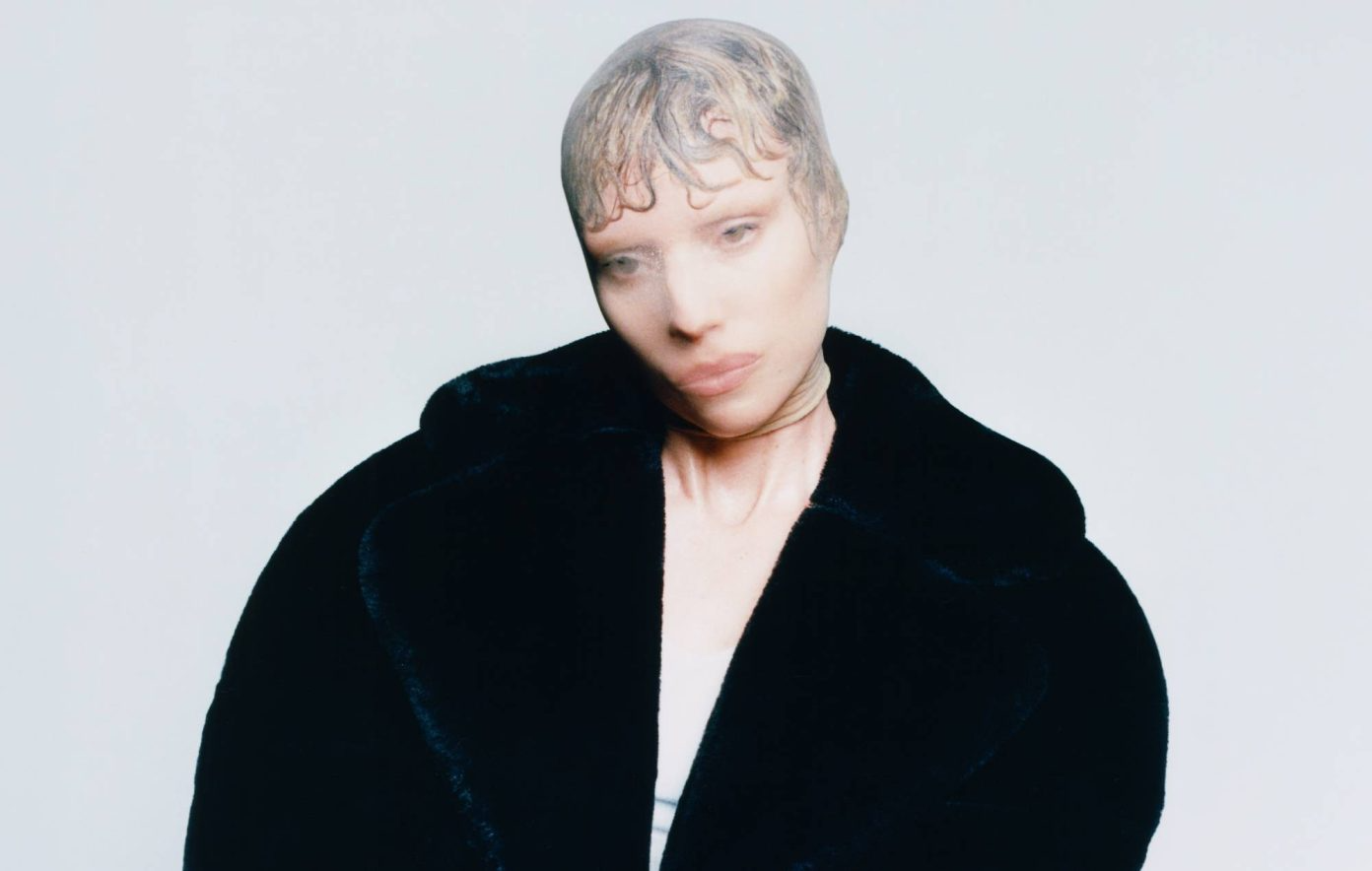
Lykke Li didn’t hold back when speaking about the making of her sixth studio album, ‘The Afterparty’, during a listening session in Los Angeles earlier this year. “Let’s talk about the album. It was a motherfucker to make,” she admitted to the crowd. While balancing motherhood, the chaos of modern culture shaped by Trump and AI, and her own desire to create something more “extroverted, impulsive and chaotic” than ‘EYEYE’, as she previously shared with NME, the Swedish alt pop star arrived at a headspace that “feels like it’s 4am and the sun is going to rise”. The record captures that blurry final moment before regret, exhaustion and reality settle in, which makes it even more emotional considering she has hinted this could potentially be her final album.
There is something fitting about how brief the project feels. With only nine tracks running across 24 minutes, it never overstays its welcome. Lykke immediately drops listeners into the atmosphere with opener ‘Not Gon Cry’, painting a picture of those lonely early morning hours with the line, “No angels here tonight, no dancing queens.” Alongside the shadowy pulse of ‘Happy Now’ and the twisted disco energy of ‘Lucky Now’, she revisits the emotional yet dance driven spirit of her earlier material while blending in the sharper, more confident attitude heard on ‘So Sad, So Sexy’ and the shimmering influence of her 2019 Mark Ronson collaboration ‘Late Night Feelings’.
The emotional fallout begins to settle in quickly. ‘Famous Last Words’ carries a lush orchestral sadness as Lykke reflects on lessons that only came after years of chaos and late nights, confessing, “I had to crash and burn to tell the tale.” Then comes ‘Future Fear’, a delicate acoustic track with robotic textures that stares directly into anxiety and uncertainty with the chilling question, “I’m going to a dark place, do you need anything?” Meanwhile, ‘So Happy I Could Die’ glows like sunrise after a sleepless night, holding onto fleeting moments as she sings about “slipping through the hourglass”.
Throughout the album, Lykke Li vividly captures the beauty and wreckage of reckless nights with the vulnerability that has always defined her music. On ‘Sick Of Love’, she channels heartbreak into revenge, wanting to “make you beg for it” after rejection in a way that feels spiritually connected to Robyn’s ‘Dancing On My Own’. One of the strongest moments arrives with ‘Knife In The Heart’, a track that fully embraces her desire to become the “rock god” and “fuck boy” she spoke about, firing back at anyone who tries to tear her down with the words “you can spit, you can walk on me” while delivering one of the catchiest songs she has created in years.
Closing track ‘Euphoria’ leaves behind the same bittersweet feeling that runs through the rest of the album. With sweeping strings, pulsing beats and emotional intensity, Lykke Li reminds listeners that nothing lasts forever as she sings, “Player play your song, waste the night away”. Like the fading energy of the perfect night out, ‘The Afterparty’ ends in a haze of beauty and uncertainty. If this truly is her farewell, she leaves with one final intoxicating statement, though it still feels like there could be another chapter waiting.