
ALBUM REVIEWS

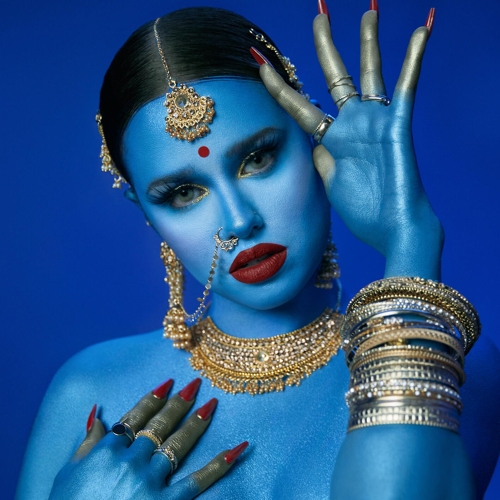
If you were looking to understand the appeal of The Last Dinner Party, you could alight on the world which they conjure in their beguiling songs: a cocktail of gothic romance and sparkling opulence. Having been mainstays on the London live circuit following the pandemic, the five-piece swiftly landed a major label deal and have since continued to align their image and artistry, bringing silken ball gowns and a raucous energy to stages the world over. It’s as though they figured where they were going long before they got there.
In the months leading up to their debut LP ‘Prelude To Ecstasy’, their name has echoed around late night chat shows and festival lineups; yet the speed with which the band broke through has led to online discourse around their credentials, not too dissimilar to the conversations that were previously directed towards the rapid arrival of Wet Leg. Arguably, there is now an element of smoke and mirrors around a band whose mission appears to be fairly straightforward: “We imagined the kind of joyful act we’d want to see when we go out, and created our own ‘dream band’ from that,” vocalist Abigail Morris told NME last year.
It’s almost easy to forget that we’re here, primarily, because of one endlessly catchy single. ‘Prelude To Ecstasy’ arrives nearly a year on from ‘Nothing Matters’, the track that launched the band on their dizzying trajectory; in terms of its Roxy Music-like stomp and fatalist lyrics, it serves as their own dark, escapist fantasy. “And you can hold me like he held her / And I will fuck you like nothing matters,” so goes the chorus.
Rendered in strings, groove-flecked guitar passages and twinkling keys, the album’s recurring themes continue to ooze out of every verse: girlhood, regret, intimacy, unsatisfying relationships. It swoops from a cavernous torch song (‘On Your Side’) to visions of hysteria via a plaintive ballad (‘Caesar On The TV Screen’). Slickly arranged as though these tracks are – with James Ford [Arctic Monkeys, Jessie Ware] on production duties – they offer a type of melodrama that doesn’t crop up often in modern mainstream pop.
In fact, when the band dial things down, like on ‘Beautiful Boy’ which peaks almost instantly with a panpipe section, the energy shift is noticeable. ‘Gjuha’, an Albanian-language call to home sung by keyboardist Aurora Nishevci, contains some beautiful, contrasting falsettos but feels out of place within the album’s clear vision. These more muted moments aren’t a slight on ‘Prelude To Ecstasy’ as a whole; if anything, they go to show that the band manage to cram a surplus of ideas into the majority of the material here.
Even at its most overwrought – the rhythmic attack of ‘My Lady Of Mercy’; a chunk of wallowing reverb in ‘Burn Alive’, presumably to evoke misery and displacement – there’s a melodic confidence throughout that’s a rare find in a debut. The Last Dinner Party may have some reverence for their art-rock forebears (think: early Julia Holter or St Vincent), but also enough self-belief and magnetism to set them apart from what’s come before.
Some may choose to posit the band’s success as an antidote to the intense scrutiny – about their rise, appearance and decision to make music without a ‘serious’ intention – they’ve received in their early career. But take all of that away, and you’re still left with fantastic songs that are easy to embrace and return to. It’s hard to miss all the things they’re doing right.

ALBUM REVIEWS

Grandeur sits at the heart of ‘This Music May Contain Hope’, RAYE’s second album, and the result feels nothing short of breathtaking. On this record, the singer born Rachel Keen explores a wide spectrum of sounds across its 73 minute length, moving from emotional ballads to lively funk moments and the jazz pop style she has become closely associated with. It can feel overwhelming at first, yet the magic that comes from RAYE fully committing to her vision makes the experience rewarding from start to finish.
‘This Music May Contain Hope’, a conceptual project about pushing through insecurity and heartbreak, unfolds like a lavish stage production. RAYE takes on the dual role of main character and guiding voice throughout the story. “Allow me to set the scene. Our story begins at 2:27am on a rainy night in Paris. Cue the thunder,” she says during the opening track ‘Girl Under The Grey Cloud’, which arrives with sweeping orchestral strings. Spoken passages appear across the album, helping shape the narrative and giving the project a sense of direction, almost like hearing the official recording of a Broadway show.
With this framework in place, the South London artist allows herself to fully explore the album’s diverse musical palette, and most of the time it works in her favor. Sometimes she fully embraces the theatrical side of the concept, especially during the closing section of the smooth R&B track ‘The WhatsApp Shakespeare’. Other moments are delivered more straightforwardly, such as the emotional slow building ballad ‘I Know You’re Hurting’. She also revisits her earlier dance influences with the impressive house track ‘Life Boat’.
Across the entire album, two things stand out clearly. RAYE’s flexible vocals sound better than ever, and her songwriting feels sharper than it has before. Take the playful highlight ‘I Hate The Way I Look Today’, a swing jazz inspired track reminiscent of Ella Fitzgerald, where she admits “I’m okay to be lonely / If I’m lonely and skinny / I have such silly self-loathing thoughts, it seems”. Then there is the emotional storytelling in ‘Nightingale Lane’: “It was right there, early June / Next to Old Park Avenue / Standing in the rain, I watched him walk away”.
Despite all the vulnerability and emotional struggles explored throughout the record, RAYE ultimately reaches a place of optimism, staying true to the album’s title. She gathers her close friends on ‘Click Clack Symphony’ with support from Hans Zimmer, finds closure with guidance from Al Green on the smooth seventies soul inspired ‘Goodbye Henry’, and reaches toward something greater alongside her sisters Amma and Absolutely on the uplifting ‘Joy’ as she searches to be “free of all the pain and every fear”. After the stormy opening imagery of that “rainy night” and “thunder”, RAYE eventually realizes that “the sun exists behind the clouds”, as she shares on ‘Happier Times Ahead’.
‘This Music May Contain Hope’ shows RAYE performing at her absolute peak. The album feels huge in scale and emotionally powerful, yet it remains rooted in honest experiences and real feelings. Yes, it asks a lot from the listener, but that is also what makes it so special. Every dramatic moment and musical shift feels like RAYE claiming her independence and finally creating music entirely on her own terms.