
ALBUM REVIEWS
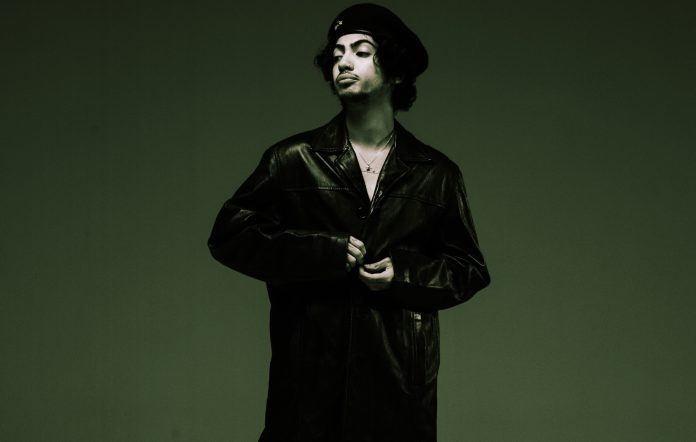
The “face of digicore” – 21-year-old producer Ericdoa – was made by and for the internet: an e-boy incubated by online glitchpop and digicore producer communities. Like his peers (including collaborators Glaive and Daine) the artist born Eric Lopez is a genre-bender by trade, punching together angsty emo, gutsy hyperpop and suave trap, teetering against the esoteric and irreverent without ever losing virality. It’s Post Malone on a sugar rush.
Not unlike the iconoclastic hyperpop, its offshoot digicore favours abrasive production and ironic pop superstardom. The Interscope-signed Ericdoa’s greatest USPs are his links to the gaming community and industry: the Discord-dwelling, Twitch-streaming, Riot Games-collaborating artist posits a vision of misfit artistry at its most digitally native. He’s a new multi-hyphenate, an underground producer reworking the fabric of pop celebrity.
‘DOA’ – the follow-up to 2022’s ‘Things With Wings’ – is no less sonically rebellious than his earlier material, but is surprisingly more grounded. Opener ‘The Cake Is A Lie’ begins with a breathless Eric atop police sirens, as if he’s sprinting from authority. It seems with all eyes on him (even TikTok success stories PinkPantheress and Addison Rae are notable fans) he’s fidgeting for creative freedom beyond his computer-desk confines.
In a sense, he defies his roots: although ‘DOA’ remains left-of-field, it washes away much of his staple glitchy bombast, instead saturating in analogue soundscapes. Only a few cuts – all album highlights, mind – remain close to hyperpop: the 100 gecs-ish ‘Lastjune’, synth-tearing ‘Imcoolimgoodimstraight’ and thumping ‘Crisis Actor’. Indeed, his digital hedonism is missed, but not always to his detriment. Some breathing room allows the elevator jazz of ‘Kickstand’, melancholic shoegaze of ‘Dancinwithsomebawdy’ and pop-rock of ‘Arm And A Leg’ to all shine.
There’s a sense that across ‘DOA’, Ericdoa seeks to recommit to the musical freedom at the heart of the digicore movement. In defying expectations, ‘DOA’ is a reassertion of self that redefines the edges of his reckless abandon – or “a decaying of immaturity”, as he said in this mixtape’s accompanying press materials. Ericdoa dials ‘DOA’ down a few notches without sacrificing vision.

ALBUM REVIEWS

Grandeur sits at the heart of ‘This Music May Contain Hope’, RAYE’s second album, and the result feels nothing short of breathtaking. On this record, the singer born Rachel Keen explores a wide spectrum of sounds across its 73 minute length, moving from emotional ballads to lively funk moments and the jazz pop style she has become closely associated with. It can feel overwhelming at first, yet the magic that comes from RAYE fully committing to her vision makes the experience rewarding from start to finish.
‘This Music May Contain Hope’, a conceptual project about pushing through insecurity and heartbreak, unfolds like a lavish stage production. RAYE takes on the dual role of main character and guiding voice throughout the story. “Allow me to set the scene. Our story begins at 2:27am on a rainy night in Paris. Cue the thunder,” she says during the opening track ‘Girl Under The Grey Cloud’, which arrives with sweeping orchestral strings. Spoken passages appear across the album, helping shape the narrative and giving the project a sense of direction, almost like hearing the official recording of a Broadway show.
With this framework in place, the South London artist allows herself to fully explore the album’s diverse musical palette, and most of the time it works in her favor. Sometimes she fully embraces the theatrical side of the concept, especially during the closing section of the smooth R&B track ‘The WhatsApp Shakespeare’. Other moments are delivered more straightforwardly, such as the emotional slow building ballad ‘I Know You’re Hurting’. She also revisits her earlier dance influences with the impressive house track ‘Life Boat’.
Across the entire album, two things stand out clearly. RAYE’s flexible vocals sound better than ever, and her songwriting feels sharper than it has before. Take the playful highlight ‘I Hate The Way I Look Today’, a swing jazz inspired track reminiscent of Ella Fitzgerald, where she admits “I’m okay to be lonely / If I’m lonely and skinny / I have such silly self-loathing thoughts, it seems”. Then there is the emotional storytelling in ‘Nightingale Lane’: “It was right there, early June / Next to Old Park Avenue / Standing in the rain, I watched him walk away”.
Despite all the vulnerability and emotional struggles explored throughout the record, RAYE ultimately reaches a place of optimism, staying true to the album’s title. She gathers her close friends on ‘Click Clack Symphony’ with support from Hans Zimmer, finds closure with guidance from Al Green on the smooth seventies soul inspired ‘Goodbye Henry’, and reaches toward something greater alongside her sisters Amma and Absolutely on the uplifting ‘Joy’ as she searches to be “free of all the pain and every fear”. After the stormy opening imagery of that “rainy night” and “thunder”, RAYE eventually realizes that “the sun exists behind the clouds”, as she shares on ‘Happier Times Ahead’.
‘This Music May Contain Hope’ shows RAYE performing at her absolute peak. The album feels huge in scale and emotionally powerful, yet it remains rooted in honest experiences and real feelings. Yes, it asks a lot from the listener, but that is also what makes it so special. Every dramatic moment and musical shift feels like RAYE claiming her independence and finally creating music entirely on her own terms.