LIVE REVIEWS

Madeleine Mitchell.
Daniel Ross
International Women’s Day was first celebrated in 1911 – if celebrated is the word for an event calling for women’s rights to vote and work, and to end discrimination. Now, 110 years later, it remains an annual fixture: a spur to debate, awareness-raising, frustration and fury. The world has changed radically since 1911. But if the ever-energetic violinist and British music advocate Madeleine Mitchell had programmed a concert simply called A Century of Music by British Composers, would you have assumed you’d find women in the lineup? (And how often are programmes of music by female composers scheduled on the other 364 days of the year?)
Mitchell’s concert of A Century of Music by British Women (1921-2021), performed by her London Chamber Ensemble, is an important reminder of just how much music most of us don’t get to hear and thus don’t get to know, most of the time. But it’s more than that: the musical 20th-century that emerges through Rebecca Clarke’s 1921 Piano Trio (pianist Sophia Rahman’s velveteen touch making the work’s lyrical moments luminous), Ruth Gipps’ mesmerising 1958 Prelude for Bass Clarinet (played with tremendous care by Peter Cigleris) and Grace Williams’ beautifully scored, irresistibly driven 1934 Suite for Nine Instruments is a far cry from the familiar modernist mainstream. This 20th century was about rethinking how instruments could sound, not a one-size-fits-all break with tonality.
The rest of Mitchell’s densely packed programme mixed miniatures by eminent living composers. From Thea Musgrave’s skittish 1960 Colloquy to the world premiere of Errollyn Wallen’s Sojourner Truth, a piece for violin and piano based on the spiritual O’er the Crossing, via works by Helen Grime, Cheryl Frances-Hoad and Judith Weir, the London Chamber Ensemble’s performances were committed but undemonstrative – sometimes to the point of understatement. The video editing, which cross-faded performances to leave barely a second between items, didn’t help. But what was missing was a sense of fun – perhaps even of celebration.
nternational Women’s Day was first celebrated in 1911 – if celebrated is the word for an event calling for women’s rights to vote and work, and to end discrimination. Now, 110 years later, it remains an annual fixture: a spur to debate, awareness-raising, frustration and fury. The world has changed radically since 1911. But if the ever-energetic violinist and British music advocate Madeleine Mitchell had programmed a concert simply called A Century of Music by British Composers, would you have assumed you’d find women in the lineup? (And how often are programmes of music by female composers scheduled on the other 364 days of the year?)
LIVE REVIEWS
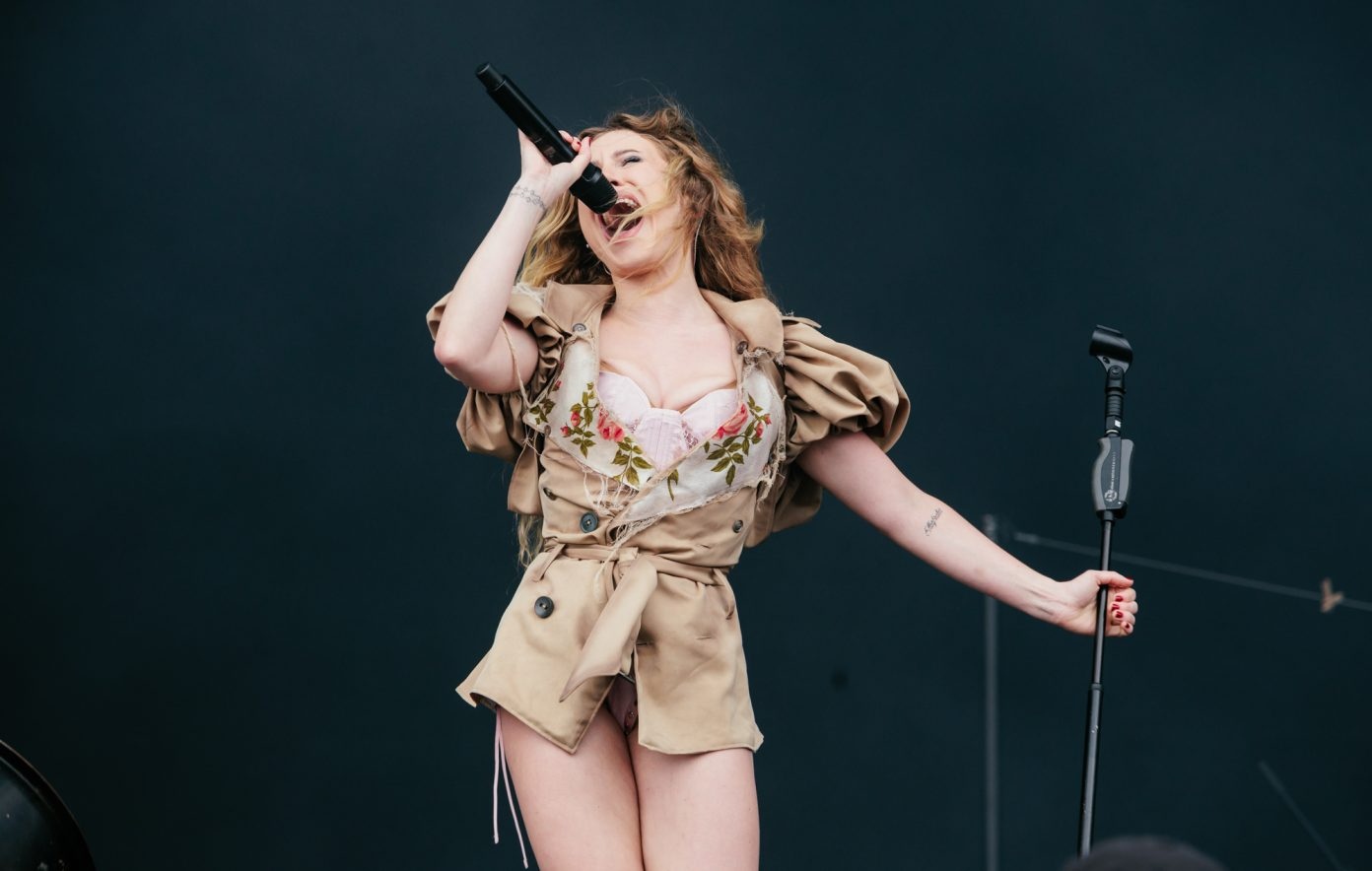
Slayyyter played her take on Turnstile’s ‘Birds’ onstage for the first time in Atlanta. You can watch footage of the performance below.
Slayyyter is currently touring with her ‘Wor$t Girl In The World’ show. She added the cover to her set at The Eastern on Monday night (September 21).
She sang ‘Birds: Slayyyter Version’ near the end of the main set, following ‘Brittany Murphy’. She then came back for an encore featuring ‘Brand New Chanel$’ and ‘Beat Up Chanel$’.
It was her first live performance of the song. She originally recorded it for Turnstile’s ‘Never Enough: Versions’, a collection of reworked tracks released on August 28.
The 22 track release brings together new interpretations of songs from Turnstile’s fourth album. Contributors include Elton John, Hayley Williams, Blood Orange, A. G. Cook, Faye Webster, Four Tet, Oklou, Floating Points, Nourished By Time, Alex G, Julien Baker and Mustafa.
Panda Bear recorded a new take on ‘Magic Man’, while Dying Fetus gave ‘Birds’ another interpretation rooted in death metal.
See Slayyyter perform the track live and listen to her studio recording here:
Slayyyter trades the original song’s hardcore intensity for a bigger electronic sound that feels at home alongside her latest album, ‘Wor$t Girl In America’.
Turnstile first released ‘Birds’ on their 2025 album ‘Never Enough’. The song won Best Metal Performance at the 2026 Grammy Awards, where the album also won Best Rock Album.
In its five star review of ‘Never Enough’, NME pointed to ‘Birds’ and ‘Sole’ as reminders of Turnstile’s hardcore beginnings. It also praised the album for “furthering their unique, pop-facing take on hardcore”.
Slayyyter will join Turnstile on another stage next month. She and Die Spitz are set to support the band at the University of Kansas in Lawrence on October 6 for the ‘Never Enough Tour Pt. 2’.
It has been a big year for Slayyyter. Her third album, ‘Wor$t Girl In America’, came out in March, and NME’s review highlighted its mix of “brash, sleazy pop” and late 2000s indie sleaze sounds.
Last month, she performed Hole’s ‘Violet’ for triple J’s Like A Version. Courtney Love called the cover “a delight” and encouraged Slayyyter to “keep wiping the floors with us”.
A few weeks later, Slayyyter took ‘Wor$t Girl In America’ to Reading Festival. NME’s live review declared that there was “undoubtedly a star before us on stage” and praised her “rasped, rocked-up delivery” and growing confidence as a performer.