

“Live if you wanna live,” Bob Marley declared at the outset of his landmark album Rastaman Vibration, released almost 45 years ago, in April 1976. In the years before Legend, Bob Marley & the Wailers’ 1984 greatest hits collection, which remains the best-selling reggae album of all time, Rastaman Vibration was the record that broke Marley to American audiences, becoming the first Marley LP to reach the Top 10 on the Billboard 200 albums chart.
On the second track, “Roots Rock Reggae,” Marley took new listeners by the hand and introduced them to a new sound from the faraway island of Jamaica. “Play I some music,” Bob sang, and the I Threes—Rita Marley, Marcia Griffiths, and Judy Mowatt—replied in unison, “This is reggae music.”
At the start of the second verse, the Tuff Gong pleaded with industry gatekeepers and radio programmers. “Play I on the R&B,” he sang. “I want all my people to see. We’re bubbling on the Top 100 just like a mighty dread.” Bob’s prophecy was fulfilled when the song reached No. 51 on Billboard’s Top 100, but R&B radio would prove harder to penetrate. The top R&B song of 1976 was “I Wish” by Stevie Wonder, who had performed with Marley at Jamaica’s National Stadium the year before. But even white groups like The Steve Miller Band, The Bee Gees, and Hall & Oates were getting more love on American R&B radio than Bob Marley at the time. By 1980, Bob was booked as an opening act for The Commodores at Madison Square Garden, and famously upstaged the headliners but Marley’s earthly mission was soon cut short, to be continued.
In May 2020, Bob’s grandson Skip Marley reached the top of Billboard’s Top Adult R&B Songs airplay chart with a gorgeous duet called “Slow Down” featuring R&B superstar H.E.R. The artists’ creative chemistry and song’s video made the track a fan favorite. “Slow Down” is nominated for Best R&B Song at the 2021 Grammy Awards this weekend. Skip’s debut project Higher Place is also nominated for the Best Reggae Album Grammy, a milestone in the 24-year-old singer/songwriter/musician/producer’s career.
In “Let’s Take It Higher,” a new Boomshots documentary premiering today on VIBE.com, Skip reflects on the honor of being nominated for the prestigious awards and of carrying on a mighty legacy in his own unique style.
“The whole foundation of wha’ we ah do now is thanks to dem man deh,” Skip says of iconic figures like Bob Marley and the man he calls “Uncle Toots,” reggae pioneer Toots Hibbert, who passed away during the Coronavirus pandemic, and whose 2020 album Got To Be Tough is also nominated for the Best Reggae Album honors— along with Buju Banton’s Upside Down 2020, Maxi Priest’s It All Comes Back to Love, and One World by The Wailers (which includes a guest appearance by Skip).
“That is huge,” says H.E.R. of the Best R&B nomination. “It just transcends. It just shows you how powerful the music is and how sometimes it crosses those genres. Even Skip’s project—there’s so many different influences in there. And you feel Bob in there but you feel Skip and how unique he is and how many things make up who he is musically.”
“The thing about it now in the millennium is that Bob Marley is totally synonymous with reggae,” says Roger Lewis of the iconic reggae band Inner Circle, who recorded and toured with Skip’s grandfather. “I really respect Skip a lot, and I like the youth’s spirit a lot—very loving, very genuine. And to see Skip as the grandson now who look a lot like Bob and have nuff of Bob vibes. What did Bob say? Them ah go tired fe see we face,” Roger sings, referencing a line from the Marley classic “Bad Card.”

“The name Skip was one of my father’s nicknames, and it just come from being the captain of the ship, them call you Skipper,” says Damian “Jr. Gong” Marley who collaborated with Skip on the dancehall-style banger “That’s Not True.” As the youngest uncle, Damian’s adventurous approach to the music was a huge inspiration to Skip growing up, along with uncle Stephen “Ragga” Marley, who first invited Skip on stage to perform with him.
“Because his foundation is so strong we were very honest with him,” says Skip’s mother Cedella, a member of the groundbreaking group The Melody Makers along with her brothers Ziggy and Stephen. “As far as what to expect, what to not expect, and to also know that you’re gonna have to do everything harder than anyone else. Just because. Not like say you have somethin’ to prove, but just because. Is a ethic. Is a work ethic.”
“One of the highlights on my musical journey is to have performed with you onstage,” says Skip’s aunt Marcia Griffiths, who toured the world with Bob Marley as a member of the I Threes and has collaborated with Bob’s children on several occasions. “To have done three generations? Wow. You don’t know what that mean to me.”
“The homie Skip, he really special,” says Rick Ross, who appears on the Higher Place track “Make Me Feel” along with Dreamville chanteuse Ari Lennox. “To me, when I hear his vocals, it’s almost like he not even trying, but it’s such an incredible sound.”

A humble and down-to-earth soul, Skip’s musical journey is clearly motivated by more than awards. “A lot of artists like myself, they kinda don’t even think about being Grammy-nominated,” says L.A. rapper D. Smoke, who collaborated on a special Dub Mix of Skip’s song “No Love,” and is himself nominated for Best New Artist and Best Rap Album this year. “It’s not a trend or it’s not common to acknowledge artists whose priority is to educate or challenge norms.” When artists like Skip and Smoke are recognized by the recording academy, Smoke hopes it will influence up-and-coming artists to be true to themselves “rather than chasing something that feels like an industry standard.”
“Let’s Take It Higher” captures Skip at home in Miami adapting to the pandemic lifestyle just like the rest of us—washing his hands, eating healthy, exercising, spending time with family and his pet dogs, and making music. The film was directed by Reshma B, who produced the acclaimed reggae documentary Studio 17: The Lost Reggae Tapes and co-produced by Rob Kenner, author of the forthcoming book The Marathon Don’t Stop: The Life and Times of Nipsey Hussle. Shot in Miami in January 2021. The first day of production was January 6, the same day a violent mob stormed the U.S. Capitol Building, making clear how urgent the Marley mantra of “One Love” is today, and giving Skip’s musical plea to “Take me to a higher place.”
“The music will just keep growing and growing and growing and keep finding the right people,” says Skip. “Them will keep trying to fight you down and that just make it double up, triple up, quadruple up. Grow and grow beyond their wildest imagination.”
MUSIC PREMIERES
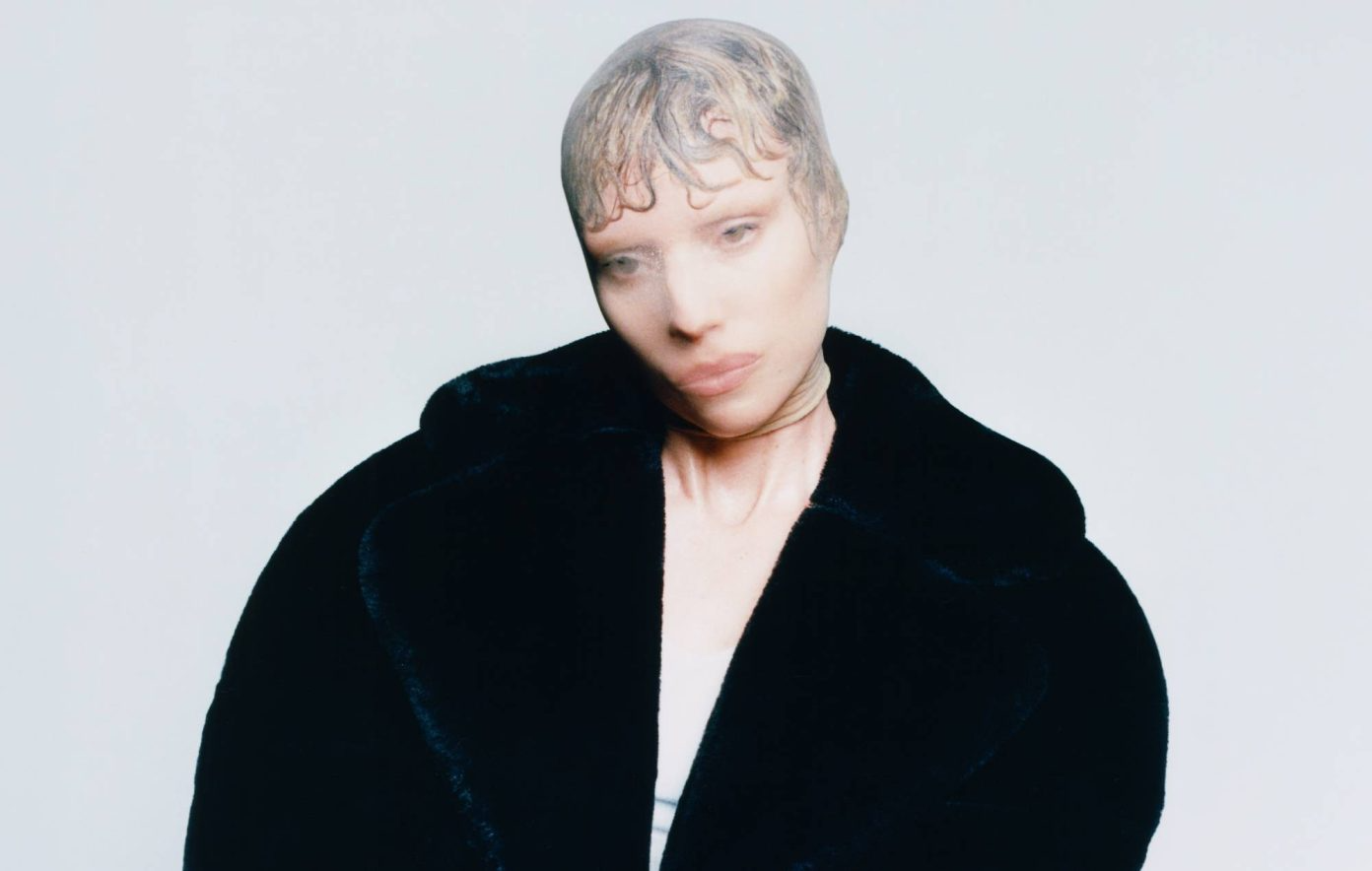
Lykke Li didn’t hold back when speaking about the making of her sixth studio album, ‘The Afterparty’, during a listening session in Los Angeles earlier this year. “Let’s talk about the album. It was a motherfucker to make,” she admitted to the crowd. While balancing motherhood, the chaos of modern culture shaped by Trump and AI, and her own desire to create something more “extroverted, impulsive and chaotic” than ‘EYEYE’, as she previously shared with NME, the Swedish alt pop star arrived at a headspace that “feels like it’s 4am and the sun is going to rise”. The record captures that blurry final moment before regret, exhaustion and reality settle in, which makes it even more emotional considering she has hinted this could potentially be her final album.
There is something fitting about how brief the project feels. With only nine tracks running across 24 minutes, it never overstays its welcome. Lykke immediately drops listeners into the atmosphere with opener ‘Not Gon Cry’, painting a picture of those lonely early morning hours with the line, “No angels here tonight, no dancing queens.” Alongside the shadowy pulse of ‘Happy Now’ and the twisted disco energy of ‘Lucky Now’, she revisits the emotional yet dance driven spirit of her earlier material while blending in the sharper, more confident attitude heard on ‘So Sad, So Sexy’ and the shimmering influence of her 2019 Mark Ronson collaboration ‘Late Night Feelings’.
The emotional fallout begins to settle in quickly. ‘Famous Last Words’ carries a lush orchestral sadness as Lykke reflects on lessons that only came after years of chaos and late nights, confessing, “I had to crash and burn to tell the tale.” Then comes ‘Future Fear’, a delicate acoustic track with robotic textures that stares directly into anxiety and uncertainty with the chilling question, “I’m going to a dark place, do you need anything?” Meanwhile, ‘So Happy I Could Die’ glows like sunrise after a sleepless night, holding onto fleeting moments as she sings about “slipping through the hourglass”.
Throughout the album, Lykke Li vividly captures the beauty and wreckage of reckless nights with the vulnerability that has always defined her music. On ‘Sick Of Love’, she channels heartbreak into revenge, wanting to “make you beg for it” after rejection in a way that feels spiritually connected to Robyn’s ‘Dancing On My Own’. One of the strongest moments arrives with ‘Knife In The Heart’, a track that fully embraces her desire to become the “rock god” and “fuck boy” she spoke about, firing back at anyone who tries to tear her down with the words “you can spit, you can walk on me” while delivering one of the catchiest songs she has created in years.
Closing track ‘Euphoria’ leaves behind the same bittersweet feeling that runs through the rest of the album. With sweeping strings, pulsing beats and emotional intensity, Lykke Li reminds listeners that nothing lasts forever as she sings, “Player play your song, waste the night away”. Like the fading energy of the perfect night out, ‘The Afterparty’ ends in a haze of beauty and uncertainty. If this truly is her farewell, she leaves with one final intoxicating statement, though it still feels like there could be another chapter waiting.