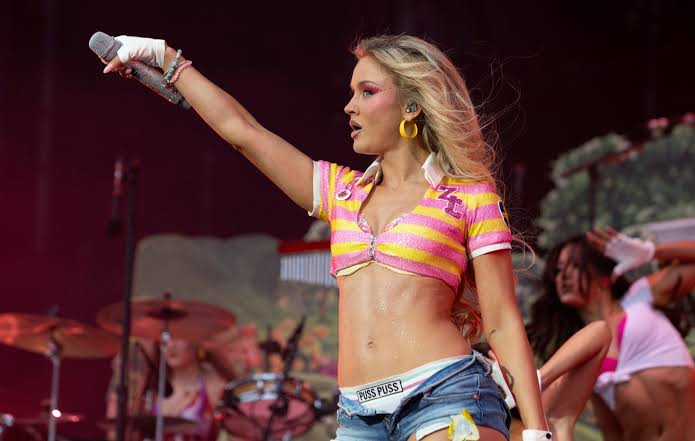

The Edge fro U2's Gibson electric guitar, Bono from U2's signed Irish Falcon Gretsch guitar and Jim Croce Martin D-21 acoustic guitar are on display at Julien's Auctions Icons & Idols: Rock 'N Roll
Getty ImagesGuitars owned by U2’s the Edge, Eddie Van Halen, Elvis Presley and Eric Clapton were among the highest-bid items at a rock-themed auction that raked in over $5 million this weekend.
Julien’s Auctions’ Icons & Idols: Rock N’ Roll event also featured David Gilmour’s stage-used guitar from Pink Floyd’s Momentarily Lapse of Reason era ($200,000, doubling its pre-auction estimate) and Amy Winehouse’s Fender Stratocaster, which the late singer played onstage in and in the “Take the Box” music video; that guitar sold for $153,000.
Despite the controversy surrounding Clapton’s stance on vaccination mandates and Covid lockdowns, people still really like the song “Layla,” as Clapton’s stage-used acoustic guitar from his time with Derek & the Dominoes sold for an auction-high of $625,000, beating its $500,000 pre-auction estimate. (Clapton’s handwritten lyrics for “Layla” sold for $37,500, however, the low-end of its pre-auction estimate.)
The Edge’s 1976 Gibson Explorer Electric Guitar — used during U2’s The Joshua Tree tour — reached a high bid of $437,500, while Bono’s 2005 Gretsch Irish Falcon — played live when U2 performed “One” and “Walk On” — sold for $115,000.
(However, some of the auction’s more notable, previously announced items — like Kurt Cobain artwork and Robert Plant’s handwritten lyrics for Led Zeppelin’s “Kashmir” — never made it to the auction block for unspecified reasons.)
It wasn’t just instruments that hit surprisingly high bids that exceeded expectations: This terrifying painting of a clown by Frank Sinatra in 1991 somehow sold for $56,000, five times its pre-auction estimate. The mask featured on the cover of Quiet Riot’s Metal Health LP scored a $50,000 high bid, and the Go-Go’s Belinda Carlisle’s own Germs t-shirt — the punk band she was a member of prior to her own Rock Hall-inducted outfit — sold for a whopping $22,000, over 20 times its expected sale price.
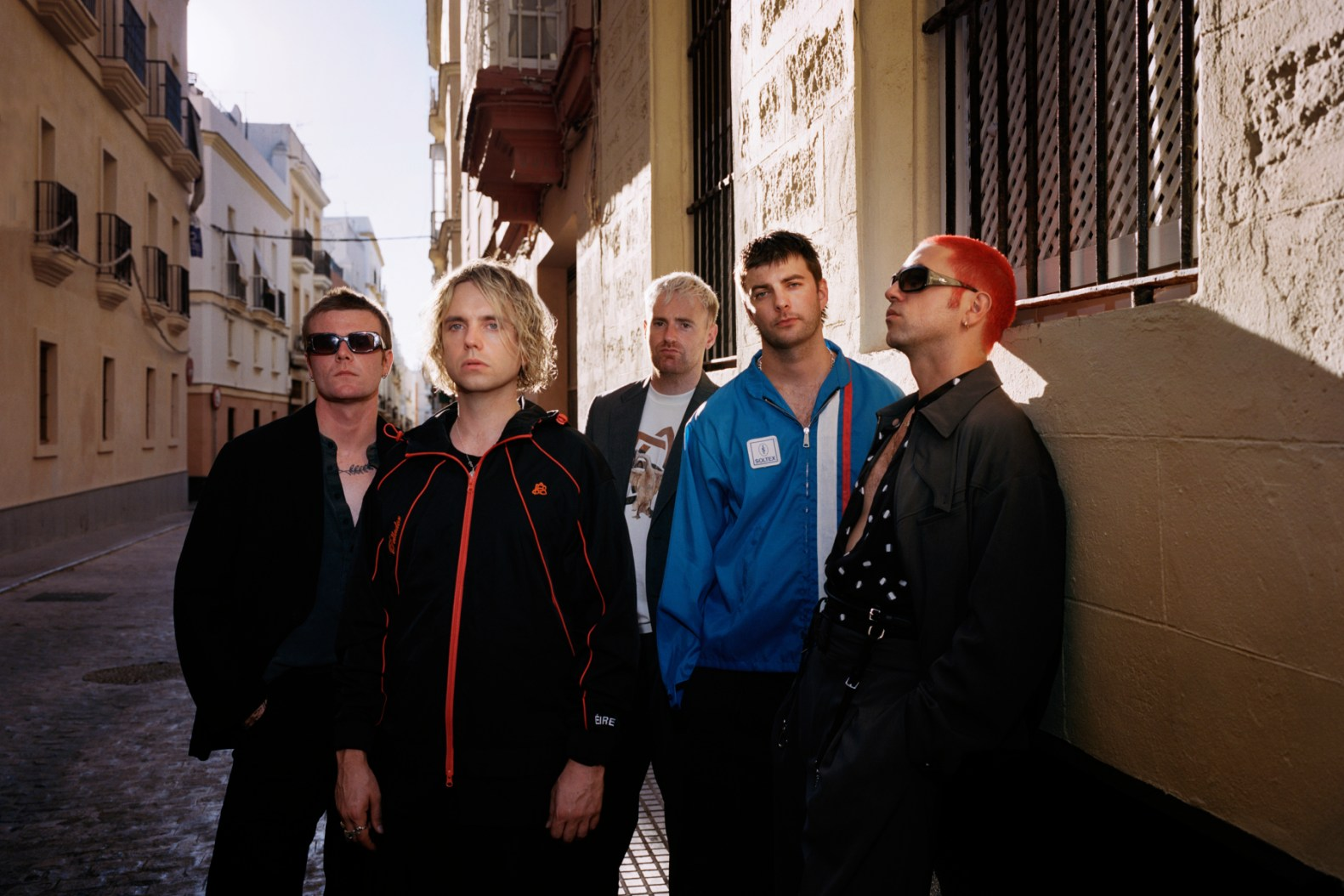
Fontaines D.C. have teamed up with Rosalía for their new collaboration, Where Is Gone?.
The song features on the Irish rock band's forthcoming album, Dopamine Chamber, which arrives on Friday (16.10.26). For guitarist Carlos O’Connell, working with the Spanish superstar is particularly special because of his own Spanish roots.
He explained: “I’ve admired Rosalía ever since her debut album, which I thought was absolutely beautiful.
“What excited me most was the way she continued to preserve Spain's musical traditions, something that felt spiritually connected to what we've been trying to achieve with Irish music. Having roots in both countries, it's been really special to witness. "She's an artist who has continued to amaze me at every point in her career.”
Frontman Grian Chatten has also described the collaboration with Rosalía as one of the most memorable achievements of his career.
He revealed that he felt "humbled" when she agreed to lend her voice to the band's album.
Speaking to NPR, Grian said: “I've always felt there's something almost like a single big idea that I'm personally trying to communicate to the world before I get old and die, if that makes sense. There's one thing I think I'll spend my life trying to express. I have a feeling she has a similar outlook. … I mean, she's an amazing arranger, composer and lyricist. It means so much that she wanted to sing on something we'd put together. It's definitely one of the highlights of my career.”
Rosalía's links to Irish rock music extend beyond Fontaines D.C. She also offered inspiration and helped develop the Spanish lyrics for U2's The Mirror Maker (Rosalía), a track from their forthcoming album, Carnaval de Luz.
During an appearance on The Tonight Show Starring Jimmy Fallon last week, she spoke about frontman Bono, saying: “I don't know him personally, but he sent me a text explaining that he was working on a new project and had written a song called The Mirror Maker."
Rosalía joked that Bono had invented a few words of his own.
She recalled telling him: “I wasn't sure what to make of it, but I told him he could create his own language if he wanted to.”
She described the opportunity to collaborate with the 66 year old music veteran as a real privilege.
She added: “Bono is a legend.
“It's amazing.”
Bono recently revealed that he was worried about seeming like a stalker when he reached out to Rosalía to ask whether he could name the song after her.