NEWS

When we all wake up, where do we go? Billie Eilish opened her eyes in 2019 to find herself the biggest sensation in pop music, when she was still just a kid on the edge of 17. Her blockbuster debut album When We All Fall Asleep, Where Do We Go? made her an overnight legend, the kind who accepts her Grammy awards from Smokey Robinson and Ringo Starr. She was suddenly the world’s most high-profile teen, the object of strangers’ gazes, a target for mind-blowing amounts of misogyny. The homemade bedroom tunes she cooked up with her brother Finneas were recognized as instant classics, even when Billie was baring the Invisalign of her soul.
Her excellent sophomore album, Happier Than Ever, feels downright heroic, the work of an artist refusing to stay still. Absolutely nobody was out here saying Billie Eilish needed to push even harder and get even better — nobody but Billie. It’s a dark, painful, confessional album where she’s choosing not to settle into the role of America’s beloved kooky kid sister. She’s got trauma to figure out and secrets to share, but she’s not watering it down for anyone. The way Billie avoids reprising any of her “duuuh!” jokes is as bracing as Taylor Swift choosing not to do any of her trademark laughs on Folklore or Evermore.
“Getting Older” is an astonishingly assured way to introduce the new 19-year-old Billie, murmuring to the minimal electro pulse like the mall-rat niece of Julie London or Björk. She details the way fame has messed up her life, the way heading toward her twenties has messed up her life, and the way she’s struggling to leave her backlog of turmoil behind. “Things I once enjoyed/Just keep me employed now” is the most disenchanted post-breakthrough hook since Nirvana kicked off In Utero with “Teenage angst has paid off well/Now I’m bored and old.” It sets the tone for the whole album.
In “My Future,” Eilish sighs, “I’m in love with my future/Can’t wait to meet her.” That sentiment is all over the album — it feels like Eilish is writing these dark, often disturbing songs as love letters to that future self of hers, to document her fucked-up doubts, fears, and confusions in detail. For her and Finneas, the music has expanded, going for a Nineties coffee-shop techno-folkie slink, with bits of smooth-jazz guitar or tongue-in-cheek lounge organ. “Billie Bossa Nova” is a delight, with a coy samba groove that glides on digital castanets. But the emotional candor of the song is still dead serious, with Eilish warning, “You better lock your door/And look at me a little more.”
“NDA” goes into detail about the terror of having stalkers and paparazzi on her trail, with eerie pizzicato strings, while “Male Fantasy” ends the album with tough talk about looking at porn and seeing nothing but lies. Most disturbing of all is “Your Power,” a song about being abused and exploited by an older man she trusted, with powerful taunts like “She was sleeping in your clothes / But now she’s gotta get to class.” “Happier Than Ever” isn’t the but-it’s-fine-now statement that the title suggests — that would feel like a cop-out on an album like this. Instead, she slices up an ex, snarling, “I don’t relate to you/Because I’d never treat me this shitty.”
“Oxycontin” is her lustiest, wittiest moment, where she invites her nightmares to dance and keep up with her, with the beats escalating as her whispered come-ons get more intense. Her brother Finneas is a perfect musical foil for her, an all-time brother/sister power-sibling duo. He’s become a star in his own right, yet he’s also like the Bernie Taupin in this partnership — a built-in connection to the non-celeb world.
But the Billie Eilish who won the Grammy for Record of the Year this March — and whose first words on reaching the stage were “What’s up, Ringo?” — is a classicist pop scholar with an unbeatable feel for how songs work. She’s always been a shameless fangirl who’s learned her shit from the greats. She’s not the first rookie pop star who’s ever responded with an album about the down side of fame. But nothing on Happier Than Ever feels like a cliche, even when it’s sentiments you’ve heard before. (People Online? Still horrible, ever since Ricky Nelson sang “Teen Age Idol.”) Her candidly politicized reads on misogyny are powerful, especially from a 19-year-old who has to do her learning in public, making art out of trauma she has every right to keep to herself.
For all but a tiny minority of her gigantic audience, Billie’s not just a musically brilliant, wildly imaginative singer-songwriter. We relate because we root for her, because we listen with affection and identification. We’d all rather see her in a crown, running this nothing town. But the most striking thing about Happier Than Ever is that she’s refusing to coddle her audience, refusing to protect us from her darkest moments. It’s a high-risk move. But by now we should know not to expect anything less from an artist like Eilish.
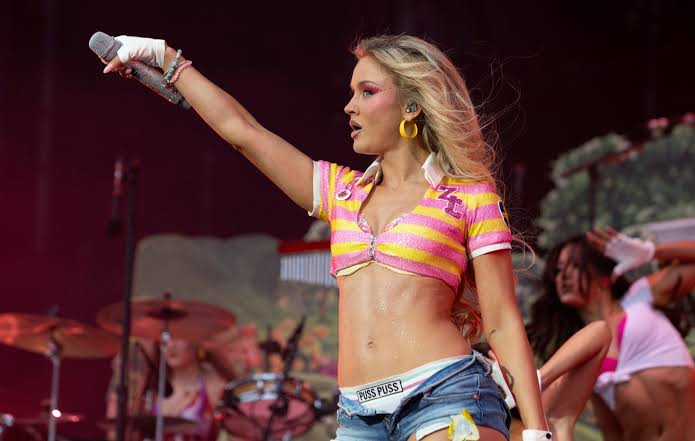
Zara Larsson has indicated that she may have cancelled her December 3 appearance at the Formula One Abu Dhabi Grand Prix. The singer initially confirmed that she would not attend, before removing the comment and sharing a more detailed explanation of why the performance no longer feels right for her.
The Swedish star was scheduled to take the stage at Etihad Live on Yas Island during the Yasalam After-Race Concerts. Zara and Lewis Capaldi were due to launch the weekend’s entertainment. However, supporters encouraged her to reconsider the booking because of concerns surrounding the United Arab Emirates’ reported connections to Sudan’s Rapid Support Forces, a paramilitary organisation accused of committing atrocities during the nation’s civil conflict.
A fan commented: “Please read about what UAE is doing to Sudan then cancel your Abu Dhabi show!” Zara responded: “I will not be going to Abu Dhabi.” Fans later realised that both comments had been removed.
She then shared that she had been considering what it means for her, as an artist, to perform in particular countries.
The Midnight Sun singer explained: “I think about that a lot in my life as an artist… I wanna perform and spread joy and music for people in every country, because no single person is their government.
“I’ve met so many wonderful people from every corner of the world and I know this to be true in my heart. I love people, and I love my fans soooo much.”
Zara acknowledged that her original comment “maybe came off as an impulsive response,” but explained that she had given the booking serious thought. She now believes withdrawing is the decision that “aligns with me the most right now, for many different personal reasons beyond politics.”
She continued: “Maybe I’ll delete both comments and do a better statement soon. I hope to sing with you in the beautiful future!”